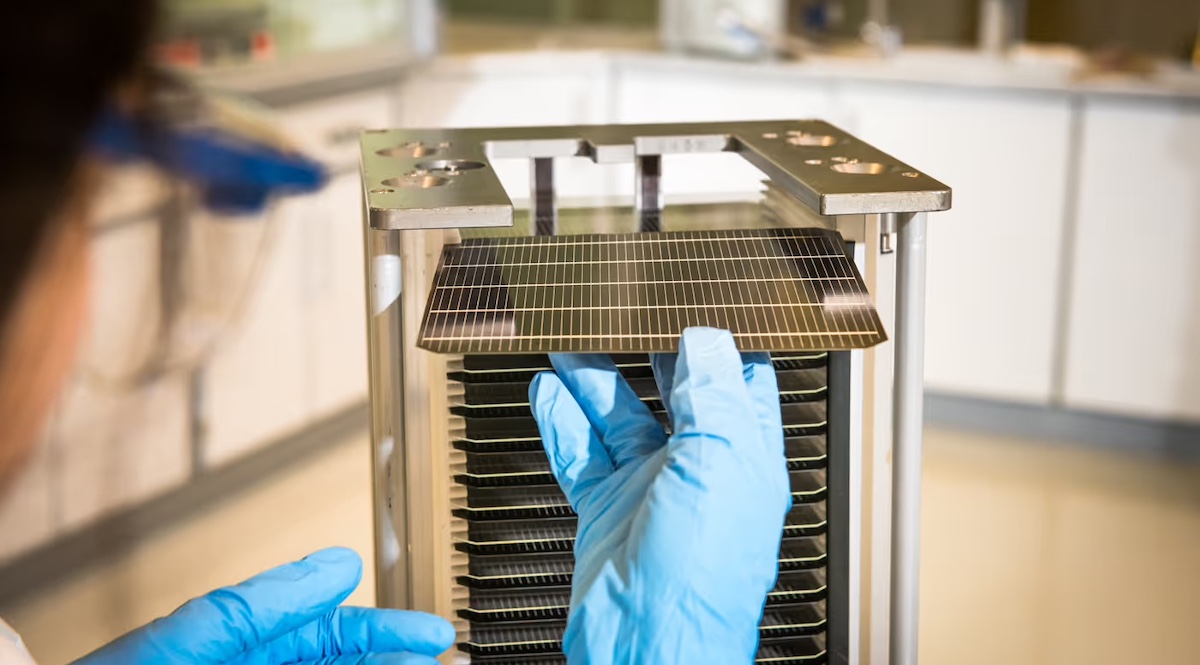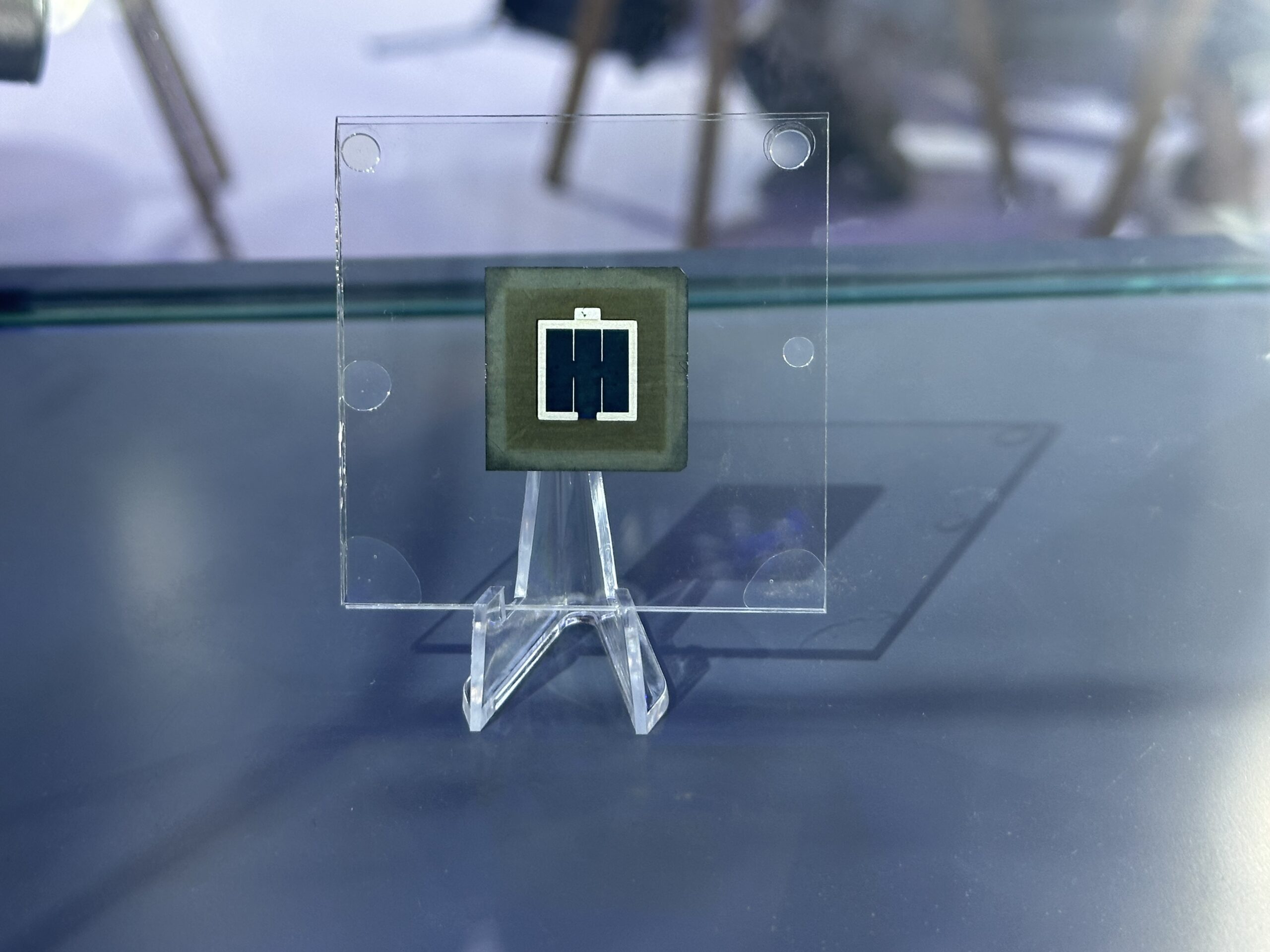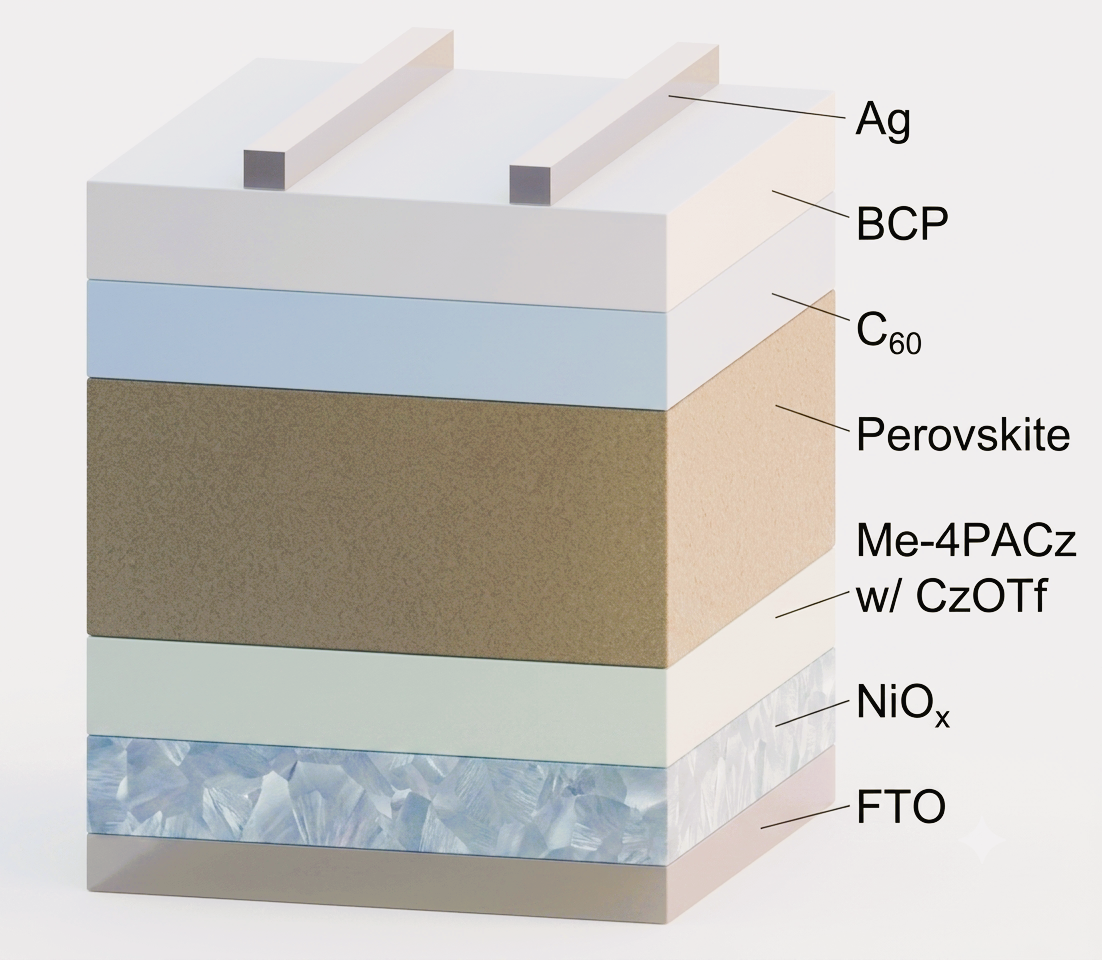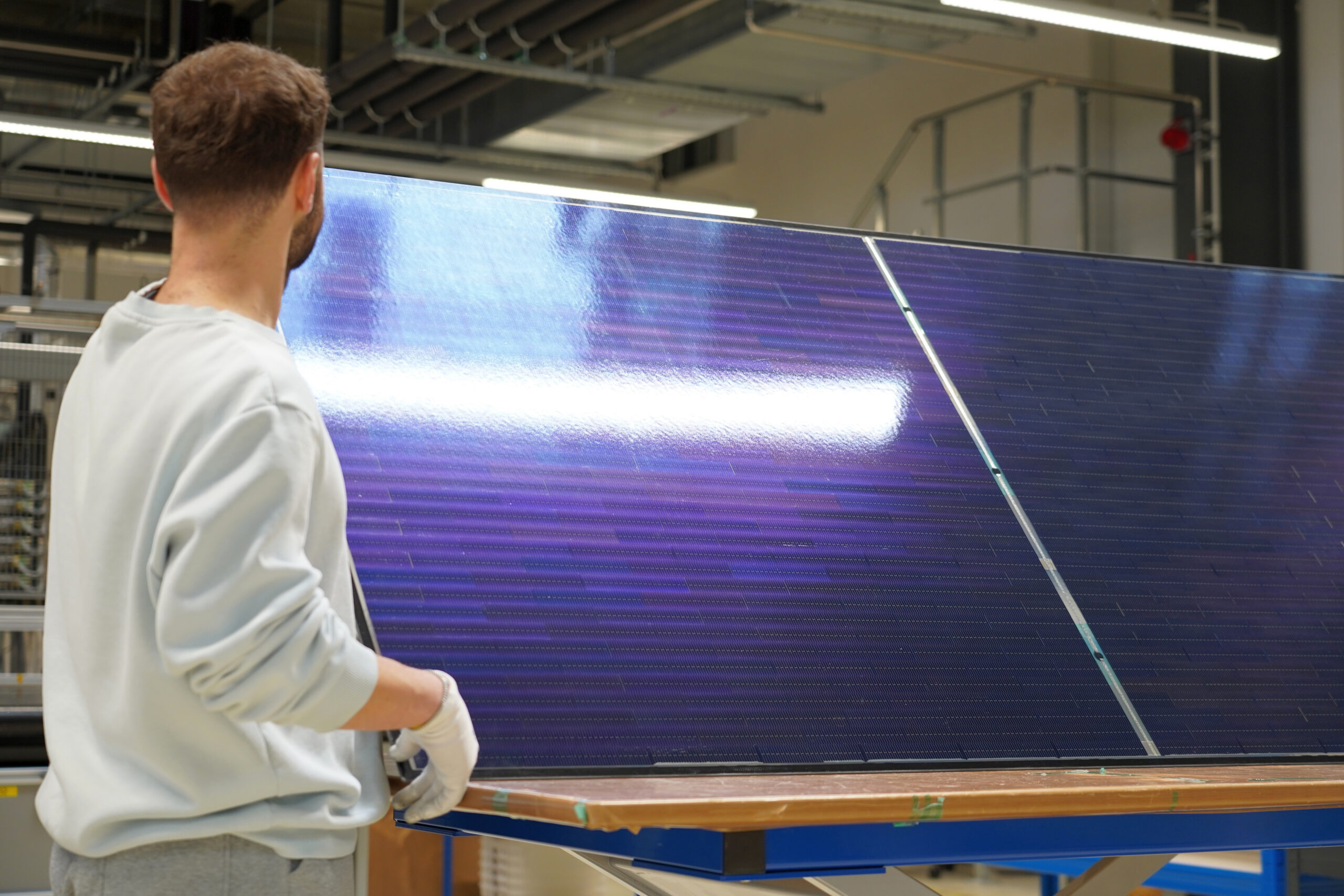
Oxford PV reported a 25.6% efficiency for a perovskite–silicon tandem module using Fraunhofer ISE’s Matrix Shingle architecture, marking the first successful integration of both technologies. The shingled, busbar-free design reduces resistive and shading losses while improving energy yield, durability, and module-level performance.
Perovskite solar module manufacturer Oxford PV announced it achieved a power conversion efficiency of 25.6% for a perovskite-silicon tandem solar module relying on a shingled architecture developed by Germany’s Fraunhofer Institute for Solar Energy Systems (Fraunhofer ISE).
“For the first time, the two organizations have successfully combined Oxford PV’s perovskite-silicon tandem solar cells with Fraunhofer ISE’s Matrix Shingle module technology,” a spokesperson from Oxford PV told pv magazine. “Beyond the efficiency gains, the combination also reduces resistive losses, removes the need for copper interconnects, and improves resilience under partial shading – all key considerations as the industry looks to reduce costs while increasing energy yield.”
The Matrix Shingle approach improves conventional solar module interconnection by replacing traditional busbar-and-ribbon architectures with a dense, overlapping cell layout. In this method, photovoltaic cells are precision-cut into narrow strips and reconfigured into a shingled pattern, similar to roof tiles. Adjacent strips overlap slightly and are bonded using electrically conductive adhesive (ECA), which provides both mechanical adhesion and electrical interconnection between neighboring cell segments.