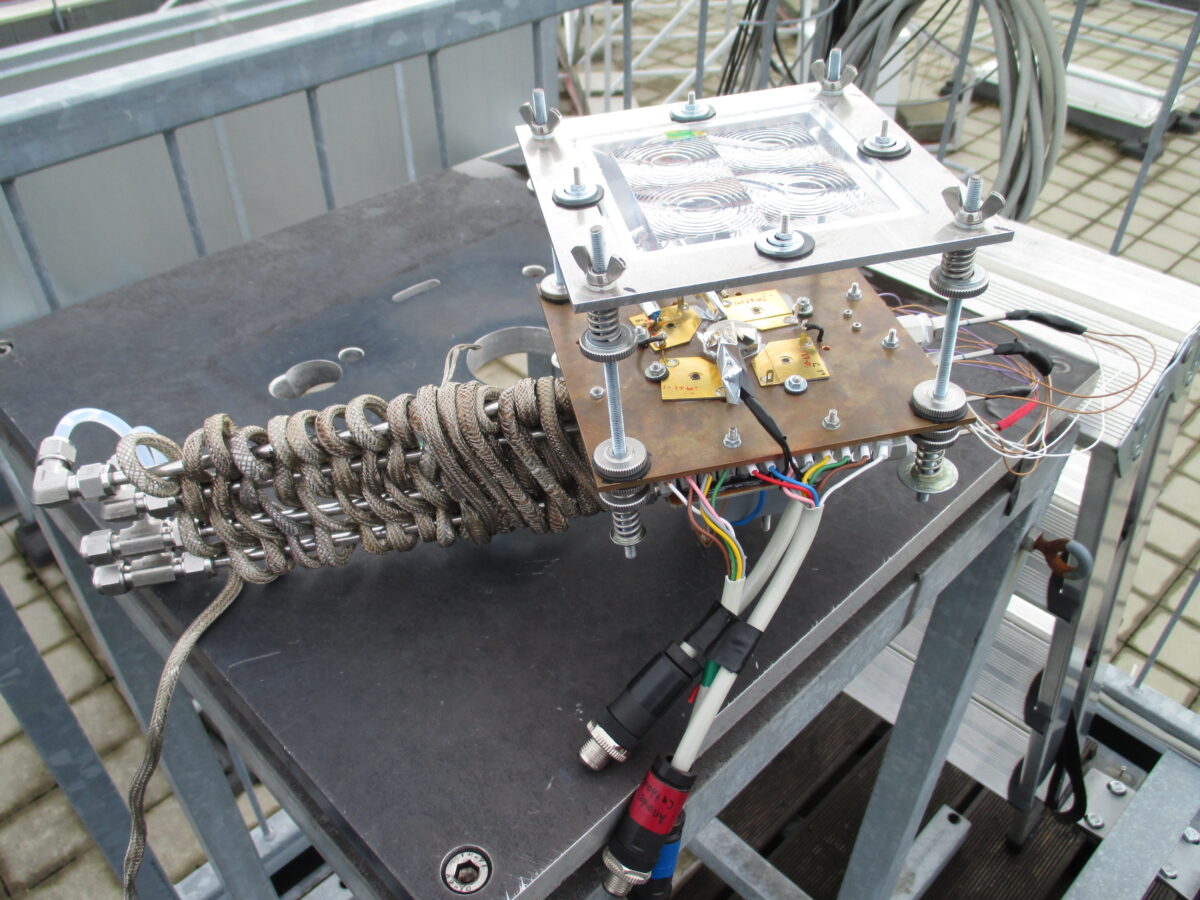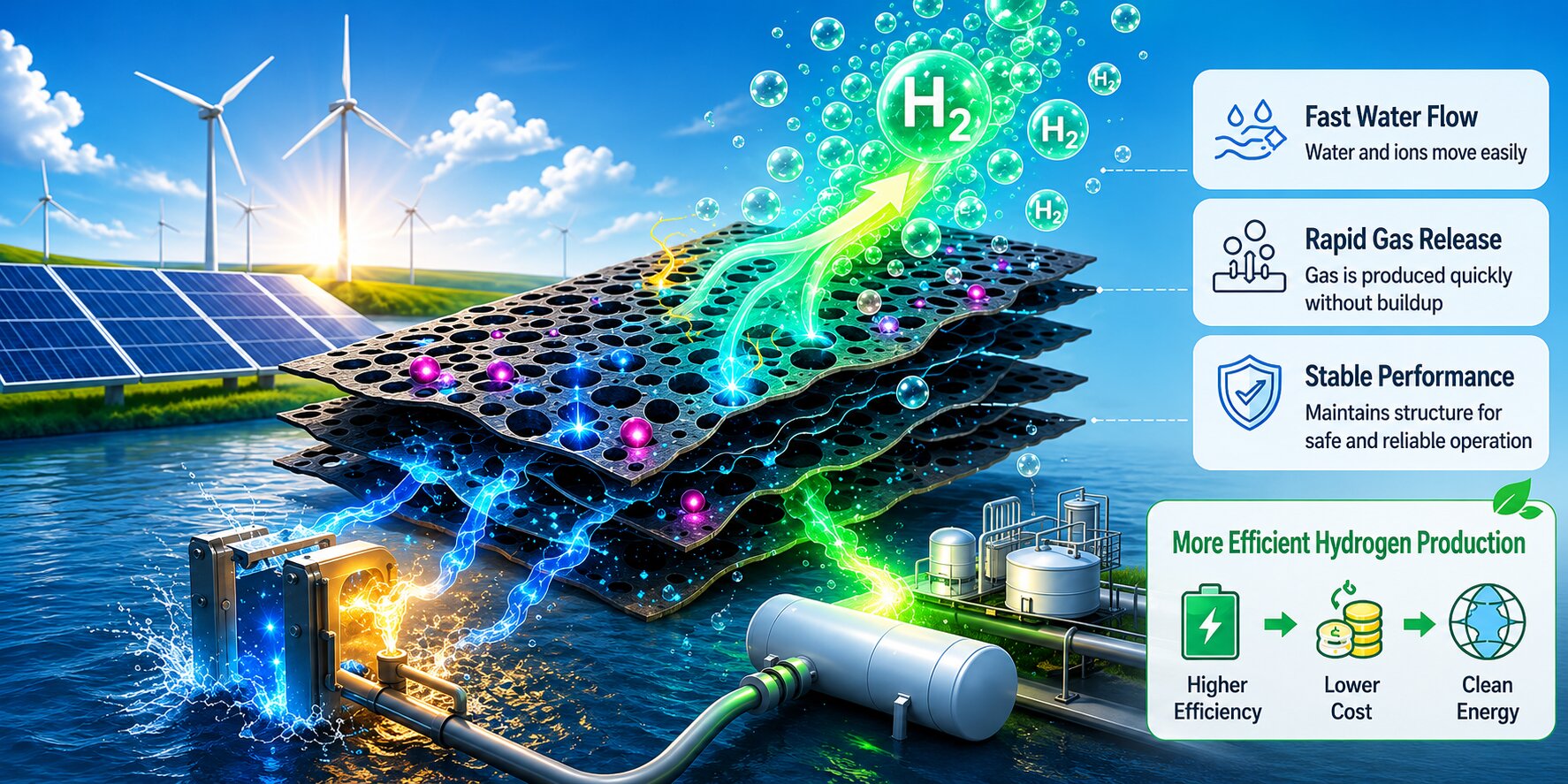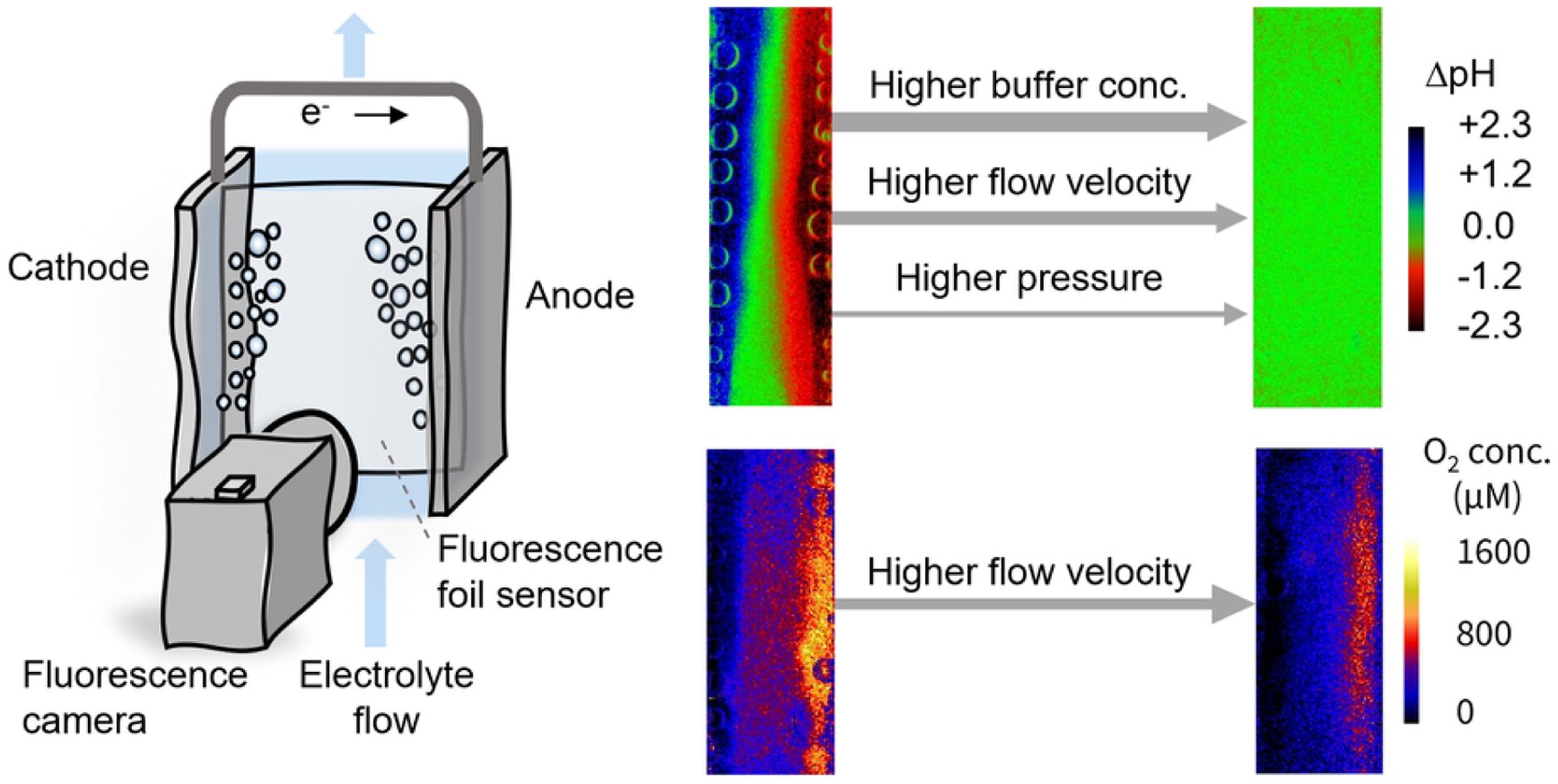
In situ 2D measurements of the pH distribution in (photo)electrochemical devices reveal the importance of high buffer concentrations to avoid overpotential losses. Credit: EES Solar (2026). DOI: 10.1039/d6el00057f
One method of storing solar energy is to use PEC electrolyzers to produce hydrogen. However, scaling up this technology remains challenging. Now, a team at the HZB Institute for Solar Fuels has used 2D fluorescence imaging and particle velocimetry to observe the movement of ions and dissolved gases within the electrolyte during electrolysis. These new insights, published in EES Solar, may prove useful in developing larger PEC electrolyzers.
Green hydrogen plays a major role in achieving a climate-neutral future. One option for producing green hydrogen involves photoelectrochemical (PEC) electrolyzers with special photoelectrodes to harness sunlight's energy. In recent years, scientists have achieved significant improvements in photoelectrodes, which can catalytically accelerate the desired reactions—albeit only on a laboratory scale. However, when scaled up, efficiency drops dramatically. This is due to various factors, such as larger volumes allowing for convective flows and pH gradients, which contribute to the degradation of electrode materials.