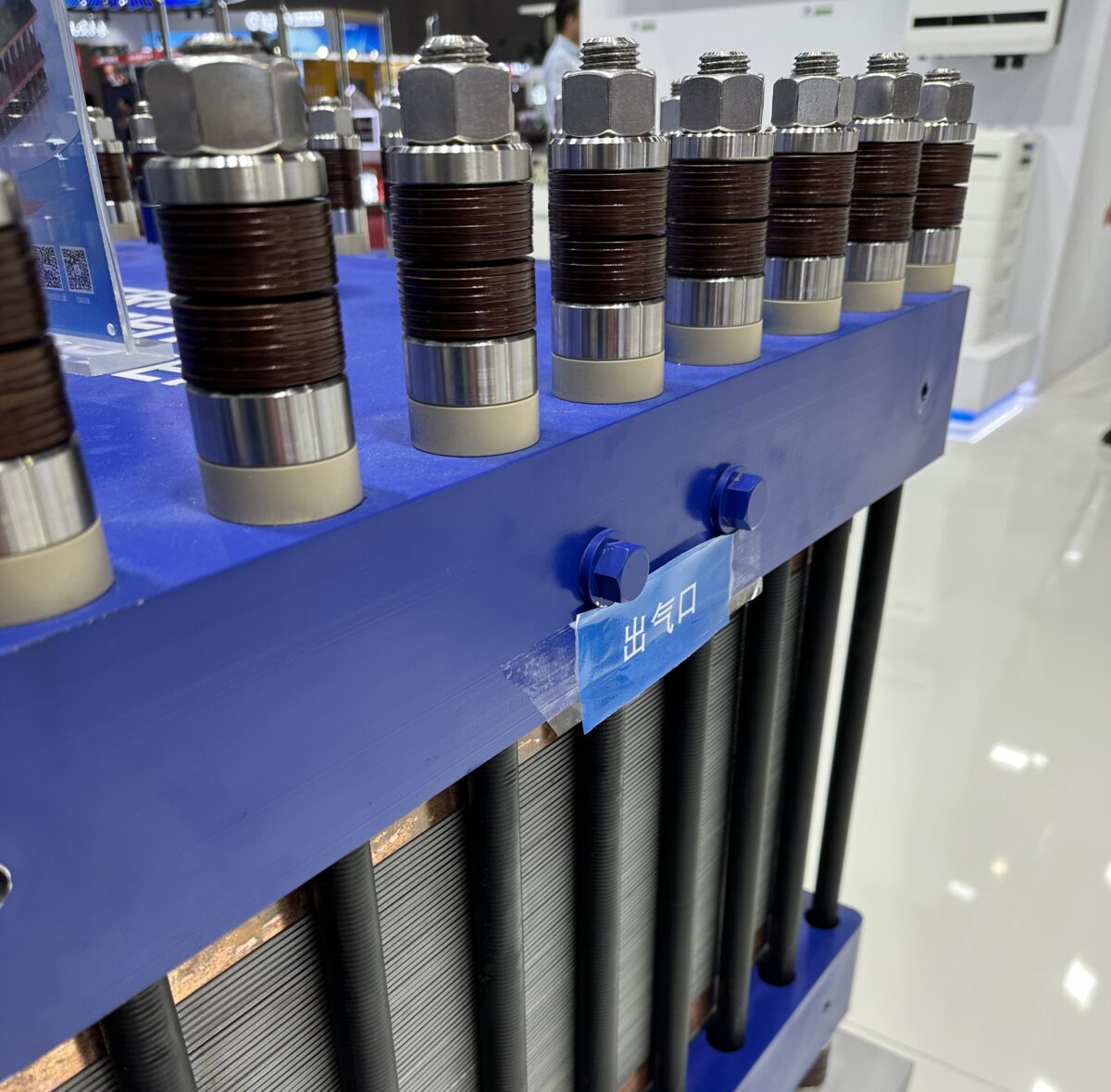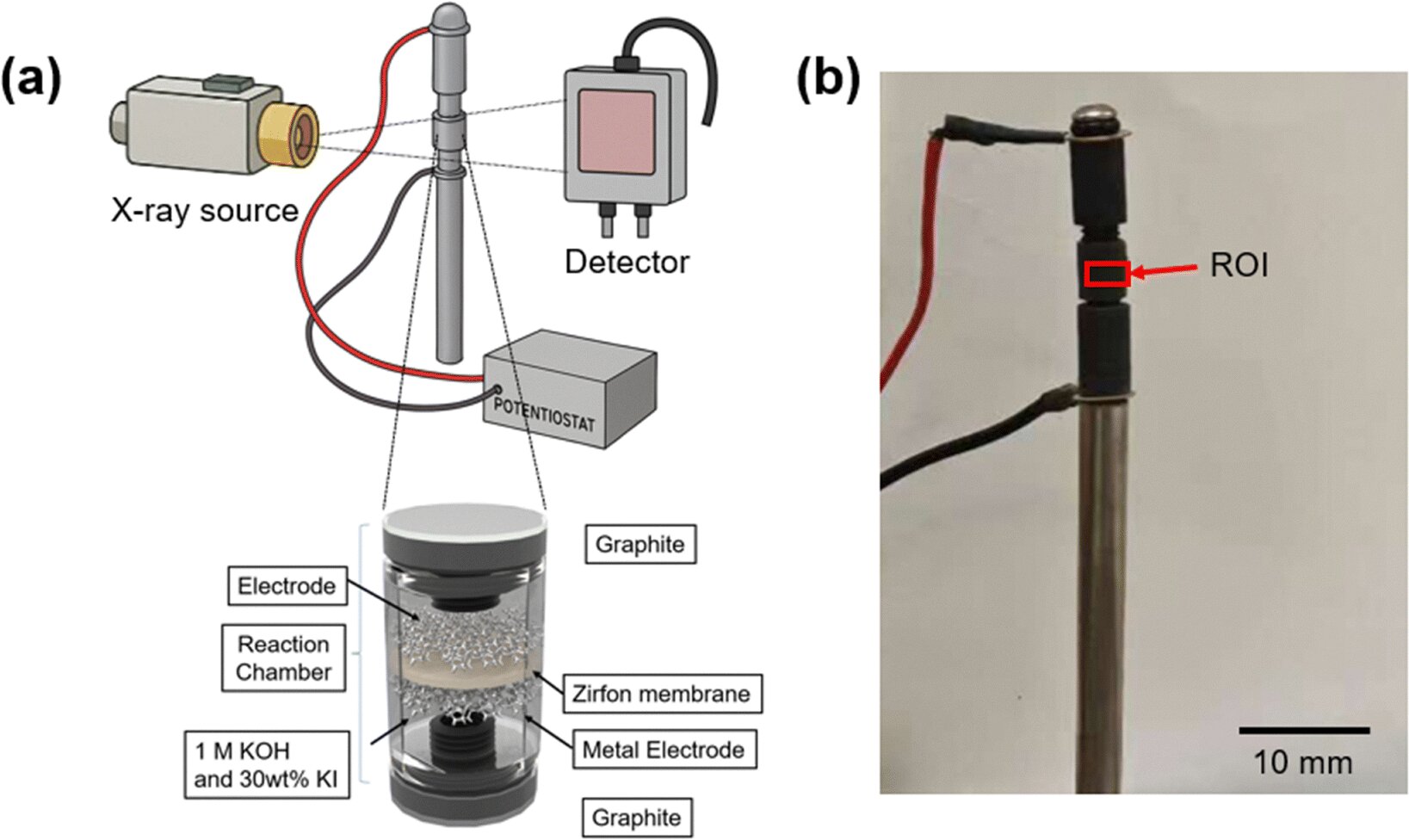
Design and configuration of the operando micro-CT electrolysis cell. (a) Schematic and (b) photograph of the custom operando cell for micro-CT imaging of gas evolution. Credit: Energy & Environmental Science (2026). DOI: 10.1039/d6ee00290k
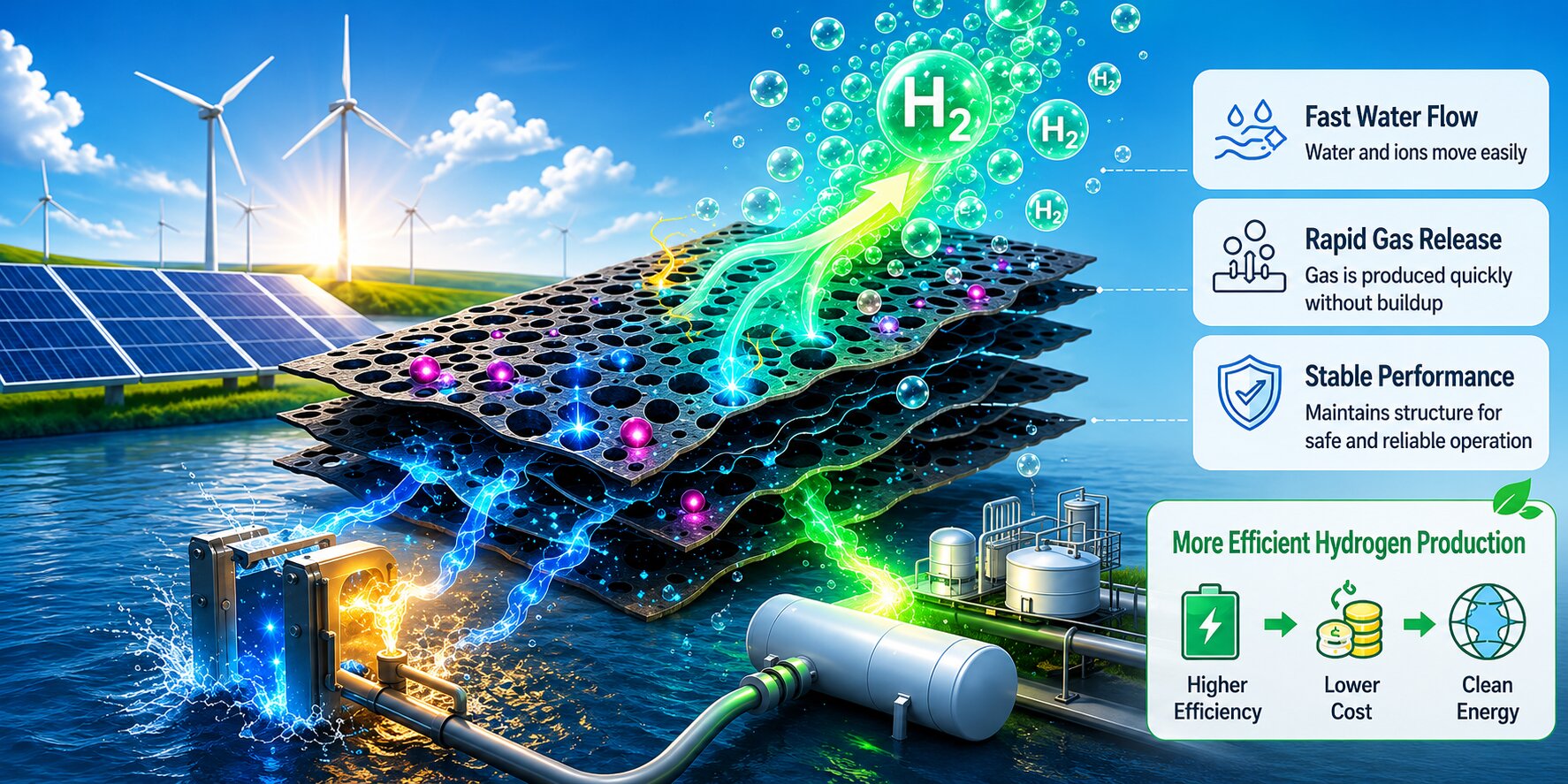
Hydrogen could be the key to a clean energy future, but a tiny problem has been holding it back: bubbles. In a paper published in Energy & Environmental Science, a multidisciplinary team of UNSW researchers, in collaboration with researchers from TotalEnergies and EPFL, has found a new way to boost the efficiency of green hydrogen production.
Their solution focuses on optimizing the design of electrolysers—the systems used to split water into hydrogen and oxygen using electricity—which, when powered by renewable energy, produce "green hydrogen."
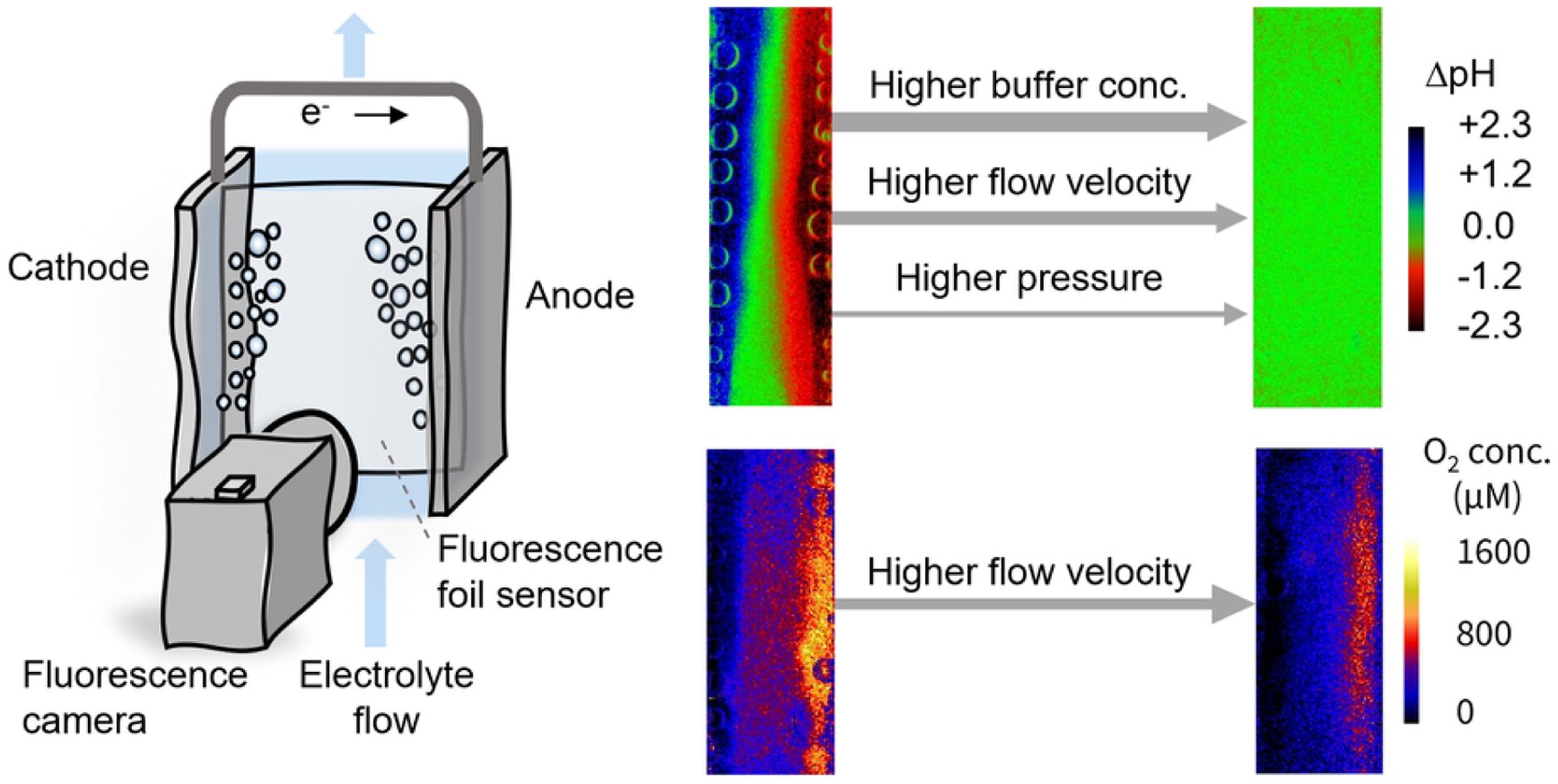
To date, industrial-scale electrolysers have faced a critical bottleneck: Hydrogen bubbles generated during operation accumulate within the porous electrodes, blocking active sites and severely limiting mass transport at high current densities.
"Green hydrogen production through water electrolysis is essential for decarbonizing hard-to-abate sectors such as steelmaking and heavy-duty transport," says Prof. Peyman Mostaghimi, the lead researcher on the team from UNSW's School of Civil & Environmental Engineering.