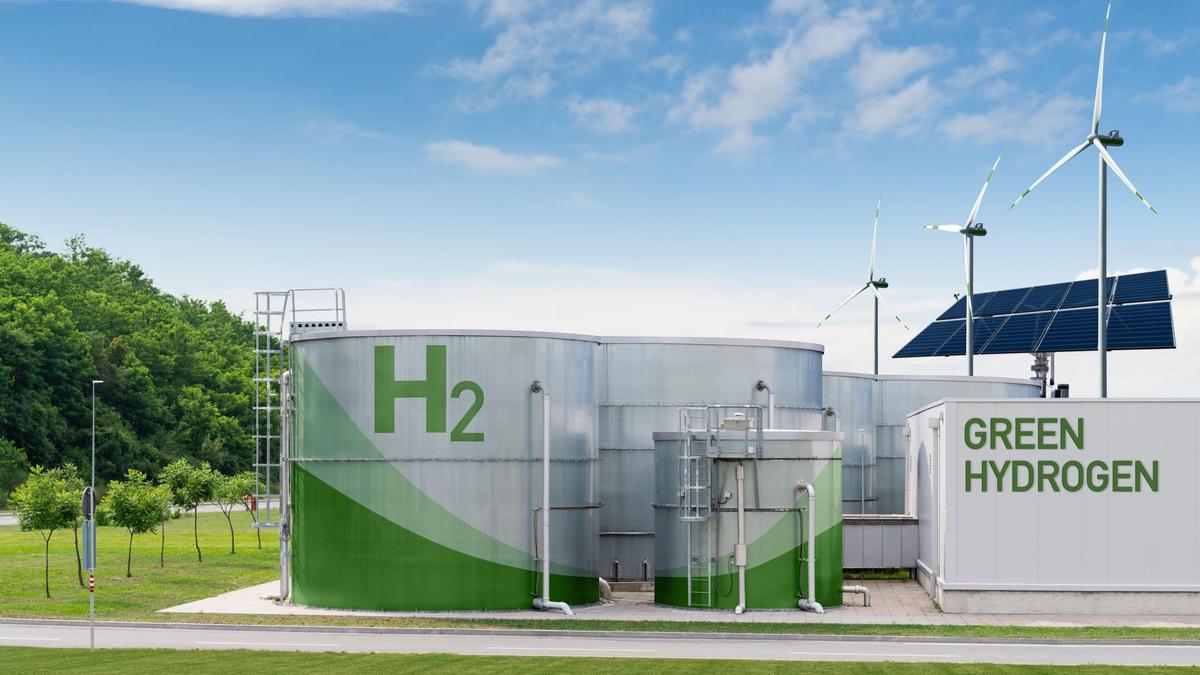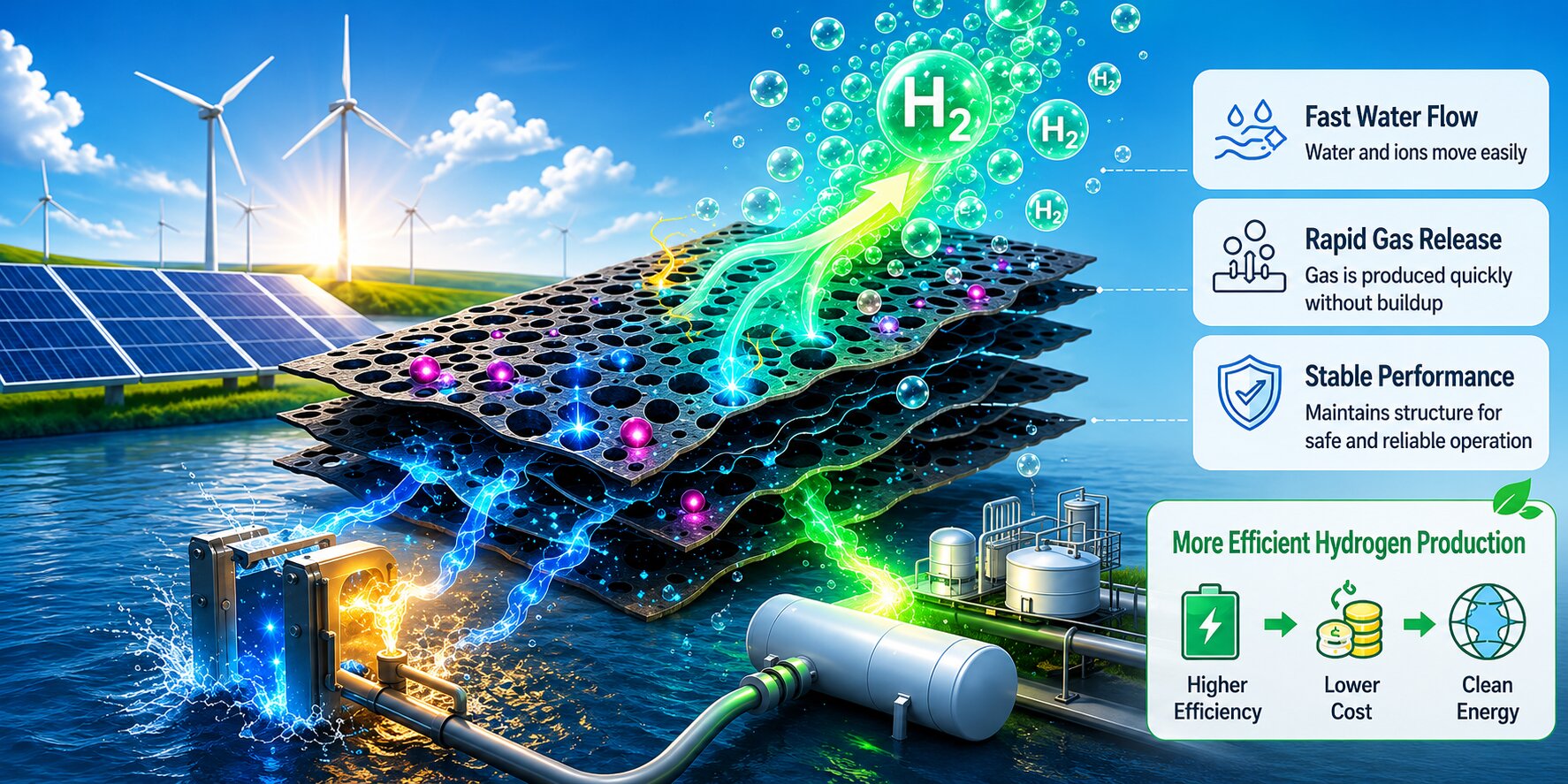
2D Mesoporous catalyst layer-based green hydrogen production technology (AI-generated image). Credit: KAIST
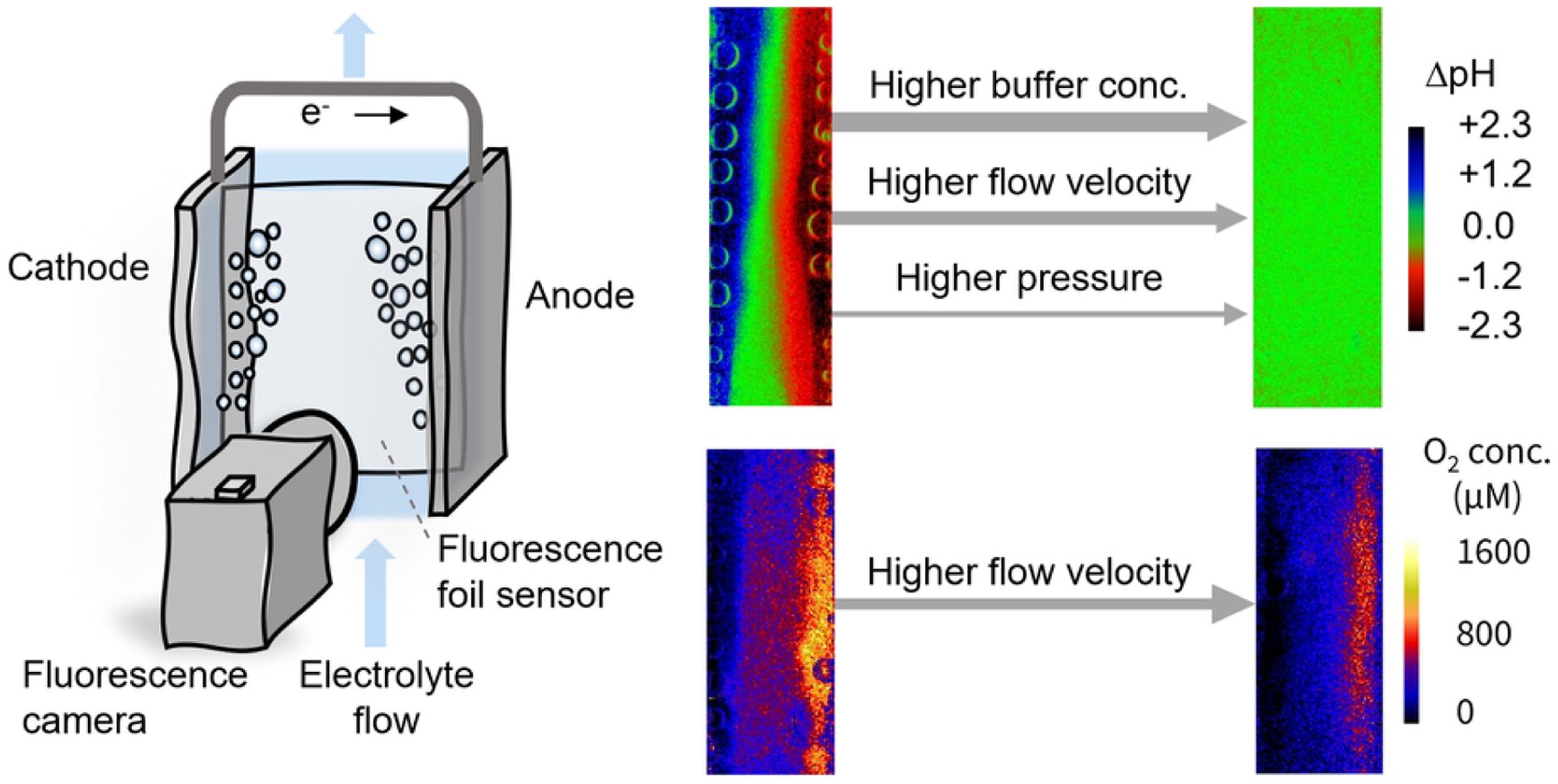
As the global transition toward carbon neutrality accelerates, "water electrolysis"—a technology that splits water electrically to produce clean hydrogen—is drawing significant attention. However, a major limitation has been the decline in efficiency caused by bubbles formed during the electrolysis process that block the pathways.
A domestic research team has resolved this challenge by developing an innovative technology that rapidly discharges bubbles and boosts hydrogen production efficiency, much like clearing an expressway through a heavily congested road. The findings were published in Joule.
A research team led by Professor Jinwoo Lee from the Department of Chemical and Biomolecular Engineering, in collaboration with a research team led by Dr. Sungjun Kim from KRICT and a research team led by Professor Jang Yong Lee from Konkuk University, has departed from the conventional method of simply increasing catalytic activity itself.
Instead, they have successfully secured both water electrolysis performance and stability simultaneously by newly designing a "pathway" inside the catalyst layer through which water and gas pass.