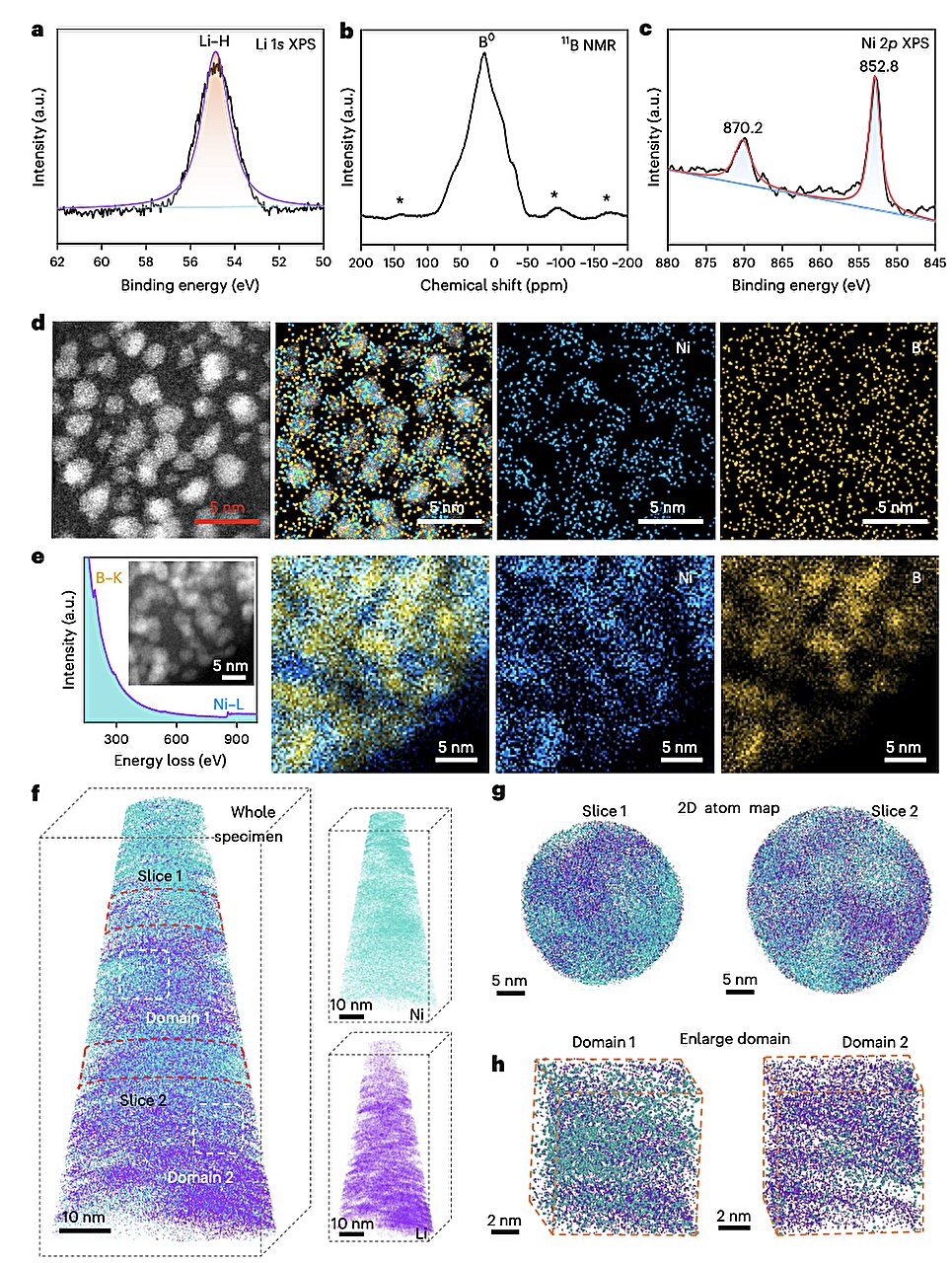
Structural and morphological characterization of the dehydrogenated sample. Credit: Nature Nanotechnology (2026). DOI: 10.1038/s41565-026-02150-z.
Energy engineers worldwide are working on various new technologies that could help to limit greenhouse gas emissions on Earth and address climate change. One proposed alternative to polluting fossil fuels, such as petrol, diesel and natural gas, is hydrogen.
Hydrogen is a clean fuel that can be used to power fuel cells, devices that directly convert the chemical energy of a fuel into electricity, without burning it. Hydrogen fuel cells could substitute combustion engines and could be particularly advantageous for the development of electric heavy-duty vehicles, such as buses, trucks and even trains.
Despite its potential, storing hydrogen safely and reliably has so far proved challenging. One approach to storing hydrogen entails the use of hydrogen carriers, materials that can absorb and release hydrogen. These materials could be used to temporarily store hydrogen and transport it to desired locations.
A material that can store remarkably high amounts of hydrogen is lithium borohydride (LiBH4). This material releases hydrogen via a process known as dehydrogenation, which results in the formation of boron and lithium hydride (LiH).