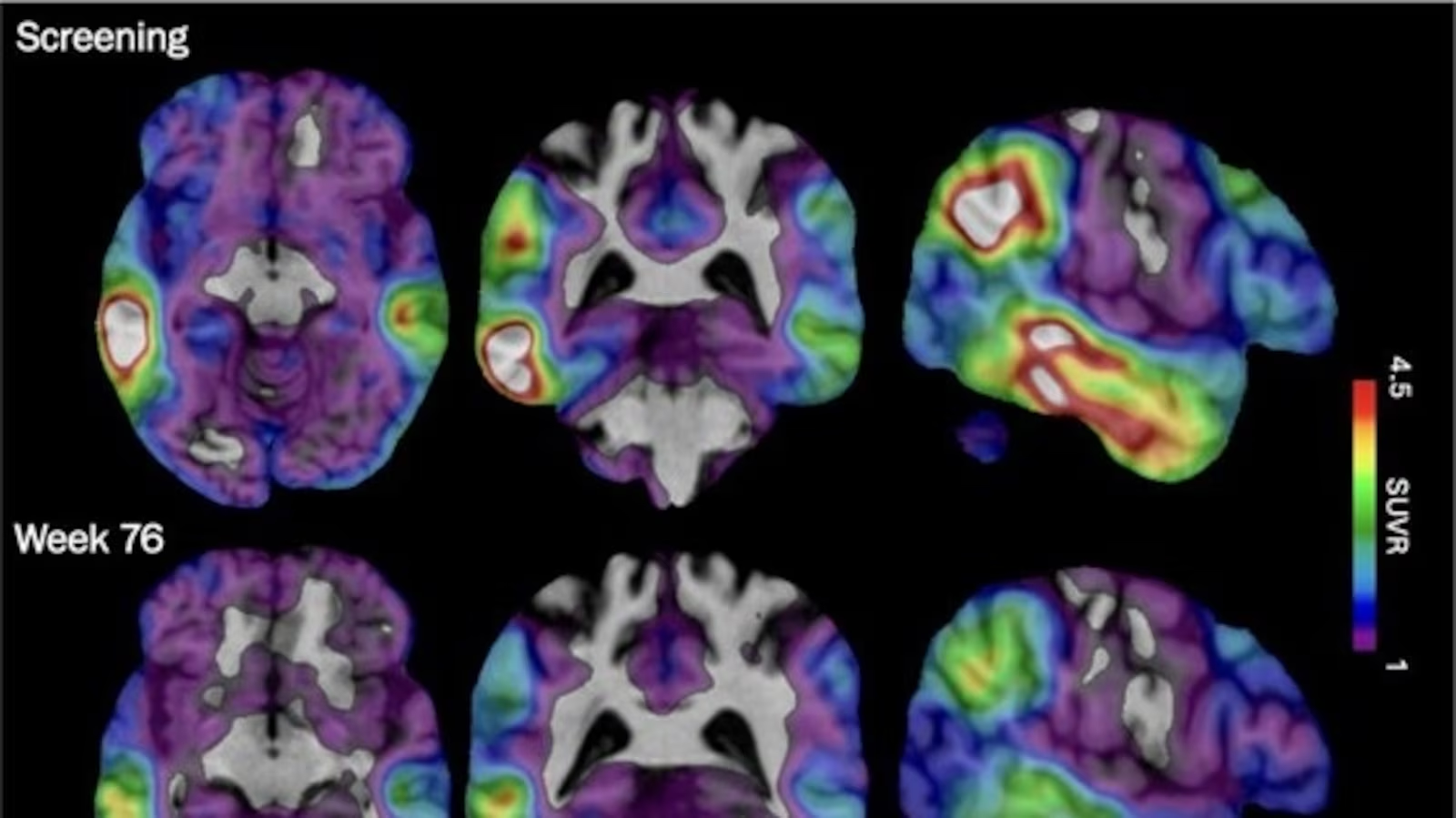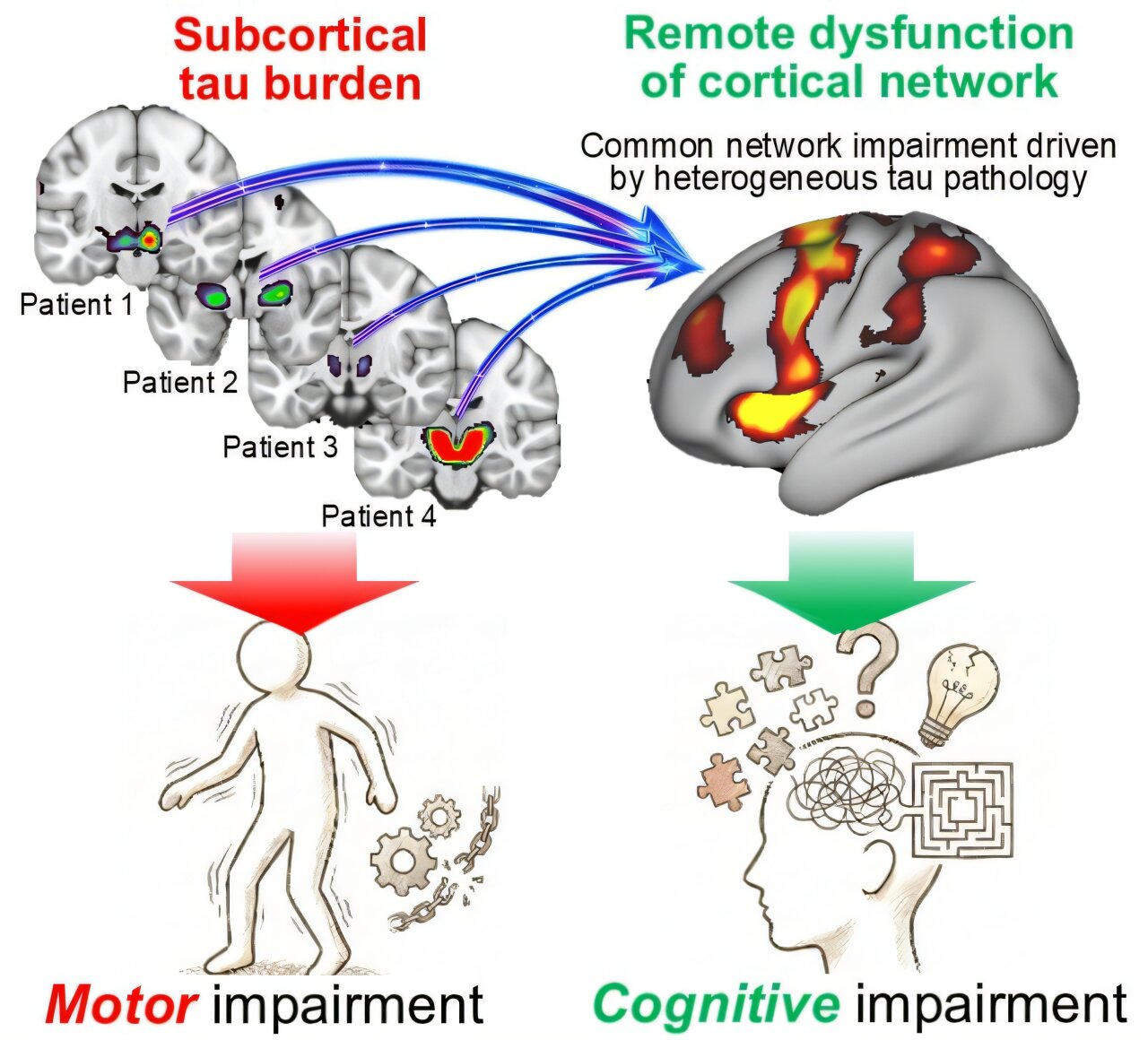
In progressive supranuclear palsy (PSP), tau protein accumulates mainly in deep brain regions, yet patients often experience cognitive and behavioral symptoms. Using brain network mapping, Hori et al. identified a shared neural circuit, termed the PSP-tau network, that links tau-affected regions to distant areas of the brain. Their findings suggest that tau pathology may contribute to symptoms not only at the sites where it accumulates, but also through its effects on connected brain networks. Credit: National Institutes for Quantum Science and Technology (QST)
Researchers at Japan's National Institutes for Quantum Science and Technology (QST) have found that tau buildup in progressive supranuclear palsy (PSP) may affect brain networks involved in thinking and behavior. The findings suggest that symptoms may arise not only from where tau builds up in the brain but also from how those affected areas are connected to distant brain regions.
The study was published online July 10, 2026, in Science Advances.
PSP is a rare neurodegenerative disease caused by the abnormal accumulation of tau, a protein associated with several forms of dementia. The disease often leads to falls, problems with eye movement, stiffness and cognitive or behavioral symptoms such as reduced attention and difficulty controlling emotions.