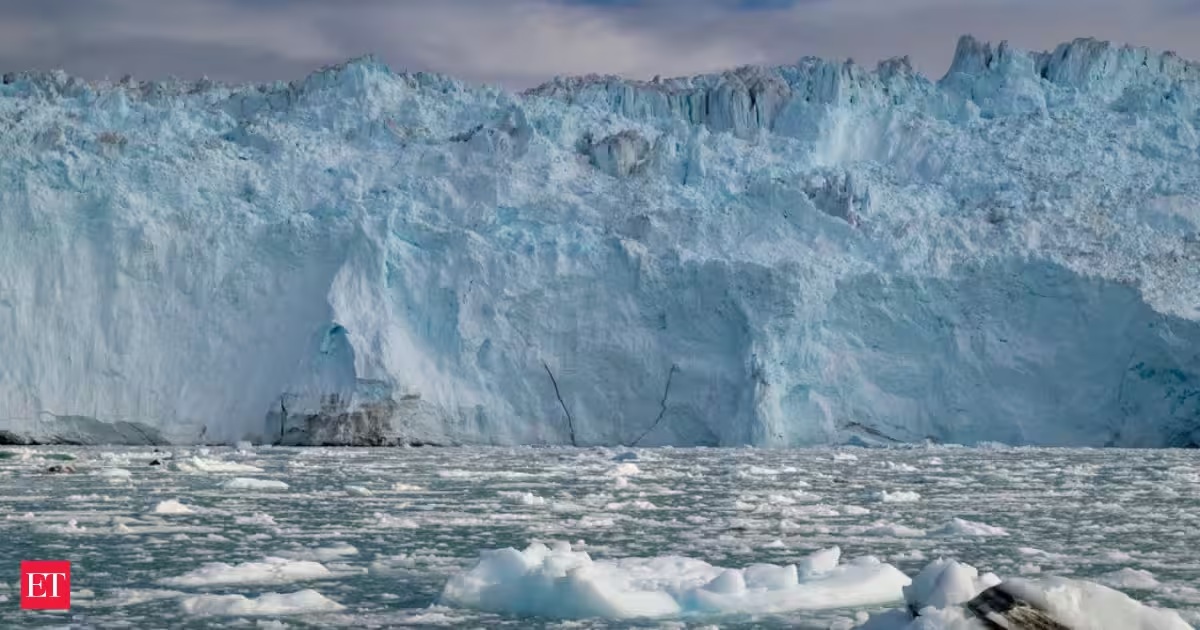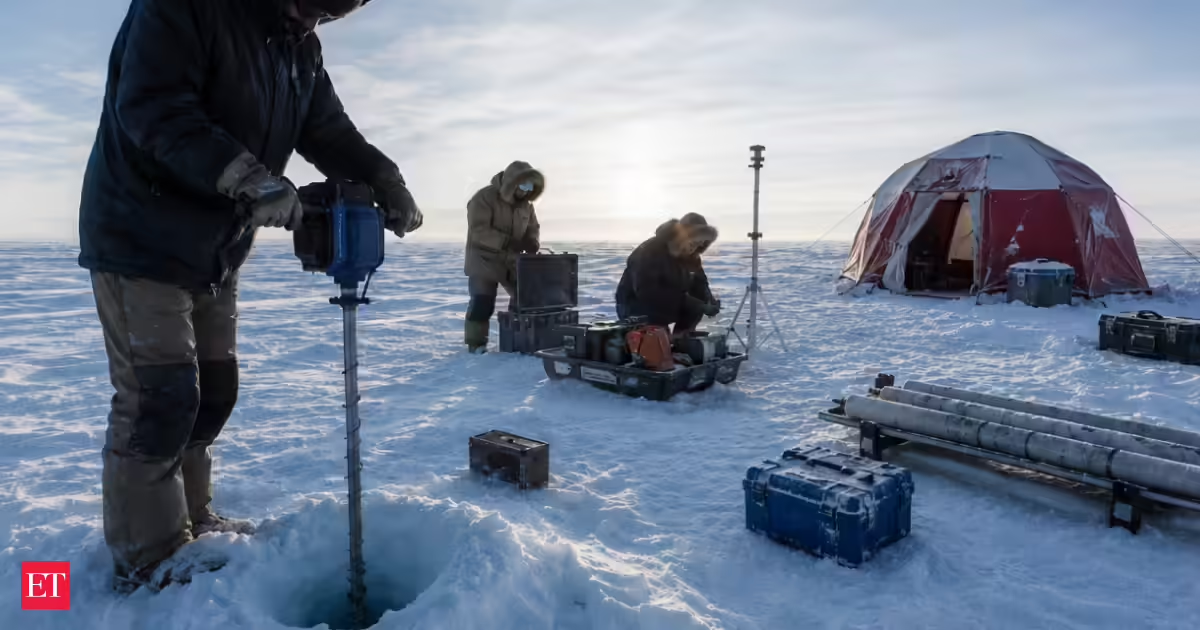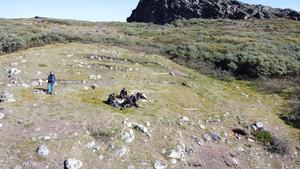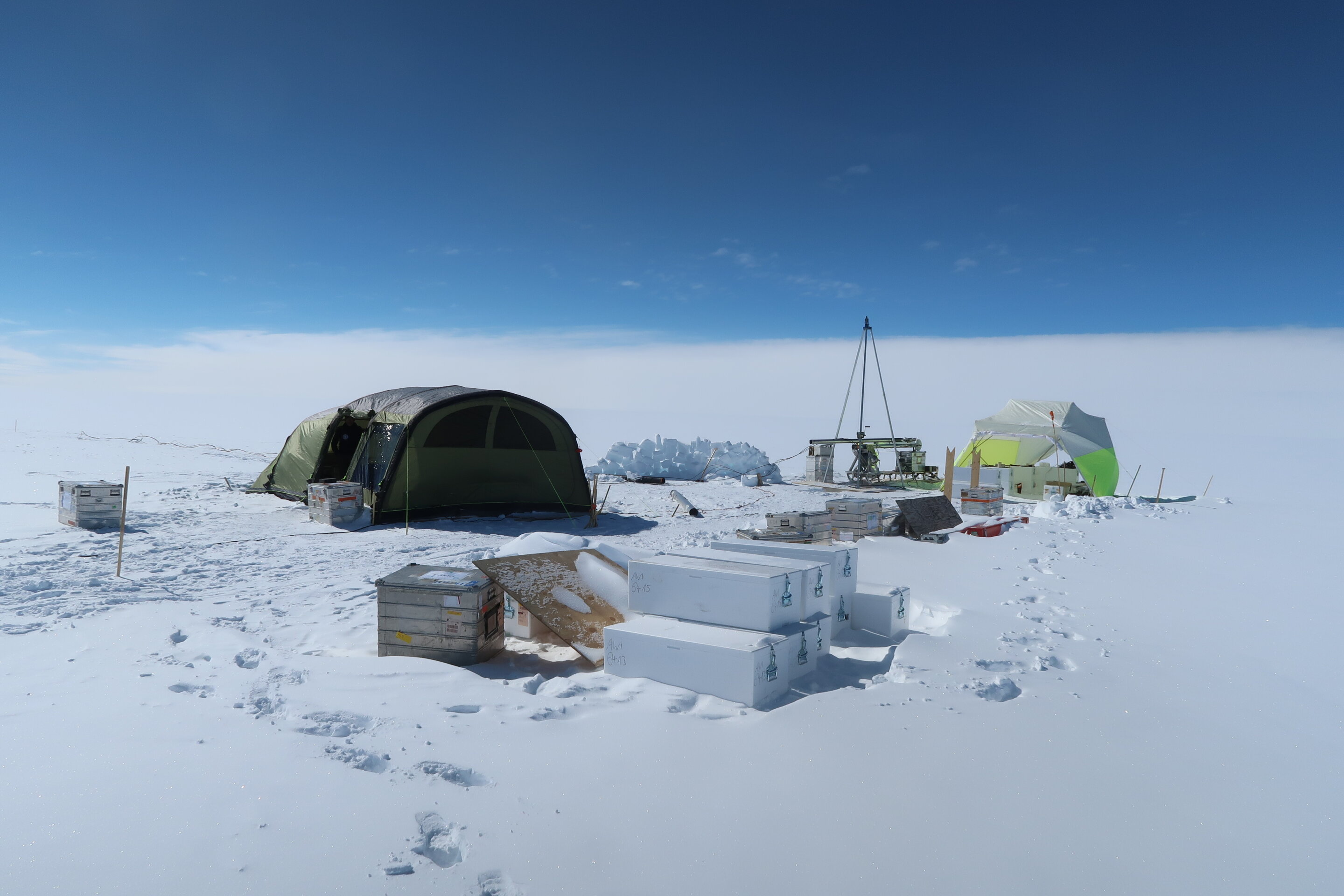
Researchers obtained up to 40-year-old air from compacted snow, called firn, on Greenland. Credit: Thomas Röckmann
An international team of researchers, including scientists from Utrecht University and the University of Maryland, has reconstructed the concentration of clumped isotopes of methane in air from the past for the first time. This provides new insights into how atmospheric methane concentrations have changed since the start of the industrial era, around 1850. For the study, the scientists used air that was roughly 40 years old, preserved in compacted snow (firn) in Greenland. The results were published in Science Advances.
Methane is the second most important greenhouse gas after CO2, responsible for around 30% of global warming to date. Atmospheric methane concentrations are rising, but it is not yet fully understood why.
Human fingerprint
The researchers' measurements and analyses showed that the concentration of clumped methane isotopes, rare methane molecules with two heavy atoms clustered together, has changed significantly over the past decades. At first, the researchers couldn't fully explain this shift, but after running model simulations of the atmosphere spanning the past 1,000 years, they were able to pinpoint a cause.