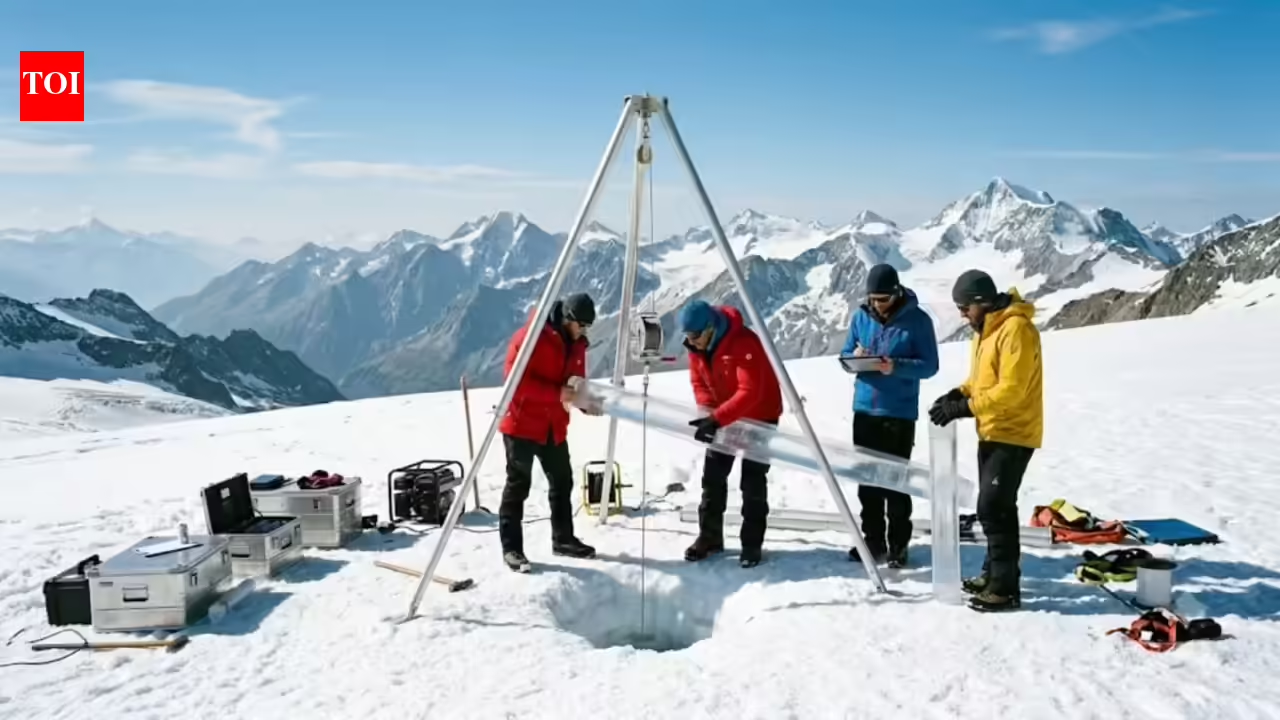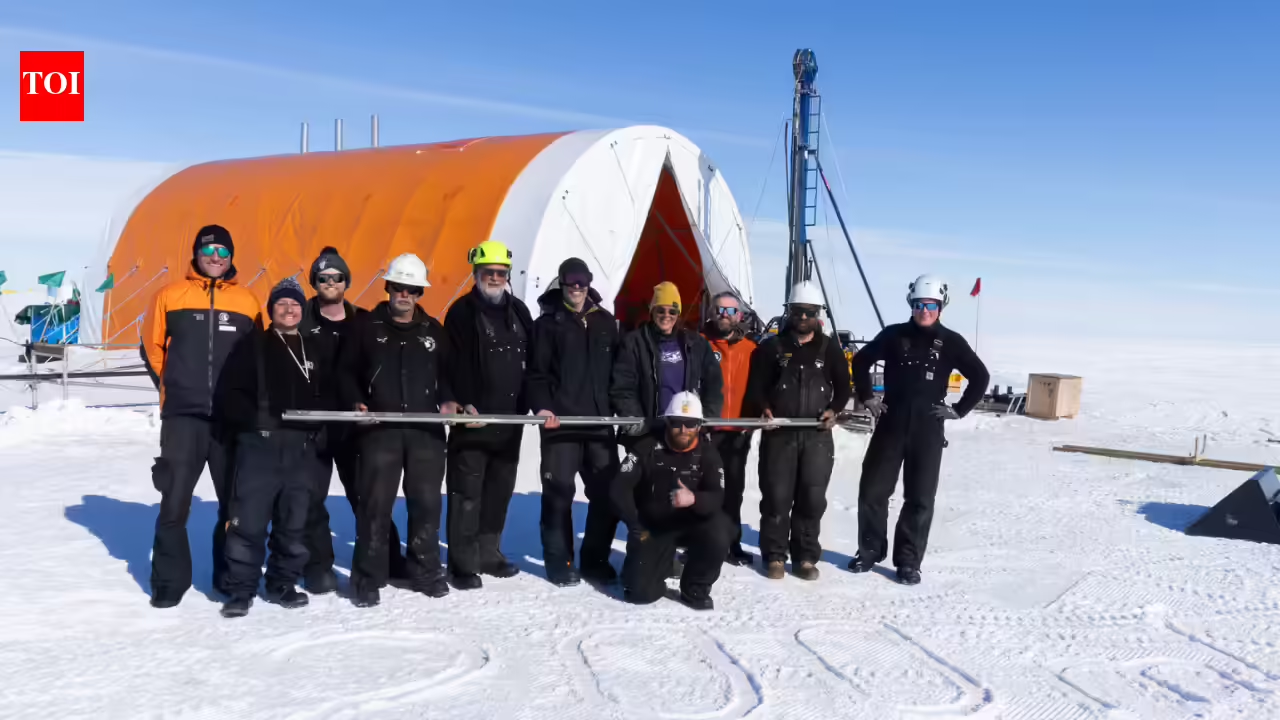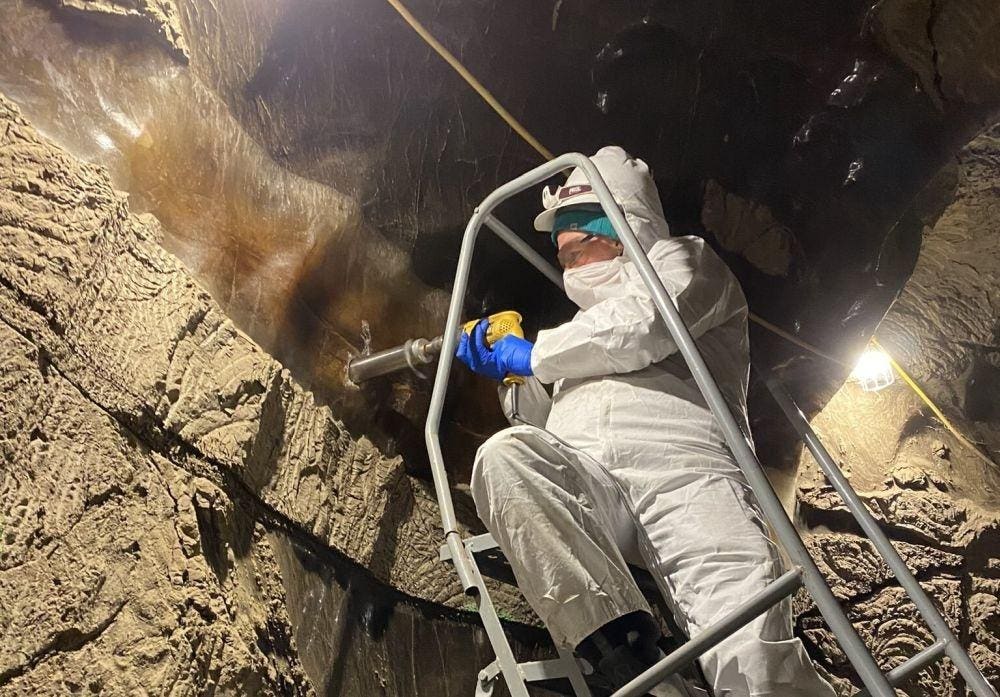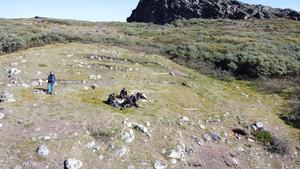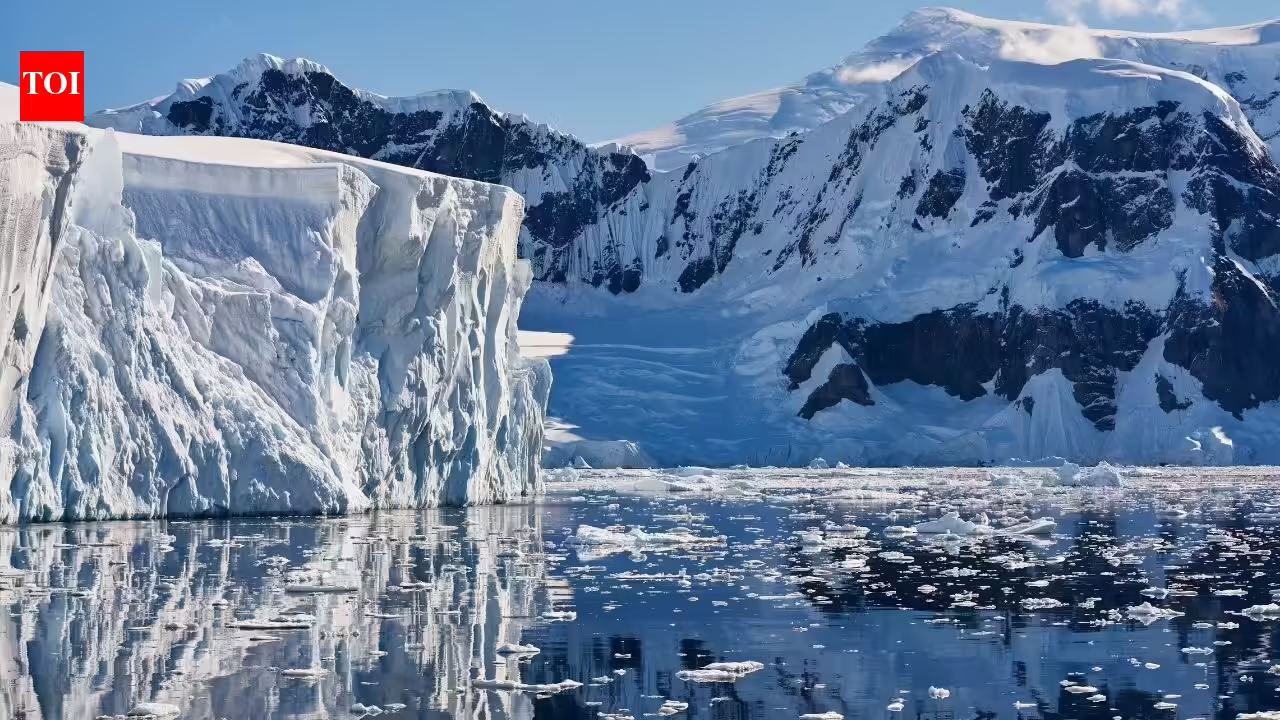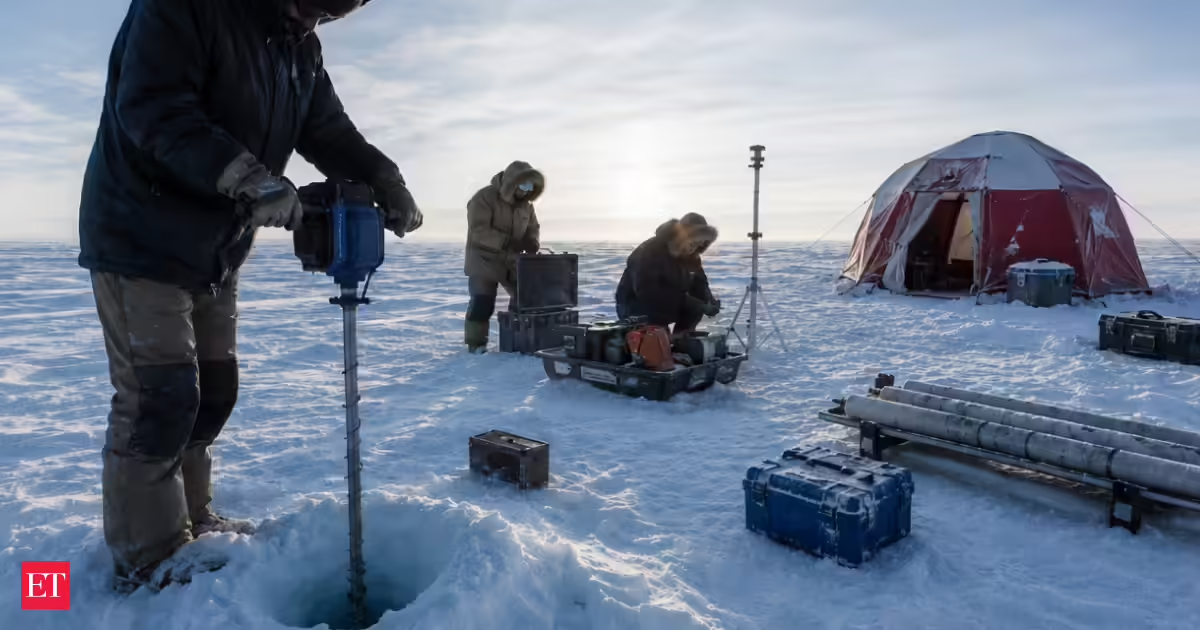
Sometimes the most important scientific discoveries aren’t made in a lab. They are made in a long-forgotten box that sat in a freezer for more than 50 years.And that’s what happened with a tube of frozen dirt pulled out of Greenland by the US Army in 1966. According to a study published in the Proceedings of the National Academy of Sciences (PNAS), inside that soil sample was something nobody saw coming: preserved leaves, twigs and moss from a Greenland that had no ice at all.A Cold War project with an unexpected payoffBack in the 1960s, the US military built Camp Century, a base tunneled right into the Greenland ice sheet. On paper, it was a polar research station. But it also doubled as cover for Project Iceworm, a secret Cold War plan to hide nuclear missiles under the ice, according to a University at Buffalo report. The plan never materialized. But the science team there did work that mattered a whole lot more decades later.They drilled a core of ice almost 1.4 kilometers deep, almost 4,560 feet, to land under the ice, at a site about 120 kilometers from Greenland’s coast. As the drill reached bottom, the team pulled up about 15 feet of frozen dirt and rock, the PNAS study says. At the time, hardly anybody probably thought twice about it. It was put away and pretty much forgotten.Lost, then found again, decades laterThe sample spent years moving between storage facilities. According to the University at Buffalo report, it was first stored frozen at the university starting in 1966, then moved to Denmark’s Niels Bohr Institute in the mid-1990s, where it was stored in unmarked boxes, essentially lost to science, for another 20 years.Fossil plant fragments, including twigs, moss, and lichen sclerotia, recovered from sediment beneath Camp Century's ice core. Image Credits: Christ et al., PNAS 118 (13) e2021442118 (2021)Its rediscovery was only a matter of luck. In 2017, as researchers in Copenhagen were moving their collection of ice cores between storage sites, they spotted the old Camp Century boxes. According to the SciTechDaily report on the University of Copenhagen's findings, team leader Dorthe Dahl-Jensen said the curator had "a feeling there was gold locked in that ice."He was correct. In 2019, geologist Andrew Christ of the University of Vermont examined the sediment under a microscope and found twigs and leaves, not just sand and rock.What the leaves were actually telling scientistsThis wasn't some curiosity for a museum shelf. It was direct physical evidence that this part of Greenland had once been ice-free and covered with plants sometime within the last few million years.The PNAS study says the sediment contained fossil leaves, twigs and mossy plant remains from Camp Century, and that the site had been ice-free at least once within the last million years. The authors used a suite of advanced analyses on the sediment and the waxy coating of leaves to show the landscape was once vegetated, not barren rock. Other finds included liverwort plants and a species called woolly feather moss, strong evidence that real vegetation, not just sparse tundra scrub, once grew where mile-deep ice now lies.Researchers used isotope dating methods that were not available in 1966 to determine the timeline. The same study also found that the ice sheet at this location melted away and then reformed at least once in the past one million years or so.Why this matters for a warming worldThis is not a mere tale of old dirt. It’s a warning sign.The National Snow and Ice Data Centre (NSIDC) says the Greenland Ice Sheet contains enough frozen water to raise global sea levels by about 23 feet if it ever melts completely. How stable that ice is, and how much warming it would take to seriously destabilize it, has long been debated by scientists.US Army Corps of Engineers pulling up a section of the Camp Century ice core, which reached 4,560 feet deep. Image Credits: U.S. Army Corps of EngineersElizabeth Thomas, one of the study's researchers, explained the find's significance to the University at Buffalo. According to the report, her chemical analysis of the plant material was key to confirming the site had been ice-free within roughly the last million years, a shorter timeline than many scientists had expected. Co-author Andrew Christ said in the same report that ice sheets generally crush and destroy everything in their path, so finding delicate, intact plant structures meant the ice had really been gone from this spot, not just thinner.The bigger pictureFor readers interested in melting glaciers and rising coastlines, this discovery provides physical evidence relevant to that debate. It hints that the Greenland ice sheet isn’t quite as permanent as it appears on a map. It disappeared before, without the extreme, human-driven warming happening today, and scientists say it could plausibly disappear again if warming continues.It's an unusual time capsule: a box of frozen mud drilled up on a secret military mission, lost in storage for half a century and then accidentally rediscovered. It has become one of the more interesting pieces of evidence scientists have about how fragile the Greenland ice sheet really is.Not bad for a sample no one remembered they owned.
In 1966, the U.S. Army drilled through 1.4 km of Greenland ice; decades later, forgotten soil from the core revealed preserved leaves and twigs
A 1966 U.S. Army drilling expedition in Greenland unearthed preserved leaves and twigs, indicating that the region was once ice-free. This discovery raises concerns about the stability of the Greenland Ice Sheet in the context of climate change.
862 words~4 min read