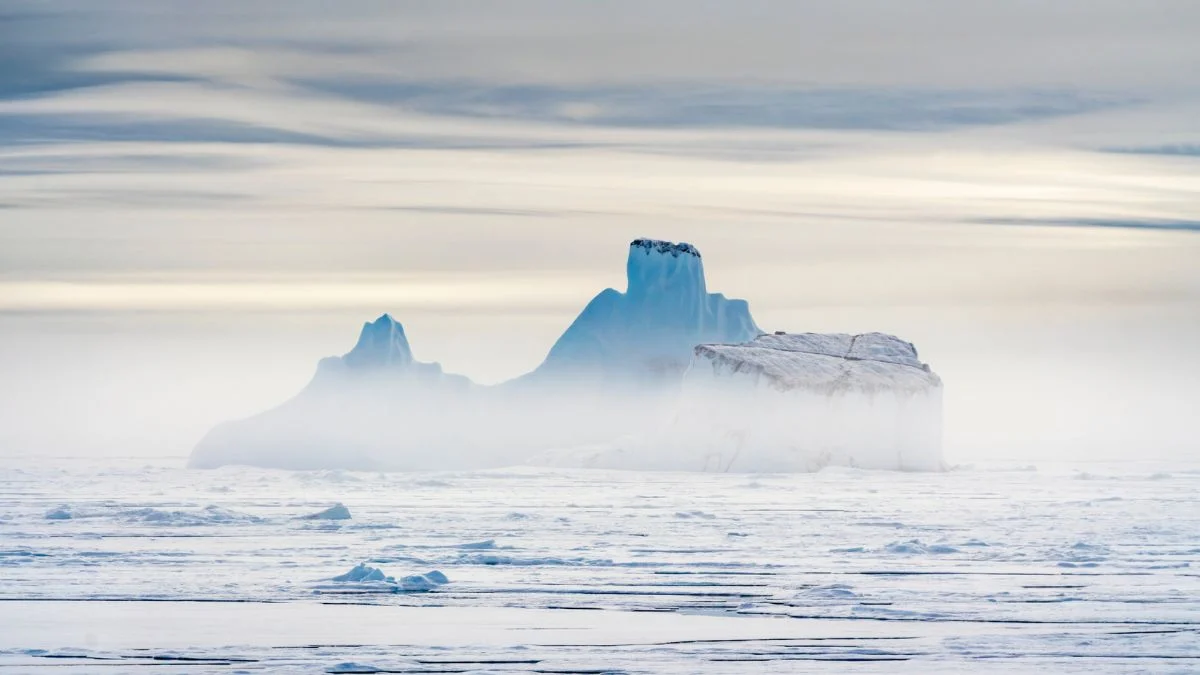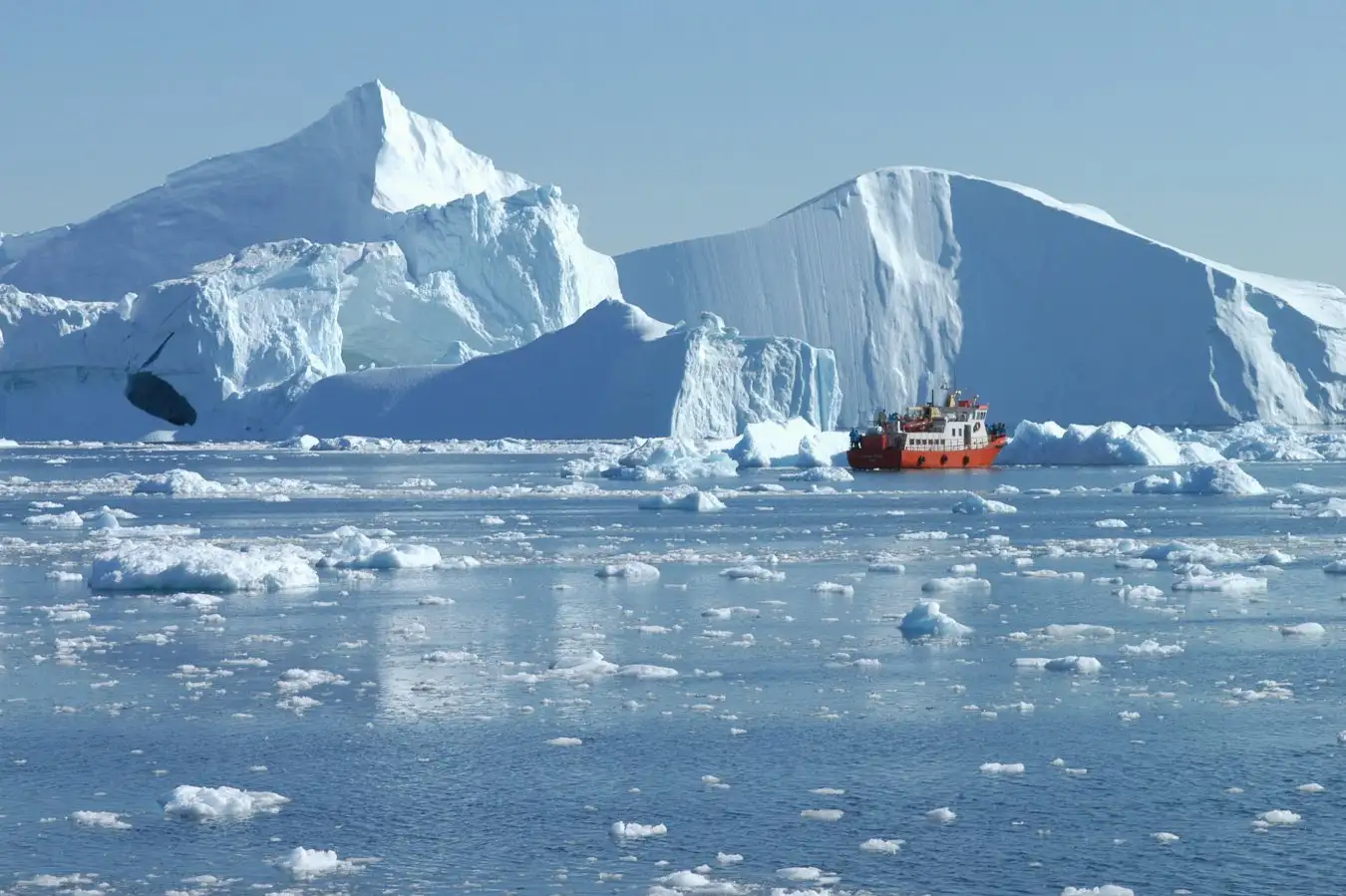
Melting glaciers, like the one in Ilulissat Icefjord, could release vast stores of methaneGerald Wetzel, Karlsruhe Institute of Technology, Germany
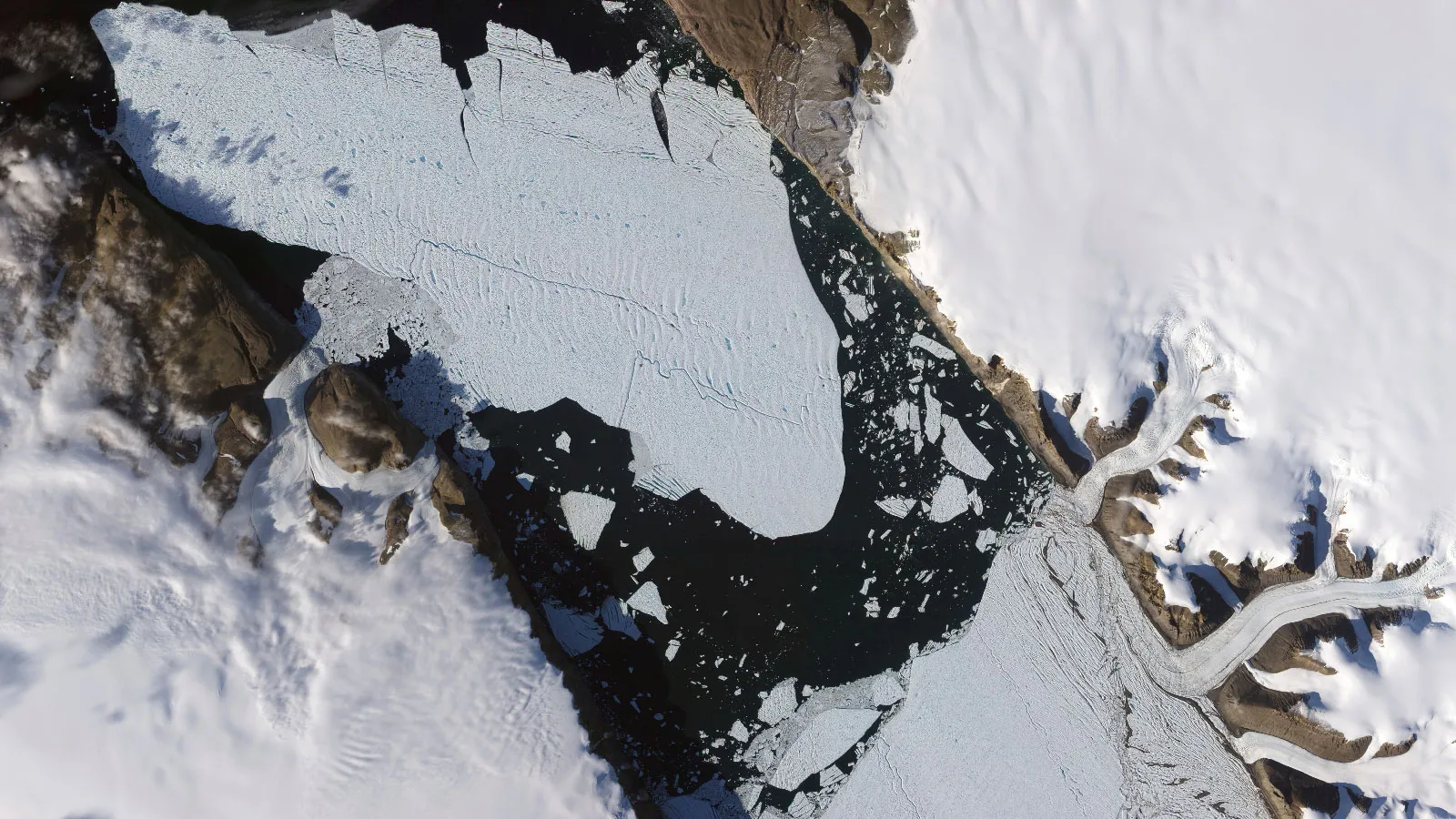
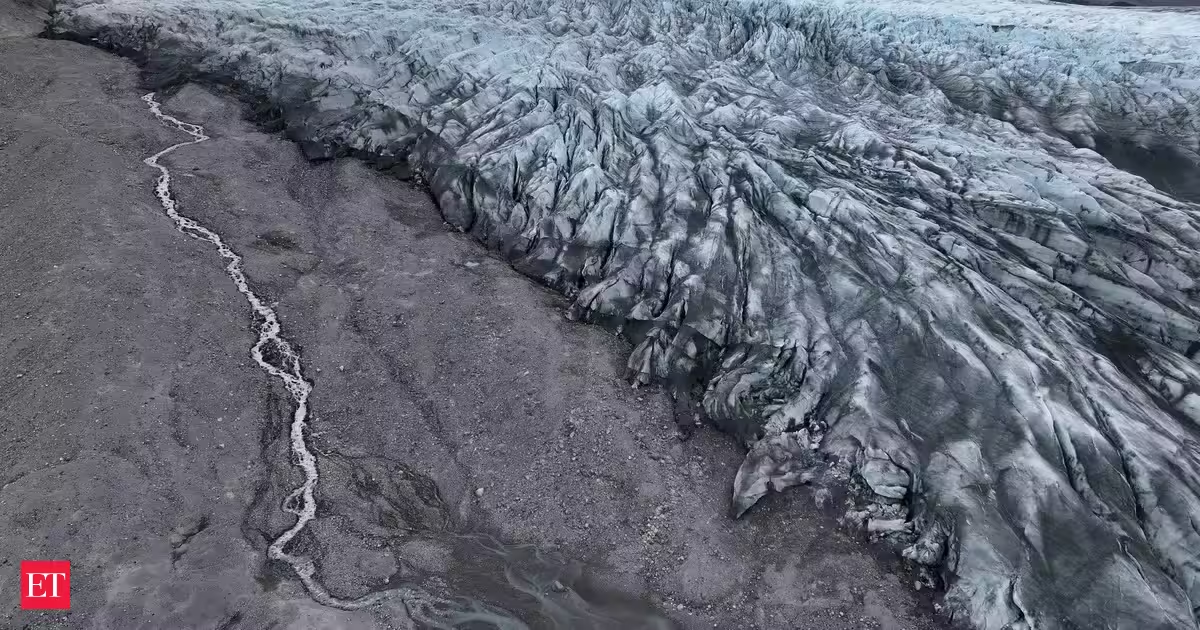
Meltwater flushed frozen methane hydrates out of the sediment at the edge of the Greenland ice sheet after the last glacial maximum, which occurred 29,000 to 19,000 years ago, raising fears that melting glaciers could soon release huge amounts of this planet-warming gas.
Methane hydrates form when gas molecules are trapped in a cage of water molecules, freezing into an ice-like substance. They are sometimes called “fire ice” because they can burn despite being 85 per cent water.
They form under the high pressure and low temperature found in sediments beneath the ocean, permafrost or glaciers. Some estimates suggest methane hydrates contain twice as much carbon as all coal, oil and conventional gas on Earth.
But global warming is disrupting some of the cold, pressurised conditions in which methane hydrates exist. For example, some scientists think a mysterious 50-metre-deep crater discovered in the Russian Arctic in 2014 was caused when permafrost thaw suddenly relieved the pressure on a methane hydrate. This would have released it in a “violent physical explosion”, wrote the authors of a 2024 study.