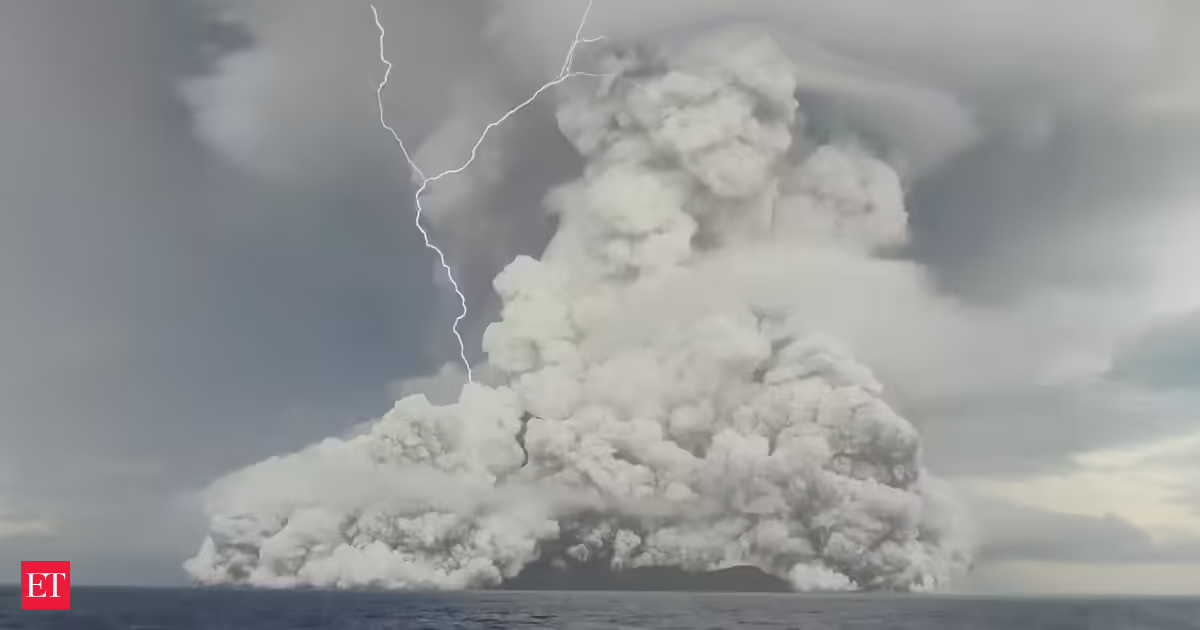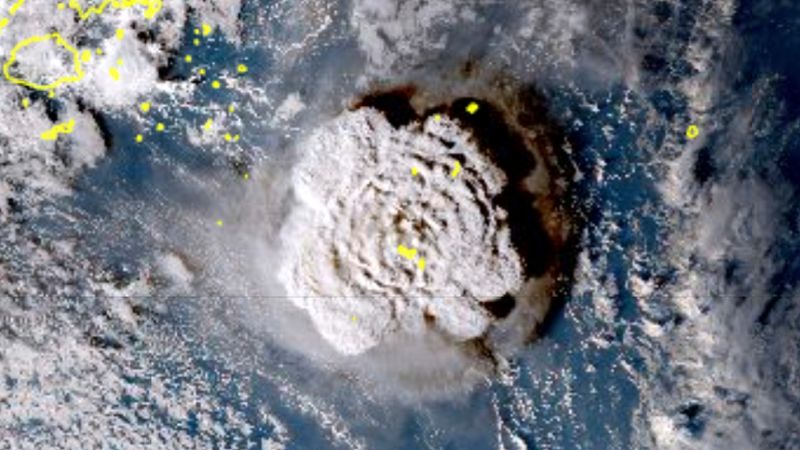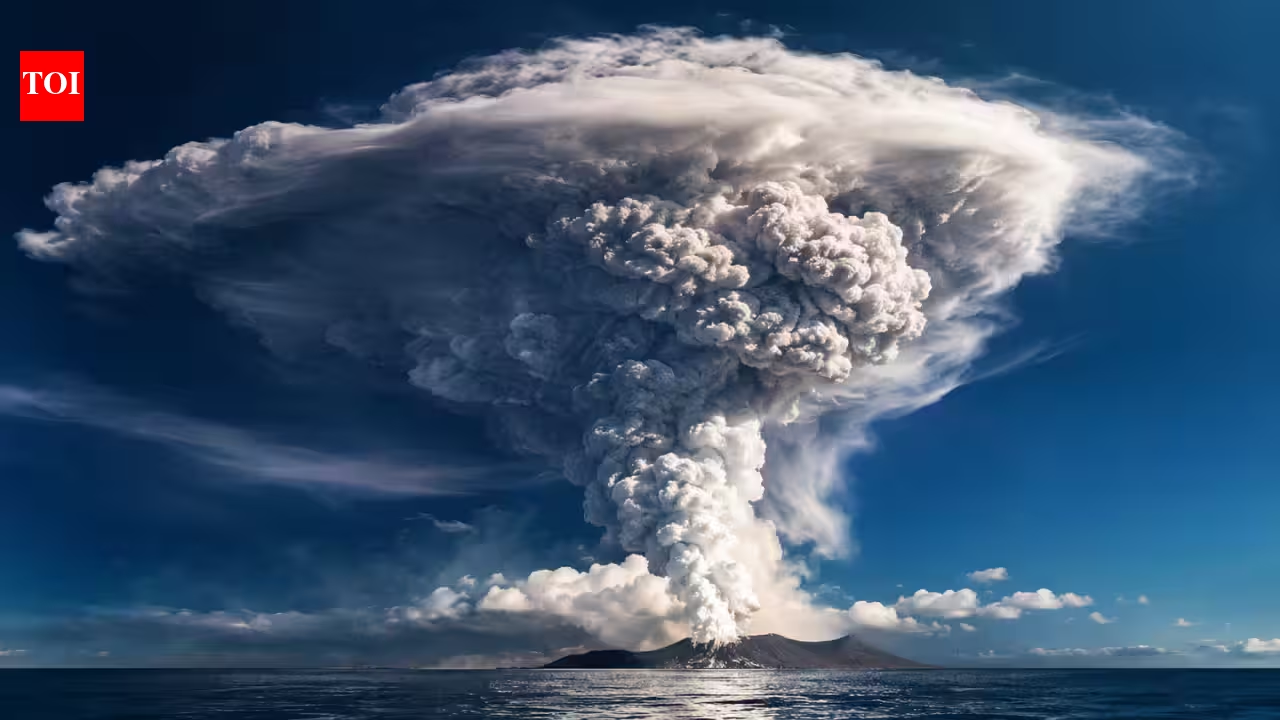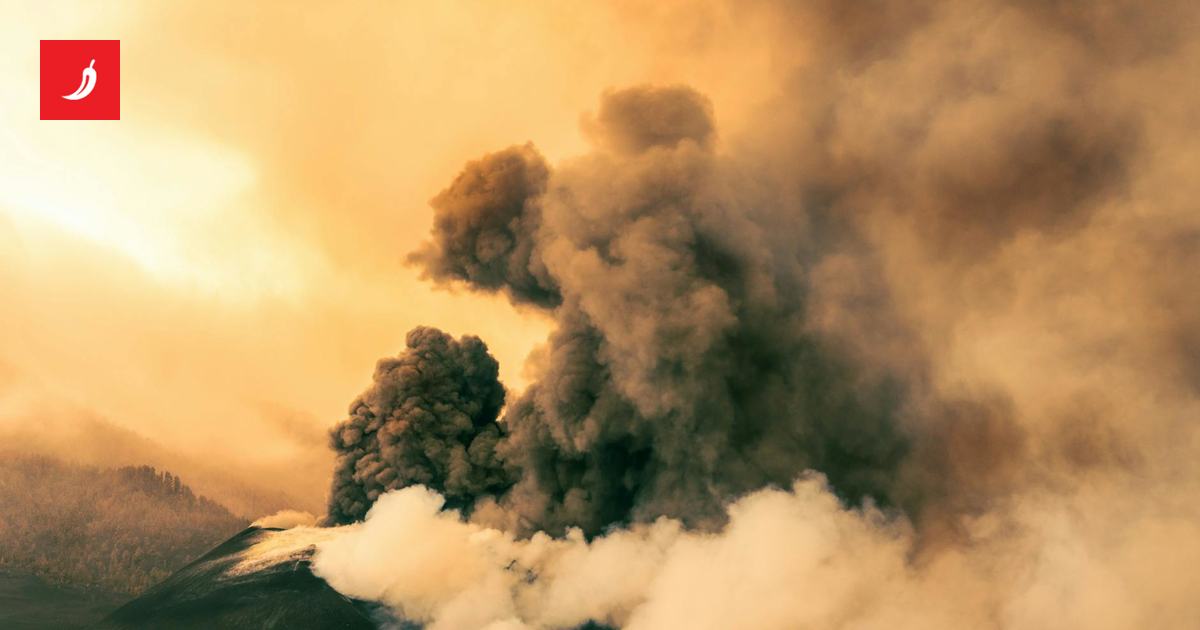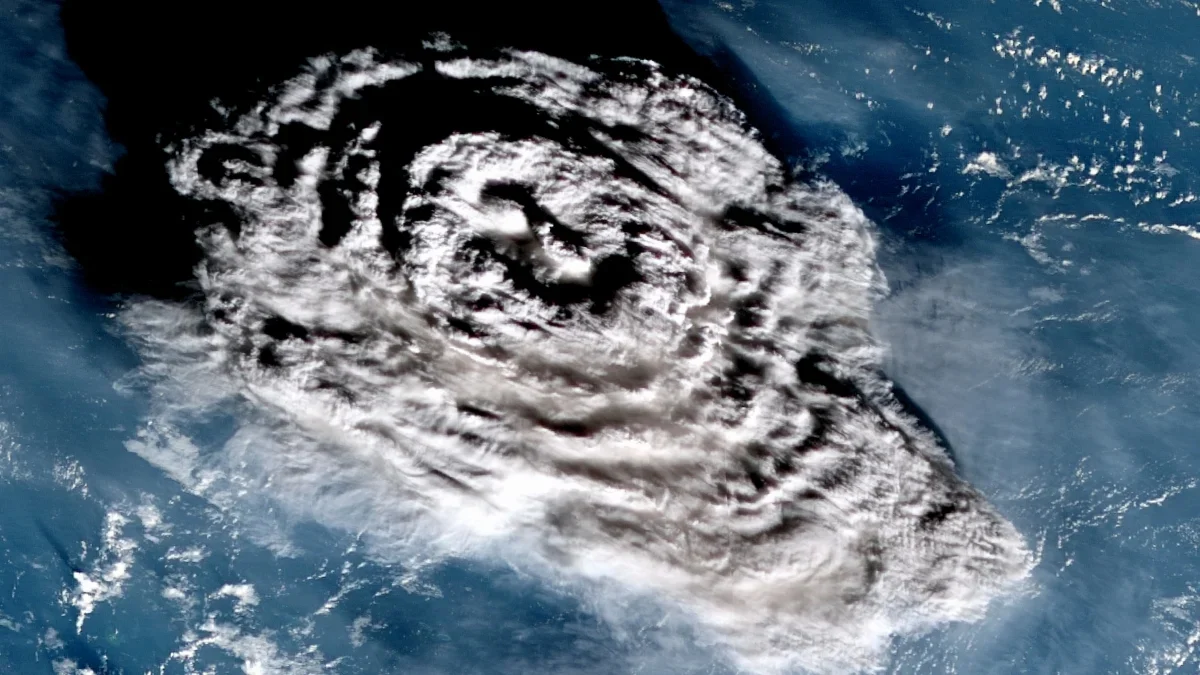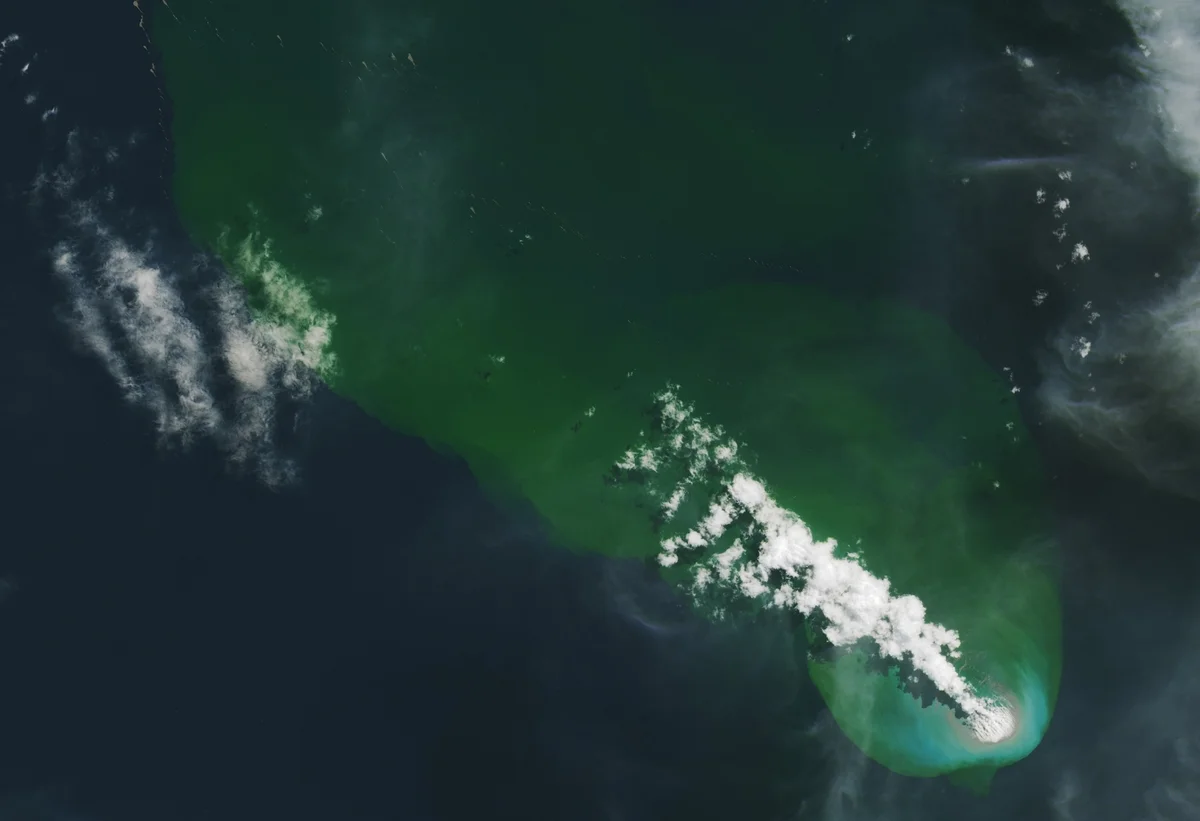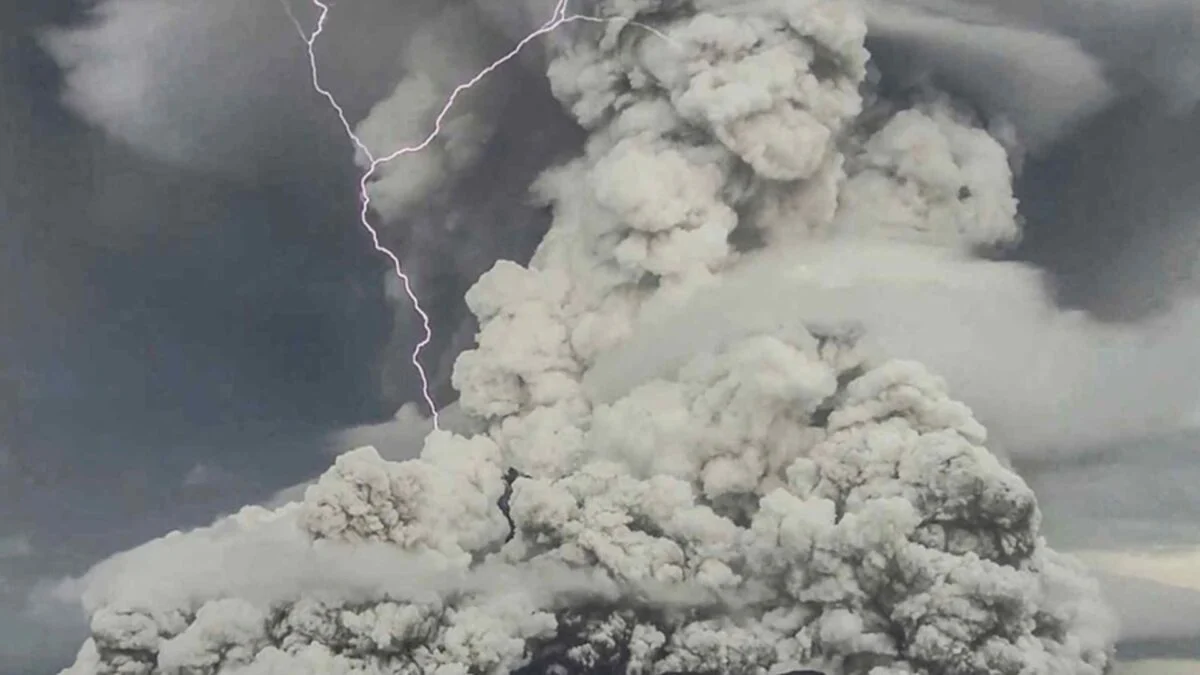
When the Hunga Tonga–Hunga Ha’apa submarine volcano erupted in 2022, it spewed roughly 2.9 billion tons of ash and gas into the air above the South Pacific. According to a new study, the eruption also cleaned up some of its own mess. The researchers estimate that the eruption released about 330 gigagrams of methane, which is roughly equivalent to the annual emissions produced by more than 2 million cows. But their findings, published in Nature Communications on Thursday, show that chemical reactions within the eruption plume destroyed about 900 megagrams of methane per day—roughly equivalent to the daily emissions from 2 million cows. As if that wasn’t surprising enough, they also found that the cloud kept removing its own methane pollution for 10 days as it drifted toward South America. “It is known that volcanoes emit methane during eruptions, but until now it was not known that volcanic ash is also capable of partially cleaning up this pollution,” first author Maarten van Herpen of the Dutch organization Acacia Impact Innovation BV said in a statement. How volcanic eruptions emit and destroy methane Methane is a potent greenhouse gas that traps about 80 times more heat than CO2 over a 20-year period. Scientists believe it currently drives about 30% of global warming. Fortunately, methane breaks down in the atmosphere relatively quickly, typically within 10 years.
A New Way to Fight Climate Change Emerges From Erupting Volcano
A volcanic eruption in the South Pacific cleaned up its own methane pollution, offering a potential mechanism for removing this potent greenhouse gas from the atmosphere.
645 words~3 min read