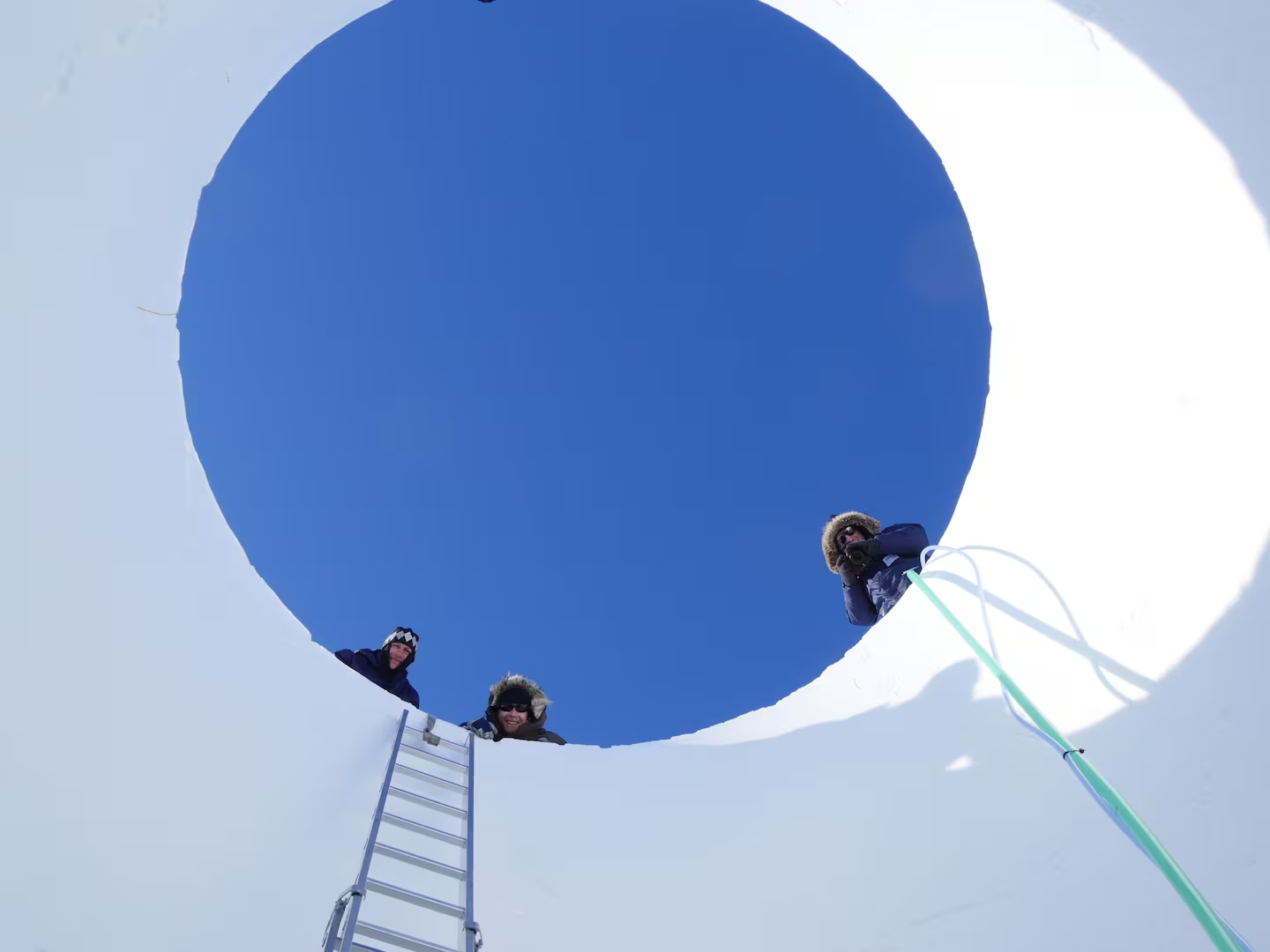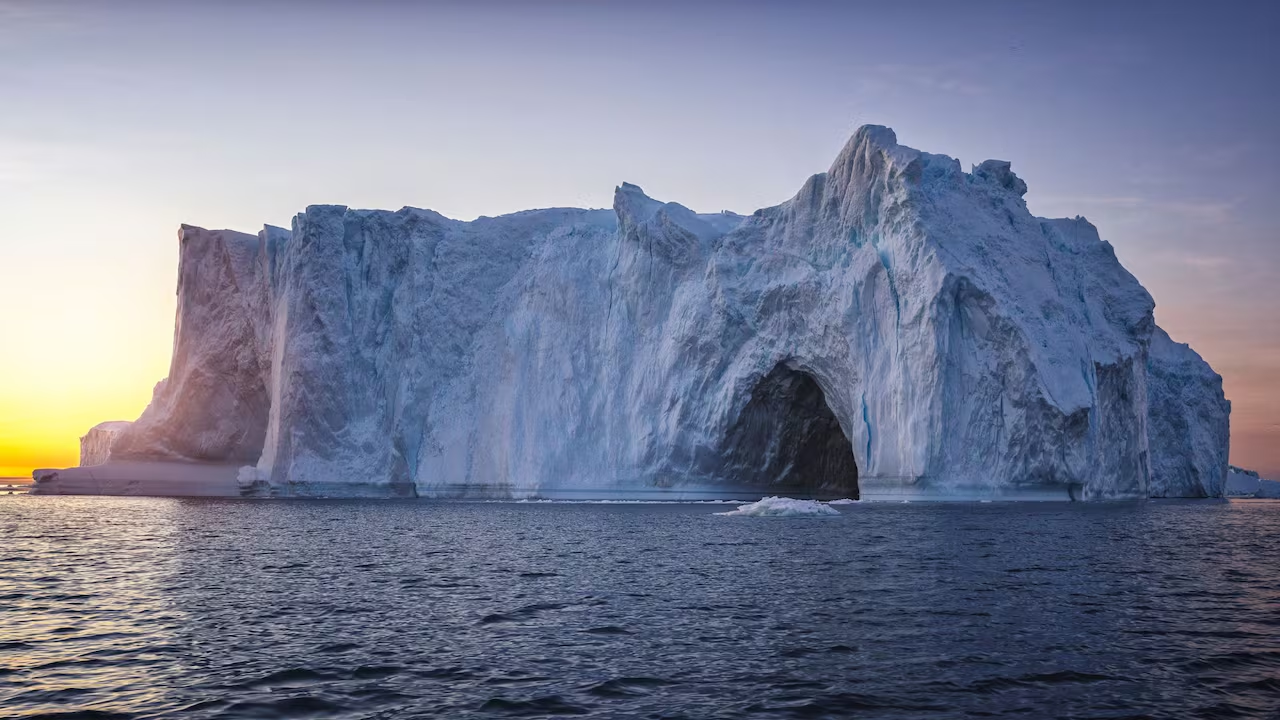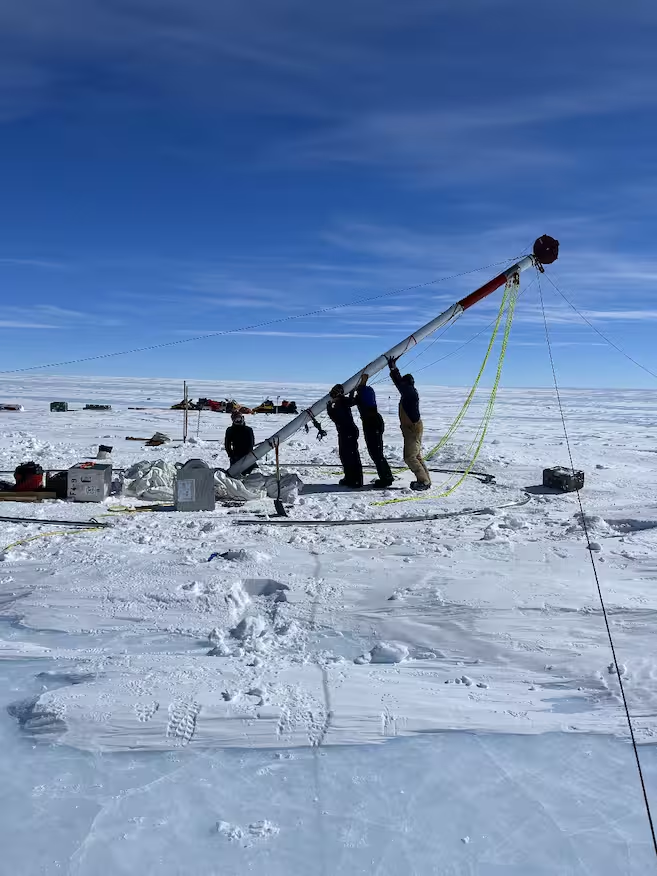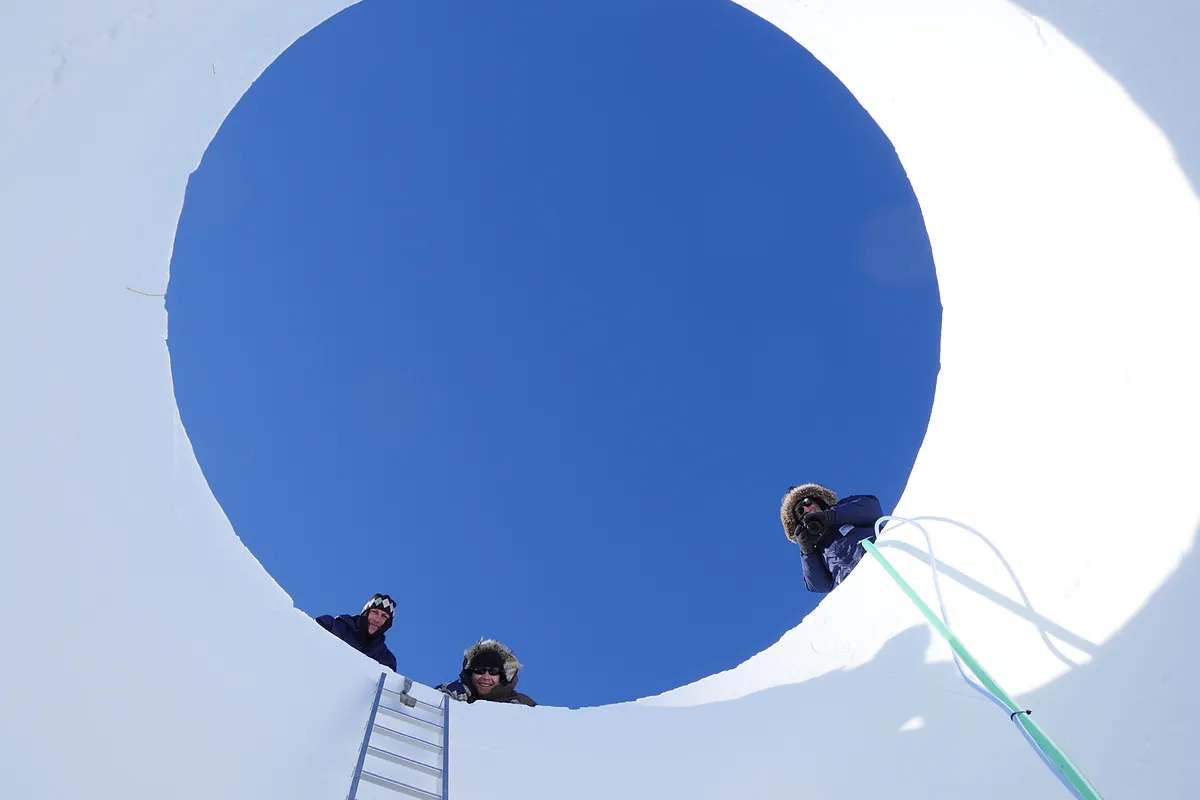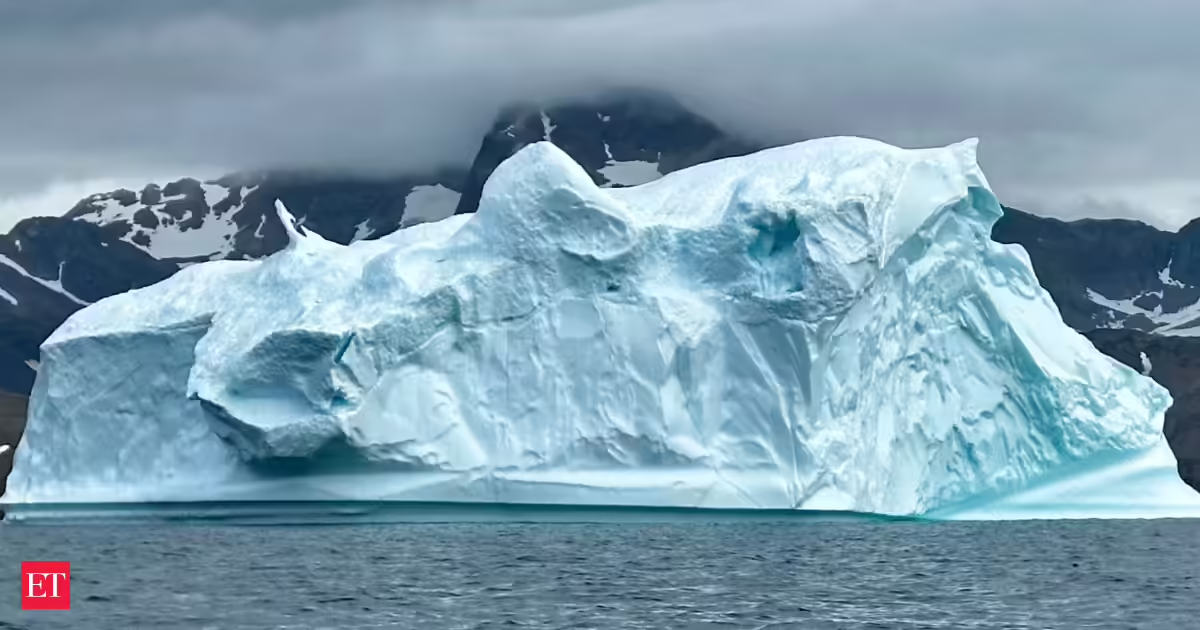
A Greenland ice core reads back almost 12,000 years of mercury fallout; humans were leaving traces thousands of years before the first factoriesSynopsisGreenland's ice sheet reveals a 12,000-year mercury record, showing human contamination far predates industrial eras. Early Bronze Age smelting and later widespread deforestation initiated this pollution. Millennial-scale increases followed, accelerating dramatically from the 13th century, with Gold Rush operations causing significant atmospheric spikes. This historical data challenges current emission models.Greenland's ice holds a record of mercury pollution spanning around 12,000 years. Image Credits: PexelsDeep under the Greenland ice sheet lies a frozen record of everything the atmosphere has absorbed almost over the last 12,000 years, and scientists just read it for mercury. What they found is a far longer, far darker story of human contamination than anyone had ever tracked.According to a study published in Science Advances, researchers analyzed an ice core from the East Greenland Ice Core Project (EGRIP), which was drilled in the Northeast Greenland Ice Stream. The most detailed such record ever created: the core-trapped mercury concentrations for the entire Holocene at a resolution of only 4-10 years per sample. Mercury is released into the atmosphere mainly as a gas, travels for months, and ultimately settles in the polar snowpack, where it is trapped in the ice. That's what makes ice cores such powerful archives.Volcanoes, climate shifts, and human handsThe Science Advances researchers found three forces that drove Greenlandic mercury build-up over the Holocene: volcanic eruptions, climate excursions, and human activity. Mercury spikes were short and abrupt over the 12,000-year record and coincided with major volcanic eruptions, including the 1912 Novarupta eruption in Alaska, the 1783 Laki eruption in Iceland, and the 1257 Samalas eruption in Indonesia. There were also effects of climate change. The researchers found that a warming anomaly approximately 4,200 years ago almost doubled the atmospheric levels of bromine, which enhanced the oxidation and deposition of mercury onto the ice sheet. But when the scientists simulated the entire chemistry, the climate alone could account for about half of the rise in mercury during that time, suggesting another source: humans.The mercury record over the Holocene as measured from the EGRIP ice core. Image Credits: Gao et al. / Science Advances (2026)The imprint of the Bronze Age on GreenlandA study in Science Advances identified a major increase in mercury accumulation beginning about 4,200 years ago, coinciding with the transition from the Neolithic to the Bronze Age civilization, around 2300 to 2200 BCE. Copper and tin smelting at the time emitted mercury from impurities in sulfide ores, and widespread deforestation associated with agricultural expansion contributed to atmospheric mercury levels. This, the researchers suggest, may be the earliest known human footprint on Greenlandic mercury cycling and predates known deliberate mercury mining by about 1,000 years.Two thousand years of continuous increaseThe study proposes that mercury accumulation in the ice began a sustained millennial-scale increase around 1000 BCE, following the proliferation of early applications of mercury, such as cinnabar smelting around 400 BCE and mercury gilding in Europe and China from 500 to 300 BCE. They identified a series of consecutive change points indicating accelerating increases in mercury since 254 CE, without any intervening decreases. This pattern is consistent with increasing and compounding human emissions over centuries. This was a roughly 1.5-fold increase over the pre-254 CE Holocene baseline.The Gold Rush and the industrial eraThe study proposes that rapid acceleration began in the 13th century with mercury flux reaching 2.7 times the baseline. The largest single use of mercury in human history was arguably colonial-era silver mining in Latin America during the 1600s, but it didn’t cause the biggest atmospheric spike, because the refining process chemically trapped most of the mercury locally rather than releasing it to the air. The bigger leap came later. The study found that Gold Rush operations in North America during the 19th century were much more likely to emit mercury into the atmosphere, causing a rapid increase in atmospheric mercury levels. The rate of mercury accumulation since 1840 was 7.4 times that of the pre-254 CE baseline. There was a brief dip in the 1940s, which the researchers attribute to reduced industrial production during World War II, before a sharp rebound through the 1960s.Mercury from America's Gold Rush eventually settled into snow here, thousands of miles away. Image Credits: PexelsWhy this matters right nowMercury does not stay put. Research published in the Journal of Biomedical Science shows that high mercury exposure causes serious changes in the central nervous system, including tremors, cognitive loss, hallucinations, and, in extreme cases, death. It enters the human food chain mainly through fish, bioaccumulating up the food chain in species like tuna and swordfish that Americans commonly eat.According to research by Amos et al. in Global Biogeochemical Cycles, mercury emitted by humans over millennia has been deposited and accumulated in global ecosystems. The legacy of past emissions continues to affect us long after the original sources have gone silent.The Science Advances authors said that emission inventories used in global models today, which are generally weighted towards the last 500 years, likely underestimate total all-time anthropogenic mercury emissions. They want longer historical windows for the global assessments, which has implications for the effectiveness of the Minamata Convention on Mercury, the international treaty the US signed in 2013 to curb mercury pollution worldwide.Turns out ice has been keeping score the whole time.Read More News onRead More News on
A Greenland ice core reads back 11,000 years of mercury fallout; humans were leaving traces thousands of years before the first factories
A new study unveils that mercury contamination traces back over 11,000 years, linking human activity to environmental impacts well before the industrial era, as revealed by an analysis of Greenland ice cores.
898 words~4 min read