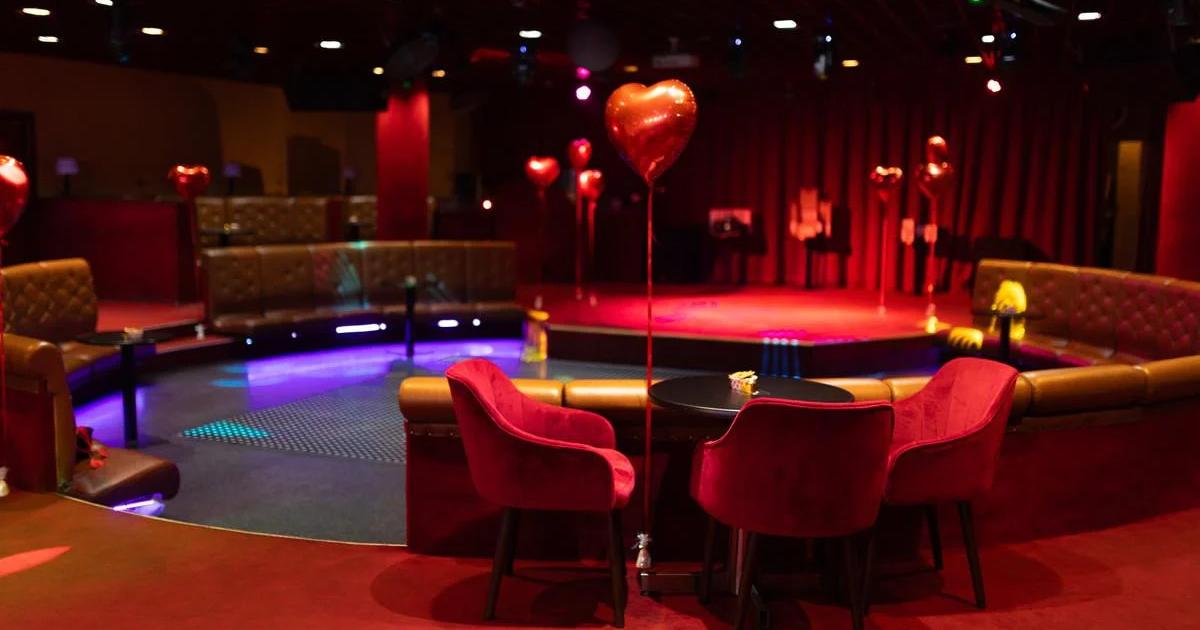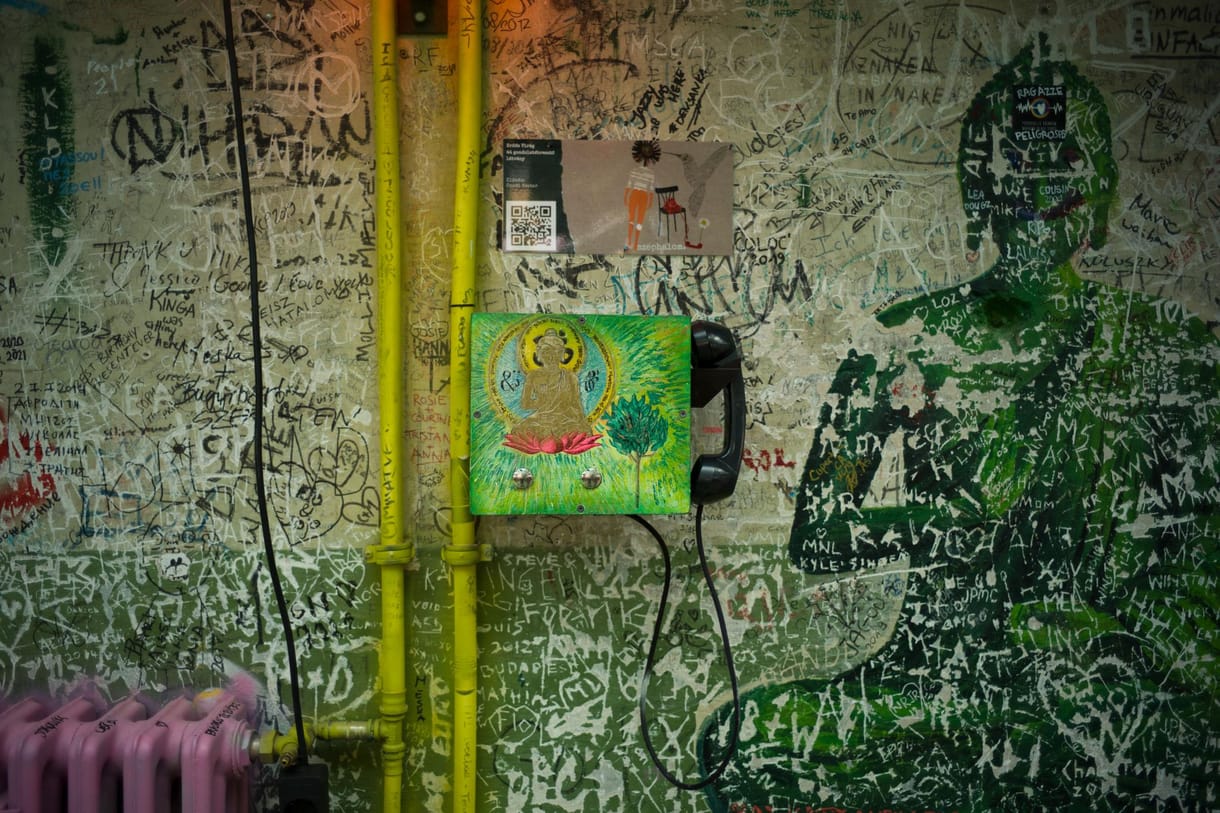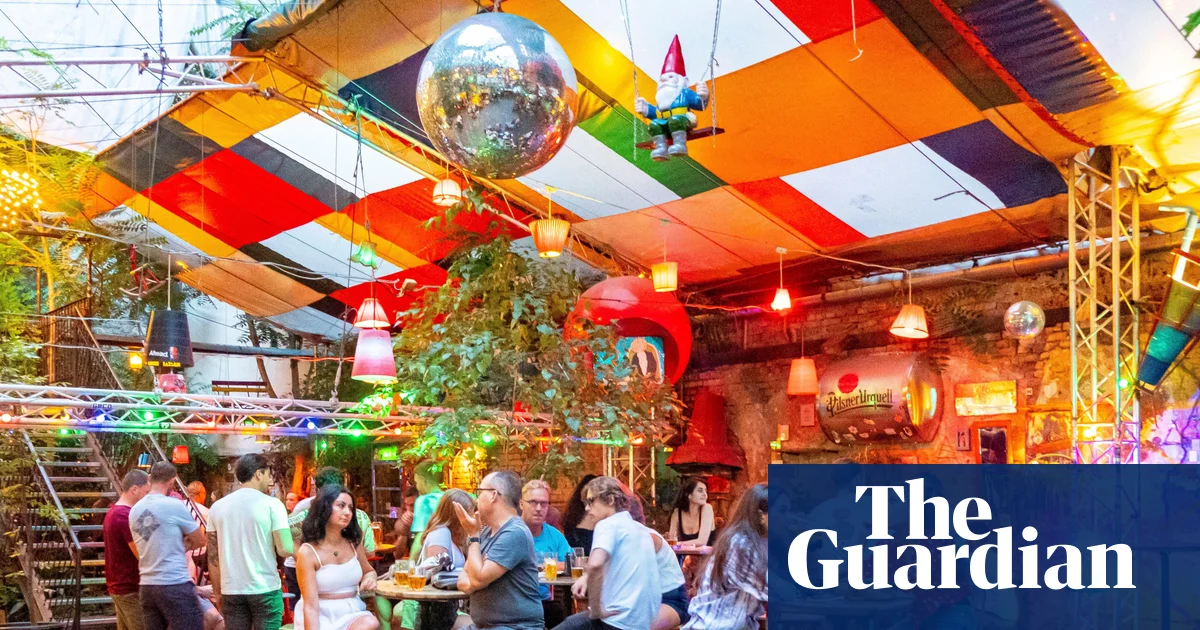
‘Many ruin bars seem to be just tourist traps now,” says artist István, standing outside Instant-Fogas complex, which calls itself Europe’s biggest ruin pub, but looks more like a mammoth nightclub with several dancefloors.“These bars were a hot topic 20 years ago, but many have become really commercial now,’ says István. “Ruin bars being expensive actually ruins their purpose. I’m a student, I like beers that are under 1,000 forints [about £2.50], and the big commercial ruin bars are typically much more expensive.”Ruin bars (or romkocsmák) emerged mainly in Budapest’s historic Jewish Quarter (District VII) in the early 2000s when abandoned, prewar buildings and empty courtyards were transformed by young entrepreneurs into cheap bohemian art spaces that flaunted their dilapidation. They were typically peppered with fairy lights and mismatching secondhand furniture and artefacts.Many have since lost their ruin bar essence and aesthetic, and simply host punters on the lash and a stream of guided pub crawls, stag and hen parties. But some proper ruin bars do still exist.Szimpla Kert Photograph: Hemis/AlamySzimpla Kert (or Simple Garden) is considered the pioneer of Budapest’s ruin bars and can feel overwhelming of an evening on your first visit; it’s much calmer in the day. Gigantic, buzzing, with multiple rooms on two levels, lots of colourful lights and pulsating music, it is undeniably a bit touristy, yet not unpleasantly so.It has become a community centre, too, with film showings, an art gallery, a farmers’ market, flea market and other regular activities.Suitably decrepit, with graffitied walls, rough wooden benches, concrete floors, a huge disco ball and plants lining the ceilings, it certainly has character. Nights may have live music and there are DJs, with small bars serving craft beers, cocktails and more. Prices are high for a Budapest bar – about 2,000 forints (£5) for a half litre of lager. Yet with a tatty bar space on such a huge scale completely assaulting your senses, there really is nowhere else like it. 9/10Füge UdvarThe perfect example of a ruin bar being ruined. The night I visited, the clientele was 90% male, a high proportion of them out to get drunk.It’s the kind of mainstream sports bar you’d find anywhere, with football screens and arcade games, but also some rather dilapidated areas (perhaps as a nod to the ruin bar concept, possibly through neglect) and a tree in the middle of an open courtyard.A £1 charge is added to each relatively expensive drink as a deposit for the ugly plastic cup it’s served in – and that I have no interest in taking away. Of course, many people don’t realise this and don’t get their deposit back, and it is a difficult process if you do: customers are typically directed to another bar with a sizeable queue to get the money returned.Unsurprisingly, there are critical reviews of Füge Udvar online. 0/10Fekete Kutya Photograph: Ben WestWith a collection of shabby bar stools and tables inside and out, a chaotic mishmash of artworks on the walls and windows covered in stickers, Fekete Kutya (or Black Dog) certainly cultivates the ruin bar vibe.“It’s been here since 2013 and used to be a ruin bar for local people,” says student Milan Keleti while serving me a Postřižinské Francin lager (£2.10). “Initially, this was a place for artists, for people that couldn’t afford expensive bars. But, as this area has become more touristy, about half the custom is now from tourists. But it still has the atmosphere, the music, the decor that is fit for ruin bars.”
My search for the perfect ruin bar in Budapest
These cool, cheap bars in old abandoned buildings became popular in the 2000s – and then tourists moved in. I went hunting for the bohemian spirit of the originals
1,106 words~5 min read