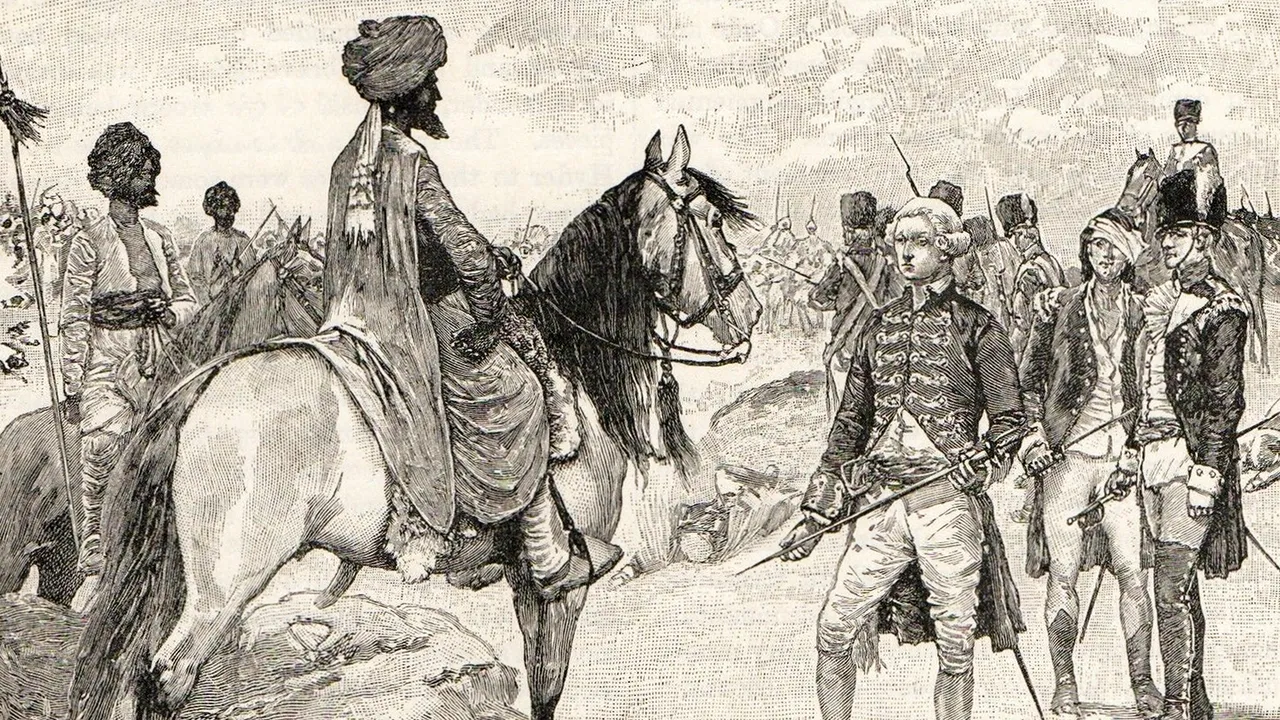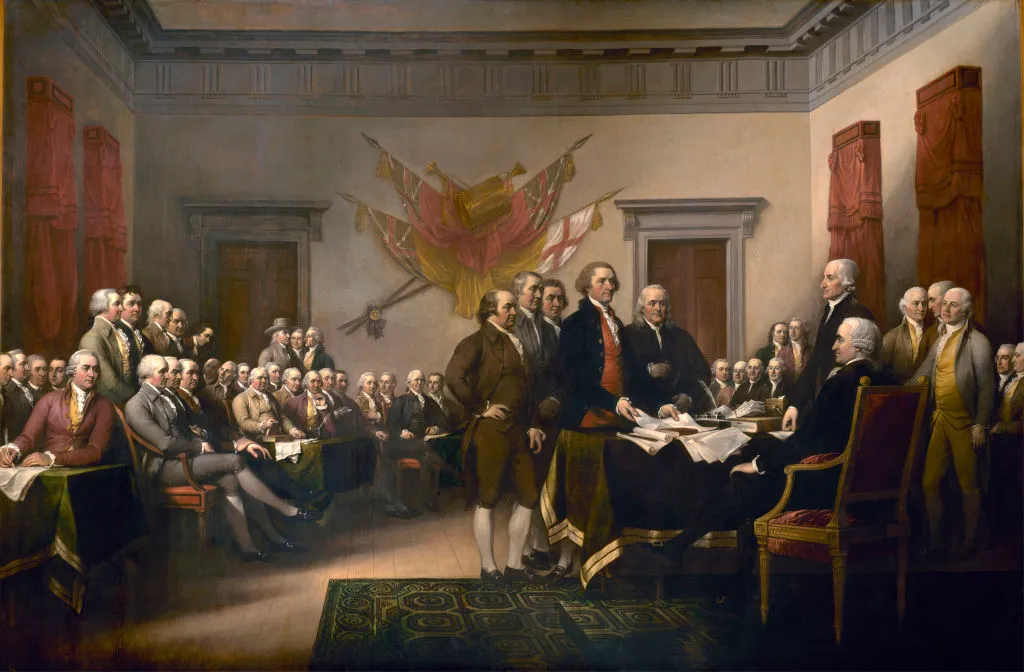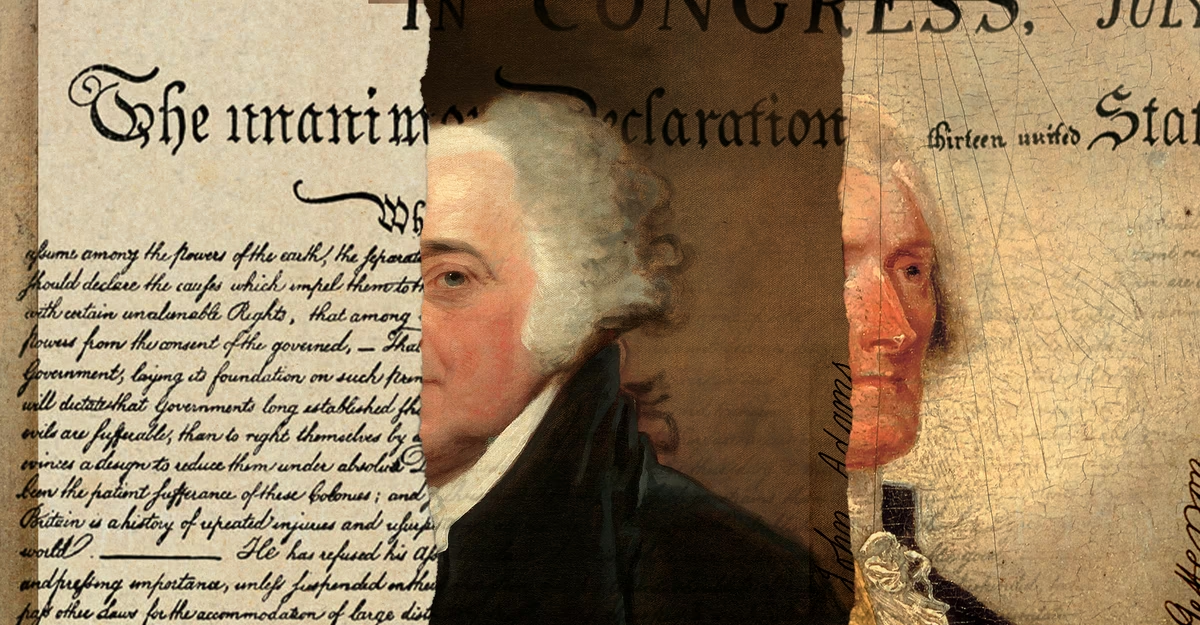
On August 19th 1777, John Adams (later to succeed George Washington as president) reported gleefully to his wife Abigail on developments in the war on the northern frontier: “The Family of Johnson, the black part of it as well as the white, are pretty well thinned. Rascals! they deserve Extermination.” To understand the most important – and most neglected – Irish dimension of the American Revolution we need to ask: who was this biracial family and why did the Founding Fathers want to exterminate them?The place to start is with the Declaration of Independence itself. One of its justifications for throwing off allegiance to the British monarch is that “He ... has endeavoured to bring on the inhabitants of our frontiers, the merciless Indian Savages, whose known rule of warfare, is an undistinguished destruction of all ages, sexes and conditions.”The leaders of those “Indian savages” were an extended Mohawk-Irish kinship group – what Adams called “The Family of Johnson”. To remember why they had taken up arms on the side of the British against the revolutionaries is to remember what so many want to forget: that this was a fight over land that belonged to neither the Americans nor the British.The “Family of Johnson” was founded by a man about whom I once wrote a book called White Savage. The family name was originally MacShane (claiming descent from the rebel Shane O’Neill), anglicised as John’s son – Johnson. The Johnsons, based near Dunshaughlin in County Meath, were Catholic Jacobites who lost their lands after the triumph of William of Orange.William Johnson left Ireland in 1738 to settle lands in upstate New York that had been (dubiously) acquired by his uncle Peter Warren, a prodigiously successful captain in the Royal Navy. Johnson quickly integrated himself into the Mohawk nation, acquiring the name Warraghiyagey (roughly Chief Much Business) and the status of a war chief. Johnson married a young German woman and had white children. But he also married a young Mohawk woman Konwatsi’tsiaienni, known to the British as Molly Brant, with whom he also had several children – these were the ones Adams referred to as the “black” part of the family. Through Molly and her charismatic young brother Thayendanegea, known as Joseph Brant, Johnson acquired immense influence with the Haudenosaunee, the confederacy of the Six Nations (Mohawks, Oneidas, Onondagas, Cayugas, Senecas and Tuscarora) known to the French as the Iroquois, whose domain stretched across the western side of the frontier between Canada and what is now the US. This, in turn, made Johnson a vital figure for the British in their wars against the French in the 1740s and 1750s – Johnson was the only European who could get Indian warriors to fight on the British side. Johnson created an extraordinary multicultural domain in the forests of upstate New York. He was the Mohawk chief Warraghiyagey. He was knighted by King George as the first Baronet of New York. And he saw himself as an Irish chieftain. He brought a Gaelic harper from Ireland to sing his praises and hung a large map of Ireland in his wooden mansion. His prestige was such that he was made Sole Superintendent of Indian Affairs – the only authorised mediator between the British Empire and the Indian nations. This superintendency was an almost entirely Irish affair. Its officers, under Johnson, were his son John, his nephew Guy Johnson, his daughter’s husband Daniel Claus (German but part of the family) and another extraordinary character George Croghan, who emigrated from Dublin to Pennsylvania in 1741. It was in this capacity as intermediary between the British and the Indians that Johnson created one of the great what-ifs of American history. If you happen to be in New York this summer, drop in to the New York Public Library’s excellent exhibition on the American Revolution and see the poignant evidence of his handiwork. Just a couple of metres from the revered original copy of the sacred Declaration, there is a much more affecting document, one that speaks of the history that didn’t happen. It’s a handwritten treaty signed on the bottom left “W Johnson” and on the right with the marks of chieftains representing each of the Six Nations.This is the Treaty of Fort Stanwix, negotiated on behalf of the British Empire by Johnson in 1768, just eight years before the Declaration of Independence. It draws a line of settlement, roughly along the Appalachian Mountains, beyond which white people will never go.It is one of the most heartbreaking documents in American history – but also, obliquely, in Irish history. It exists in a kind of dreamtime in which the rapaciousness of colonialism has a limit.Which, of course, it didn’t. There’s a reason the American revolutionaries called their assembly, not the American Congress, but the Continental Congress. They had a vision of an infinitely expanding frontier. Thomas Jefferson’s ideal of a republic of free farmers depended on the endless opportunity to grab more and more land. Many of those farmers were, of course, the other Irish, the Ulster Presbyterians who formed the backbone of the revolution.Would the British have honoured, in the long term, Johnson’s treaty with the indigenous nations? Most probably not. But we should remember and understand why “the Family of Johnson”, both its Mohawk and its Irish parts, fought on what history would decree to be the “wrong” side in the American war of independence. The very language of the Declaration’s reference to them – savage, merciless – made clear that the native nations were already the revolution’s Other.The Johnson family was not in fact exterminated. John and Guy Johnson ultimately left for England. Molly and William’s son Peter did die fighting for the British, but after the Americans drove the Mohawks out of their lands, Molly and Joseph managed to reestablish a Six Nations community in Canada. Molly features now on Canadian postage stamps.But extermination was nonetheless to become the project of the new republic. It was not the savages who would prove to be merciless.
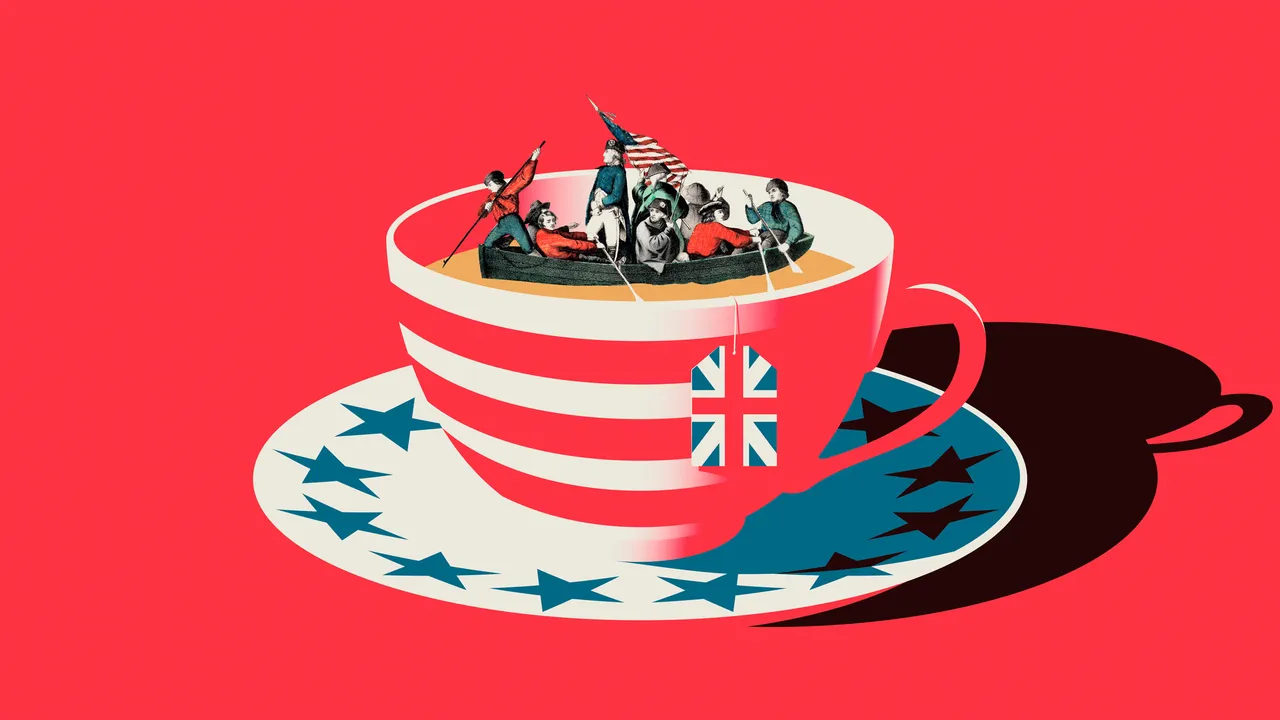
Fintan O'Toole: The Irish-Mohawk chief at the centre of a great what-if in US history
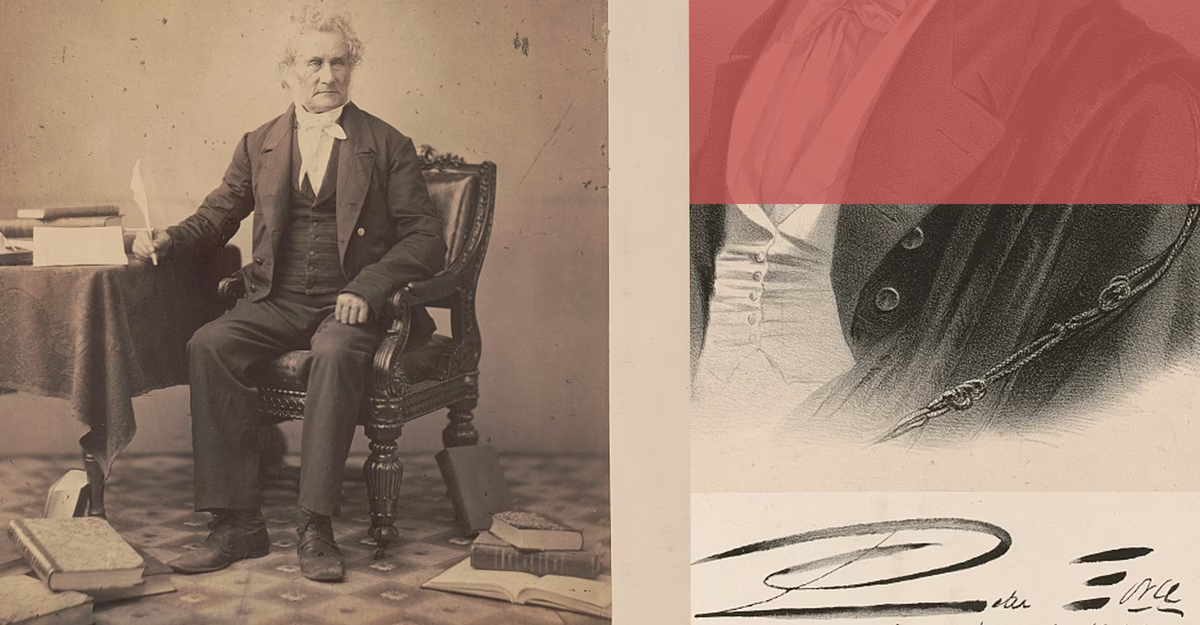
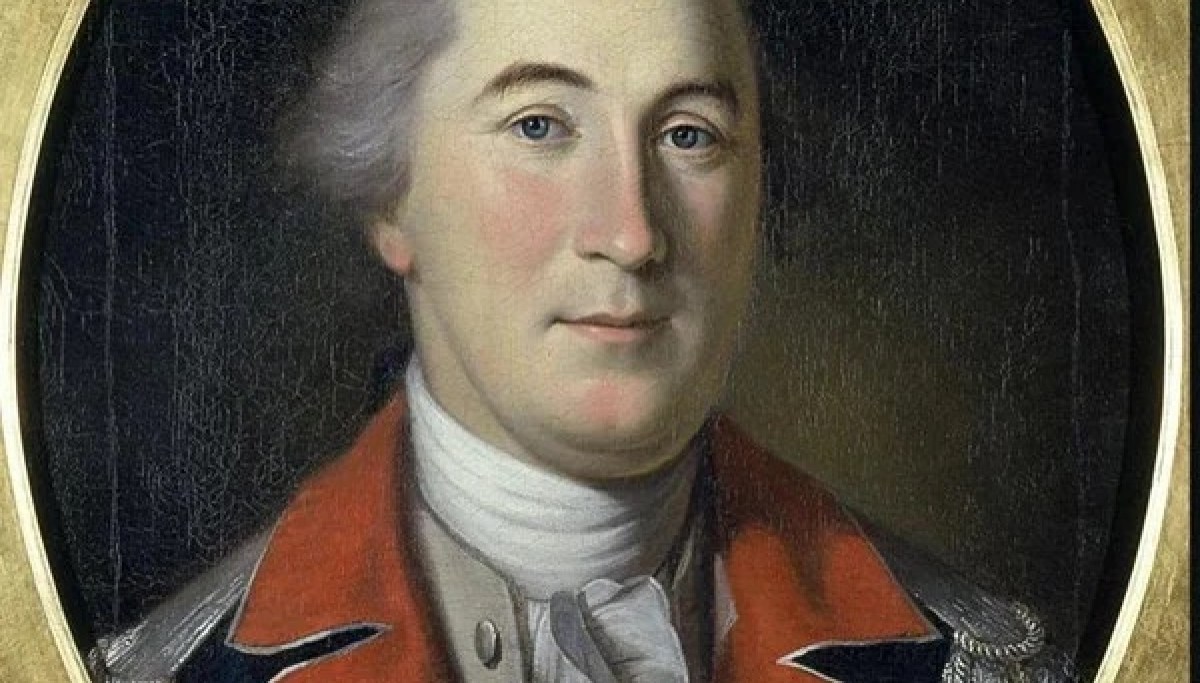
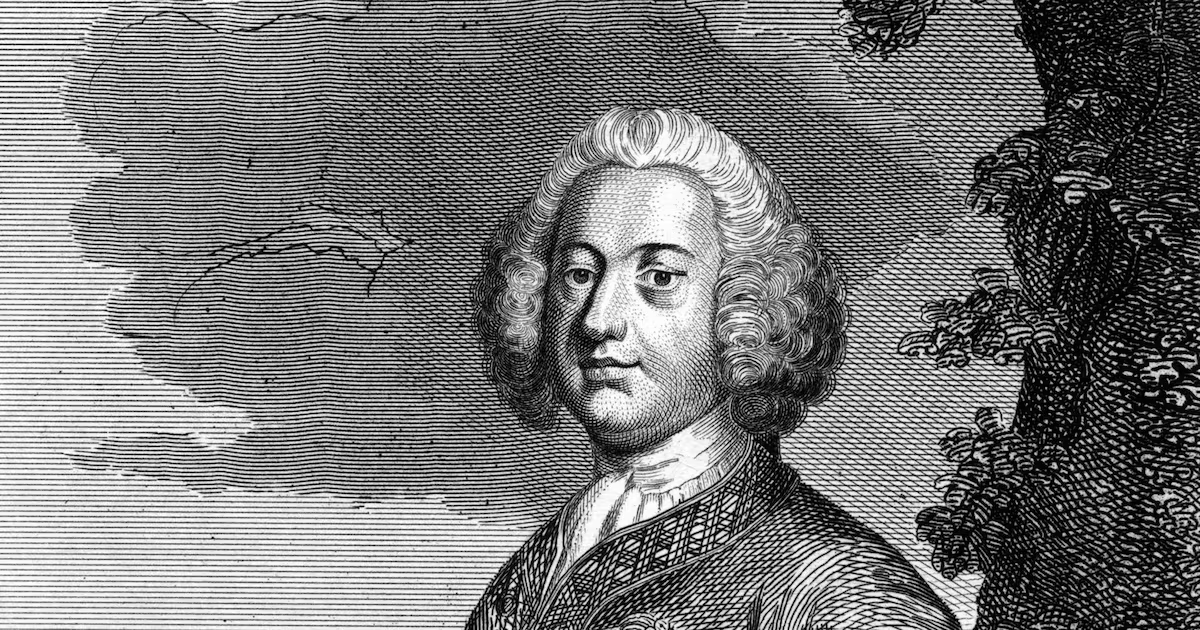
William Johnson - aka Chief Warraghiyagey - saw himself as an Irish chieftain and was the only authorised mediator between the British empire and the Indian nations
1,002 words~5 min read