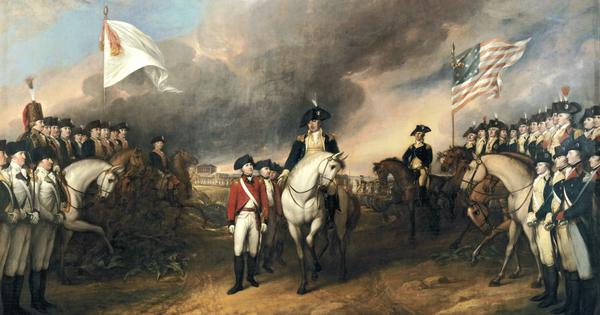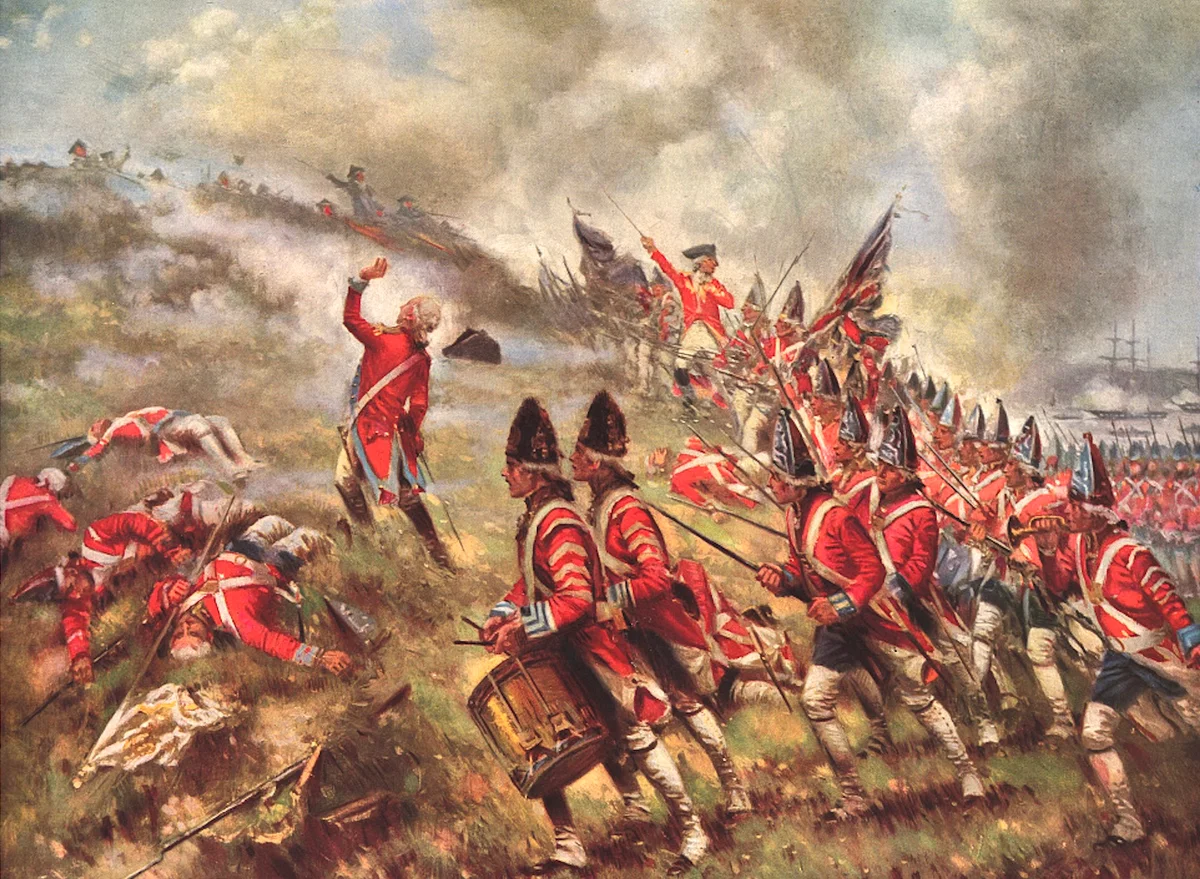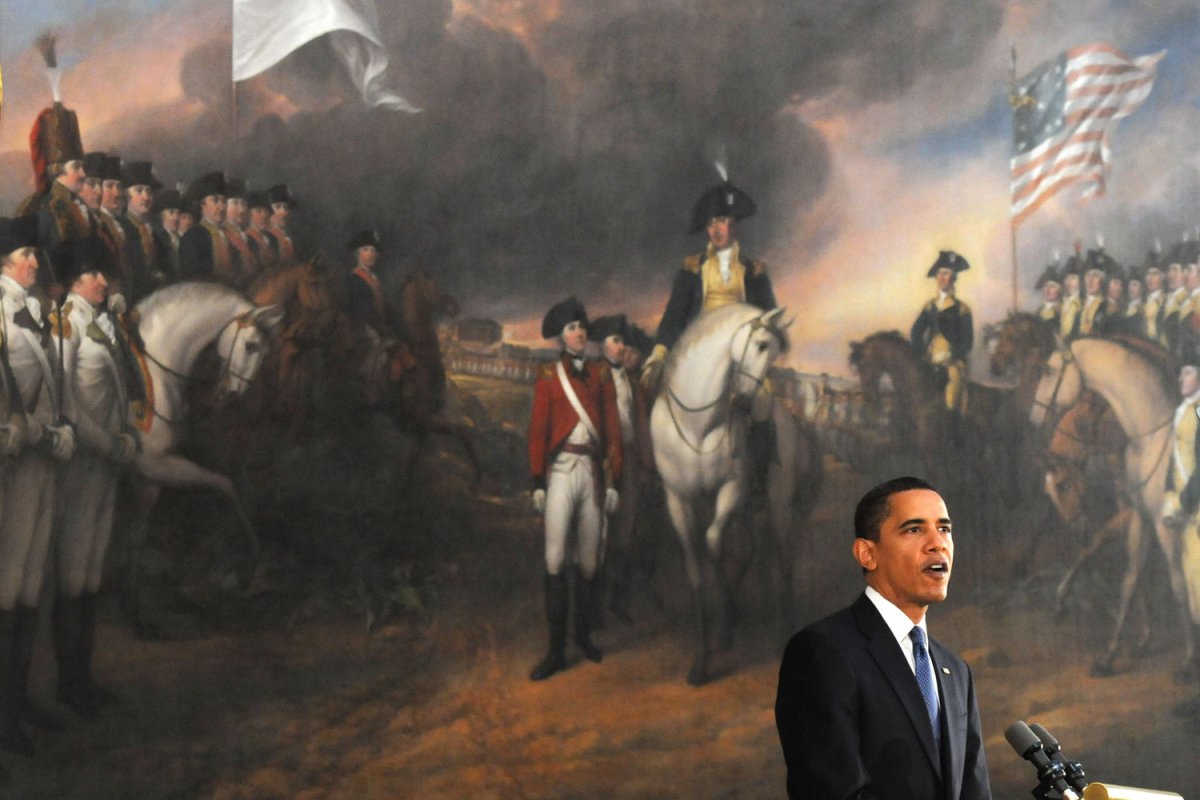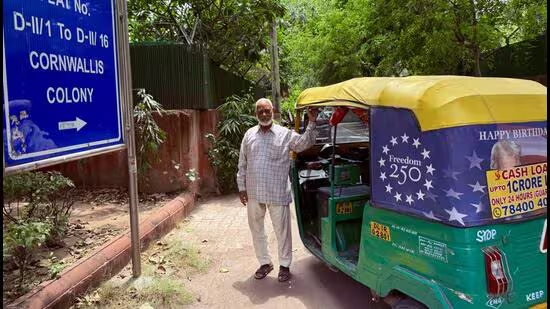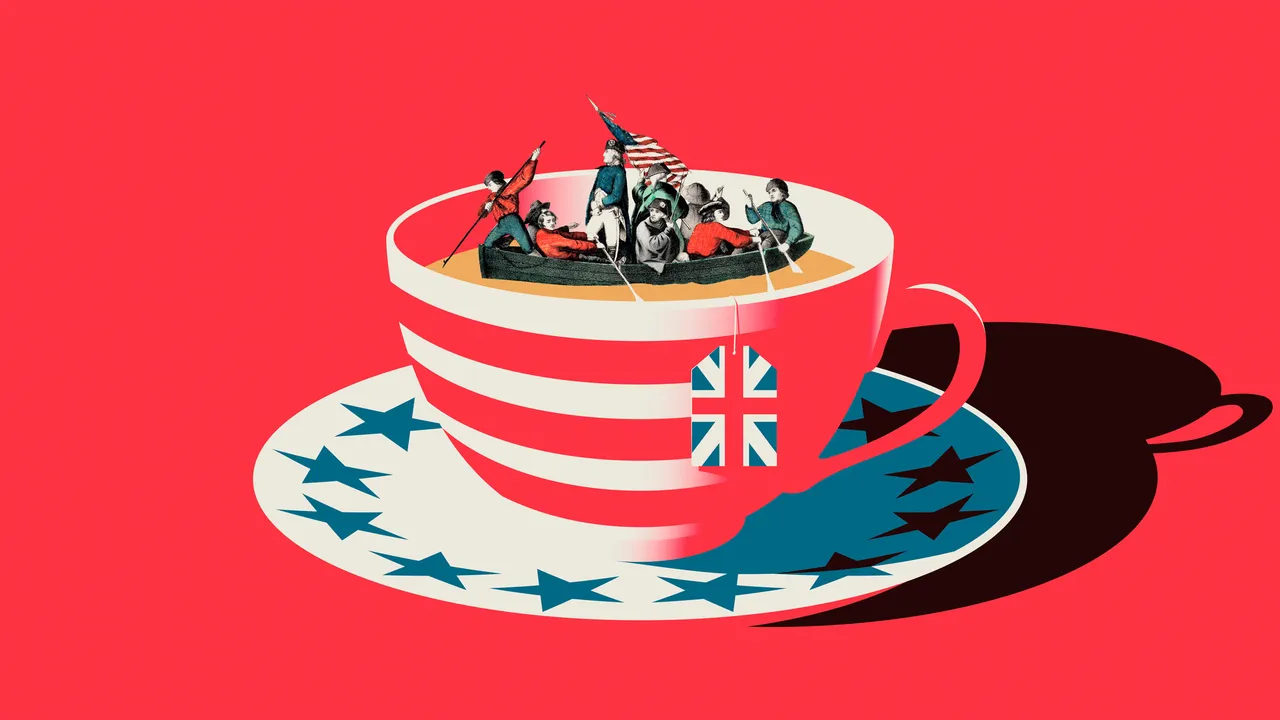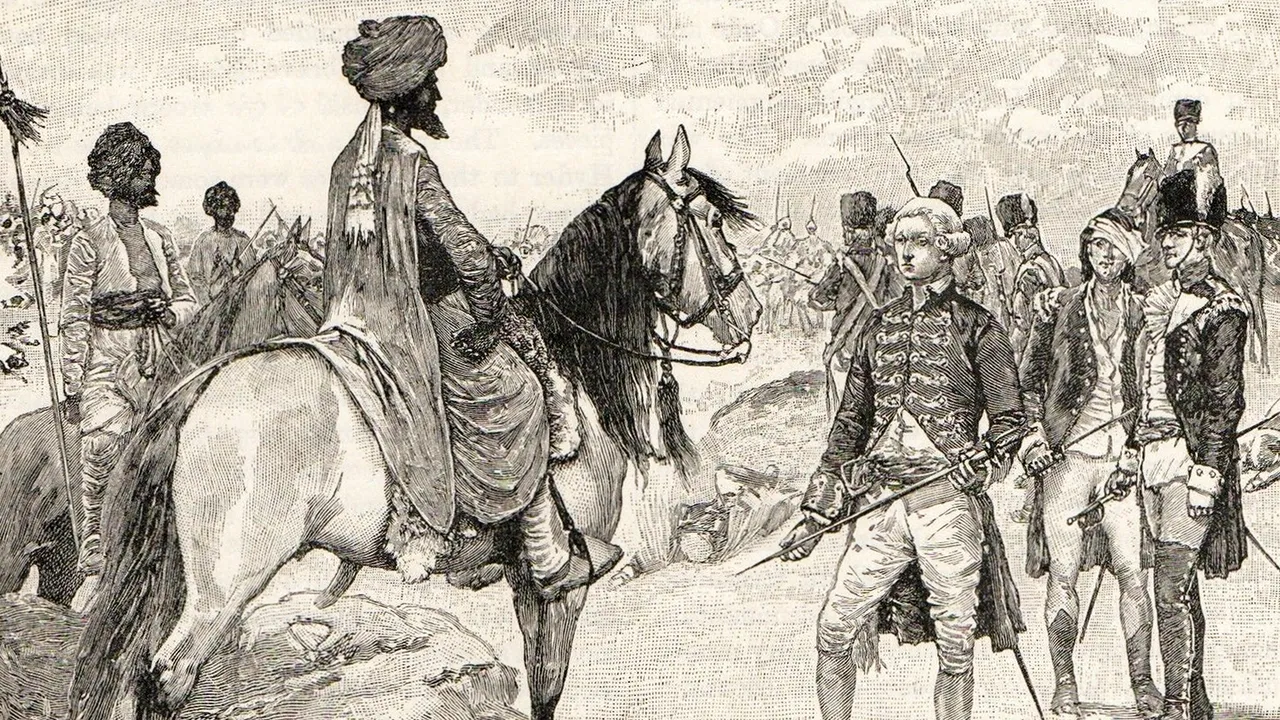
In April, 1782, a ship called the Hyder Ally cast off from the docks of Philadelphia for a mission into the Delaware Bay. The previous year, the British general Charles Cornwallis had surrendered, at Yorktown, to the combined might of the Continental Army and its French allies, a capitulation on land that’s often considered the concluding event of the American Revolution. But the war was not quite over. The British Navy was still choking off shipping from Philadelphia, the U.S.’s first capital, which was connected to the Atlantic via the Delaware River; loyalists to the Crown, slipping out in flat-bottomed boats from marshes and inlets, routinely harassed American merchantmen. To counter these attacks, the Hyder Ally, a single-masted sloop refitted with a battery of cannons, was tasked with escorting seven ships out of Philadelphia. A few days after the ship embarked, it encountered a flotilla of three British warships at the mouth of the Delaware, waiting to prey on the convoy. Outnumbered but undaunted, the ship managed to capture one vessel, while compelling another to run aground and the last to run away.The startling victory of the Hyder Ally at the Battle of Delaware Bay, and the bravado of its twenty-two-year-old captain, Lt. Joshua Barney, marked an early triumph for the fledgling U.S. Navy. Barney became a Philadelphia hero, immortalized by the famous Revolutionary-era poet Philip Freneau, who wrote a poem celebrating the victory. An earlier poem of Freneau’s, written to encourage recruitment for the Hyder Ally’s maiden voyage, had explained that the vessel’s curious name was an homage to the then Sultan of Mysore, Hyder Ali, who was locked in his own campaigns against the army of Britain’s East India Company on the other side of the world. Freneau wrote, “From an eastern prince she takes her name, / Who, smit with freedom’s sacred flame, / Usurping Britons brought to shame, / His country’s wrongs avenging.”The colonial struggle that preceded the founding of the United States, which, later this week, celebrates the two-hundred-and-fiftieth anniversary of the signing of the Declaration of Independence, is intertwined with the story of India in many ways. The 1773 Boston Tea Party that prefigured the Revolution was a protest against the Tea Act, which granted a subsidy on colonial tea to the East India Company—a world-spanning corporate behemoth whose costly wars in South Asia had strained its finances. When the war for independence broke out, in 1775, it immediately became a global conflict—some scholars have interpreted the Declaration itself as a cry for help, to France and Spain—that saw skirmishes and sieges from the Caribbean to the Mediterranean to Africa. India was a major zone of contest between Europe’s colonial powers, and the French wound up fighting alongside Hyder Ali. Mysore was one of the most powerful kingdoms in southern India; its military was among the more modernized and effective fighting forces in the hodgepodge of principalities that made up India’s political map at the time. The resulting conflict, which historians have labelled the Second Anglo-Mysore War, involved battles that dwarfed much of what occurred in the thirteen colonies, in both scale and bloodshed.As the name of Barney’s ship suggests, the struggles in Mysore stirred the American imagination. Hyder Ali’s decisive victory at the Battle of Pollilur, in September, 1780, in which he routed a column of British troops, was documented and discussed by the Founding Fathers. Edmund Jennings Randolph, a Virginia delegate at the Continental Congress, wrote to John Adams, then posted in Europe, in April, 1781, of how Hyder Ali’s “Army of 80000 Horse” had “totally defeated” its British quarry. John Quincy Adams, a teen-age student in the Netherlands at the time, wrote excitedly to his mother, Abigail, about “the check the English have had in the East Indies,” where they had “lost a great number of men.” In a letter written in the summer of 1782, James Madison praised Hyder Ali’s “superiority” over his most implacable foe, Sir Eyre Coote, the British general tasked with pushing back Mysore’s forces from the East India Company’s southern Indian stronghold in what is now the major coastal city of Chennai. Nine days after the British surrendered at Yorktown, in October, 1781, a group of notables in Trenton, New Jersey, made a series of triumphant toasts that were accompanied by artillery fire; one of those toasts hailed the “great and heroic Hyder Ali, raised up by Providence to avenge the numberless cruelties perpetrated by the English on his unoffending countrymen, and to check the insolence and reduce the power of Britain in the East Indies.” (Hyder Ali died, of an apparent tumor, at the end of 1782, and his son, Tipu Sultan, followed as his successor.)John Adams and his colleagues helped broker a preliminary peace deal with the British in the autumn of 1782, in Paris—a few months later, Britain would forge a separate set of deals with Spain and France. But combatants in the subcontinent were unaware of the initial truce that had been made in the West, and dozens more battles took place around the world. The last clash of the American Revolutionary War, some historians suggest, occurred along India’s Coromandel Coast, in June, 1783; as the British laid siege to a fort in Cuddalore, then occupied by a joint Franco-Mysorean force, a smaller French fleet scored a naval victory nearby. Around the same time, the siege was finally lifted.What solidarity Americans had with Mysore proved fleeting after independence. France withdrew direct aid to Mysore following the 1783 Treaty of Paris, at a moment when Mysore’s forces could have pressed their advantage. In the years thereafter, Hyder Ali’s son, Tipu, would likely rue having allied with the wrong European power; the French, struggling financially and on the verge of their own revolution, could do little to support his kingdom against the emboldened British. In 1788, Thomas Jefferson, who was then the U.S. Ambassador to France, wrote of the arrival of a number of diplomats from Tipu’s court, and noted that he would attend their reception in Versailles, but was unsure what any of it would achieve. “If their mission has any other object than that of pomp and ceremony, it is not yet made known,” he wrote in a letter. As early as 1792, the U.S. sent an American consul to Calcutta, the East India Company’s main port in Asia—an implicit recognition of the growing power of the British in India, and a sign of how the U.S. saw its early trade interests in Asia best served.Cornwallis, the British general who surrendered at Yorktown, may be remembered as a loser in America, but he was an empire builder in India, serving as governor-general in Bengal and chief commander of the East India Company forces. In the early seventeen-nineties, he campaigned against Tipu Sultan, capturing Bangalore and a huge chunk of Mysorean territory. Tipu’s kingdom finally fell in 1799, when British and allied forces overwhelmed his fortress at Seringapatam, a few hours’ drive from present-day Bangalore.These battles have completely receded from the American imagination, even though, in some ways, the American rebellion was a sideshow to a far greater imperial drama. Britain, arguably, decided to cut its losses with the unruly thirteen colonies to better safeguard its more lucrative possessions in the Caribbean and South Asia. Meanwhile, every Indian schoolkid knows of Tipu Sultan’s last stand, and generations of Britons were raised on tales of colonial derring-do and the menace of the “tiger of Mysore,” Tipu’s sobriquet. (An ornate automaton that Tipu once possessed, of a tiger eating a British soldier, is probably the most well-known object in London’s Victoria and Albert Museum.) In more recent years, the culture wars waged by India’s ruling Hindu nationalists have complicated the image of Tipu and his father, who some now have recast as bloodthirsty Muslim warlords rather than icons of national resistance. But that was not the case when, as a teen-ager, multiple decades ago, I went with my family on a tour of the ruins of Tipu’s fortress. Guides spoke of the monthlong siege that ended only because of the treachery of a local noble who turned on the sultan and allowed British troops to scale the walls. Tipu himself was found slain near a passageway once used to bring water into the fort; it’s dubbed the Water Gate. “First Watergate, Seringapatam,” the guide told us, elongating the consonants in melodious, if broken, English. “Second Watergate, Washington.” ♦
Why The Last Battle of the American Revolution Was Fought In India
The conflicts that took place elsewhere in the world have receded from our collective imagination, but the American rebellion was, in many ways, a sideshow to a far greater imperial drama.
1,403 words~6 min read