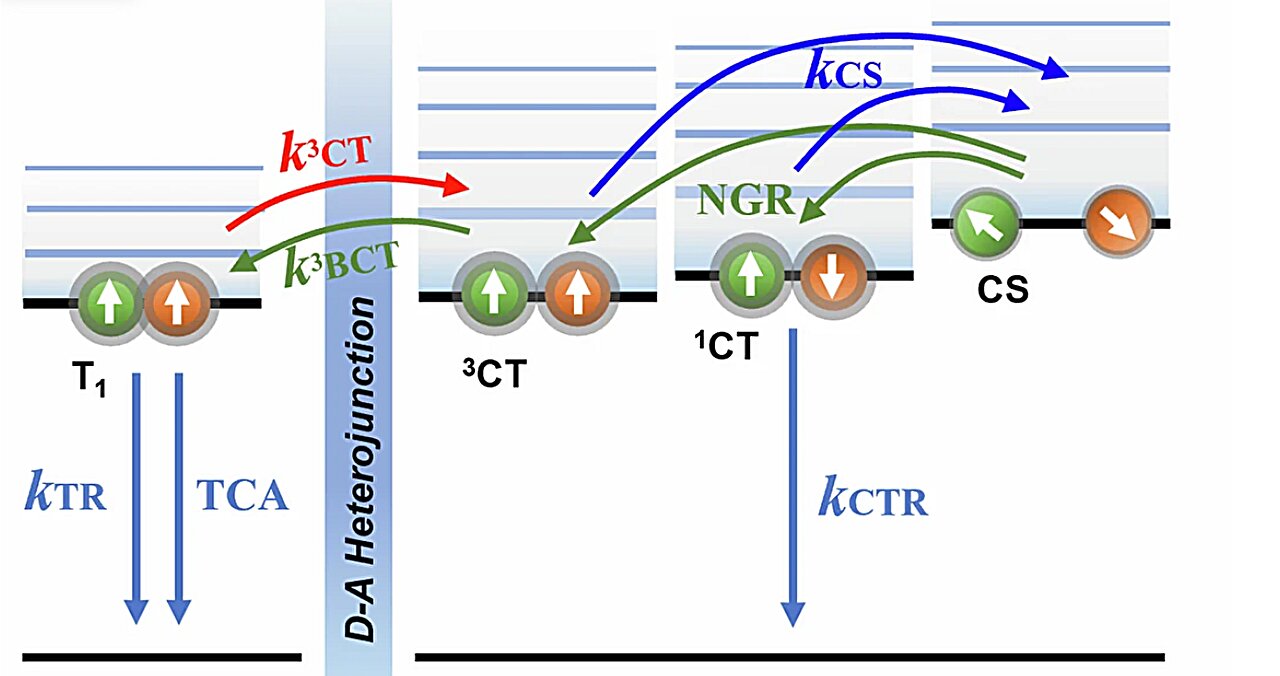
Simulation of CS and T1 recombination dynamics in D18:FTh-4F and D18:BrQx-4BO. Credit: Nature (2026). DOI: 10.1038/s41586-026-10419-5
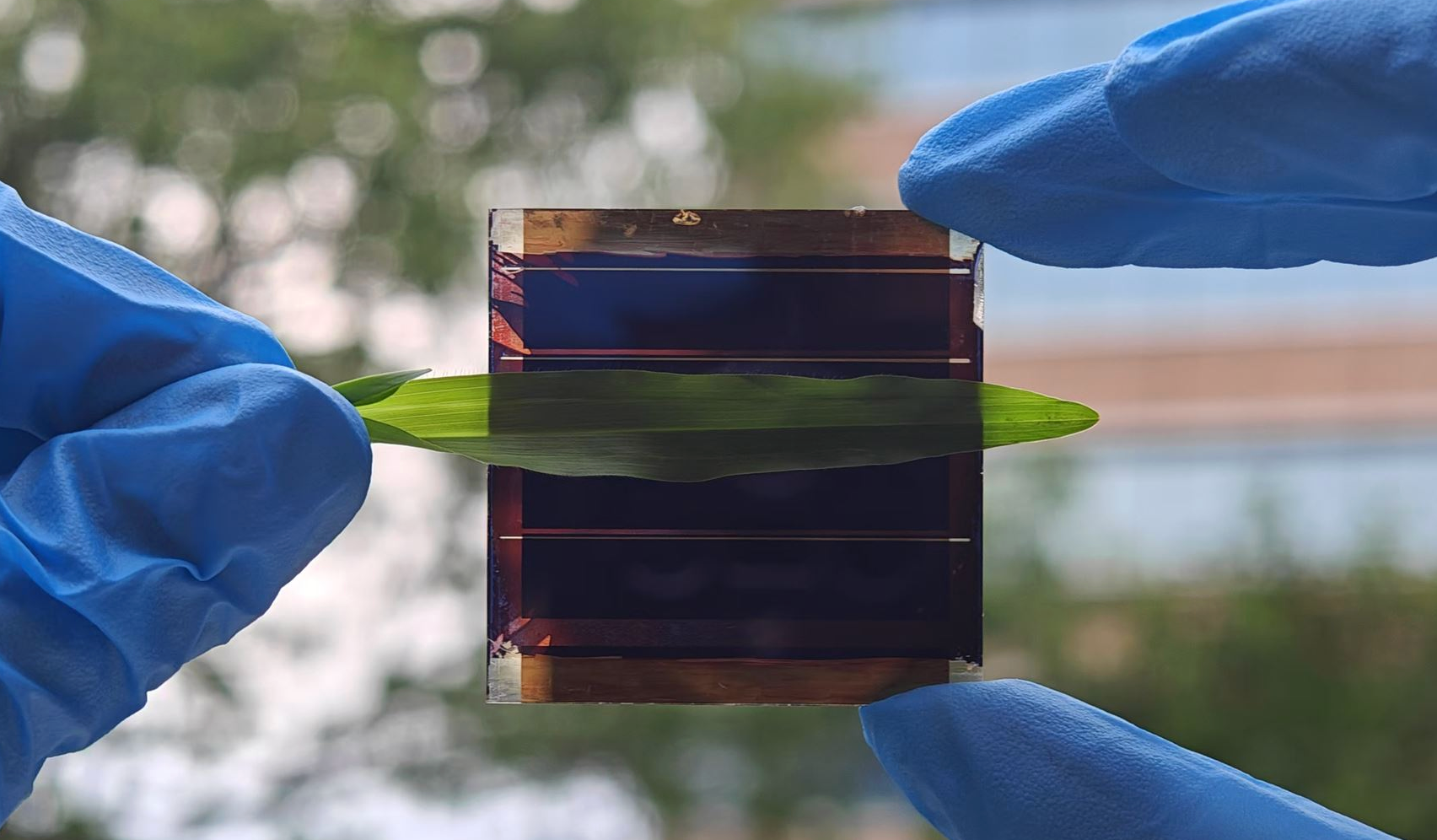
A research team from City University of Hong Kong (CityUHK) has recently overcome a technological bottleneck that has persisted for more than a decade. They successfully "turned waste into treasure" by recycling triplet excitons and converting them into effective charge carriers for electricity generation. Using this new approach, they achieved an efficiency of 20.5% in OPV cells.
In organic photovoltaics (OPV), low-energy spin-triplet excitons (T₁) have long been regarded as "energy traps" that often dissipate energy as heat rather than contributing to light-to-electricity conversion.
Led by Professor Alex Jen Kwan-yue, Lee Shau Kee Chair Professor of Materials Science at CityUHK, the team studied an organic photovoltaic system incorporating a new acceptor material, FTh-4F. They observed that the lifetime of free charge carriers in this system is significantly longer than that of spin-triplet excitons. This finding challenges the conventional understanding and suggests that triplet excitons can dissociate back into free-charge carriers instead of simply decaying into heat.