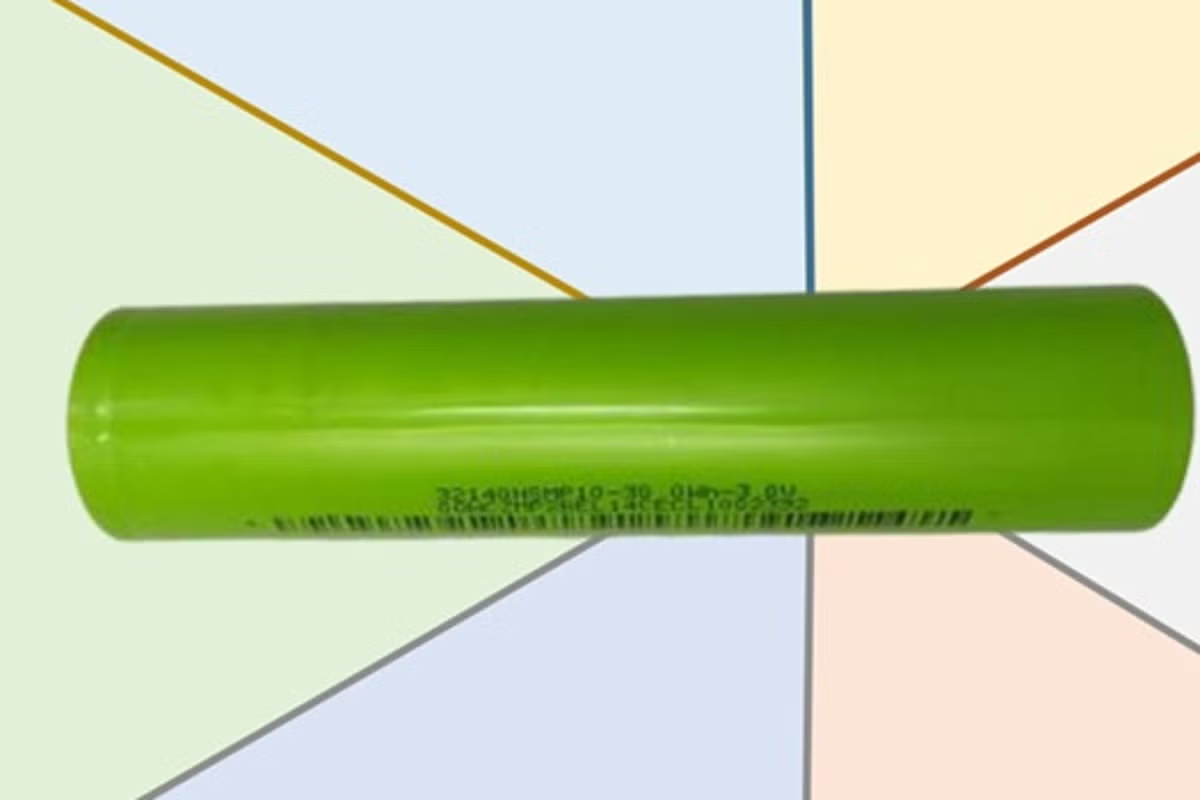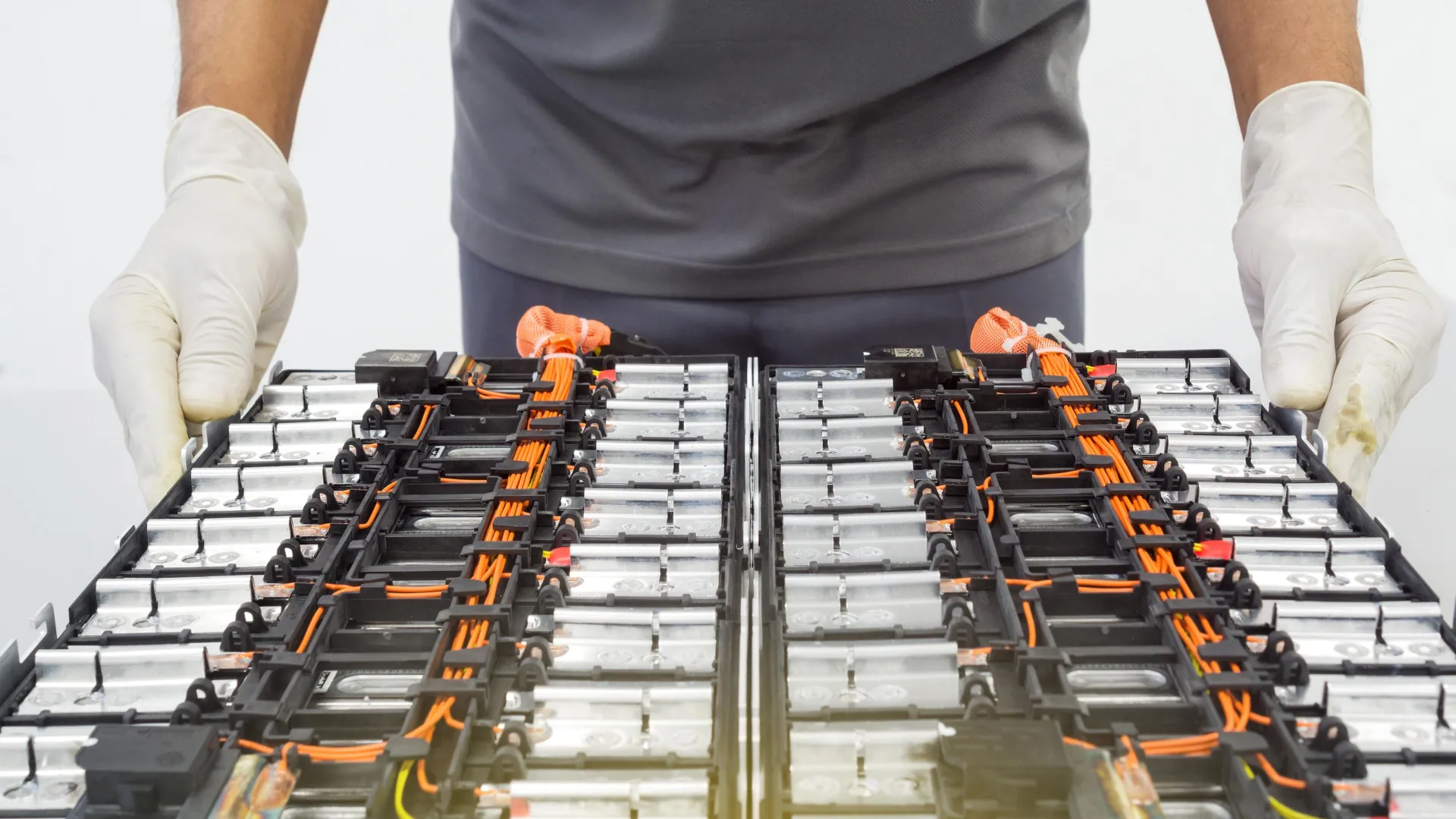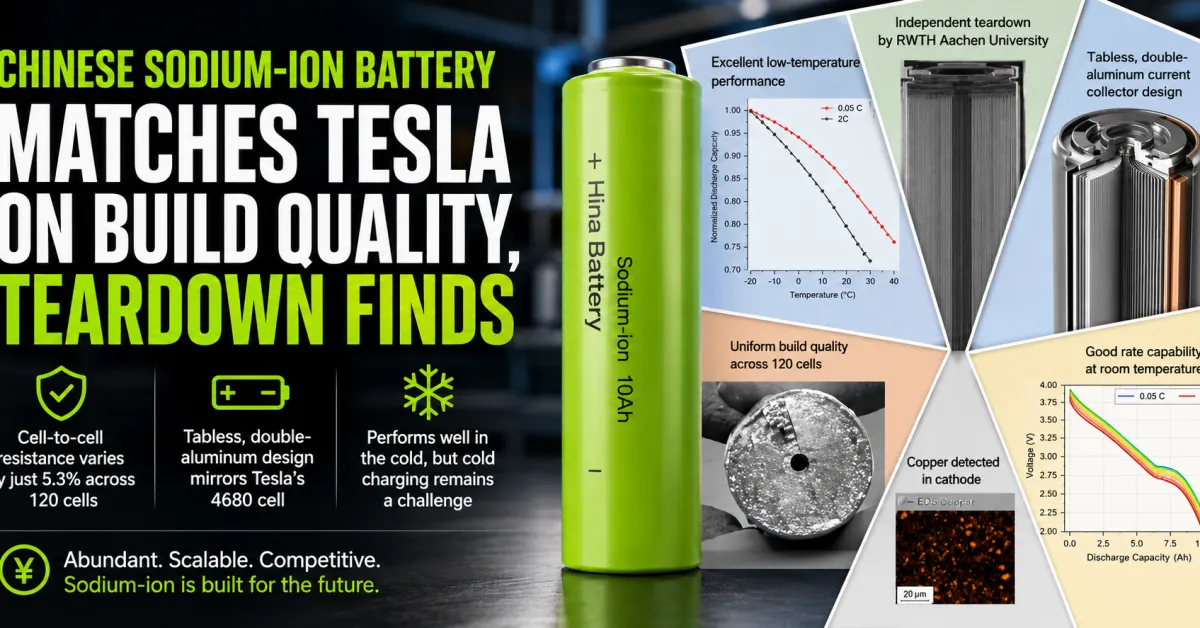
A commercial sodium-ion battery from Chinese manufacturer Hina matches Tesla’s lithium-ion cells on manufacturing quality and internal design, according to an independent teardown published in the Cell Press journal Cell Reports Physical Science.
Researchers at Germany’s RWTH Aachen University measured cell-to-cell resistance varying by just 5.3% across 120 cells — a sign of tightly controlled mass production rivaling the best lithium cells on the market.
What the teardown found
The study, led by Christian Siebert and Moritz Schütte, set out to benchmark a widely used Hina sodium-ion cell against more advanced Tesla lithium-ion technology.
The team ran impedance spectroscopy — a non-destructive method — across 120 cells to gauge uniformity, then tested performance at currents and temperatures ranging from −20°C to 45°C. They used X-rays to image the internal structure before physically dismantling the cells to measure electrode dimensions, composition, and microstructure.