What you need to know:
Colonisation impacted the entire societal life of African communities as it brought about not only new ways of doing things, but also of thinking, believing, and living. A large-scale impact on how people live is, in other words, an impact on their ‘culture’ which sociologists define as ‘a people’s way of life.’
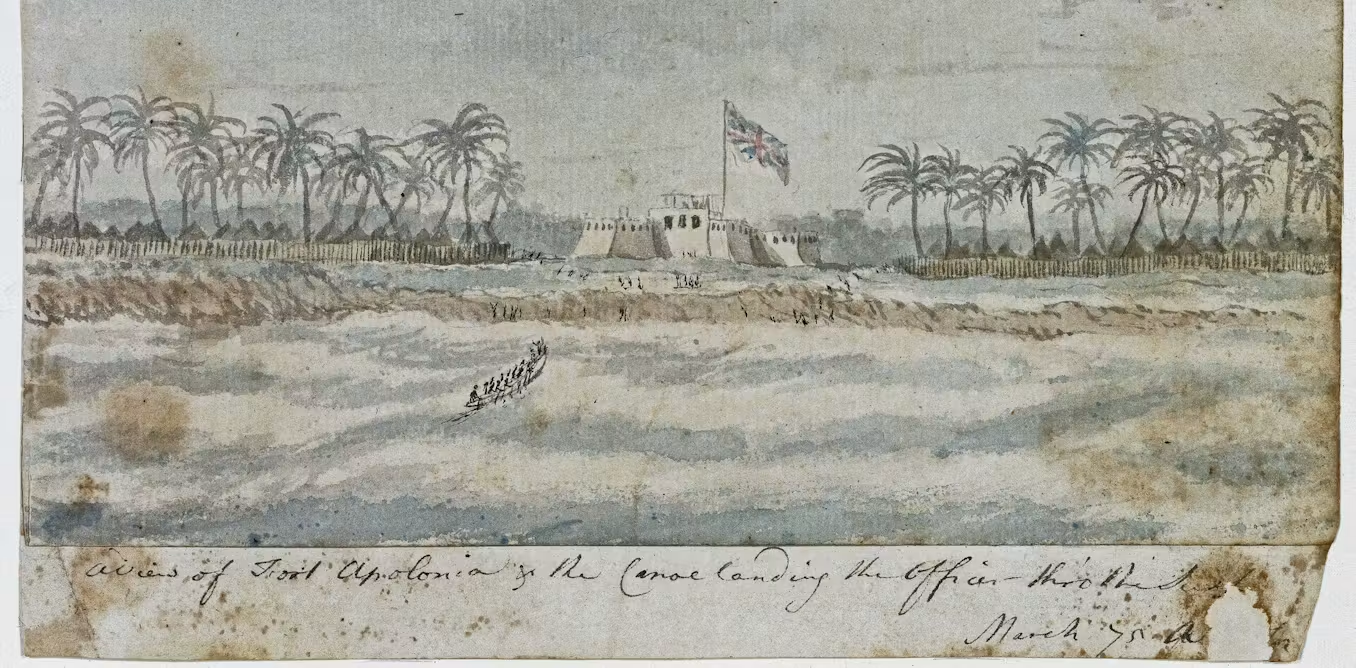
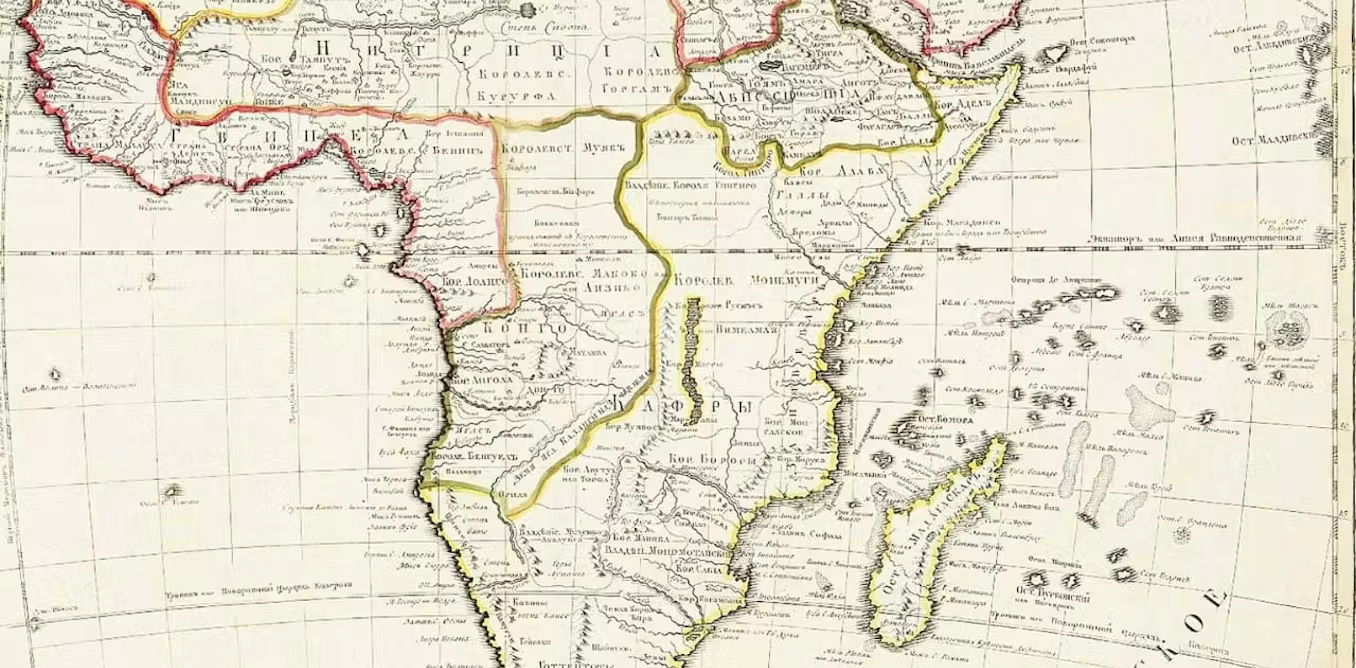
Though colonisation and slave trade are considered by some as things of the past, they remain subjects of conversation due to their impact on the continent of Africa. Africa as a whole was colonised by Western countries for over a century, though the slave trade had persisted for over four centuries. Tanganyika was colonised by Germany from 1884 to 1919, and by Britain from 1919 to 1961. Zanzibar was colonised by the Portuguese from 1498 to 1698, then by the Omani Sultanate from 1868 to 1890, and by the British from 1890 to 1963.
Colonisation impacted the entire societal life of African communities as it brought about not only new ways of doing things, but also of thinking, believing, and living. A large-scale impact on how people live is, in other words, an impact on their ‘culture’ which sociologists define as ‘a people’s way of life.’
The time of colonisation ‘proper’ spans a century, about three to four generations if we consider a generation to be 25 to 30 years. This period severely disrupted cultural continuity, creating a significant disconnect between pre-colonial ways of life and today's traditions and history. It has also only been 110 years since the abolition of slave trade in our land in 1916, just four generations before the young adults of today. Rather than assign blame, it is important to recognise that, continent-wide, the most distressing years in African history are the epochs of slavery and colonisation.