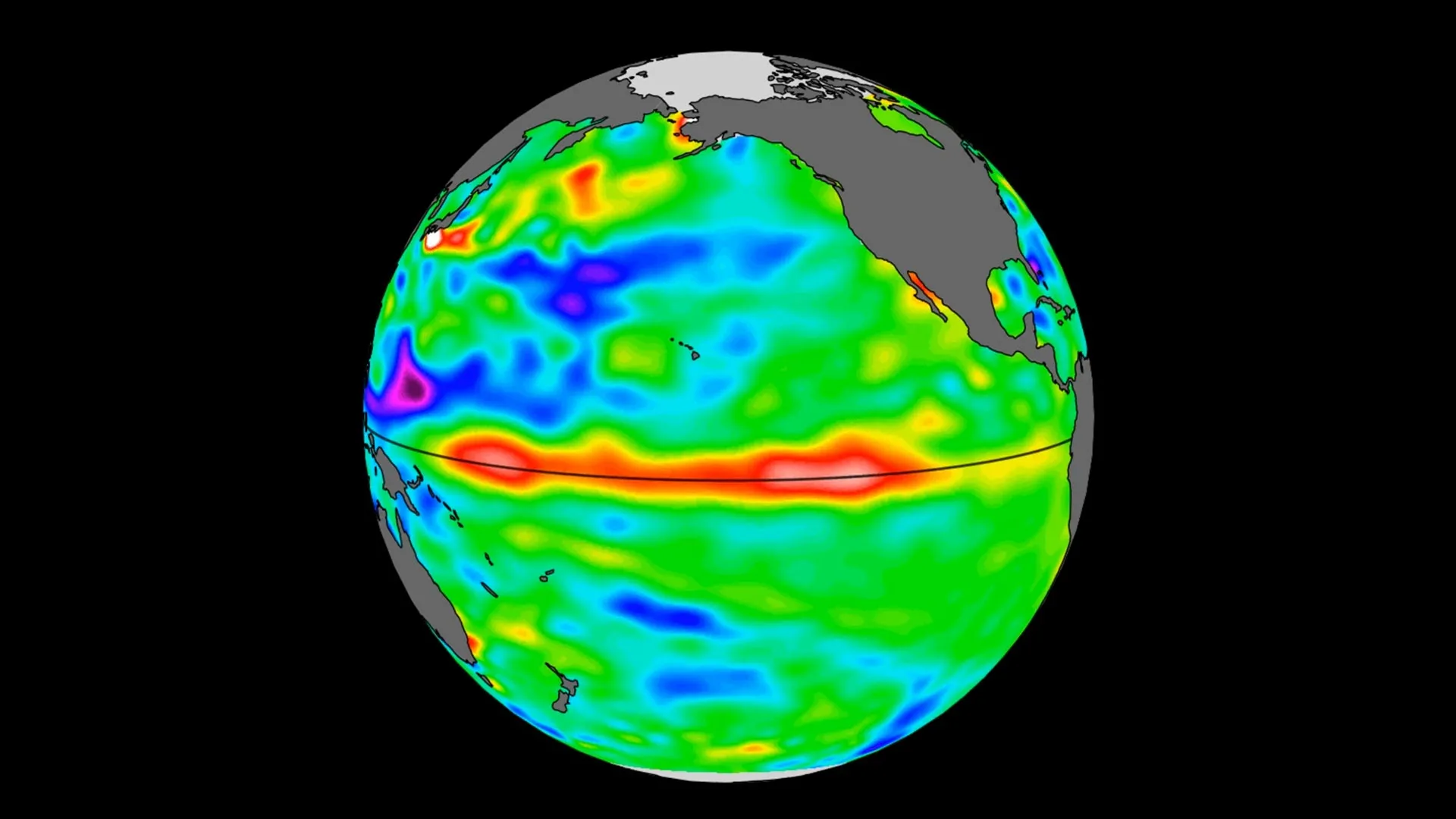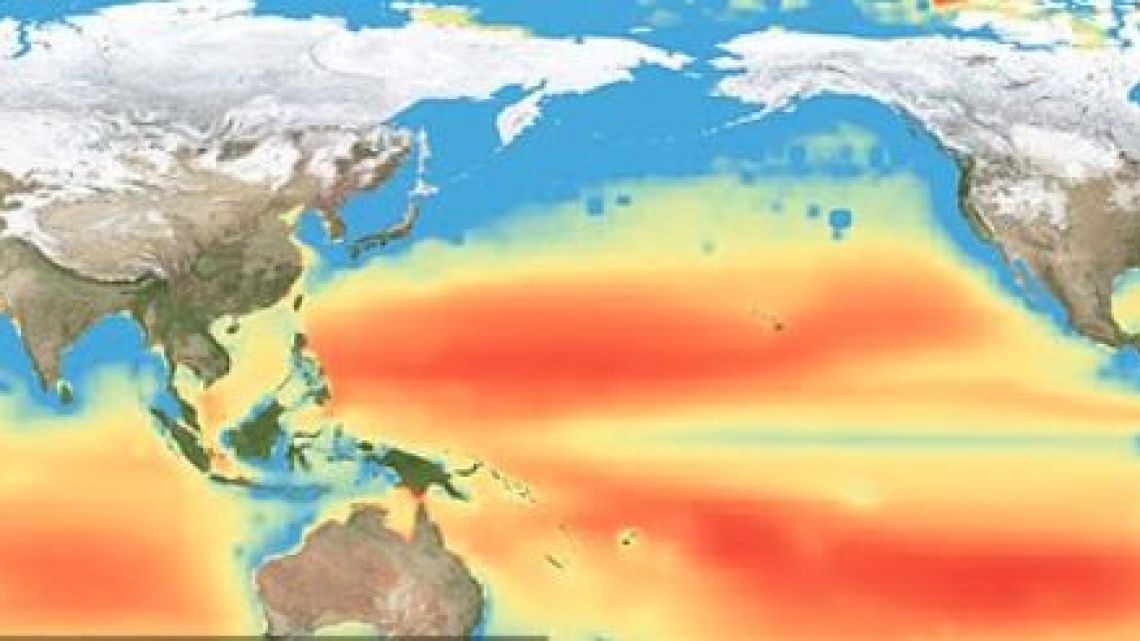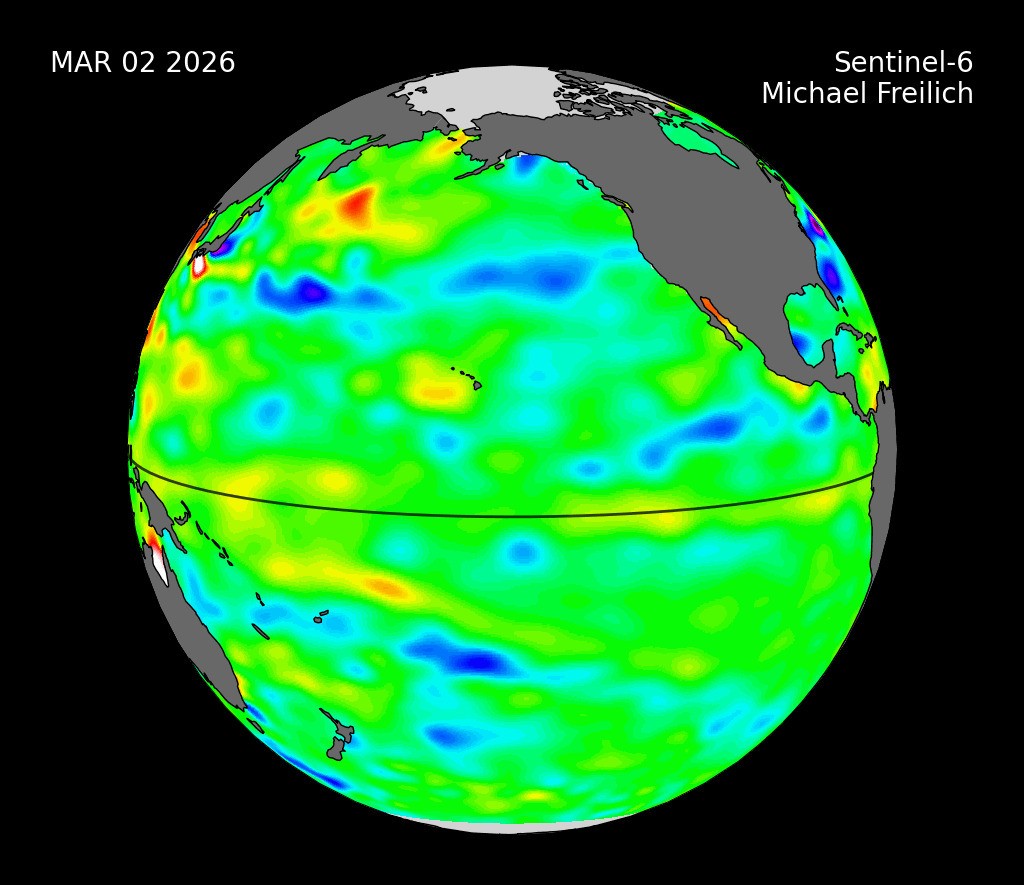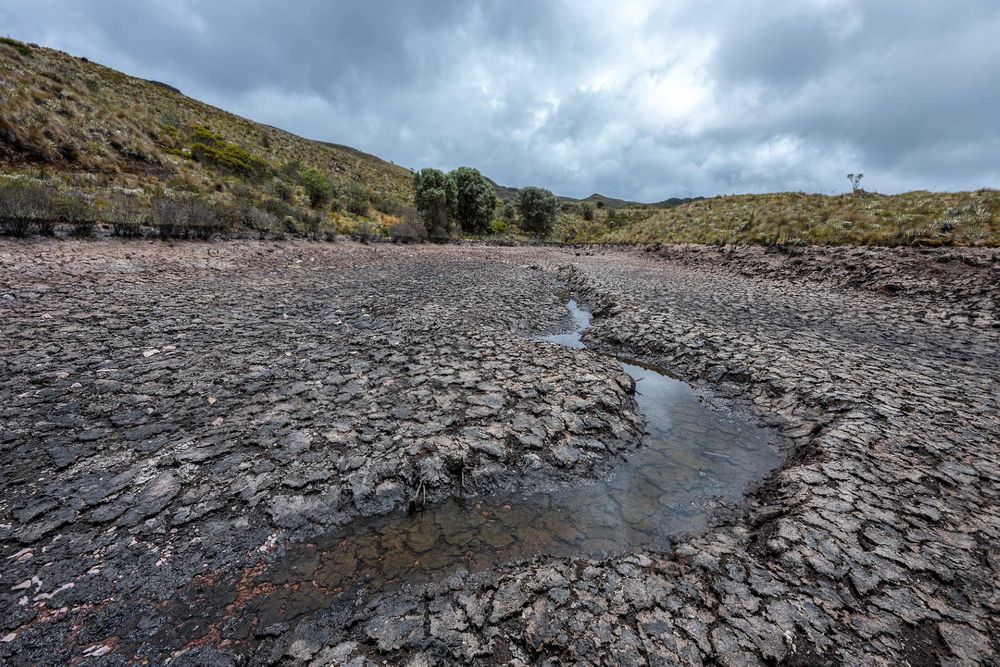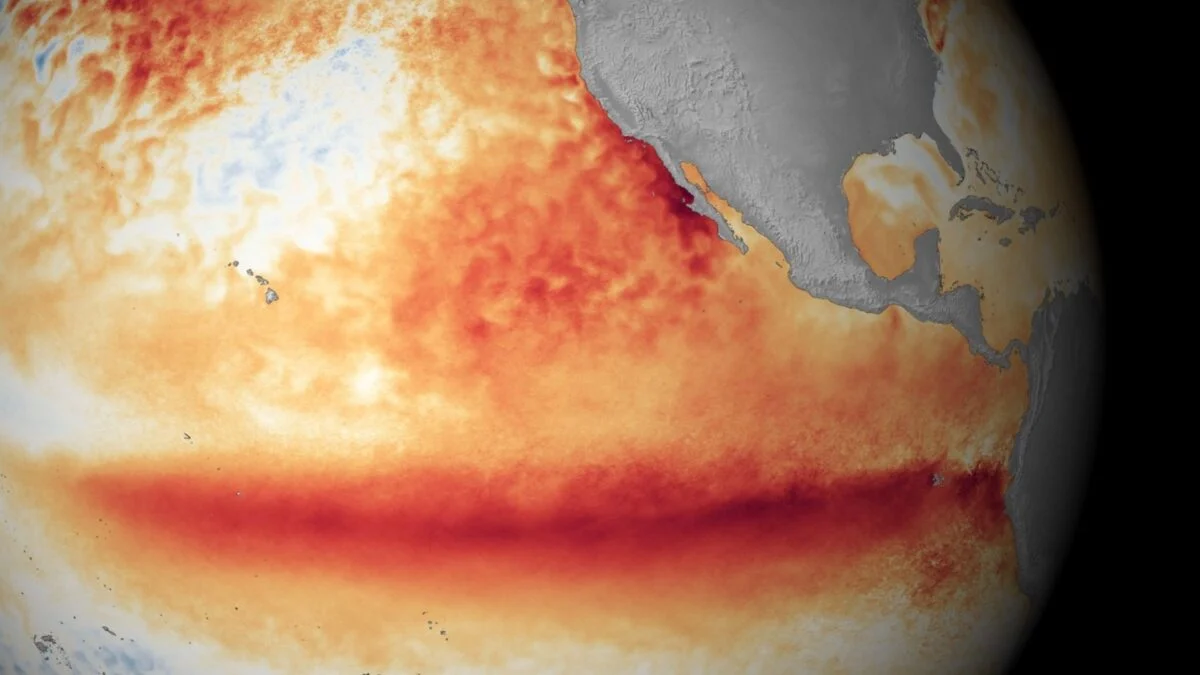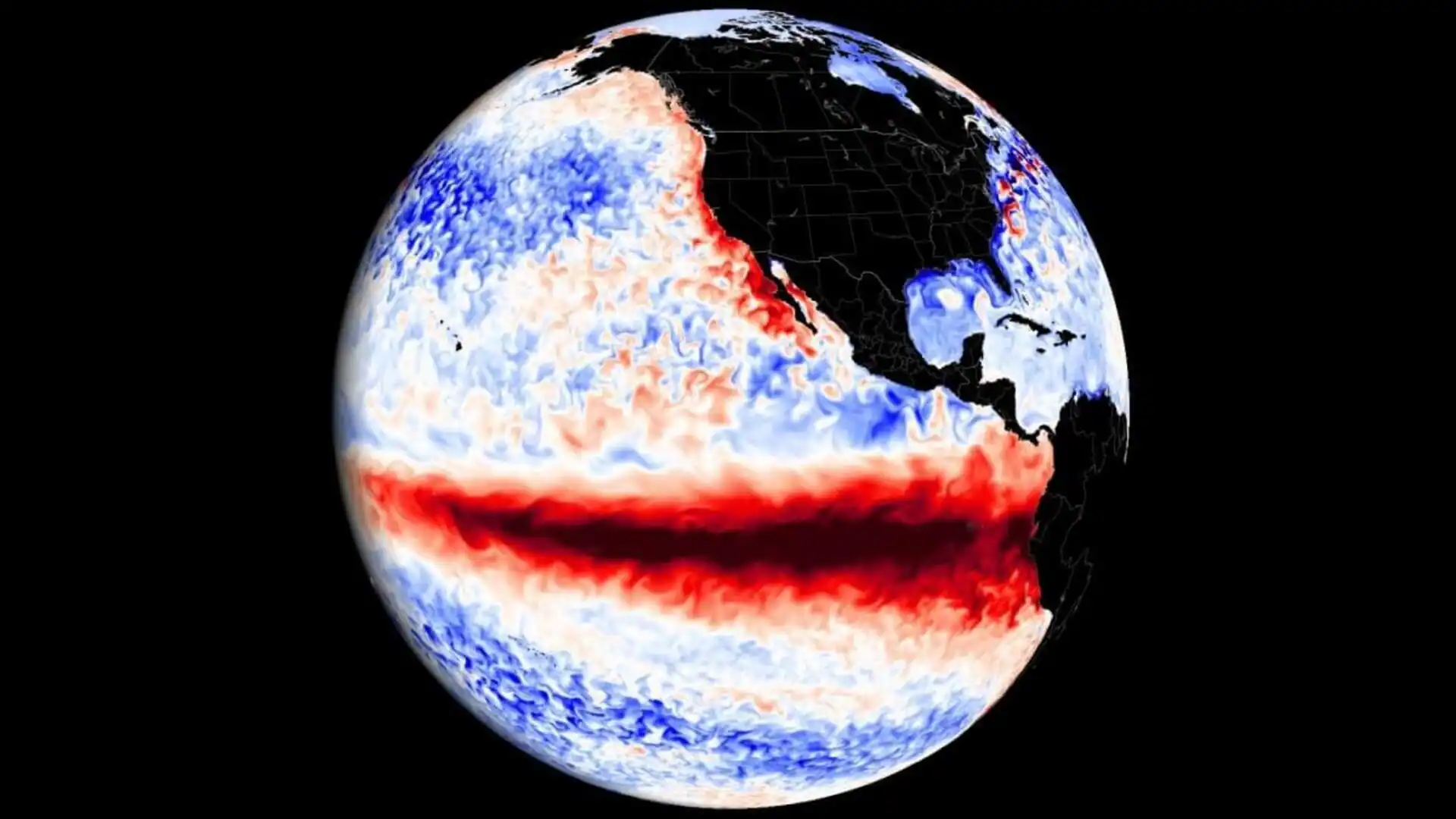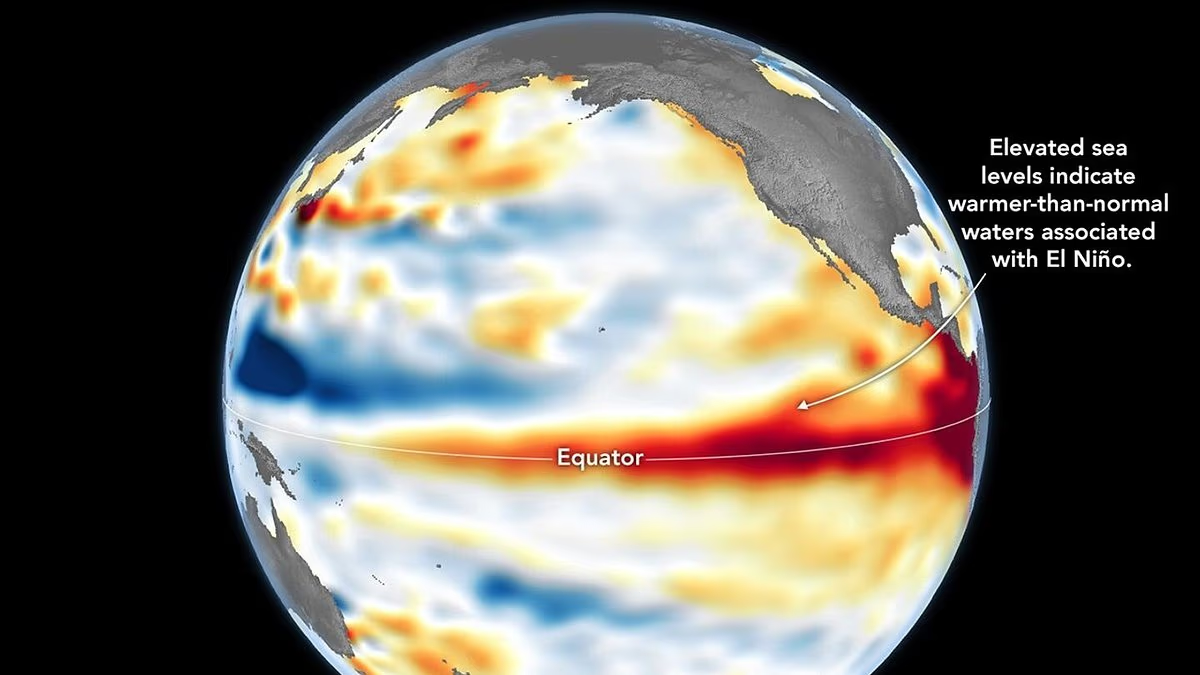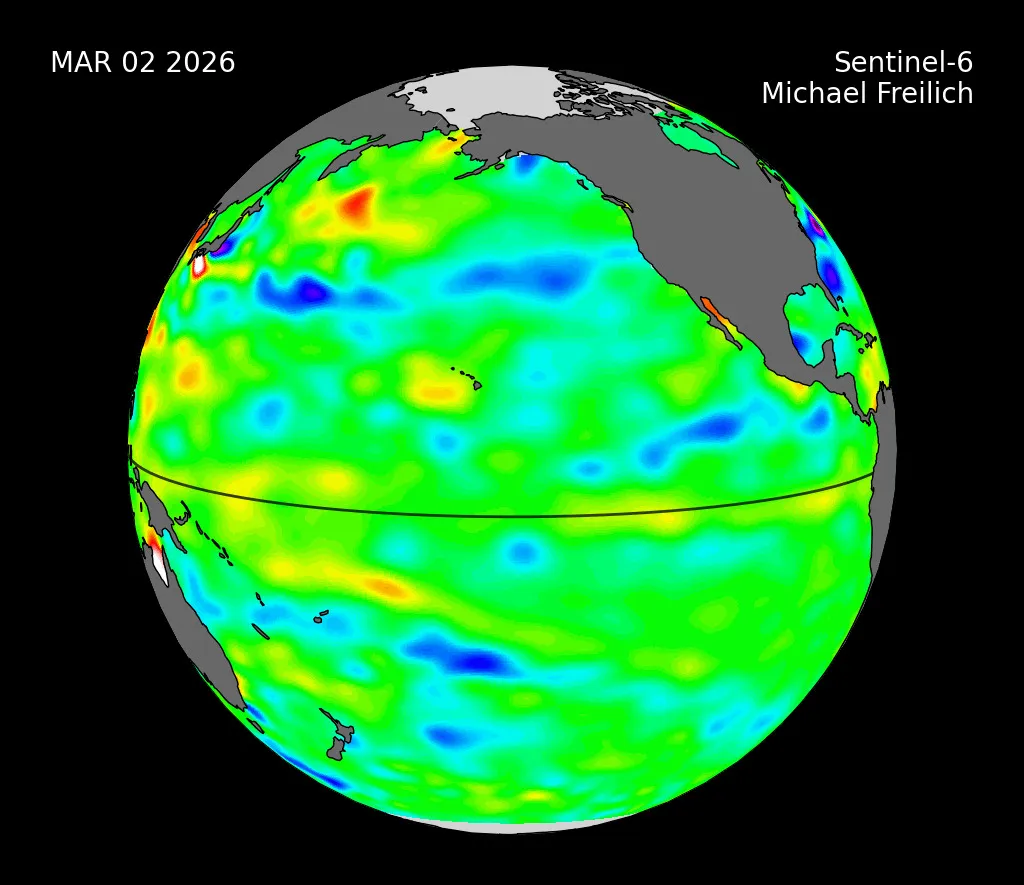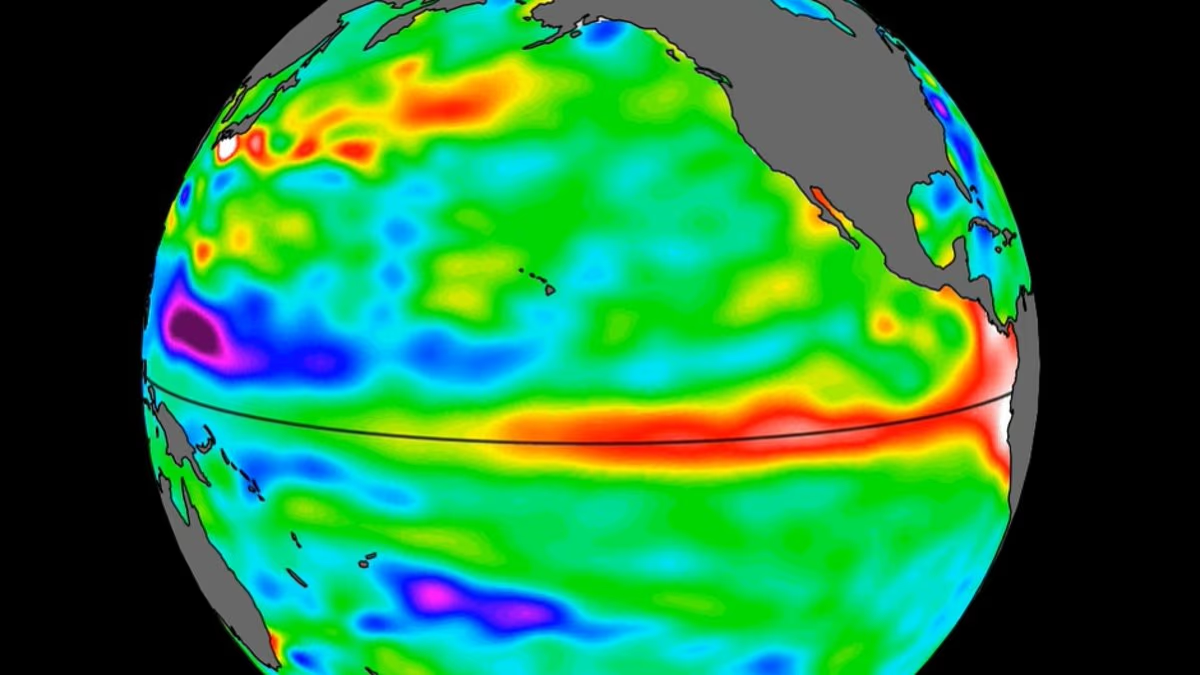
A swell of warm water hundreds of miles wide has arrived in the Pacific Ocean, NASA has revealed. Using satellite data, the space agency detected the warm water off the coast of South America. Worryingly, experts say this is an ominous sign that a Super El Niño will emerge 'later in the year'.'Waves of higher, warmer water move eastward across the Pacific Ocean a few months before an El Niño emerges. Several have shown up in 2026 satellite data,' NASA explained.The El Niño cycle has been going on for hundreds of thousands of years. However, current signs point to this year being one of the strongest El Niño patterns ever recorded.Experts predict extreme heat 'nearly everywhere', with the potential for global average temperatures to rise by as much as 3°C (5.4°F) this summer. Meanwhile, Super El Niño is expected to wreak havoc on rainfall patterns around the world. A swell of warm water hundreds of miles wide has arrived in the Pacific Ocean, NASA has revealedThe new data comes from the Sentinel–6 Michael Freilich satellite, which was launched in 2020 by NASA. This satellite measures and maps water height for the entire ocean every 10 days, down to fractions of an inch. In the case of El Niño, the satellite tracks what are called 'warm Kelvin waves'.Nadya Vinogradova Shiffer, lead program scientist at NASA Headquarters in Washington, explained: 'NASA's observation of El Niño uses sea level satellites like Sentinel–6 Michael Freilich to track massive Kelvin waves as they cross the Pacific, capture changes in Earth's ocean thermodynamics, improve forecasts of weather extremes, and help communities prepare for potential coastal hazards.' Kelvin waves typically form after brief periods when winds over the far western equatorial Pacific Ocean moving from east to west change direction. That effect, combined with a general weakening of easterly winds along the equator, causes water in the tropics of the western Pacific to get warmer and sea levels to rise. The wave that forms then travels east for several weeks, eventually reaching South America and causing water off the coast to heat up and rise. An El Niño develops as multiple Kelvin waves appear over the course of several months, and the warm water accumulates off the shores of Colombia, Ecuador, and Peru, according to NASA.
Super El Niño inches closer as swell of warm water arrives in Pacific
Using satellite data, NASA has detected a swell of warm water off the coast of South America.
917 words~4 min read