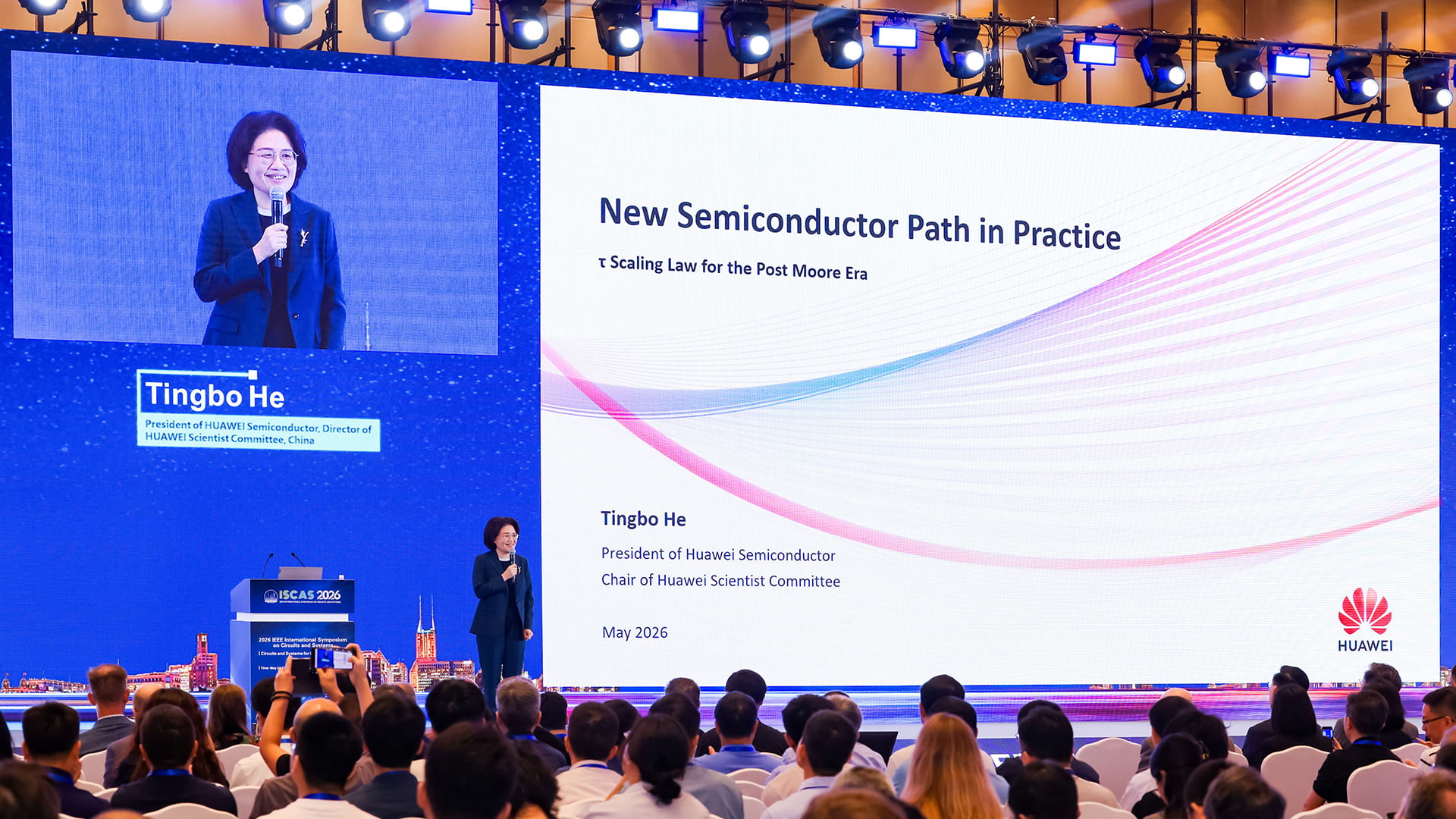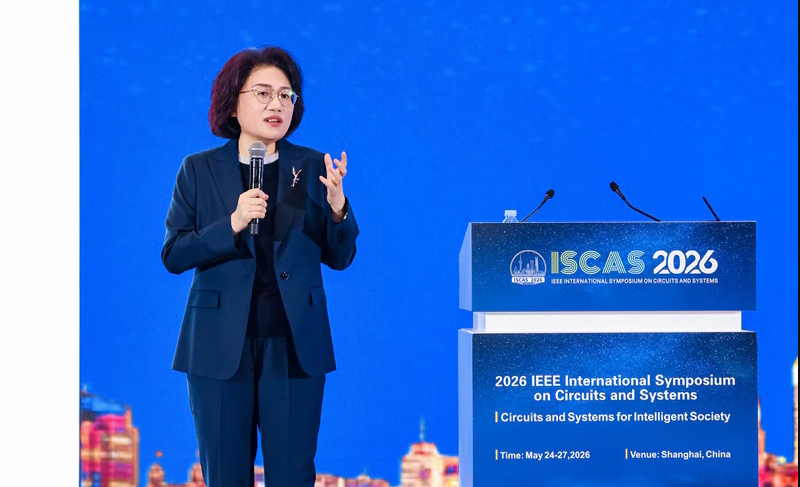
While China's semiconductor industry navigates intensified trade hurdles and narrows the gap with global competitors, a newly proposed industry theory from Huawei Technologies Co could alter the country's chip development trajectory with far-reaching global implications, experts said.
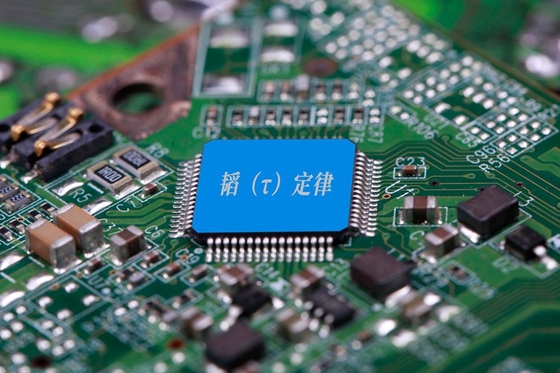
Tau Scaling Law, introduced by He Tingbo, president of Huawei's semiconductor business department, in a paper published in the academic journal Science China Information Sciences, is being described by industry experts as "a significant rethinking" of chip evolution since Moore's Law was first articulated more than six decades ago.
Moore's Law is the observation that the number of transistors on computer chips doubles approximately every two years. It was first made by Gordon E. Moore, co-founder of Intel, in 1965. The trend made computers faster, cheaper and more energy-efficient.
However, with transistors now becoming almost as small as atoms, close to the physical extreme of contemporary manufacturing capabilities, Moore's Law is starting to hit a wall.
Zhou Jianjun, a professor at Shanghai Jiao Tong University's School of Integrated Circuits, said that Huawei is looking for a different path to improve performance — not by shrinking transistors any further, but by making a group of chips work better together as a system.