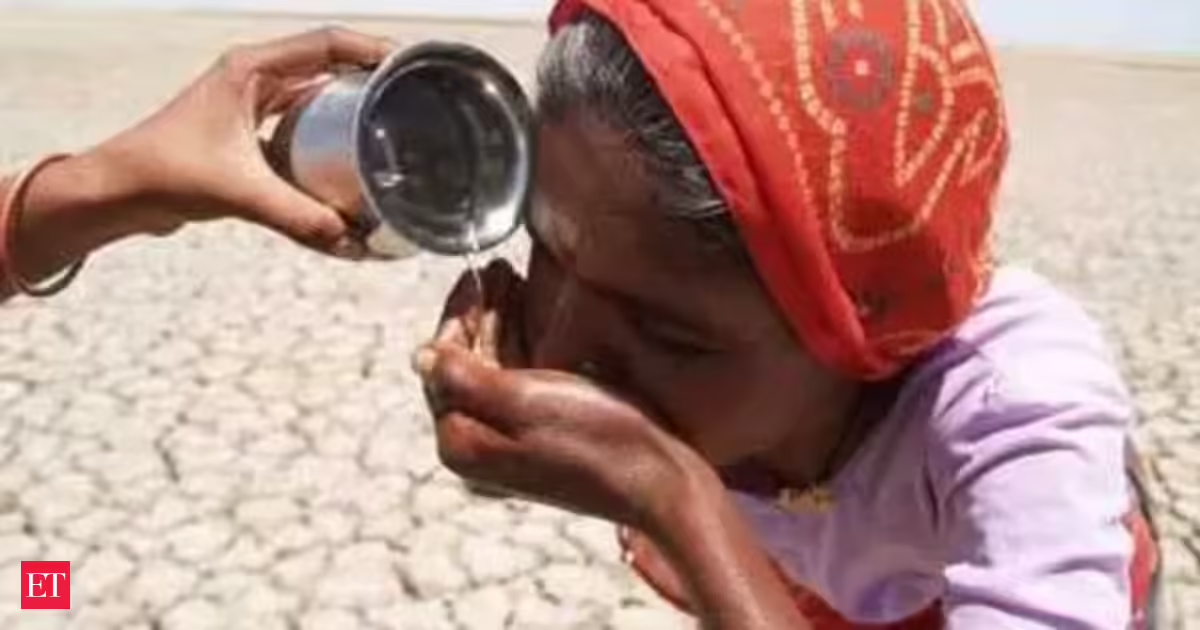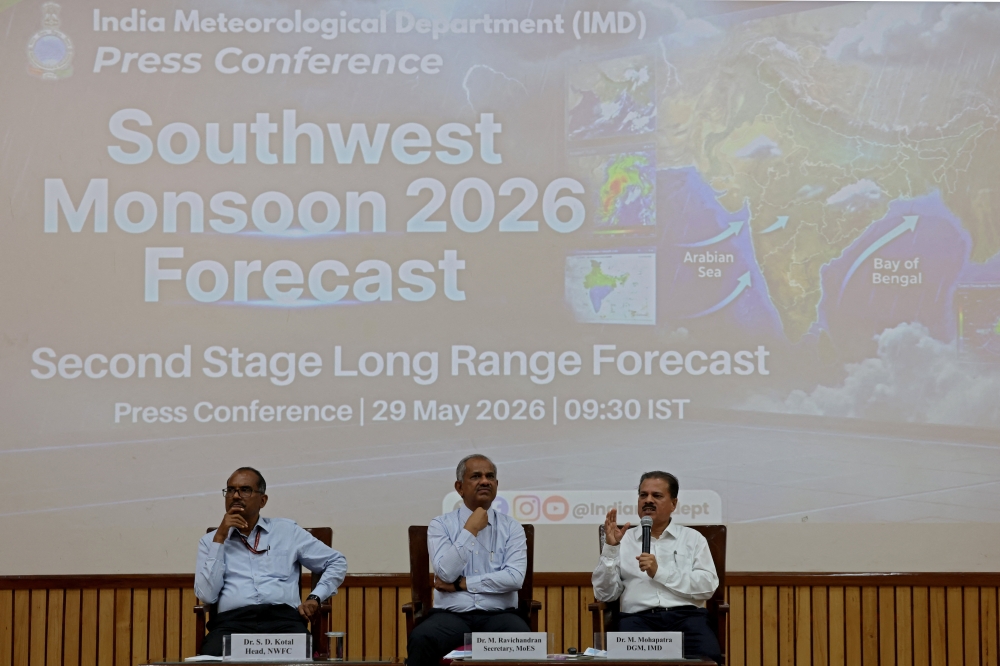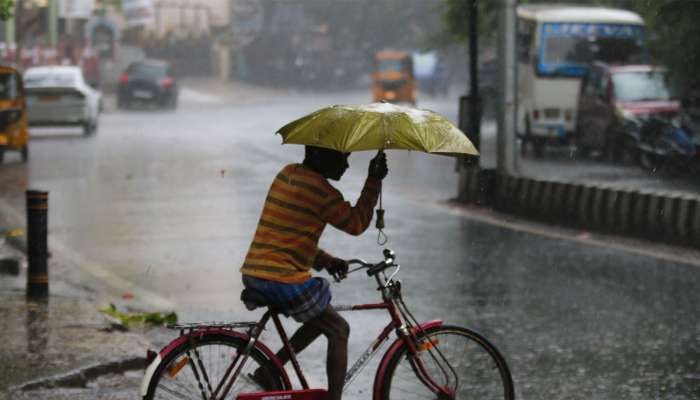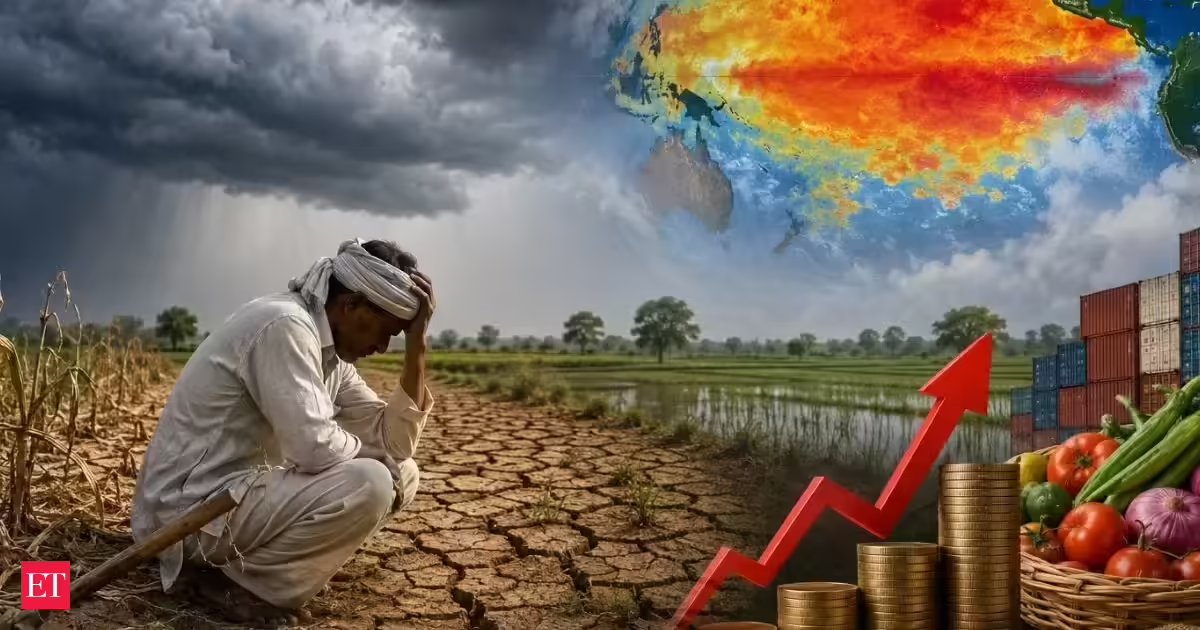
The India Meteorological Department (IMD) delivered a sobering update on Friday by maintaining its forecast for a below-average monsoon in 2026. The weather watchdog warned that the notorious El Nino weather pattern is rapidly locking into place across the equatorial Pacific Ocean with a staggering 92% probability of dominating the crucial June to September season. With cumulative rainfall projected at just 90% of the long term average, the nation is staring at its weakest monsoon in over a decade. A research report from HDFC takes a deep dive behind these grim meteorological numbers to map out the economic wreckage this climatic shift could leave in its wake. This report breaks down how the developing dry spell is poised to squeeze agricultural output and trigger a fresh wave of inflationary pain leading to disruption of rural consumption and rate hike risks.ALSO READ | IMD retains below-normal monsoon forecast; Raises worries for farms and food billsThe return of the problem childTo understand the scale of the threat, it helps to look at the mechanics of the weather anomaly itself. El Nino, which translates to the little child, involves a periodic and unusual warming of sea surface waters in the central and eastern equatorial Pacific Ocean. This thermal disruption fundamentally alters global atmospheric circulation patterns, weakening the cross-equatorial winds that normally push moisture heavy clouds across the Indian subcontinent.According to the HDFC, India is transitioning directly from a stabilizing neutral phase into a full-scale El Nino event that is expected to intensify through June and July. This timing is particularly dangerous because the early summer months lay the foundation for the entire agricultural cycle. The weather office expects June rainfall to hover around 92% of the long term baseline, pointing to an uneven and sluggish start to the annual downpour.For an economy that relies on the four-month monsoon window for more than 70% of its total annual precipitation, the threat is structural. Despite decades of heavy investment in agricultural infrastructure, roughly half of the country's net cultivated area remains completely dependent on rain. HDFC points out that the real damage of an El Nino year is rarely about the overall headline deficit alone. Instead, it is the erratic spatial distribution and the highly unpredictable timing of the dry spells that break the back of the farming community.The big dry?The most immediate casualty of a sub-par monsoon is the crucial Kharif crop season, where sowing begins with the arrival of the summer rains. The HDFC report paints a worrying picture for several key staples that form the backbone of the Indian diet and agrarian economy. Crop-critical sowing phases for paddy, pulses, cotton, coarse grains like maize, and oilseeds are highly sensitive to initial soil moisture. A delayed onset or extended dry patches in June and July can ruin seedlings or force farmers to shift to lower-yielding alternative crops.Historical data analyzed in the report reveals that previous severe El Nino cycles, such as the major disruptions seen in 2002 and 2009, caused sharp double digit drops in crop productivity across dozens of major agricultural districts. Rice paddy, the nation's primary food security crop, is highly vulnerable in non-irrigated belts. Similarly, the report warns of output volatility for pulses and edible oilseeds, categories where India already relies heavily on expensive foreign imports to balance its domestic demand.Compounding this agrarian distress is an unfortunate geopolitical backdrop highlighted by the analysts. Farmers in 2026 are not just battling a hostile sky, they are also dealing with a volatile Middle East. Ongoing regional conflicts have choked shipping lanes, sending global freight costs soaring and disrupting the supply chain for imported fertilizers and raw materials. HDFC stresses that this creates a double whammy for the rural economy. Farmers are facing a simultaneous squeeze from both ends: lower crop yields on the output side and significantly inflated production costs on the input side.The inflationary pressureWhen agricultural output stumbles, the shockwaves travel instantly from rural fields to urban dinner tables. Food items command a massive share of the consumer spending basket in India, which means any supply side disruption triggers immediate inflationary pressures. The research report sounds an alarm on food inflation, noting that retail prices for staples and perishables could spike rapidly as supply gaps emerge.Vegetables are expected to be the first line of escalation. Past El Nino data compiled by the researchers shows that summer monsoon dry spells often cause seasonal spikes in vegetable inflation that are twice as large as a normal year. Even if staple cereals remain relatively stable due to state buffer stocks, a sudden surge in the prices of highly volatile items like tomatoes and onions can distort headline inflation metrics.This presents a serious headache for the Reserve Bank of India (RBI), which has been trying to navigate a delicate path toward lowering borrowing costs. The central bank has projected retail inflation at 4.6% for the fiscal year, explicitly marking the developing El Nino and expensive crude oil as major upside risks. HDFC report emphasises that the central bank cannot easily look through extended food price shocks. If a weak monsoon pushes headline inflation higher, the central bank will be forced to keep interest rates elevated for a longer period. Higher lending rates act as a drag on the broader corporate landscape, raising borrowing costs for businesses and slowing down private capital expenditure.The rural engine can lose steamBeyond crop yields and interest rates, the HDFC report analysis uncovers a deeply concerning trend regarding domestic consumption. Nearly half of the Indian workforce earns its livelihood from agriculture, meaning that farm income dictates the purchasing power of hundreds of millions of rural households. When a monsoon fails, the disposable income of this massive population segment evaporates.The report links rural income health directly to the corporate balance sheets of consumer facing industries. Historically, a strong monsoon fuels a 10% to 12% volume growth in rural sectors. Conversely, an El Nino induced drought causes immediate cutbacks on non-essential spending. The analysts warn that demand for consumer goods, electronics, two-wheelers, and tractors will likely face a sharp slowdown in the coming quarters. Fast-moving consumer goods companies, which have been banking on a rural demand revival to support their volume growth, may have to brace for a period of stagnation as household budgets tighten.Structural shock absorbersWhile the report details a grim economic forecast, it emphasize that India is far from defenseless. The country enters the 2026 crisis with much stronger structural shock absorbers than it possessed during the disastrous droughts of previous decades. Agriculture's total share in India's overall gross value added has steadily declined over the years, settling at around 14%, while the services sector now drives more than half of the economic engine. This structural evolution means that a weather shock, while painful for livelihoods, does not cripple overall national output the way it once did.Also, physical buffers are in remarkably good shape. India is entering this dry season with reservoir water storage levels running significantly above their historical ten-year averages. These well-stocked reservoirs offer a critical lifeline for irrigated farming zones, potentially offsetting some of the rain deficit in central and western India. Government foodgrain stockpiles remain robust, giving policymakers the ammunition needed to intervene through open market sales to cool down speculative price spikes.The HDFC report suggests that the 2026 El Nino should be treated as a major macroeconomic risk to be monitored with high vigilance, rather than an existential crisis to be feared. The true economic cost will ultimately be determined not by the headline 90% rainfall figure, but by how effectively the government manages trade policies, export restrictions and regional water distribution in the high-stakes months ahead.
Tantrum of a problem child threatens to cool India's economic engine
India is heading toward a below-average monsoon in 2026, with the IMD retaining its forecast of rainfall at 90% of the long-term average as El Nino conditions strengthen with a 92% probability during the June-September season. An HDFC report warned that weak and uneven rainfall could hurt Kharif crop output, especially paddy, pulses, oilseeds and maize, triggering food inflation and weakening rural demand.
1,271 words~6 min read