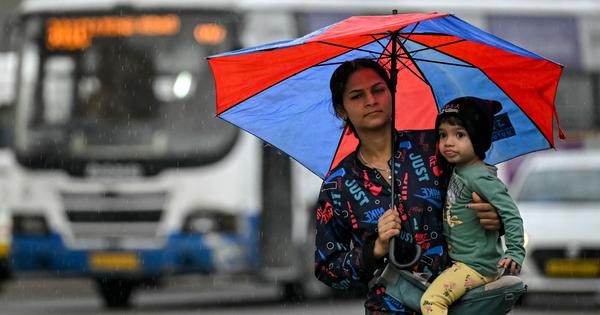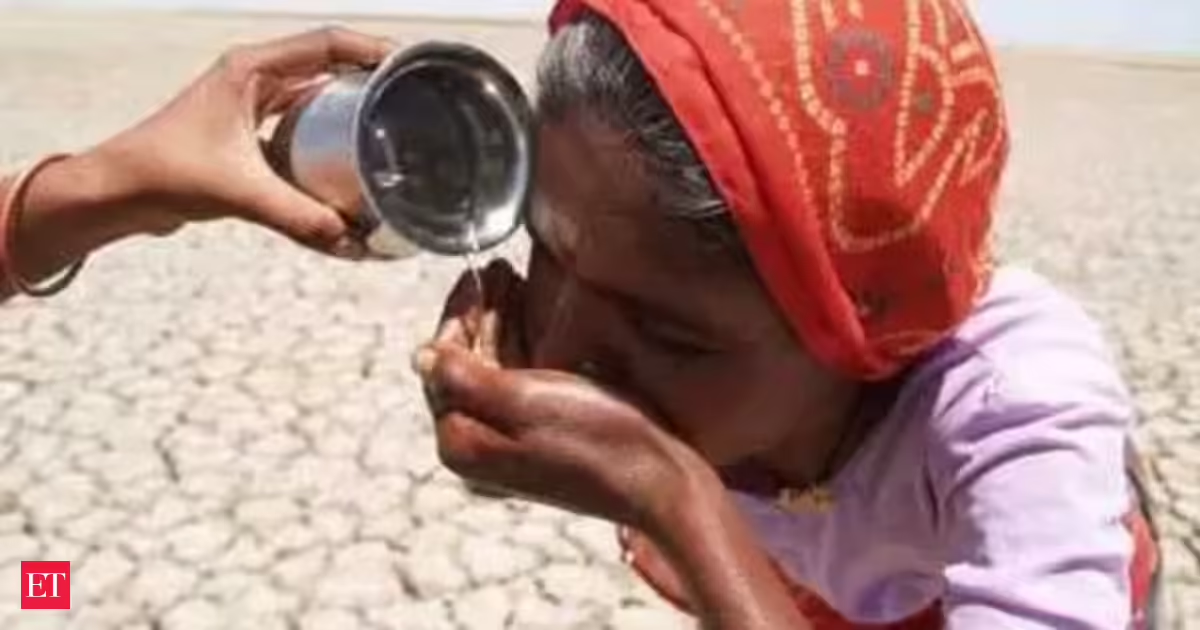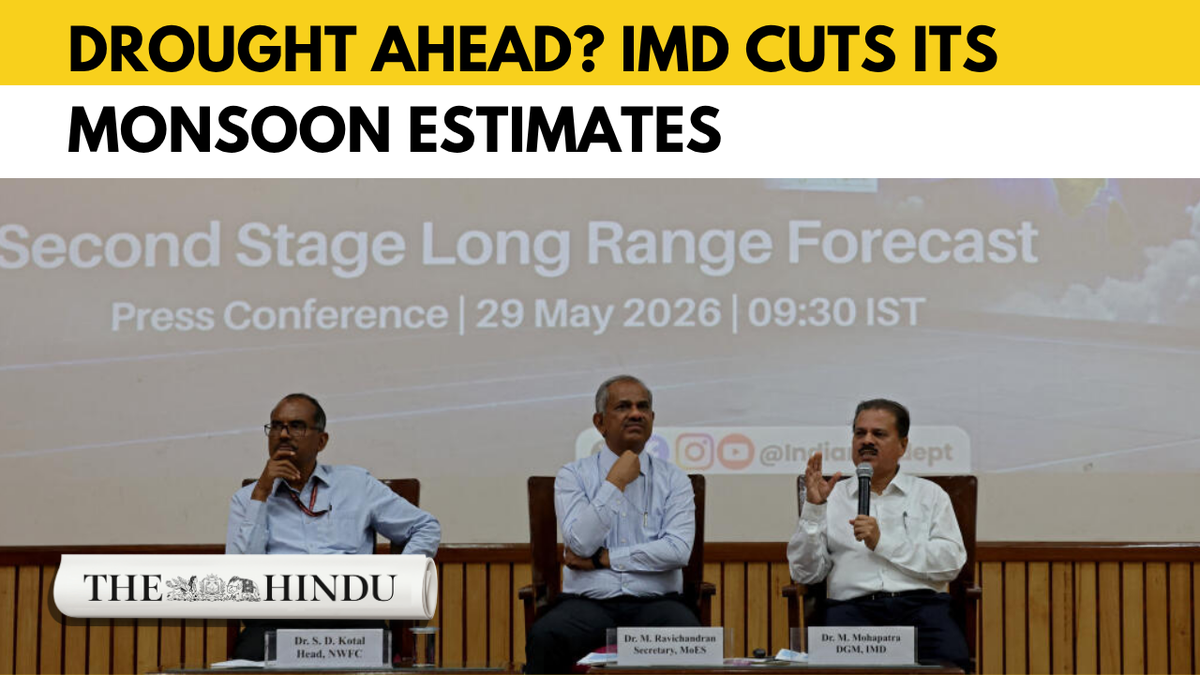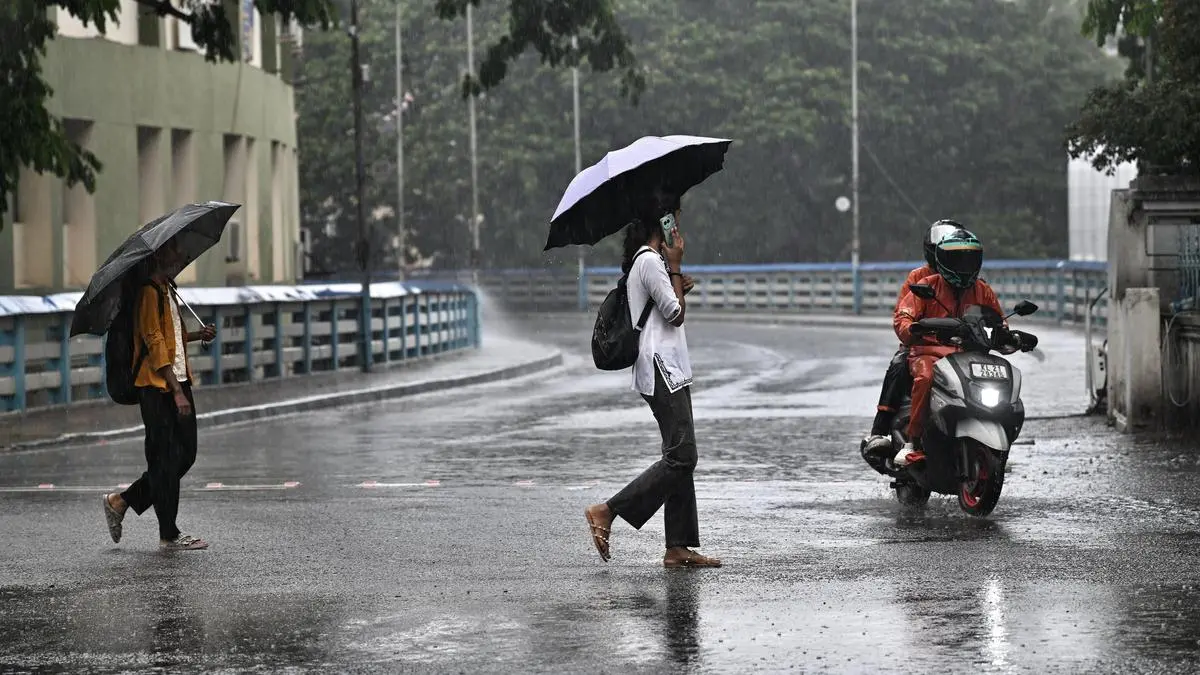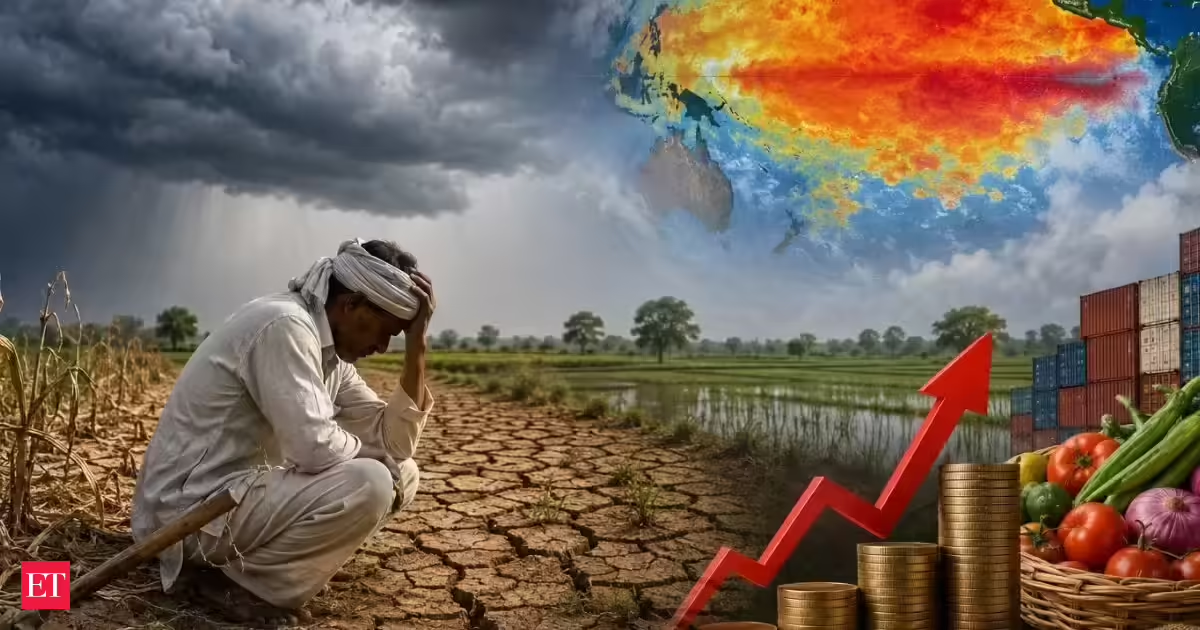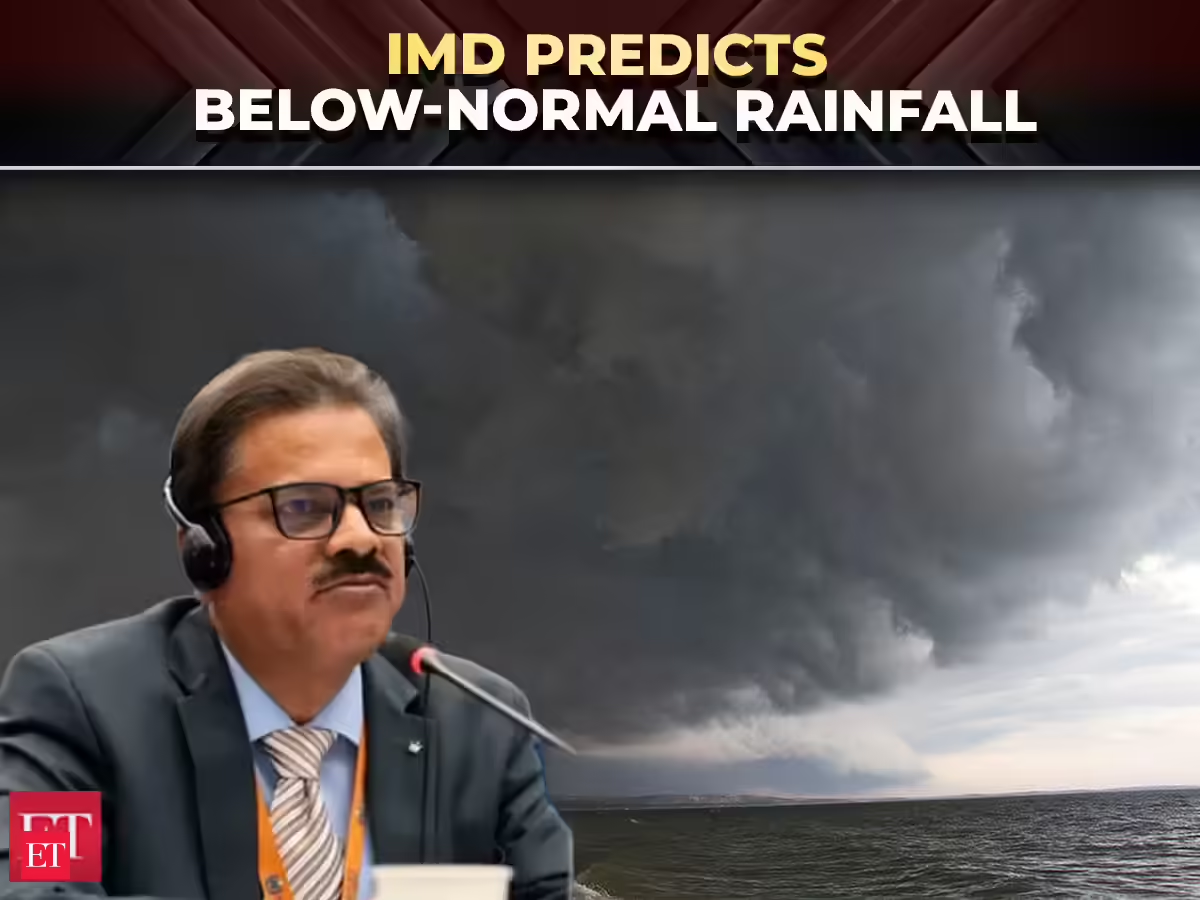
New Delhi : The India Meteorological Department (IMD) on Friday revised its seasonal rainfall forecast downward — from 92% of the long-period average issued in April to 90% — and attached a 60% probability to a deficient season, meaning there is a better-than-even chance that total rainfall falls below the threshold that even qualifies as below-normal.IMD also assigned a 24% chance of a below-normal monsoon (90–95% of LPA), 14% for normal (96–104%), 2% for above-normal, and zero for excess. (ANI)The LPA for the June-to-September season, calculated over the 1971–2020 period, is 87cm – if the prediction bears out, this would mark the lowest monsoon season rainfall in 11 years. The forecast carries a model error of ±4%.IMD also assigned a 24% chance of a below-normal monsoon (90–95% of LPA), 14% for normal (96–104%), 2% for above-normal, and zero for excess. Combined, there is an 84% probability of below-normal rainfall or worse.Two developments since the April forecast have driven the revision downward. El Niño is now expected to arrive earlier and bite harder than previously assessed. “We can expect weak El Niño conditions to set in as early as June,” Ravichandran said. Currently, neutral ENSO conditions are transitioning towards El Niño over the equatorial Pacific, with the latest forecasts from IMD’s Monsoon Mission Climate Forecast System and other climate models indicating El Niño will develop during the monsoon season itself.The agency added that El Niño conditions were likely to evolve into moderate category through the monsoon season, and strong category post-monsoon.Equally significant is the disappearance of the IOD buffer. The Indian Ocean Dipole — which, in a positive phase, can partially offset El Niño’s suppressive effect on the monsoon by warming the western Indian Ocean and drawing moisture towards India — is currently in a neutral state and is likely to remain so through the season, IMD said. This removes a mitigating factor that had earlier offered some comfort.Nearly half of India’s net-sown area lacks irrigation access, and the monsoon replenishes 91 natural reservoirs that supply power generation, industry and drinking water. The season arrives as cultivators already face a potential shortfall in fertiliser supplies caused by the war in West Asia.The weather forecaster too cautioned that below-normal rainfall may lead to challenges for agriculture, water availability, hydropower generation and ecosystem sustainability, with increased risks of drought, heat stress and pressure on drinking water resources.The central estimate of 90% sits at the deficient threshold — a convergence that requires context, officials explained. M Ravichandran, secretary of the ministry of earth sciences, said: “The forecast probability is not the only factor. We have issued the 90% of LPA forecast based on the total quantity of rainfall that we are likely to receive during the season. So, we look at dynamic factors also.”Dr G V Ramanjaneyulu, executive director, centre for Sustainable Agriculture said, “The problem is not just the total reduction in rainfall, but the way the rainfall is distributed. The delay in the onset of rainfall, along with dry spells that may occur in between, will be the more serious issues. Crops can manage dry spells of about one week. Beyond that, soils are unable to support them. Total rainfall reduction will increase our dependency on irrigation. Insufficient rainfall will prevent groundwater recharge.”The earlier assumption that rainfall in June would be relatively unaffected has also been overturned. IMD now projects below-normal rainfall for the country as a whole in June, at below 92% of LPA — a significant shift from the April picture. Below-normal monthly rainfall is very likely over most parts of the country, except parts of Northwest India, Northeast India, the southern Peninsula and isolated pockets of central India.Spatially, the sharpest deficit is forecast for Northwest India at below 92% of LPA. The Monsoon Core Zone — the belt of rainfed agriculture across central India — is also forecast at below 94% of LPA. Central and south Peninsular India face a similar below-normal outcome. Northeast India alone is forecast at normal (94–106% of LPA).The onset itself is now in doubt. IMD had forecast on May 15 that the monsoon would arrive over Kerala on May 26, six days ahead of the June 1 normal date. That timeline has been pushed back: IMD’s extended range forecast now shows largely dry conditions over Kerala between May 28 and June 4, with only a marginal improvement between June 4 and June 11. Rainfall is expected to pick up only after June 11.Two factors are behind the delay. A typhoon developing over the West Pacific is pulling significant moisture away from the Arabian Sea and Bay of Bengal. Separately, a cyclonic circulation over the Lakshadweep region is diverting rainfall over the ocean rather than the land surface over Kerala. “We are expecting that monsoon will gradually advance to more parts of Arabian Sea and extreme Peninsular India during next one week. Most of the rainfall now is happening over the ocean and not on the mainland. So we have not declared monsoon onset over Kerala yet,” said Ravichandran.June will also be hotter than previously estimated. IMD has forecast above-normal heatwave days over many parts of Uttar Pradesh, Haryana, Punjab, Bihar, Odisha, Chhattisgarh, Gujarat and Andhra Pradesh, and over isolated regions of Maharashtra, Telangana, Himachal Pradesh and Tamil Nadu. Some of these regions are expected to record around five to six heatwave days in June against a normal of three. “Normally 3 heat wave days are expected in these regions. But we are expecting 2-3 additional heat wave days in June,” said M Mohapatra, director general, IMD. Below-normal heatwave days are expected in Rajasthan and Jharkhand.An ICRA analysis warns that a weak monsoon combined with the fertiliser supply disruption will weigh heavily on agriculture outcomes in FY2027, with agri-GVA expected to grow at sub-1.5% — against an estimated 2.4% in FY2026 — with kharif MSP hikes of 0.1–8.8% offering only limited support.The non-crop segment — livestock, forestry, fishing and aquaculture, which accounts for 38–39% of agri-GVA — is expected to prevent an outright contraction. Current reservoir levels remain healthy, above both year-ago and historical averages. Weakening agricultural output and the pass-through of higher global commodity prices amid the West Asia conflict pose a further downside risk to rural demand.State governments and district administrations have been advised to ensure cooling shelters are operational, safe drinking water is available, and health surveillance and emergency response systems are on heightened readiness. Elderly people, children, outdoor workers and those with pre-existing health conditions are at particular risk from prolonged heat exposure.
A weak monsoon looms as MeT dept lowers its forecast
The agency added that El Niño conditions were likely to evolve into moderate category through the monsoon season, and strong category post-monsoon. | India News
1,082 words~5 min read