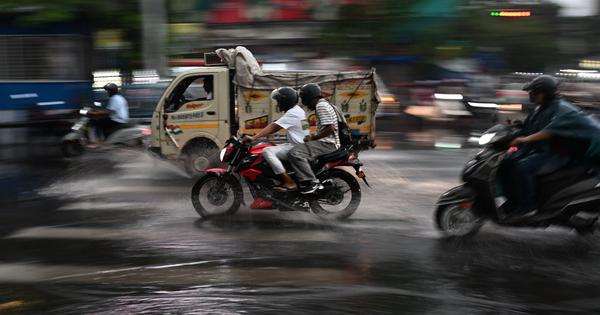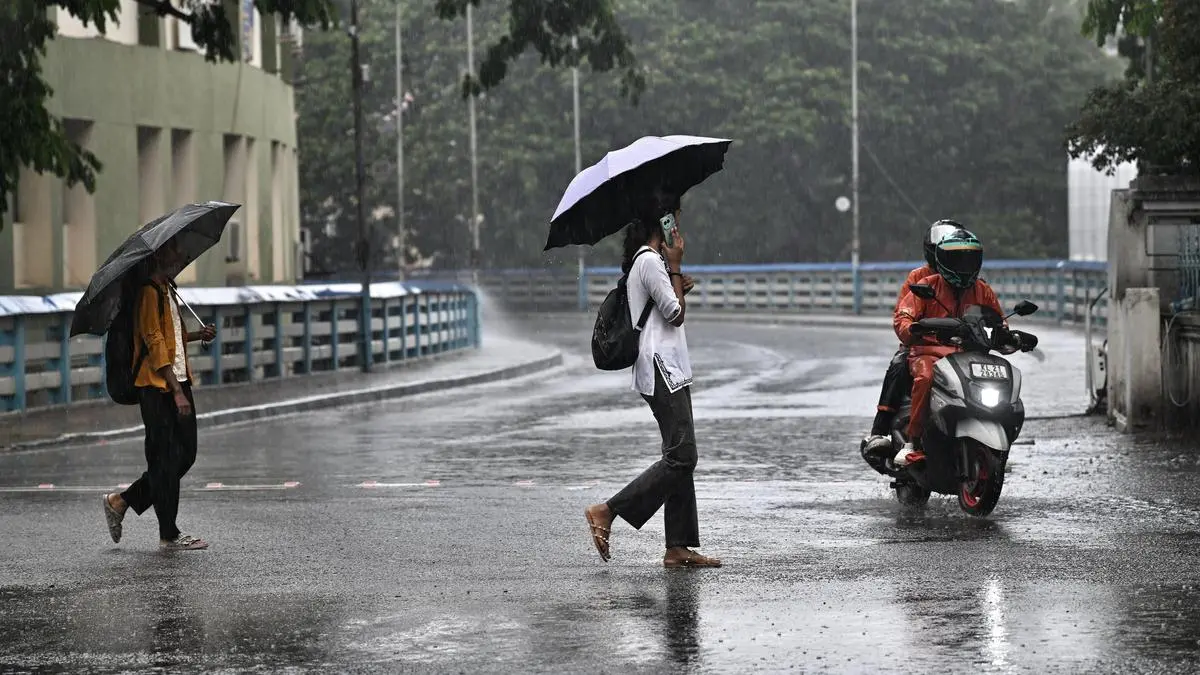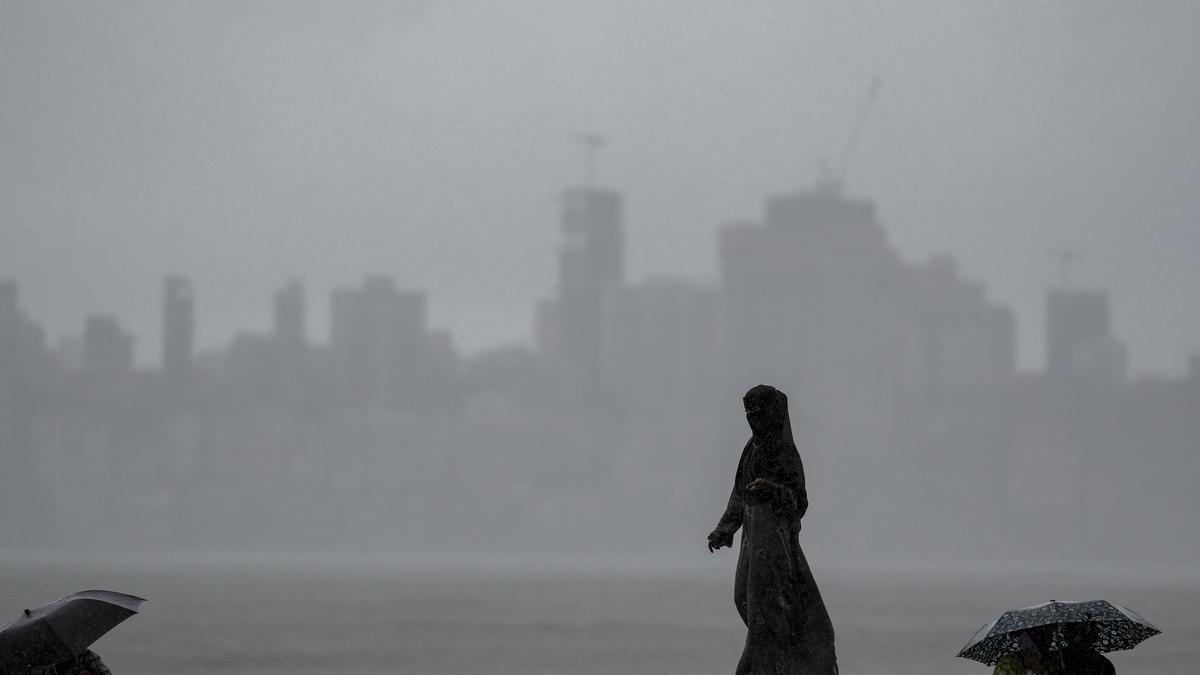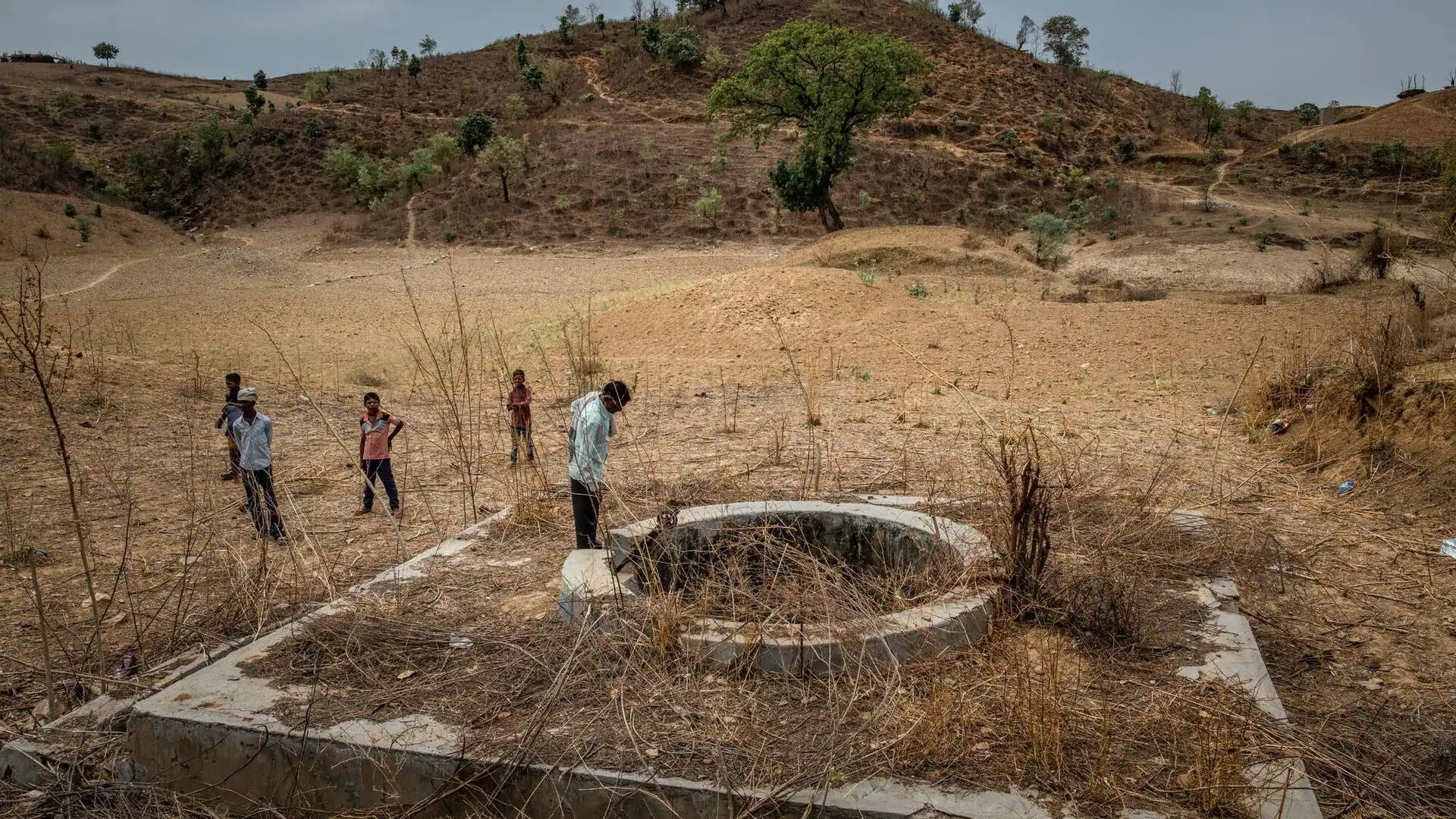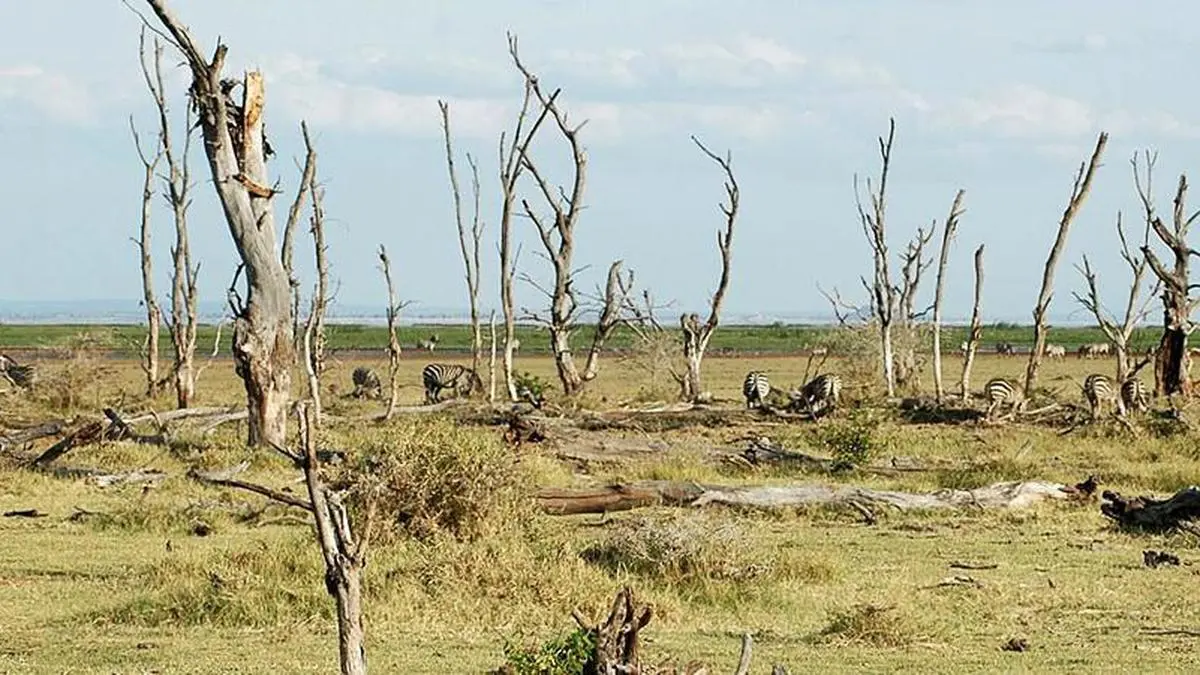
El Nino brings drought condition. Photo : Handout_E_Mail
| Photo Credit:
India Meteorological Department on Tuesday predicted a “below-normal” monsoon rainfall in July, quantitatively 94 per cent of the long-period average of 280.4 mm. However, the IMD indicated that a potential positive Indian Ocean Dipole (IOD) in September might marginally mitigate the adverse impacts of a strong El Niño.Given that June concluded with just 60 per cent of its normal rainfall and the bureau refrained from offering definitive long-term projections for July, the full impact of this seasonal deficit remains highly uncertain.Briefing media on the assessment of June forecast and the outlook for July, Mrutyunjay Mohapatra, director-general of IMD, said that monsoon rainfall in June was 99.5 mm against its long-period average of 165.3 mm, a fall of 39.8 per cent from the normal. It is the fifth lowest since 1901. In June, the weather bureau predicted monsoon to be less than 92 per cent of LPA.Next 15 days crucial“During July, below-normal rainfall is likely across most parts of the country except some areas of the north-west and north-east regions as well as east-central India and the eastern peninsular region where normal to above normal rainfall is likely,” he said.Mohapatra said that the impact of a below-normal monsoon in July, closely after the deficiency in June, may be on water availability for irrigation. “In general, there will be water stress. Farmers should opt for short-duration varieties and alternative crops where there is rainfall deficiency. But the Agriculture Ministry is better placed to issue such advisories,” he said, adding that IMD has been regularly sharing its inputs with the ministry.“It is early to say that the kharif crops sowing coverage would be low this year. However the next 15 days are very crucial for planting most of the kharif crops. Let us watch the progress of the monsoon in the heartlands of the country. There is definitely a worry while looking at water availability in our reservoirs and scorching heat,” said J S Sandhu, a former agriculture commissioner.1997 an exceptionOn IOD turning to ‘positive’, he said IMD’s own model still maintains the current neutral conditions to persist throughout the monsoon season (till September). However, there is a possibility of IOD turning to positive and if that happens it may marginally reduce the impact of El Nino. When asked on the impact of El Nino on 1997 monsoon (India received 2 per cent above normal rain), he said: “that was the only exception in a strong El Nino year.”IMD has also predicted that there may be good rainfall across the country at least in the first week of July due to a low-pressure system developing in the Bay of Bengal. This spell of rain may boost some sowing activities as kharif season’s acreage till June 25 has dipped 23 per cent from the year-ago level.IMD’s June rainfall data from 741 districts also show that only 181 (24 per cent) of them received either normal or excess precipitation whereas 560 (76 per cent) reported deficient rainfall up to 99 per cent. Gujarat’s Dwarka reported no rainfall in the month whereas the district’s normal rainfall for the first month of the season is 100.3 mm.Normal only in 25% regionsThe east and north-east subdivision received a record 40 per cent below normal rain at 197.5 mm (lowest since 1901) in June against the LPA of 328.4 mm for the region. Even with such a huge deficit, the actual rainfall in the east and north-east subdivision is still higher than the normal precipitation of any other region.The north-west subdivision, which is considered India’s food bowl, has received 53.7 mm against 78.1 mm normal, which is 31 per cent less than average. The central subdivision, majority of which is under rainfed conditions, has received 84.4 mm against 170.3 mm normal, which is 50 per cent below average and is the seventh lowest since 1901. The south peninsula subdivision has reported 117.4 mm rainfall in June against the LPA of 161 mm, which is 27 per cent below normal.Only 9 out of 36 meteorological subdivisions, having a fourth of the share in India’s geographical area, have reported “normal or higher” rainfall. An analysis of rainfall in 36 states and union territories shows that only 7 of them, having 21 per cent of the country’s total area, had “normal or higher” showers.Unfavourabel MJOMohapatra attributed the high deficit in June on some key factors. First, an unfavourable phase of the Madden-Julian Oscillation (MJO), which is a moving system of wind, cloud, and pressure that brings rain as it circles the equator. Second, there was no low-pressure system (LPS) formed during June, against normal 2-3 in the month. Besides, the emergence of El Nino conditions this month also negatively impacted the rainfall activity.El Nino is one of the three phases of the El Nino Southern Oscillation (ENSO) — a climate phenomenon characterised by changes in sea temperatures along the central and eastern tropical Pacific Ocean.The IMD chief also said that maximum temperatures in July are expected to remain above normal across most parts of India, except a few isolated areas in west central India, where normal to below-normal maximum temperatures are likely.Published on June 30, 2026