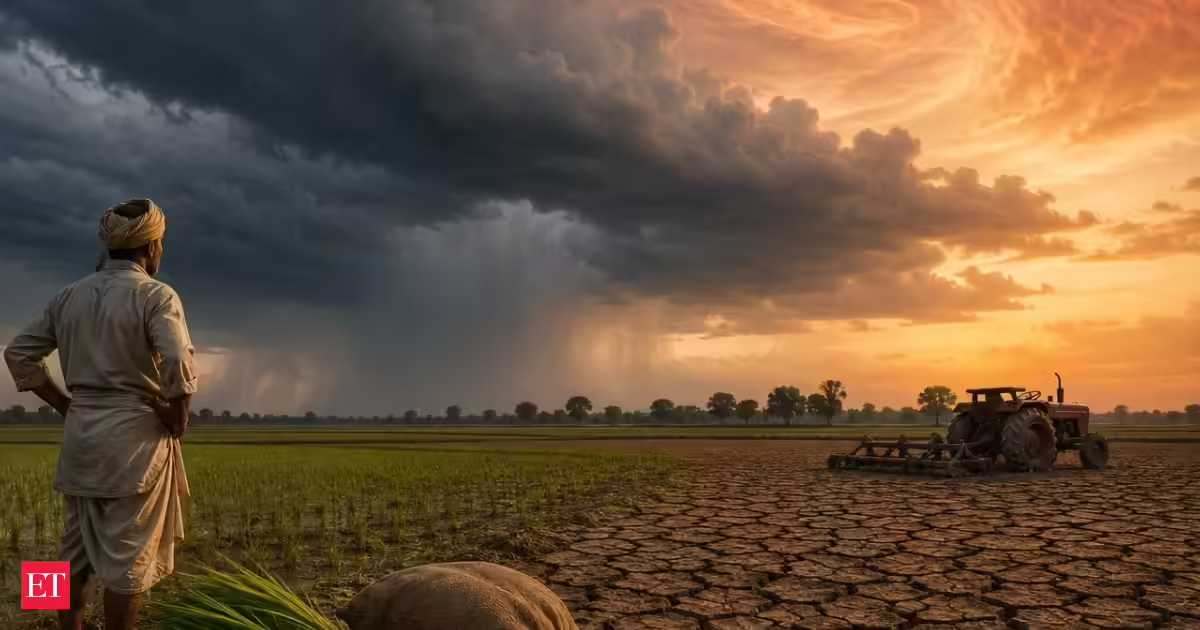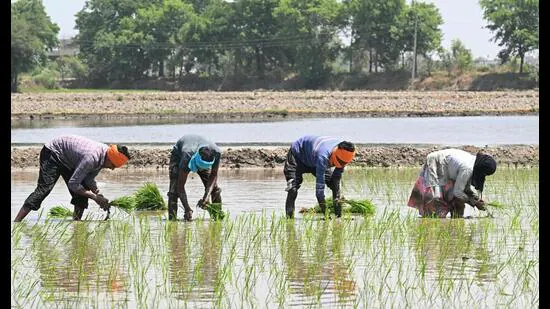
That the monsoon rains will be sub-par this year was admitted in the first forecast of the Indian Meteorological Department (IMD). The primary reason for this bearish outlook was the development of the El Niño weather system which is associated with lower monsoon rainfall.2026 is likely to have a rainfall deficit which will be much larger than what has been the case in the recent past. This will matter for agricultural production in the current and next two cropping seasons. (AFP)In the past few weeks, things have only become worse. El Niño conditions have strengthened and the monsoon is also facing headwinds from factors independent of El Niño. HT has discussed these in detail in its analysis of climatic patterns and rainfall in IMD’s gridded dataset.The translation of these climatic dynamics is being felt most acutely by farmers in Maharashtra who were told by IMD that the monsoon had arrived on June 8, cautioned by their chief minister that this was not the case, and are still waiting for the rains. The rest of the country, irrespective of whether or not the monsoon has arrived, is not doing any better. Cumulative national rainfall deficit for the south-west monsoon — it accounts for three-fourths of the annual rainfall in India — is now above 38%. The deficit has been inching up every day since the monsoon made landfall in Kerala on June 4.The writing on the wall is clear. 2026 is likely to have a rainfall deficit which will be much larger than what has been the case in the recent past. This will matter for agricultural production in the current and next two cropping seasons. It will also create problems, if not an acute crisis, for the supply of drinking water due to deficient reservoir and ground water levels.Pragmatic prudence rather than alarmism should dictate the policy response. Even when rains are normal at the national level, their geographical and temporal spread — both are critical for farming — often shows great variation. This year might be no exception on this count.Having said this, mitigation efforts, both for farmers and for non-farm water usage should begin in earnest. This will have to be a joint federal effort. The central government will have to deploy not just resources but also persuasive skills to make sure that inter-state disputes do not create a zero-sum game.Last, but not the least, science, not optics should be in command. IMD was hasty in declaring the monsoon onset over Maharashtra on June 8. Such enthusiasm is counter-productive and avoidable.
India must prepare early for the economic impact of a weak monsoon
Pragmatic prudence rather than alarmism should dictate the policy response
423 words~2 min read