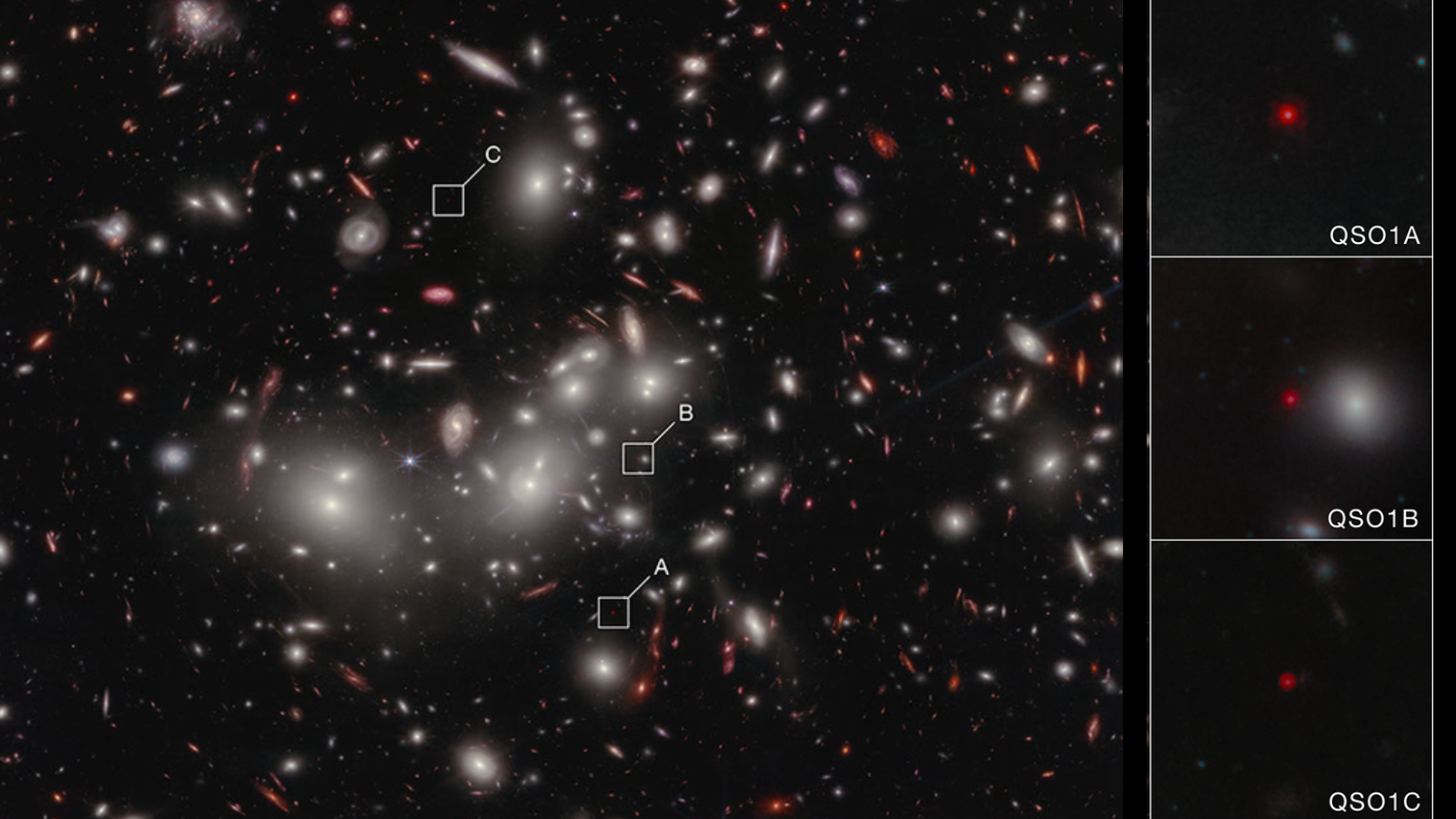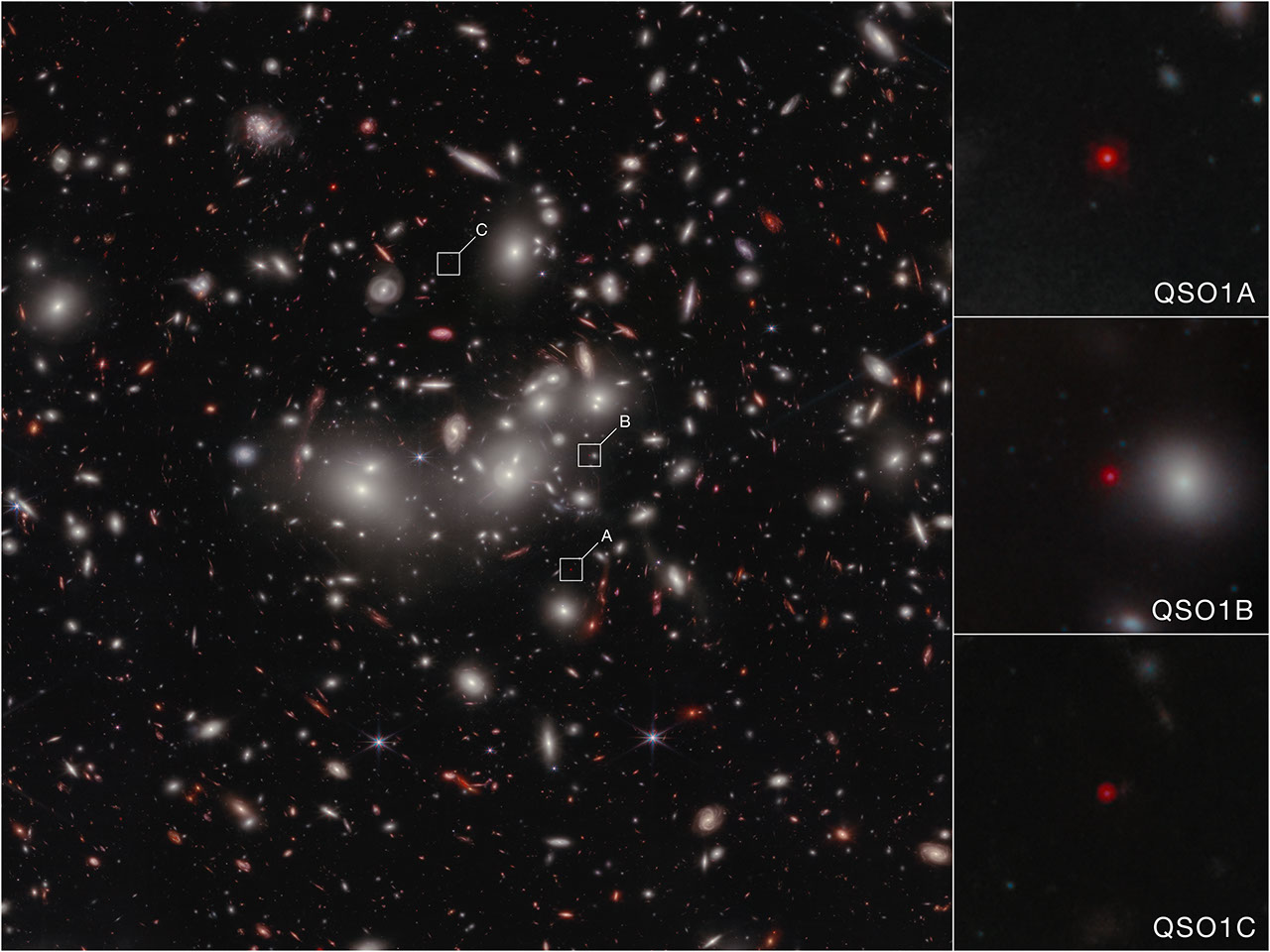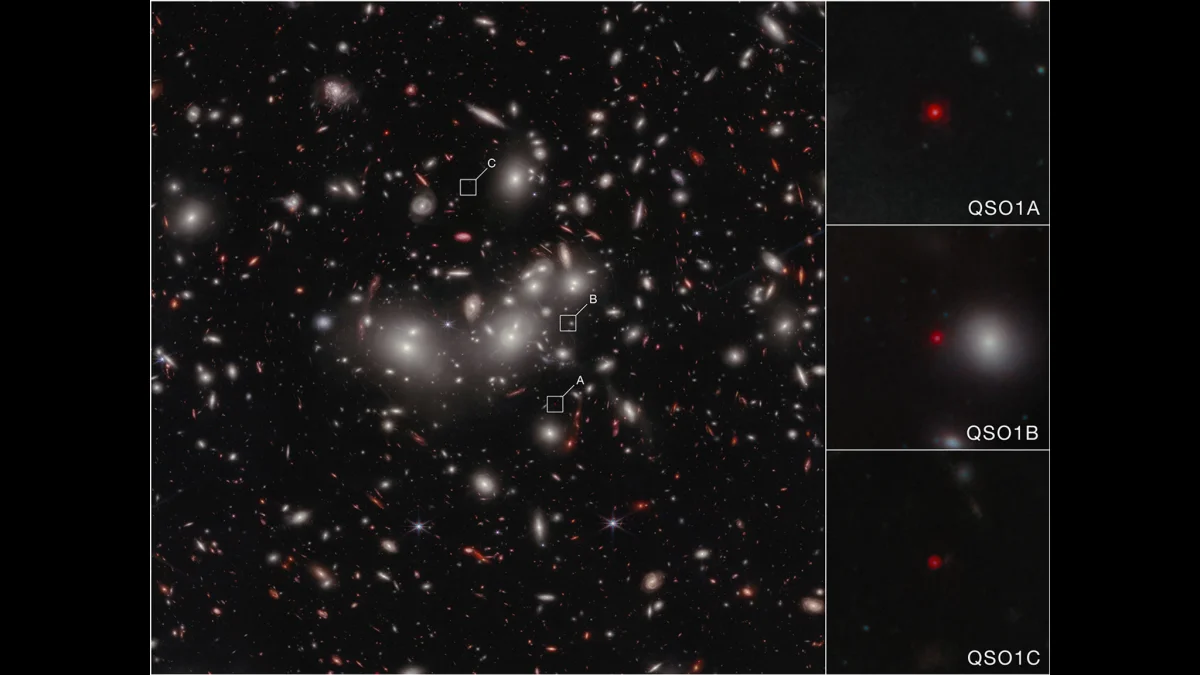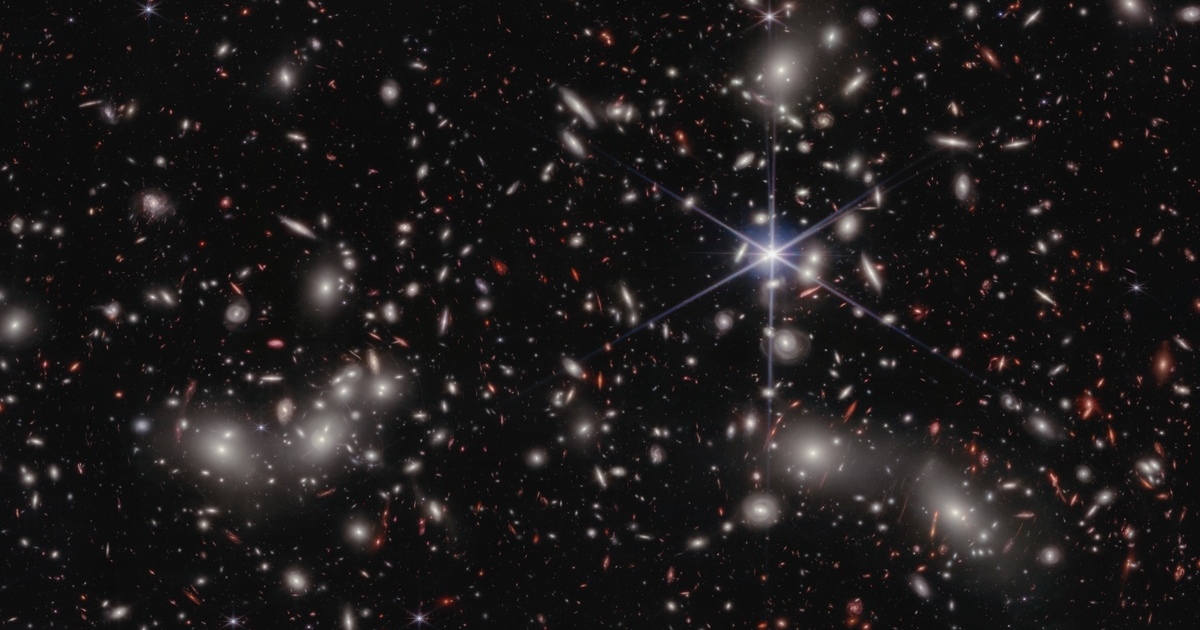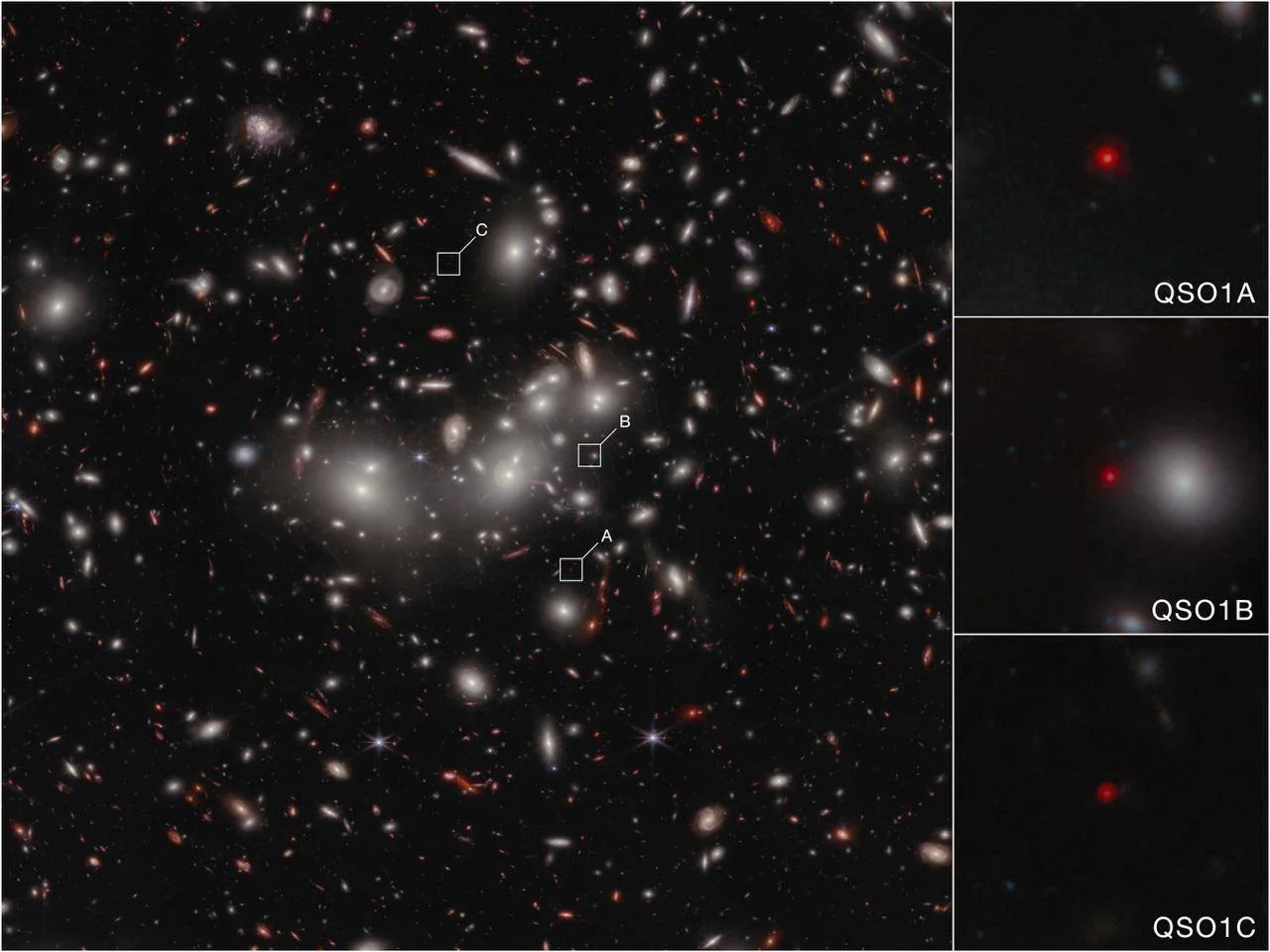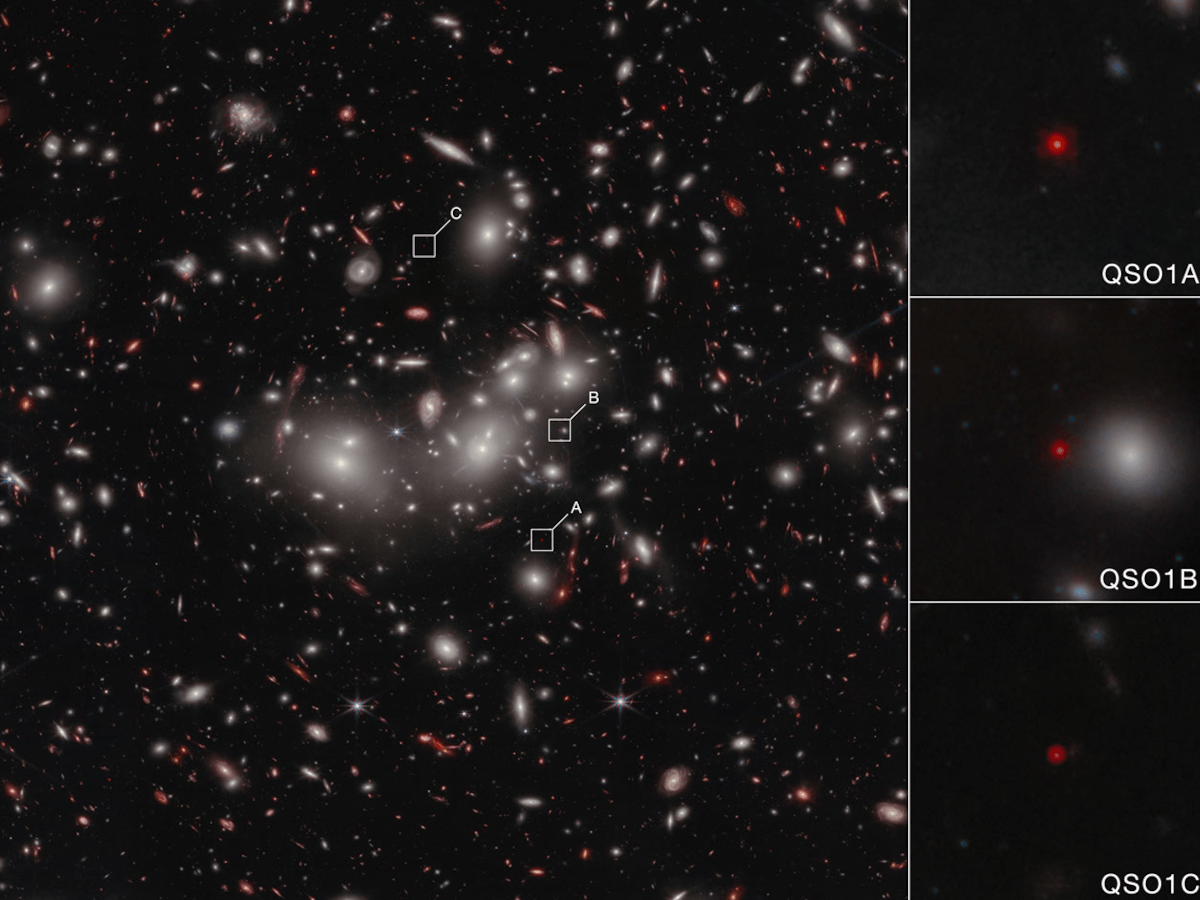
NIRCam Image showing Abell2744-QSO1. Image: NASA, ESA, CSA, Lukas Furtak, Alyssa Pagan
Evidence suggests that the 50-million-solar-mass black hole predates its host galaxy.
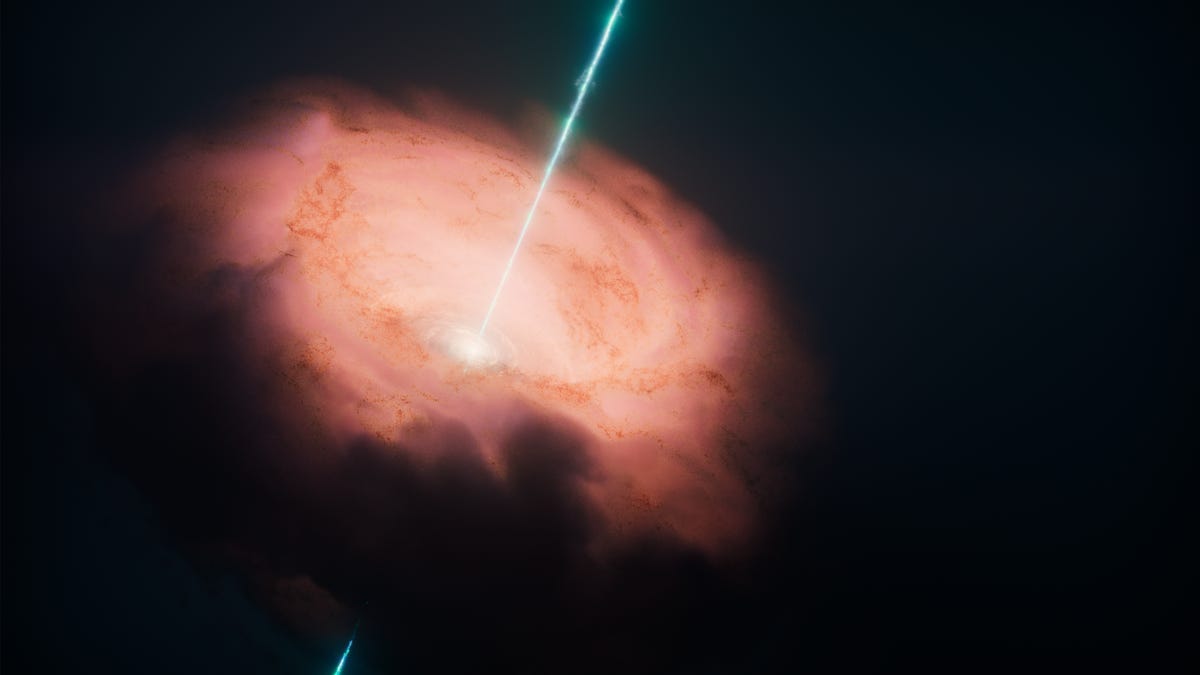
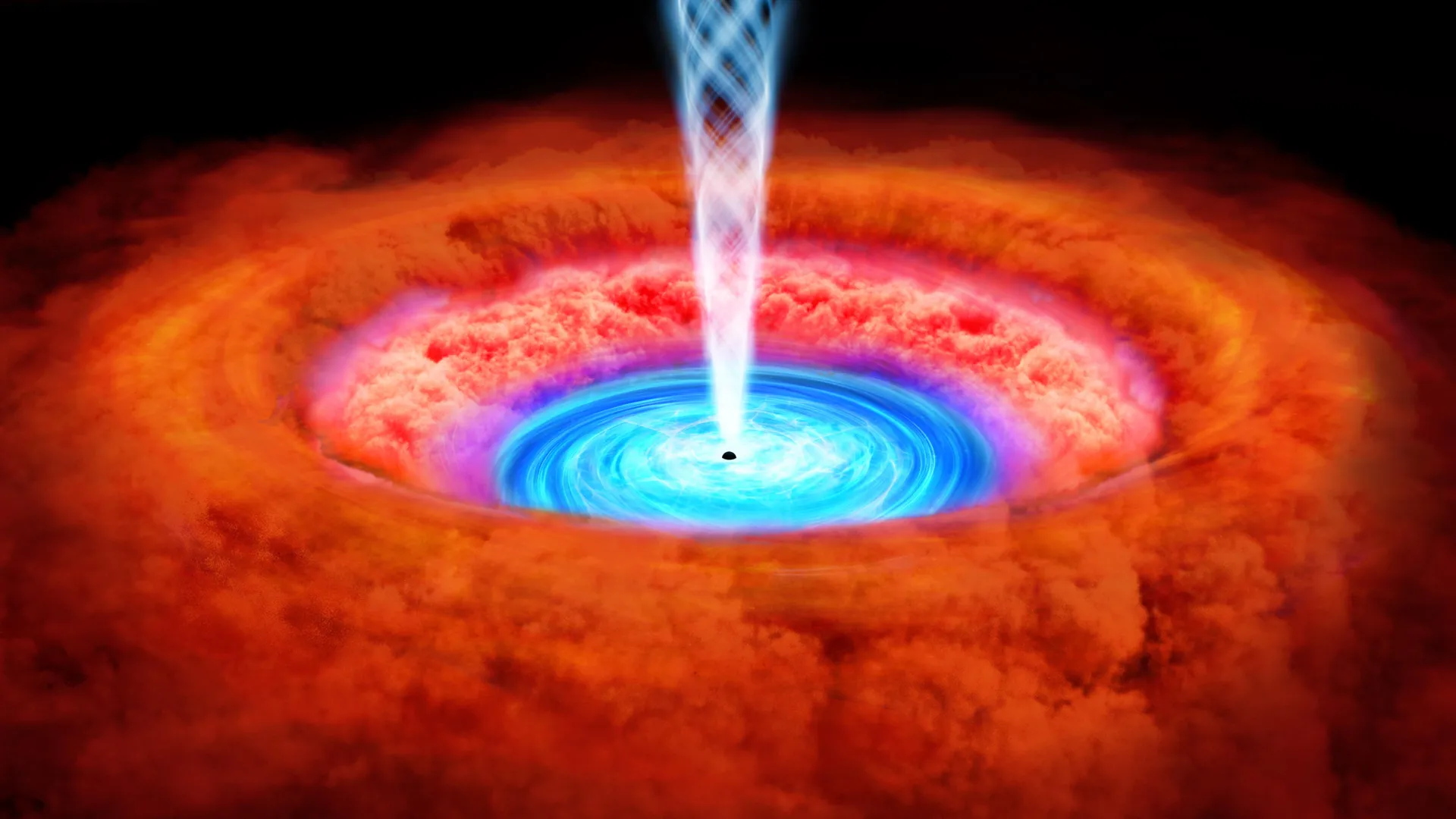
Researchers, using NASA’s James Webb Space Telescope have detected clear evidence that some supermassive black holes were enormous from the beginning, forming without a stellar collapse phase and without a significantly more massive host galaxy to feed them.
The research team observed images of Abell2744-QSO1 (QSO1), which is a prototypical Little Red Dot that existed some 700 million years after the Big Bang. Little Red Dots were discovered by the James Webb Telescope and are the subject of significant research within the wider space exploration eco-system.
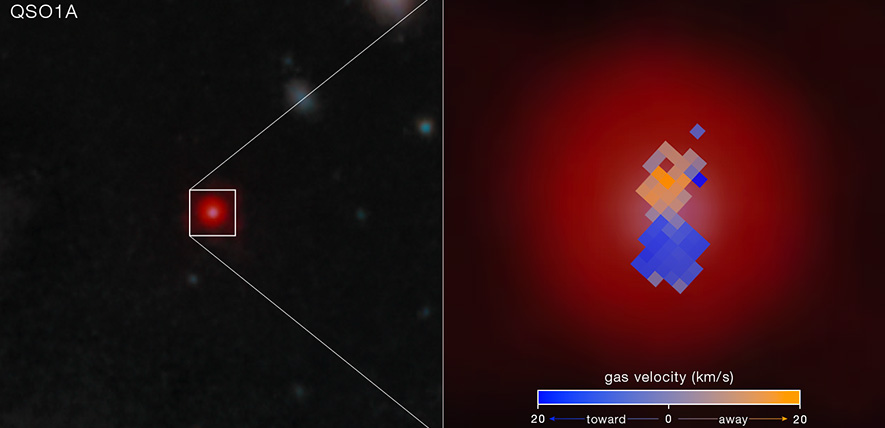
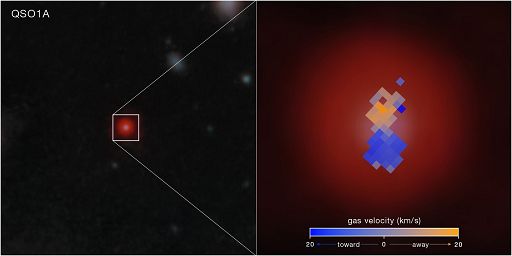
Using the Webb Telescope’s imaging and spectroscopic features, such as integral field unit (IFU) and NIRSpec (Near Infrared Spectrograph) tech, the team of researchers mapped the motion and composition of gas orbiting a black hole in the centre of QSO1. What was discovered is that the gas has Keplerian motion, that means it orbits a central point in the same way that the planets in our solar system orbit the Sun.