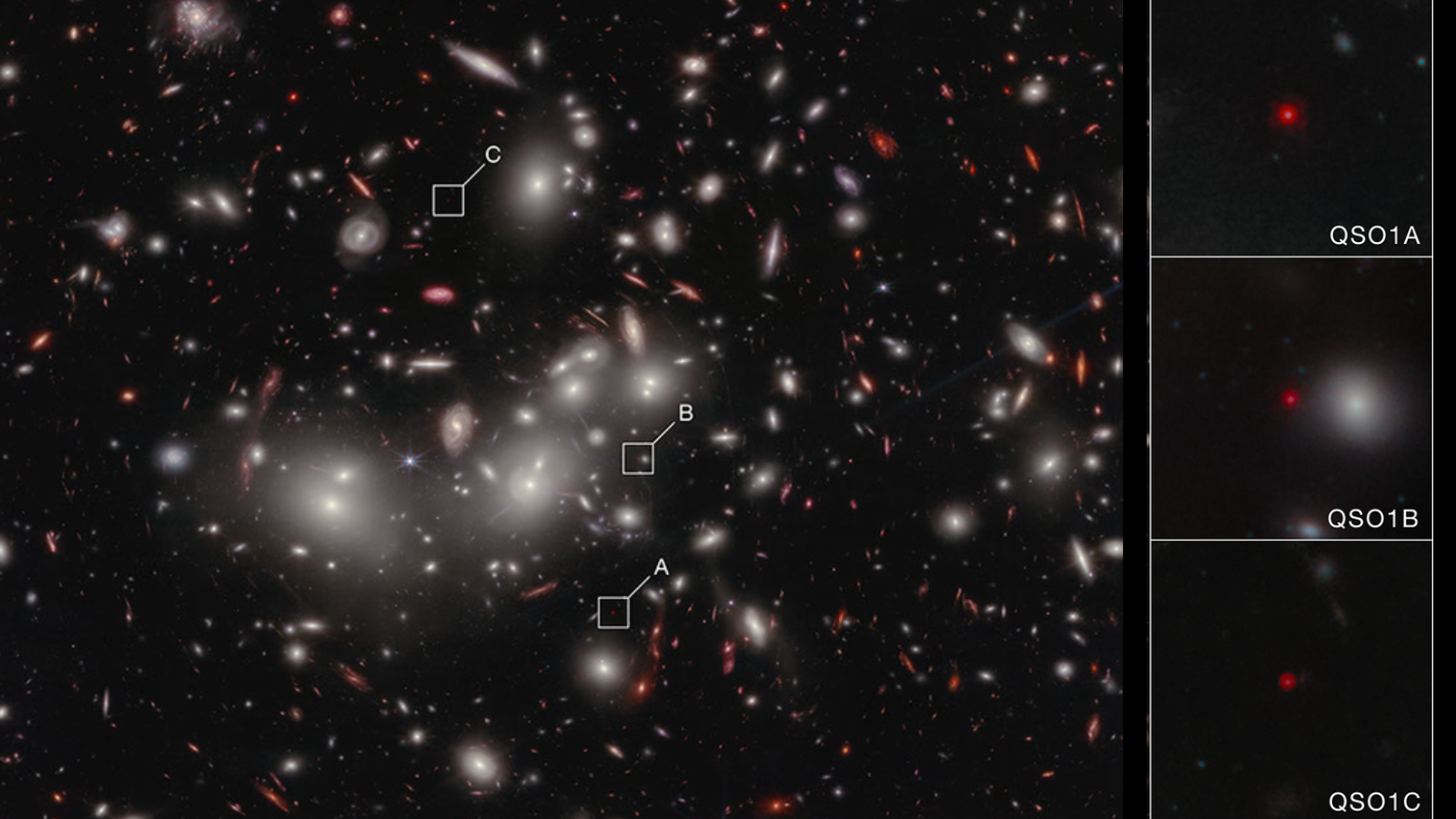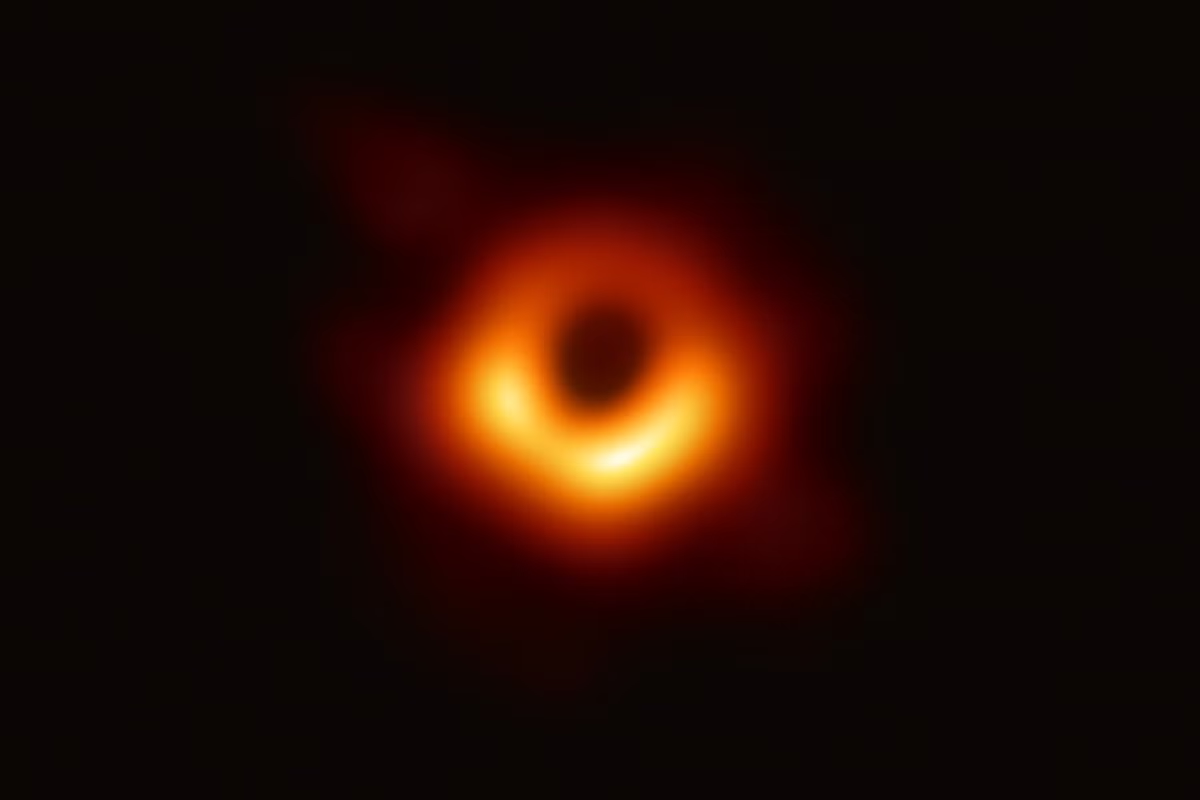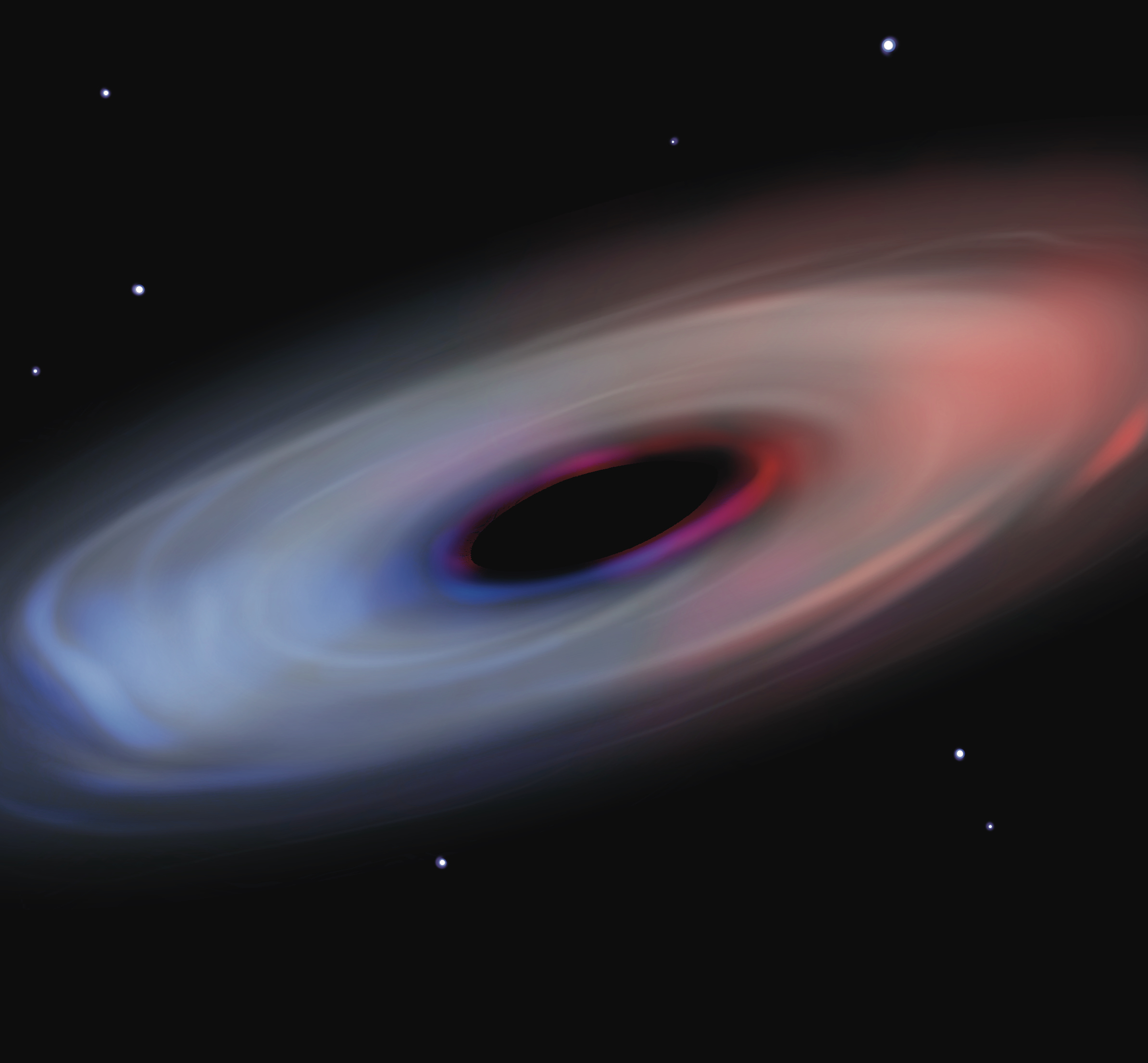
While probing the dawn of the universe for the origins of ancient galaxies, the James Webb Space Telescope uncovered something unexpected lurking at their cores—a discovery that might reshape our view of the early cosmos. Scientists have long thought that galaxies evolved first, while the black holes at their center formed after from the collapse of large stars. Recent observations by Webb, however, tell a different story. The telescope captured evidence of supermassive black holes evolving first, without a host galaxy to feed them. The Webb observations may finally provide an answer to a celestial chicken-or-the-egg question, suggesting that ancient black holes did not need to consume large amounts of surrounding gas and dust to grow to their enormous sizes. “This is a remarkable finding,” Roberto Maiolino, a researcher from the University of Cambridge and co-author of two studies published in Nature and the Monthly Notices of the Royal Astronomical Society, said in a NASA statement. “It’s a paradigm shift, a total revisiting of the classical scenarios of how black holes form and grow.”
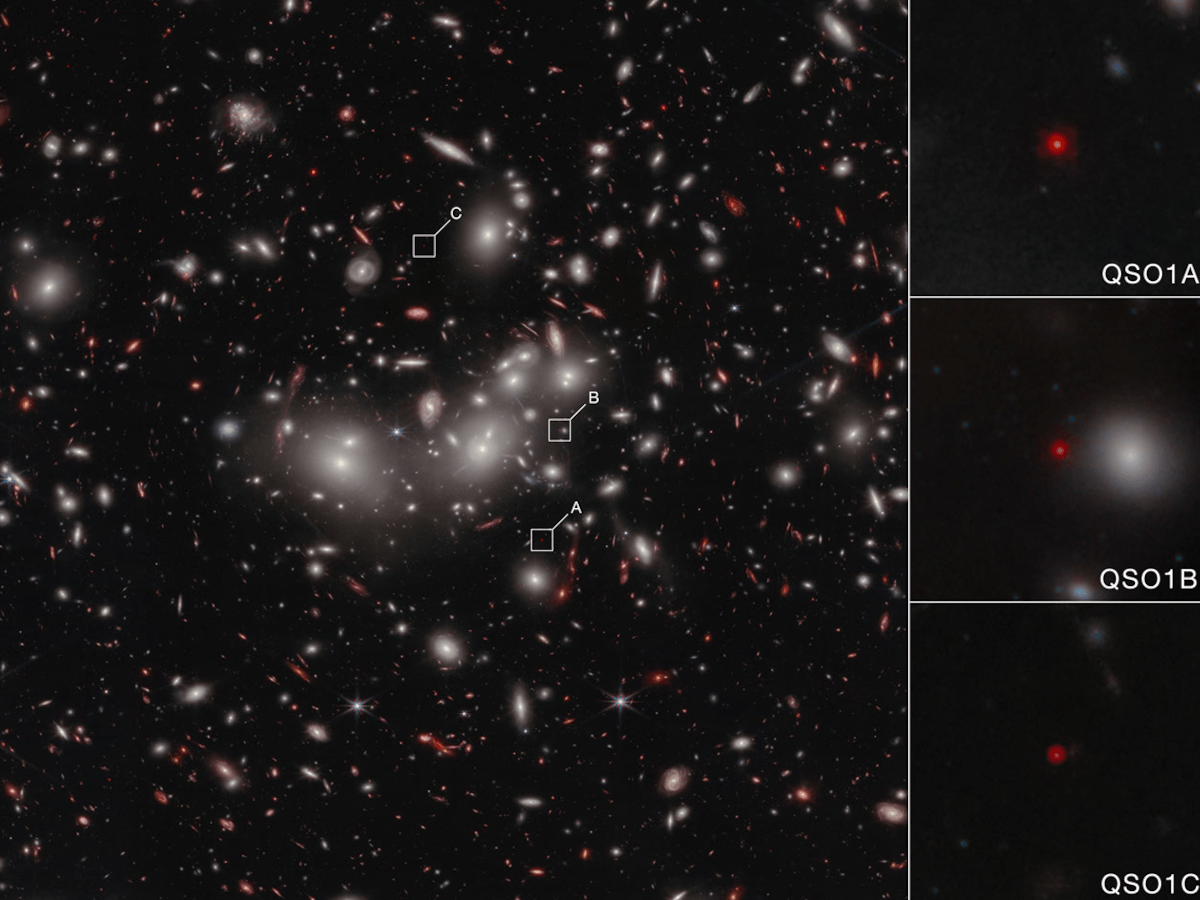
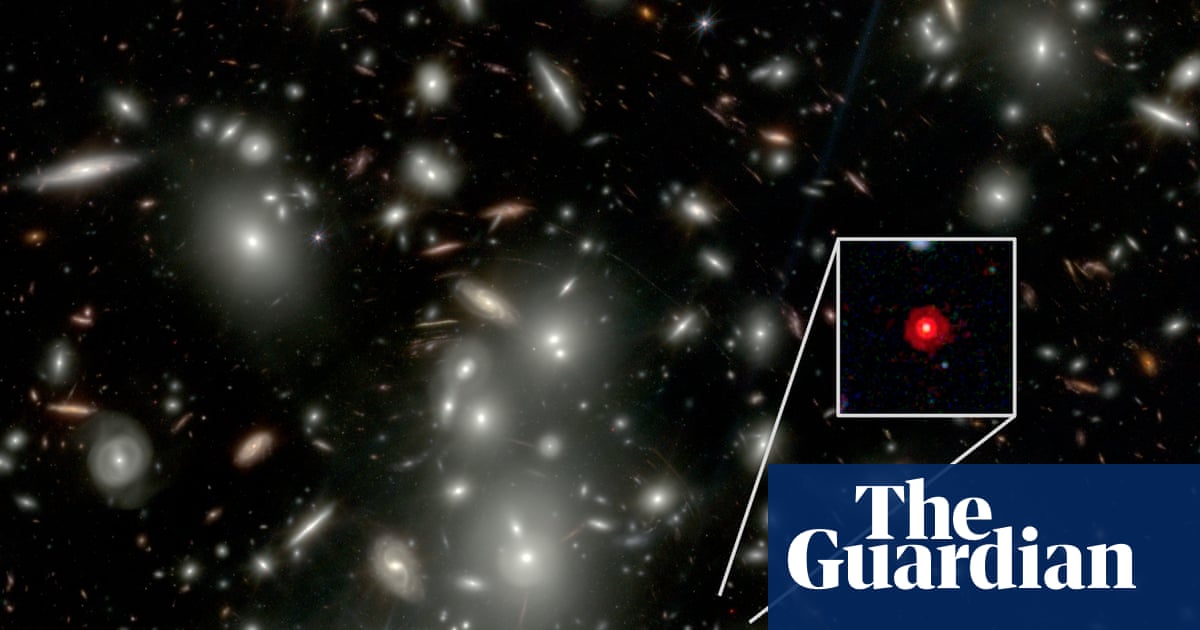
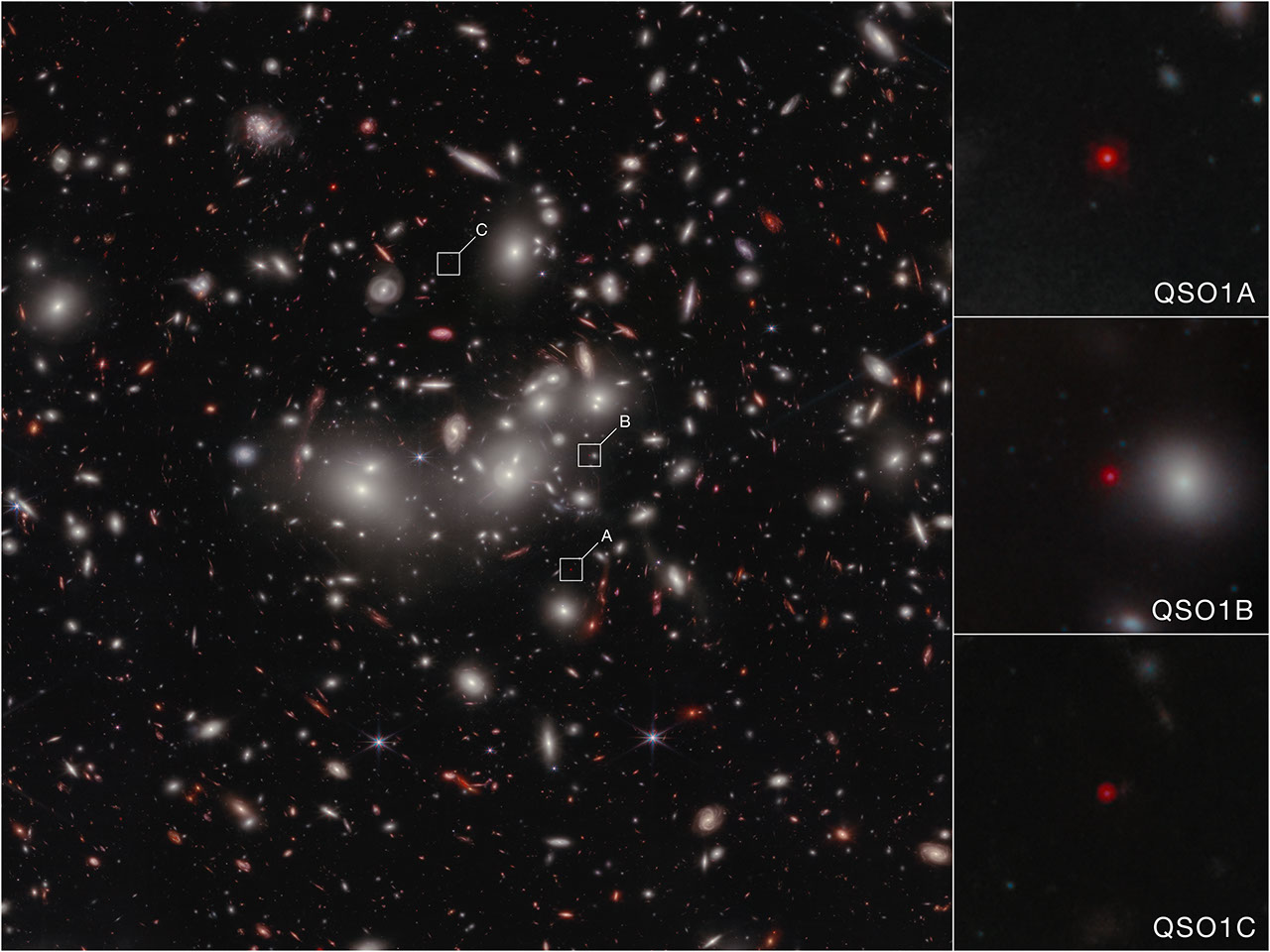
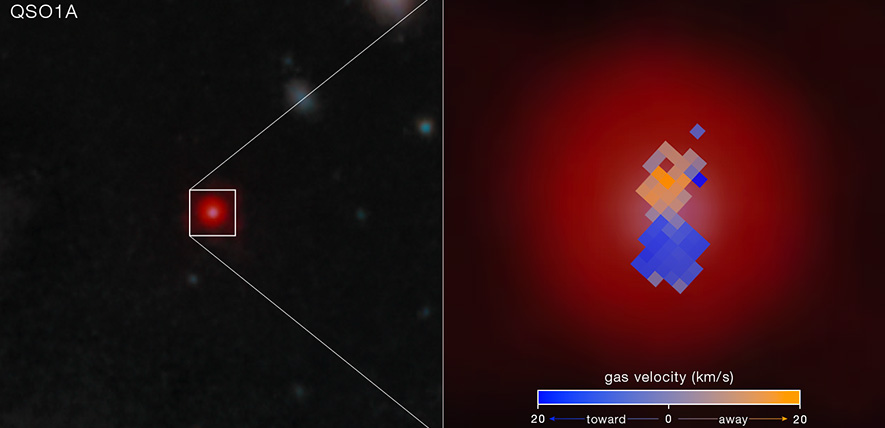
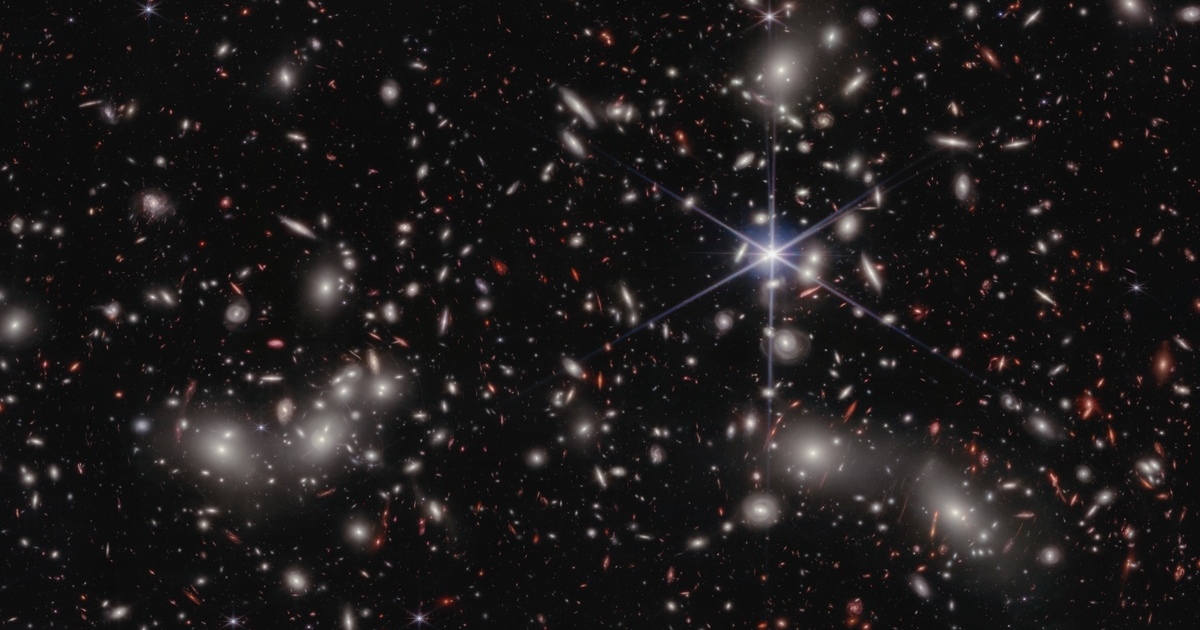
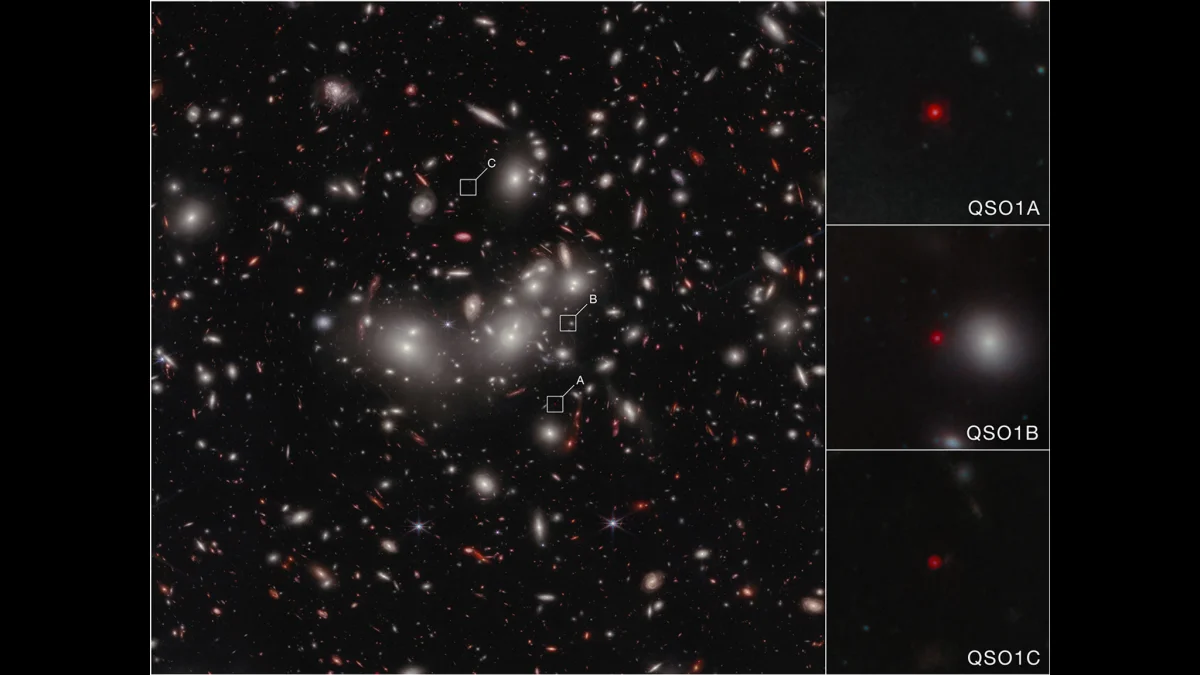
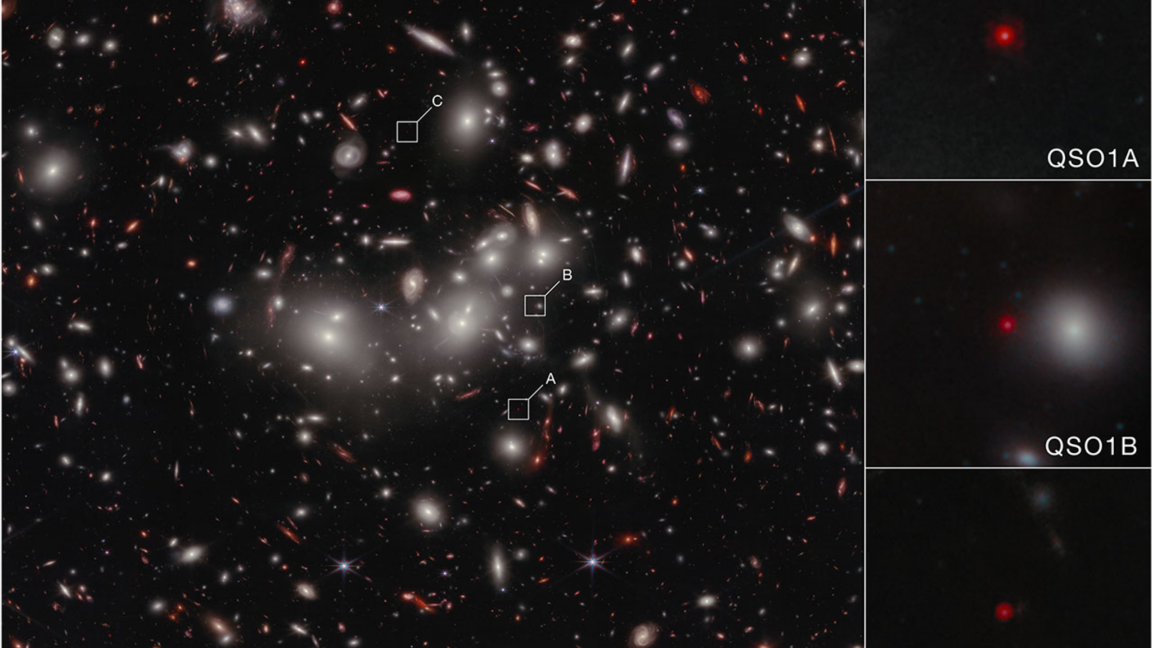
A look back in time One of the first tiny glowing flecks of infrared light that Webb found, named Abell2744-QSO1 (QSO1), dates back to just 700 million years after the Big Bang (5% of its current age). The prototypical Little Red Dot is gravitationally lensed by the galaxy cluster Abell 2744. That makes it an ideal target, as it appears magnified and triply imaged.