Sighting by James Webb space telescope of black hole with sparse halo of material could upend theories of the universe
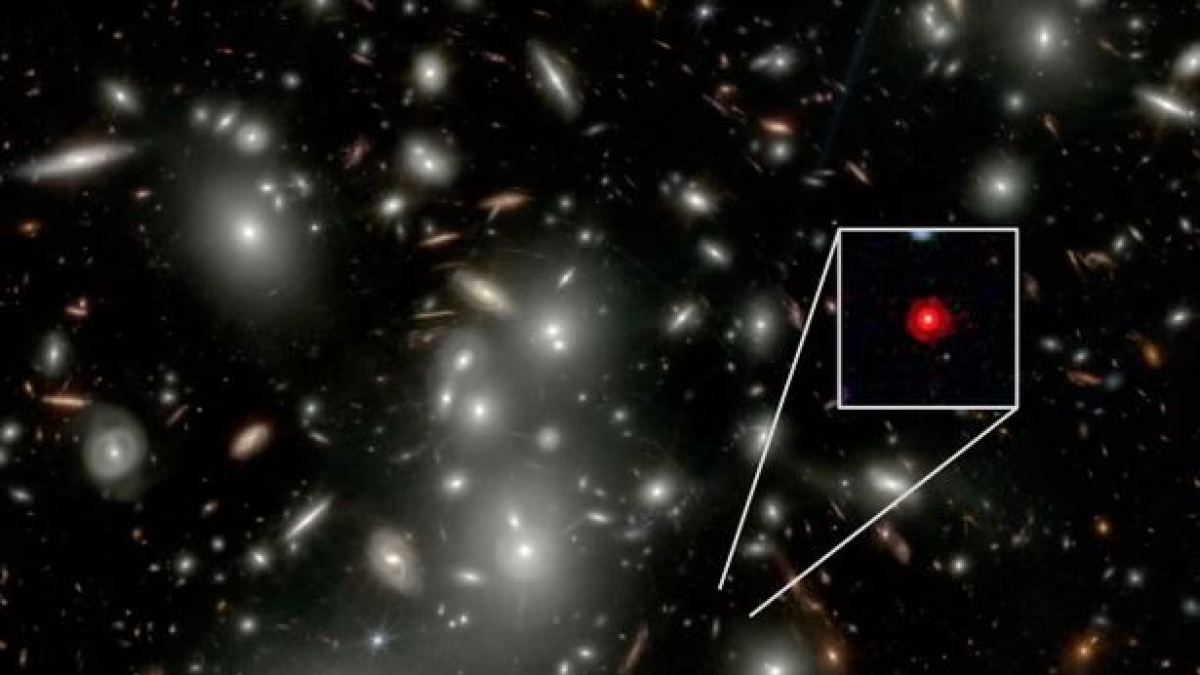
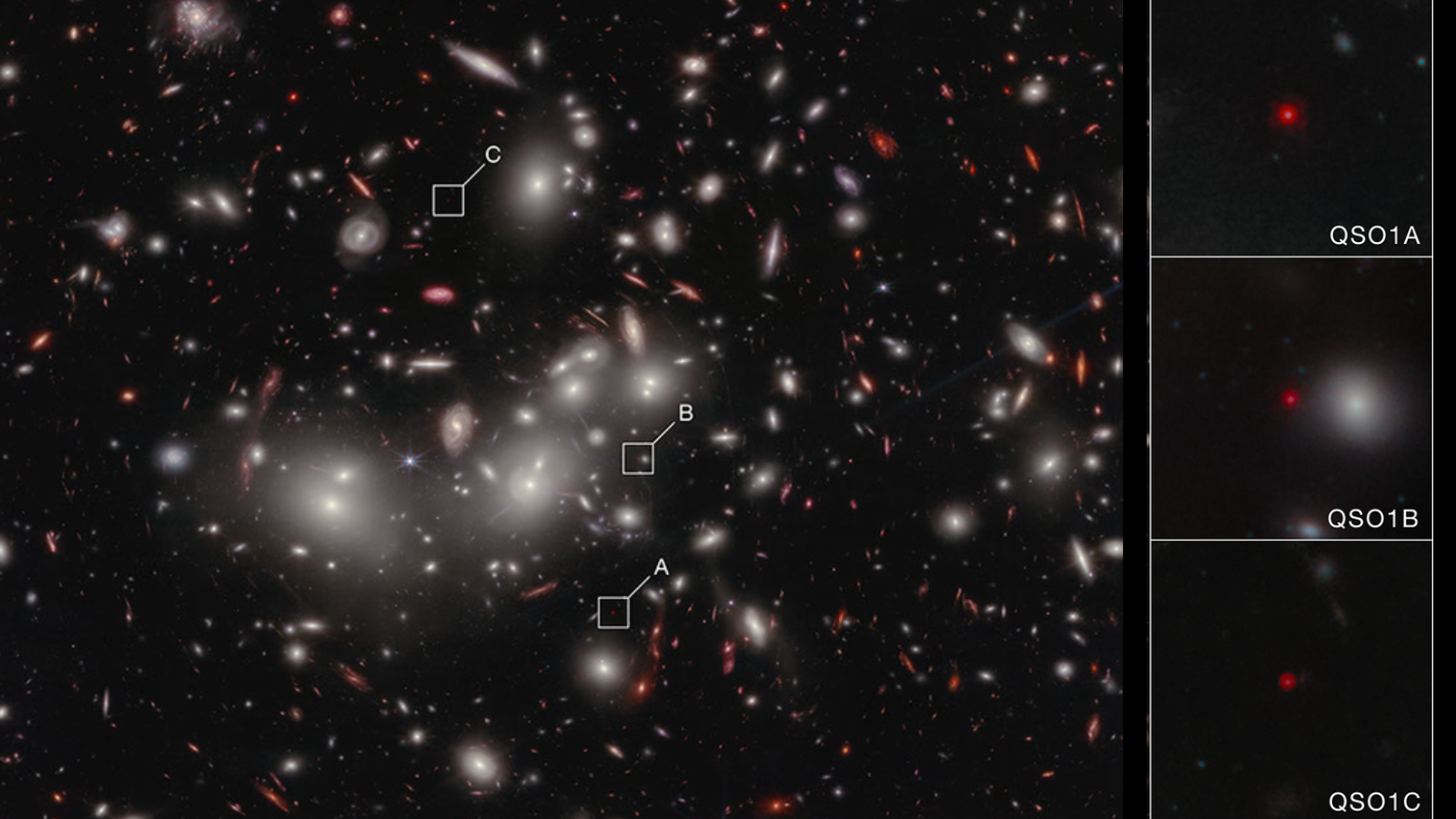
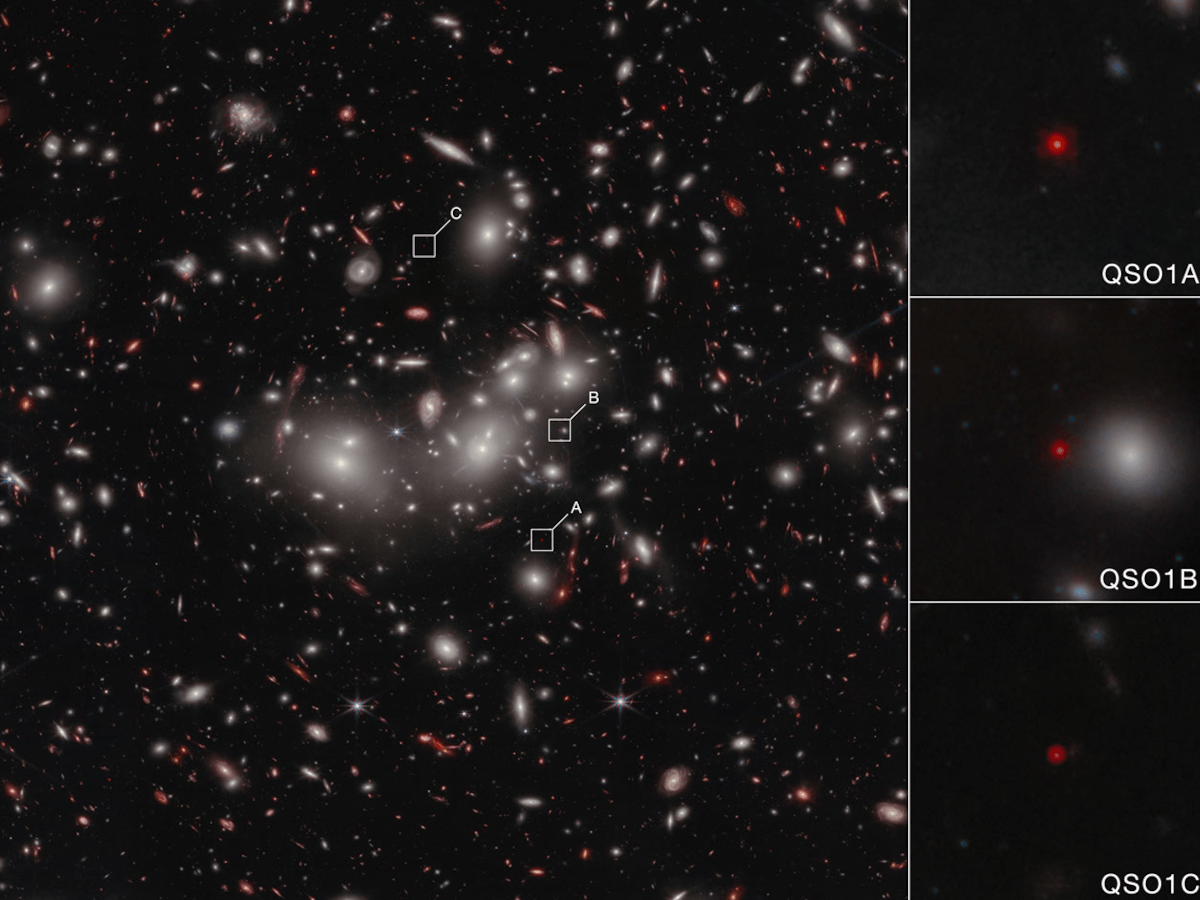
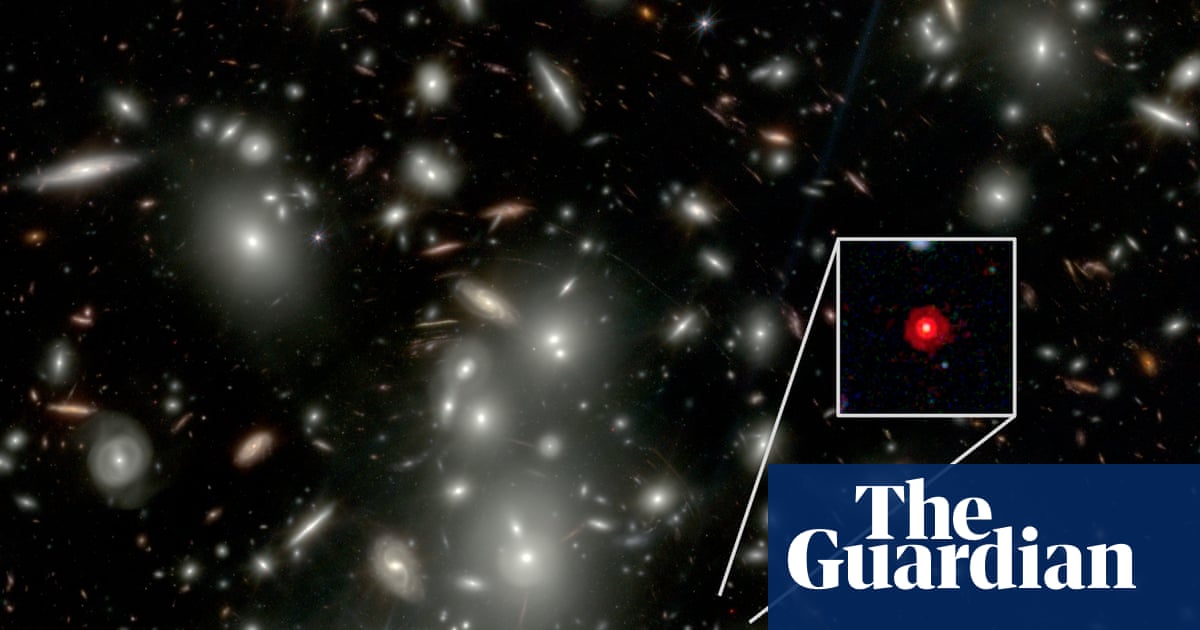
An ancient and “nearly naked” black hole that astronomers believe may have been created in the first fraction of a second after the big bang has been spotted by the James Webb space telescope.
If confirmed as a so-called primordial black hole, a theoretical class of object predicted to exist by Stephen Hawking but never before seen, the discovery would upend prevailing theories of the universe.
Until now, the mainstream view has been that stars and galaxies appeared first and that black holes were created only when the earliest stars ran out of fuel and collapsed under their own gravity.
But the latest observations by the space telescope, which reveal a gargantuan black hole with only a sparse halo of surrounding material dating back to the dawn of the cosmos, appear incompatible with this sequence of events.