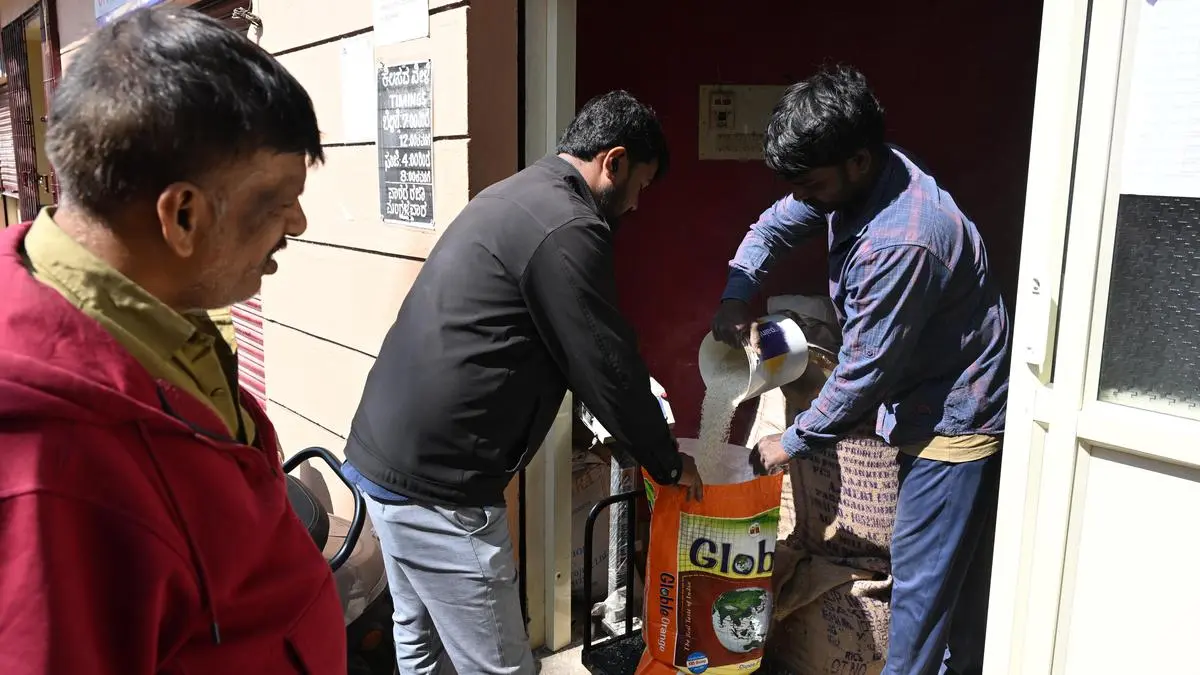
India’s dietary habits continue to remain heavily skewed towards cereals, with large sections of the population falling short on the intake of proteins, vegetables and fruits recommended under national nutrition norms, according to a government-backed assessment based on household consumption data for 2022-23.The analysis, which mapped household food consumption patterns against dietary benchmarks prescribed by the Indian Council of Medical Research (ICMR), showed that cereal intake remains significantly above recommended levels across most states, even as consumption of pulses and vegetables lags sharply behind nutritional requirements.The findings come at a time when policymakers are increasingly focusing on malnutrition, rising obesity levels and the growing burden of lifestyle diseases. Recent discussions within government circles, reported widely in the media, have highlighted concerns over India’s "double burden" of undernutrition and non-communicable diseases, especially in urban centres where processed food consumption is rising rapidly.Also read | India's prized Alphonso mango crop ruined by weatherThe study found that only Kerala, along with urban pockets of Punjab and Tamil Nadu, recorded cereal intake below the ICMR’s suggested monthly limit of 7.5 kg per person. Among Union Territories, residents of Delhi, Puducherry, Chandigarh and Lakshadweep consumed cereals below the prescribed level.In contrast, cereal dependence remained particularly high in several eastern and northeastern states. Rural households in West Bengal, Odisha, Tripura and Manipur reported some of the highest cereal consumption levels, exceeding 11 kg per person per month. Similar trends were observed in Bihar, Rajasthan and Chhattisgarh.Urban consumption patterns also reflected continued reliance on grain-heavy diets. Tripura and Manipur topped the urban cereal consumption rankings, followed closely by Bihar, Arunachal Pradesh and Chhattisgarh.Economists and nutrition experts have long linked cereal-heavy food habits to income levels and affordability. As household earnings rise, diets typically diversify towards protein-rich foods, dairy products and fats. However, the report noted that the rapid spread of packaged foods and restaurant culture is simultaneously altering food behaviour, particularly among urban consumers.The study warned that increased dependence on processed and outside food could aggravate the incidence of non-communicable diseases such as diabetes, hypertension and cardiovascular ailments. Health experts cited in recent ET reports have pointed out that India is witnessing a sharp rise in obesity and metabolic disorders, especially among younger consumers in cities, driven by sedentary lifestyles and changing eating patterns.Also read | India's fertilizer subsidy may cross Rs 3 lakh crore if West Asia crisis prolongsOne of the most striking findings of the assessment was the persistent shortfall in vegetable intake across both rural and urban India. The recommended consumption level of 12 kg per person per month remained unmet in every state and Union Territory.Even Chhattisgarh, which emerged as the highest vegetable-consuming state, recorded intake levels far below the prescribed benchmark. In nearly 15 states and Union Territories, monthly vegetable consumption remained under 5 kg per person, underscoring the limited access to balanced nutrition.Protein intake indicators were similarly weak. The report found that pulse consumption remained well below recommended levels in most parts of the country. Under ICMR norms, vegetarians are advised to consume 2.6 kg of pulses per person each month, while non-vegetarians are expected to consume at least 1.7 kg.However, data from nearly 28 states and Union Territories showed pulse consumption of less than 1 kg per person per month, indicating a significant protein deficit in household diets.The findings assume significance amid continuing concerns over food inflation and uneven income growth. Prices of pulses, vegetables and protein-rich foods have remained volatile over the past two years, prompting repeated interventions by the Centre through buffer stock releases and import measures.ET had recently reported that the government is also examining ways to improve nutritional outcomes through diversification of food distribution under welfare schemes and by encouraging cultivation of pulses and millets.Policy experts argue that while India has achieved broad food security in calorie terms, the next challenge lies in ensuring nutritional security through diversified and affordable diets.
Dietary balance remains missing as India continues to gorge on cereals
Many Indians consume too many grains and not enough proteins, vegetables and fruits. This imbalance affects health, contributing to malnutrition and lifestyle diseases. The findings highlight a need for dietary diversification across the nation.
645 words~3 min read