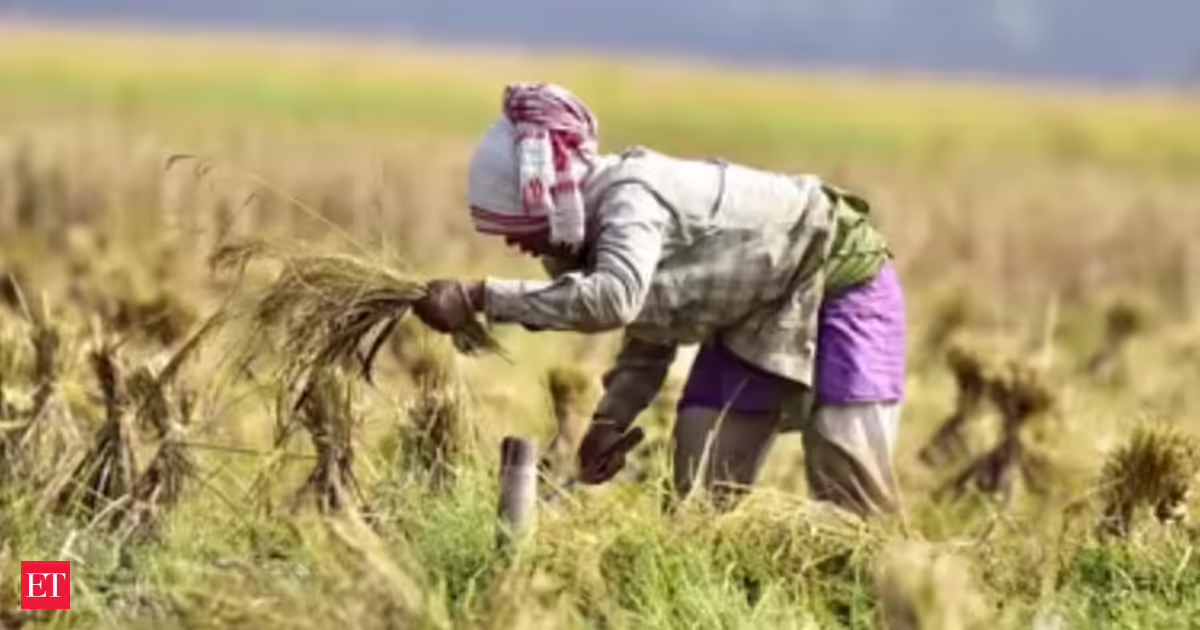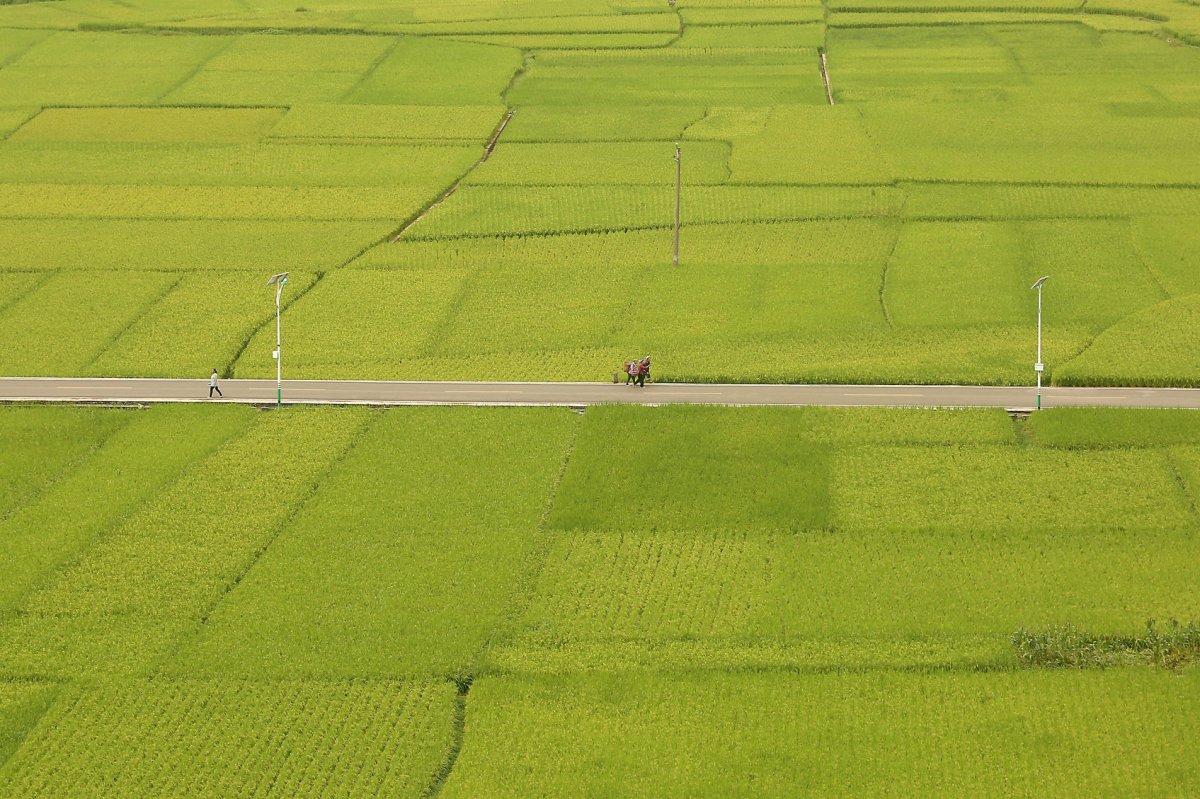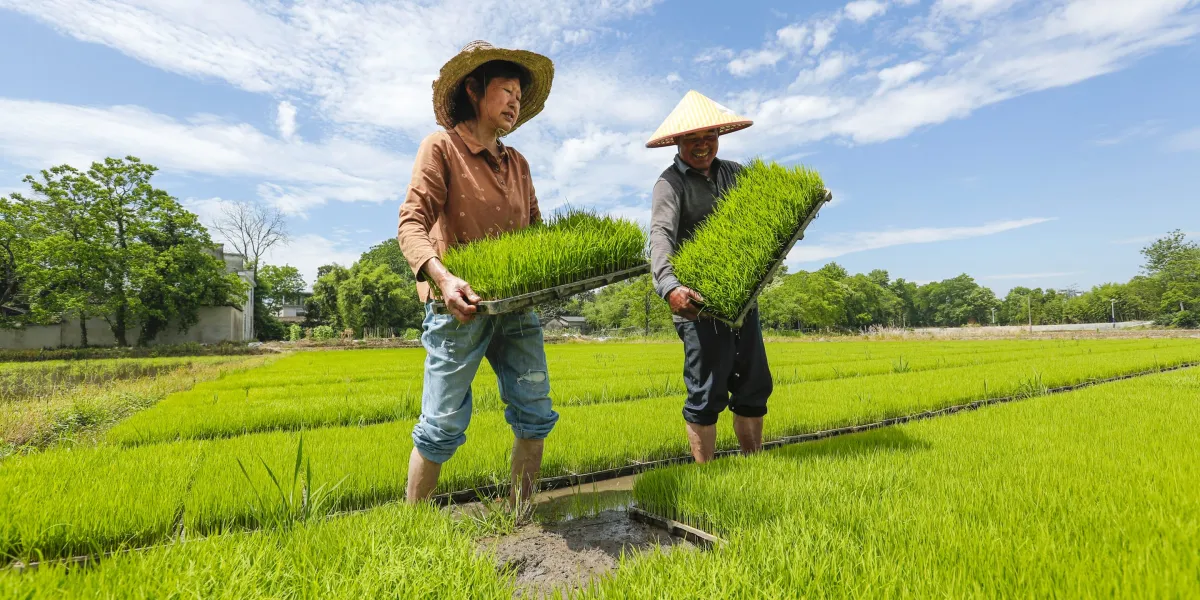
The Green Revolution transformed India’s food security by making rice and wheat cultivation central to price stability and rural livelihoods. Backed by sustained policy support, India is now the world’s largest rice producer, contributing nearly 28 per cent of global rice production, and is also a leading exporter of rice at 38 per cent of the global share. Yet this success carries a growing ecological cost.Despite record rice production of over 150 million tonnes, paddy cultivation remains among the most water-intensive farming practices, consuming 1,500–2,500 litres of water per kg of rice. The burden is most visible in the north-western Indo-Gangetic Plains, where groundwater is rapidly depleting. In Punjab, water tables are falling by an average of 43 cm annually, with some districts recording declines of up to 59 cm. If this trajectory continues, experts warn parts of the state could face desertification within 25 years.At the same time, methane (CH4) emissions, with a global warming potential nearly 27 times that of carbon dioxide (CO2), are rising sharply. Paddy cultivation emitted 3.2 million tonnes of methane in 2020, accounting for 23 per cent of India’s agricultural methane emissions. North-western India is also a hotspot for excessive nitrogen fertiliser use, worsening soil degradation and pollution.Macro-economic, climate governance imperativeThese pressures underscore the need to rethink India’s water–energy–food nexus. Water-intensive crops are rapidly depleting groundwater, while cheap electricity subsidies encourage over-irrigation. At the same time, procurement and subsidy policies favouring rice and wheat lock farmers into cereal cultivation, undermining soil health, crop diversification, and dietary diversity. Sustainable rice management is therefore not merely an agronomic challenge, but a macroeconomic and climate governance imperative.Regenerative rice practices offer a pathway to sustain productivity while reducing pressure on water, energy, and natural resources. Diversifying towards high-value crops can further improve resilience and soil health. Proven solutions such as Alternate Wetting and Drying (AWD), Dry Direct Seeded Rice (DSR), shorter-duration rice varieties, precision nutrient management, and precision irrigation can substantially cut water use and greenhouse gas emissions. AWD and DSR alone can reduce irrigation demand by 18–50 per cent and methane emissions by 30–70 per cent.PM-PRANAM schemeImportantly, reducing emissions from rice cultivation directly advances India’s climate commitments, including its net-zero by 2070 target, emission intensity reduction goals, and long-term carbon sink objectives under the Nationally Determined Contributions (NDCs). India’s policy landscape is beginning to reflect this urgency. Schemes such as the Pradhan Mantri Krishi Sinchayee Yojana (PMKSY) promote efficient water use, while the Soil Health Card programme enables smarter fertiliser application. Meanwhile, the Prime Minister Programme for Restoration, Awareness Generation, Nourishment, and Amelioration of Mother-Earth (PM-PRANAM) encourages a shift toward regenerative farming and diversified crop systems rooted in indigenous knowledge. Complementing these efforts, initiatives show how no-burn practices, water-efficient cultivation, and farmer engagement can deliver impact at scale. Such initiatives have helped avert millions of tonnes of CO2e emissions and save nearly a billion litres of water through regenerative agricultural practices. Its broader vision is to build regenerative foodscapes through farmer empowerment, local agri-entrepreneurship, policy support, and strategic partnerships.The momentum and the building blocks for sustainable rice systems is already in place. The challenge now is to align incentives, procurement, and resource management with long-term sustainability goals – improving farm incomes and productivity while restoring ecological balance. India’s next agricultural transformation must be measured not only by how much it produces, but by how sustainably it grows.Manoj is Deputy Director for Climate, The Nature Conservancy in India; Rajveer is Agronomist, The Nature Conservancy in India, and Kumar is Research Director - Sustainable Impact Department, International Rice Research Institute (IRRI)Published on May 24, 2026
Securing food, saving the environment: Rethinking India’s rice cultivation
Rethink India's rice cultivation: balance food security with sustainable practices to ensure ecological health and resource conservation.
596 words~3 min read