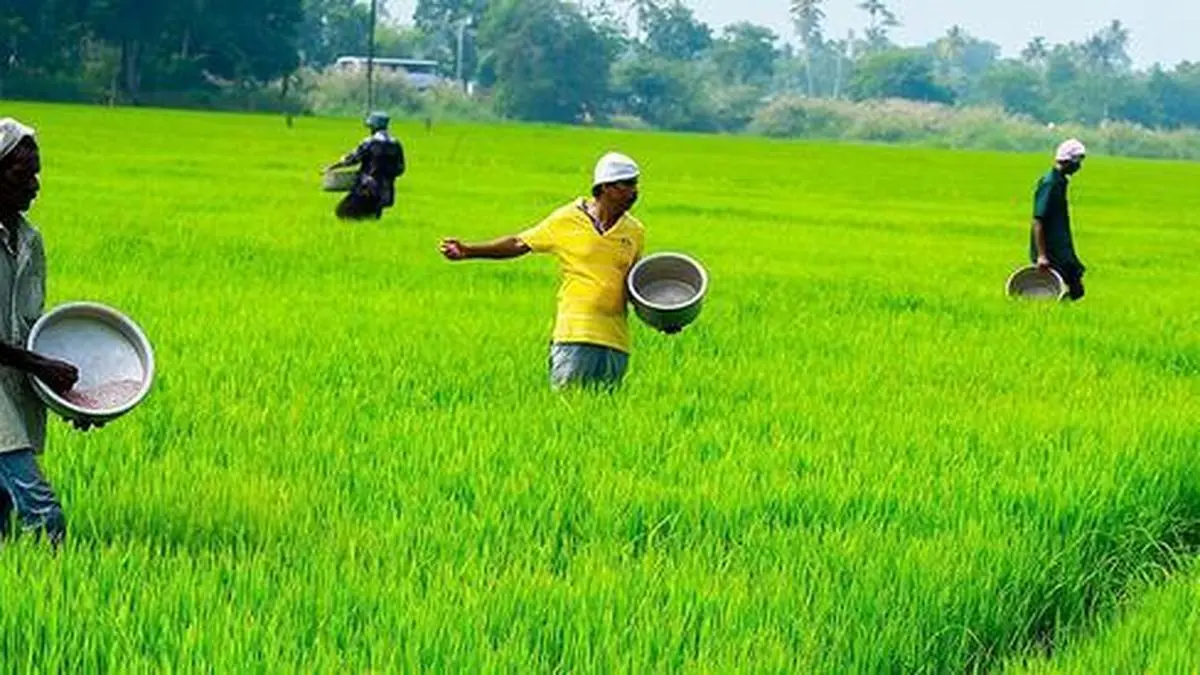
India’s Green Revolution remains one of the defining achievements of modern agriculture. In the span of a few decades, the country transformed itself from a food-deficit nation dependent on imports into one of the world’s largest producers of food grains. High-yielding crop varieties, expanded irrigation networks and the widespread adoption of chemical fertilisers played a pivotal role in securing the nation’s food future.Yet, more than half a century later, the most important lesson of the Green Revolution is not that agricultural inputs can transform productivity. It is that quality, stewardship and balanced use determine whether those gains remain sustainable over generations.As India stands at the threshold of a Bio Revolution powered by biofertilisers, microbial consortia, biostimulants and other biological inputs, this lesson has never been more relevant.What the green Rrevolution taught usThe success of the Green Revolution was undeniable. However, over time, the rapid expansion of fertiliser use outpaced efforts to promote balanced nutrient management. India’s fertiliser consumption grew from approximately 2.3 million tonnes in the late 1960s to more than 65 million tonnes in 2023-24. Since the Green Revolution era, heavy subsidies have been given on nitrogen-based fertilizers, especially urea, leading to severe imbalances in soil nutrients and creating a huge fiscal subsidy burden on the government. While these measures contributed significantly to increased crop production, nutrient application gradually became skewed towards nitrogen, often at the expense of phosphorus, potassium and micronutrients.The consequence was not immediate. It unfolded over decades through declining nutrient-use efficiency, deteriorating soil health and increasing pressure on agricultural ecosystems. Importantly, the issue was never the use of fertilisers themselves. Rather, it was the absence of sufficient guardrails to ensure balanced and efficient use at scale.The response to these challenges offers an equally important lesson. Through initiatives such as the Soil Health Card programme, more than 25 crore cards have been distributed based on over 8 crore soil samples, providing farmers with field-specific nutrient recommendations. The programme reflects a broader recognition that productivity and sustainability must advance together, not in opposition to one another.A new agricultural transformation is underwayToday, biological inputs are emerging as one of the most promising tools for sustainable agriculture. By improving nutrient availability, enhancing soil microbial activity and supporting crop resilience, they have the potential to complement conventional fertilisers while reducing the environmental footprint of farming.This transition is being driven by a growing understanding that the future of agriculture will depend not only on producing more, but on producing better.The enthusiasm surrounding biologicals is therefore well-founded. Yet the sector’s long-term success will depend on something far more fundamental than market growth: trust.For a farmer, every input purchased represents an investment made months before harvest and often before income arrives. A farmer cannot afford uncertainty. Trust, therefore, becomes the most valuable currency in agriculture.This is precisely why quality matters.Building quality into the bio revolutionWhen the Fertilizer (Control) Order was extended to include biostimulants, regulators faced a marketplace that already contained tens of thousands of products. The objective was not to slow innovation but to establish common standards that distinguish proven technologies from unverified claims.The lesson is clear: quality assurance is most effective when it evolves alongside a category, not after problems have emerged.For biological inputs, this means robust efficacy validation, clearly defined microbial specifications, shelf-life standards, traceability mechanisms and accessible testing infrastructure. These measures protect farmers, reward credible manufacturers and create the confidence necessary for widespread adoption.Most importantly, they safeguard the reputation of the sector itself.If one ineffective biological product reaches a farmer’s field, it does not merely damage a brand. It can undermine confidence in an entire category that India needs for its transition towards sustainable agriculture.The road aheadIndia enters the Bio Revolution with advantages that did not exist during the early years of the Green Revolution: stronger institutions, better scientific capabilities, extensive farmer outreach programmes and unprecedented access to agricultural data.The opportunity before us is not simply to expand the use of biological inputs. It is to build a biologicals ecosystem founded on science, transparency and accountability from the very beginning.The Green Revolution taught India how to produce more. The Bio Revolution must teach us how to produce more while restoring what decades of intensive cultivation have depleted. That objective will not be achieved through adoption alone. It will be achieved through adoption backed by quality, evidence and farmer confidence.History rarely offers a second chance to build an agricultural transformation from the ground up. India has that opportunity today. If we embed quality into the biologicals ecosystem at the outset, we will not merely avoid repeating the mistakes of the past—we will create a model for sustainable agriculture that the world can follow.The author is President of IPL Biologicals)Published on July 4, 2026
Lessons from the green revolution: Let’s not repeat the mistakes with the bio revolution
If we embed quality into the biologicals ecosystem at the outset, we will create a model for sustainable agriculture that the world can follow.
782 words~4 min read