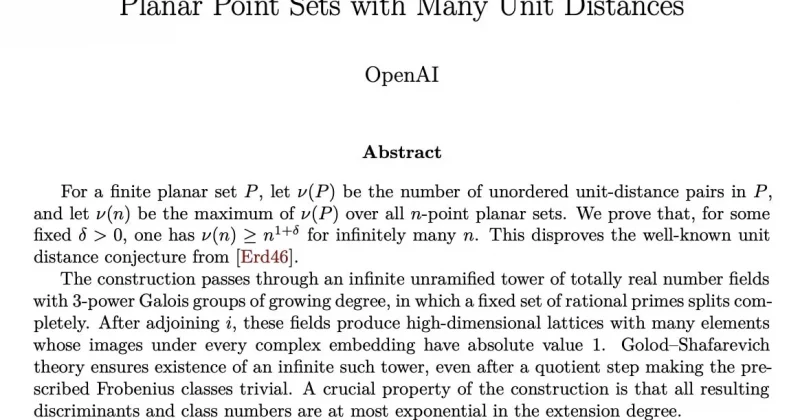
Yesterday, an internal model at OpenAI disproved the Erdős unit-distance conjecture. The conjecture is from 1946. It is, depending on which discrete geometer you ask, either the best-known or the most-tried open problem in combinatorial geometry. Paul Erdős attached a $500 prize to it. The disproof is, according to the nine mathematicians who examined it line by line, correct.
Let me say what the problem actually is, because It took me forever to understand it (did i mention I am not a mathematician??)
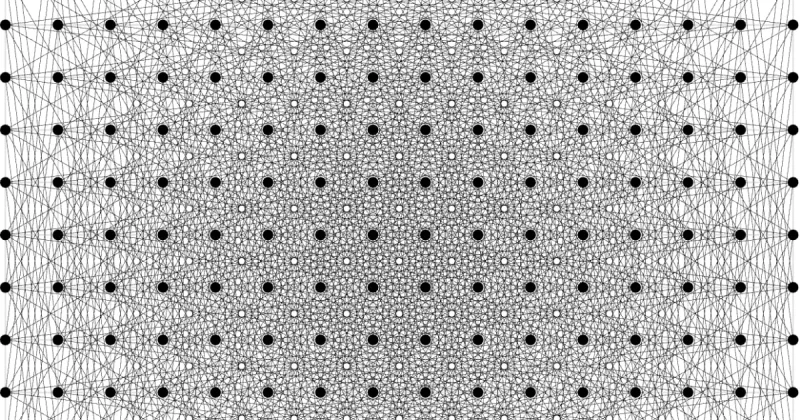
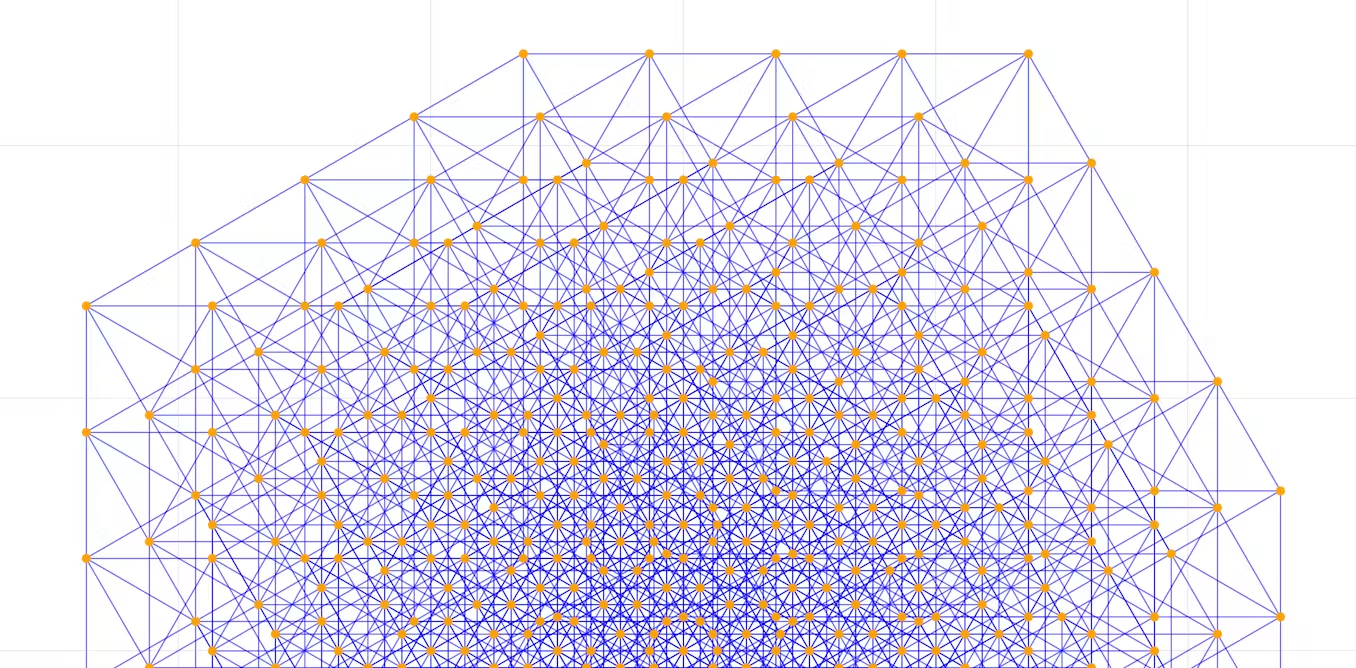
Put n points in a plane, anywhere you want. Count the pairs of points that are exactly distance 1 from each other. Call that count the "unit distances." How big can the count get as n grows? Erdős showed in 1946 that you can get the count to grow a tiny bit faster than n itself. He conjectured that you cannot do much better than that, formally that the count is bounded by n raised to (1 + o(1)), where the o(1) shrinks toward zero as n grows. Eighty years of human effort have, broadly, been on the side of proving that ceiling. The model showed there is no such ceiling. You can construct point sets that beat the bound by a fixed exponent forever.
The way it did this is, if you squint at it, the most ordinary thing mathematics has ever done.