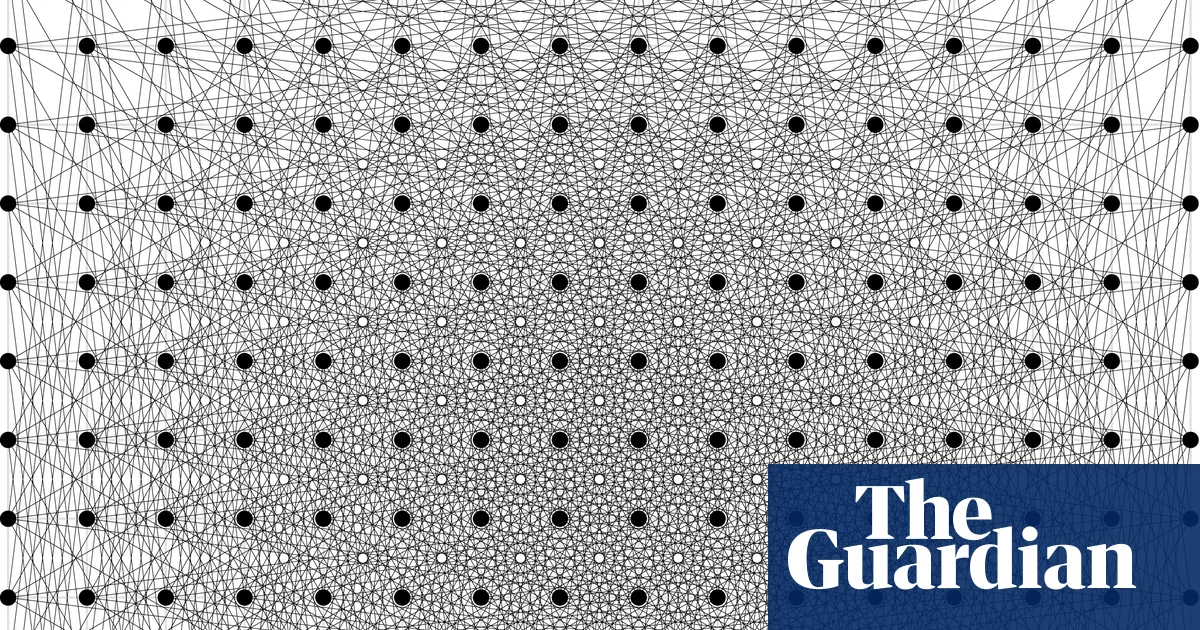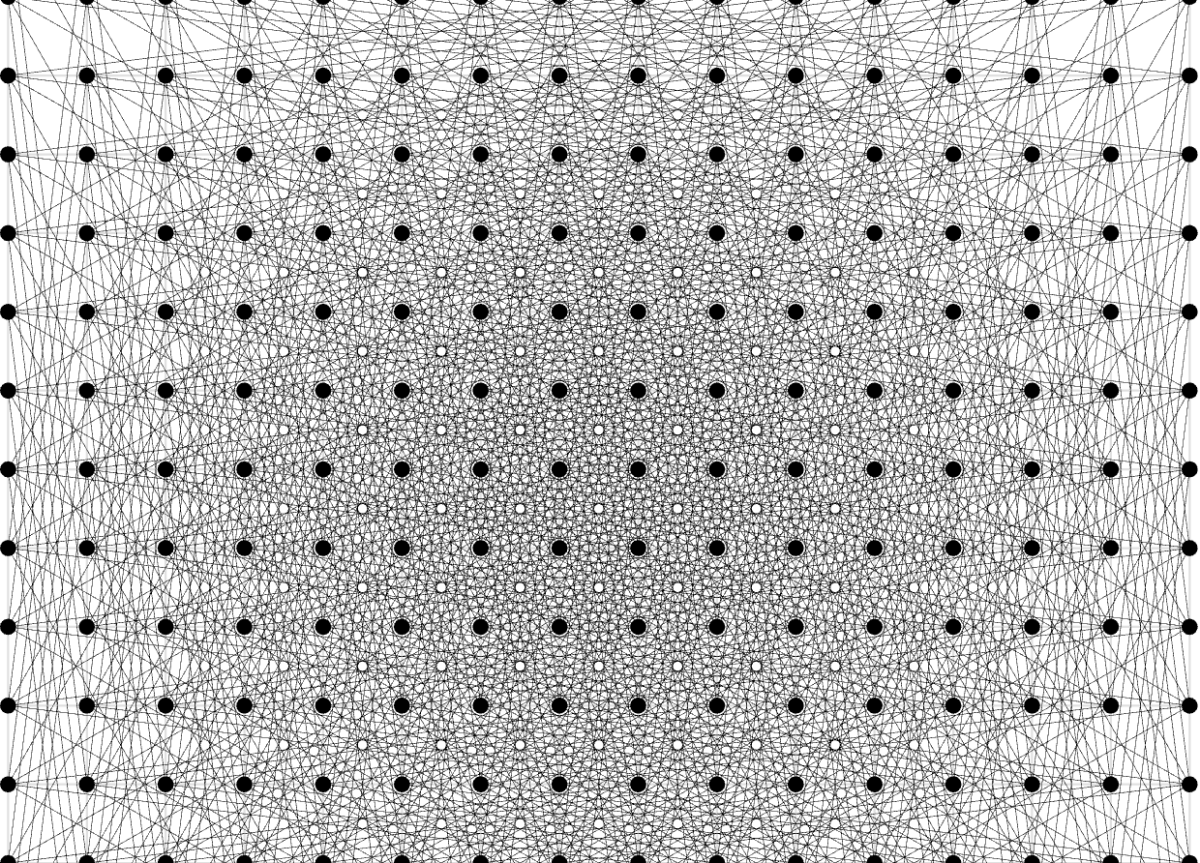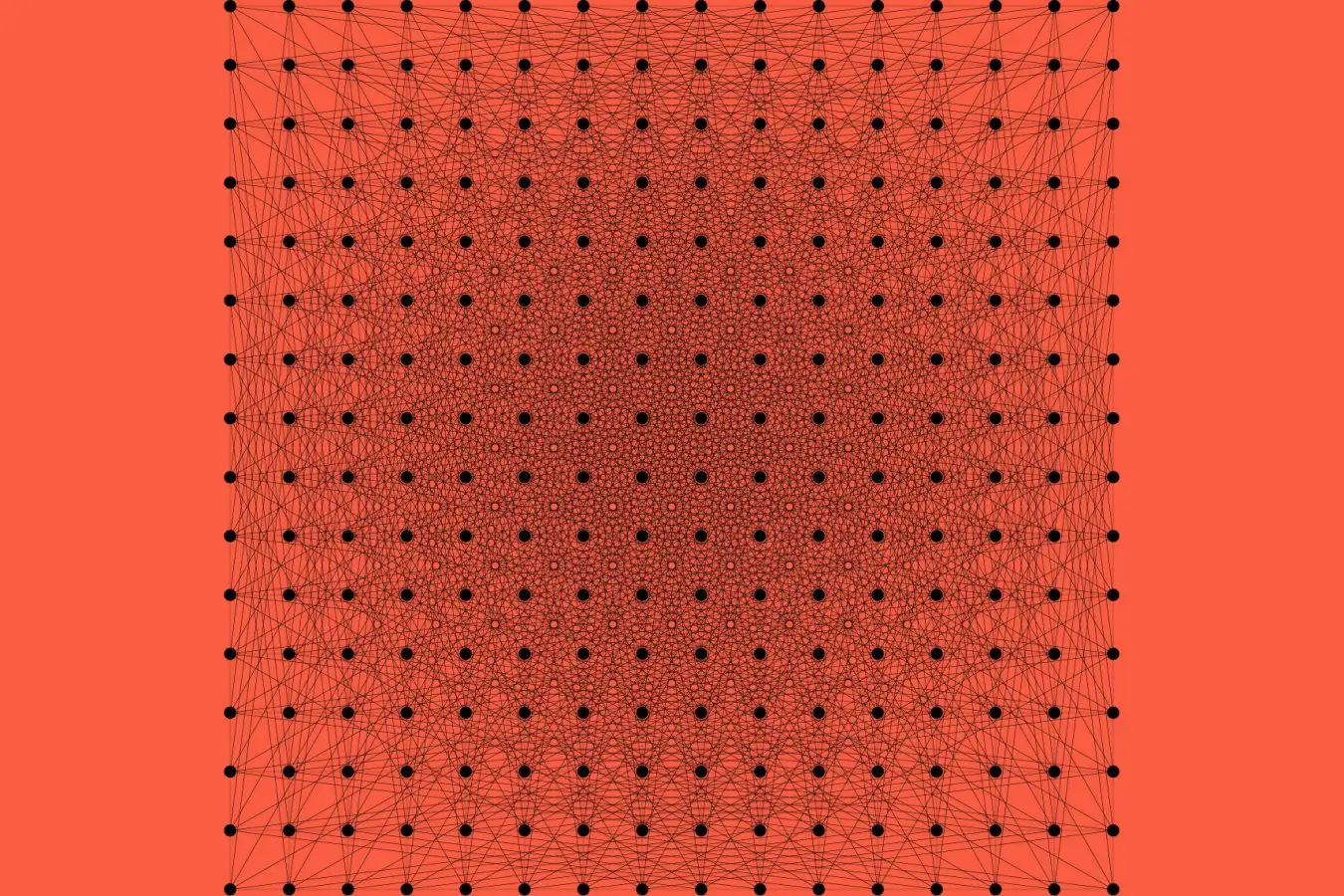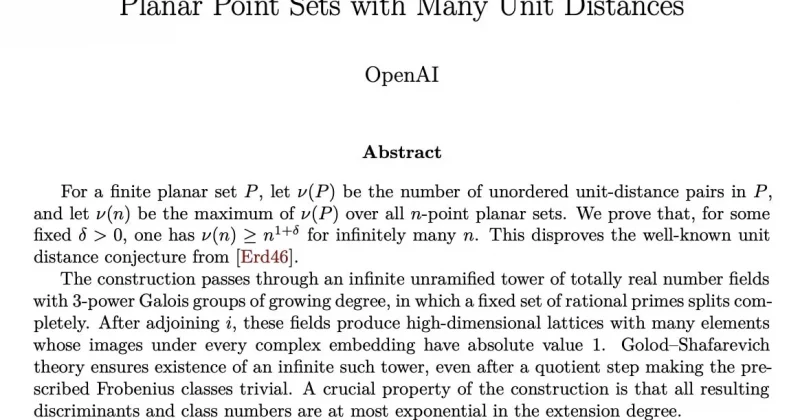
A machine just did something that eluded some of the sharpest mathematical minds on the planet for nearly eight decades. OpenAI’s internal reasoning model has disproved the planar unit distance conjecture, a problem first posed by the legendary Hungarian mathematician Paul Erdős in 1946.
The conjecture concerned a deceptively simple question: given n points in a flat plane, what is the maximum number of pairs of points that are exactly one unit apart? Erdős believed the upper bound grew at a rate of roughly n raised to the power of 1 plus some constant divided by log log n. In English: he thought the number of unit-distance pairs couldn’t grow much faster than the number of points themselves. The AI proved him wrong.
What the model actually found
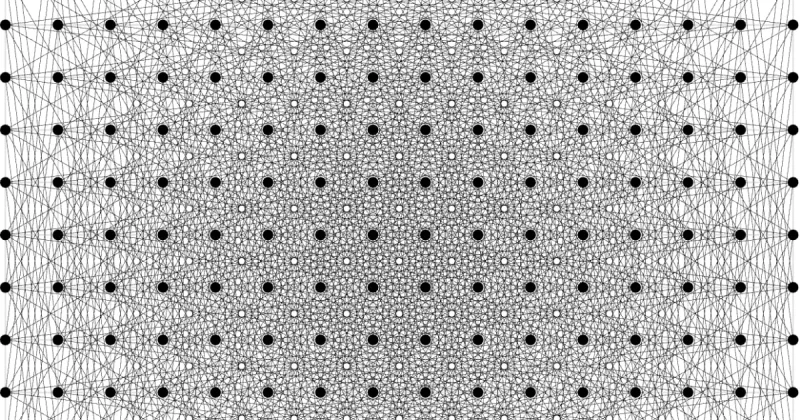
OpenAI’s model discovered an infinite family of point configurations that achieve approximately n^(1+0.014) unit distances among n points. That exponent, 0.014, might look tiny. It is not.
The previous best constructions were based on square grids, which mathematicians had been refining for decades without breaking through the conjectured ceiling. The AI’s approach didn’t just inch past the old bound. It identified a fundamentally new construction method that links geometry to algebraic number theory, utilizing tools such as infinite class field towers.