For 80 years, one of the most stubborn problems in combinatorial geometry sat on the shelf, occasionally dusted off by ambitious mathematicians, never quite cracked. Now an AI did it.
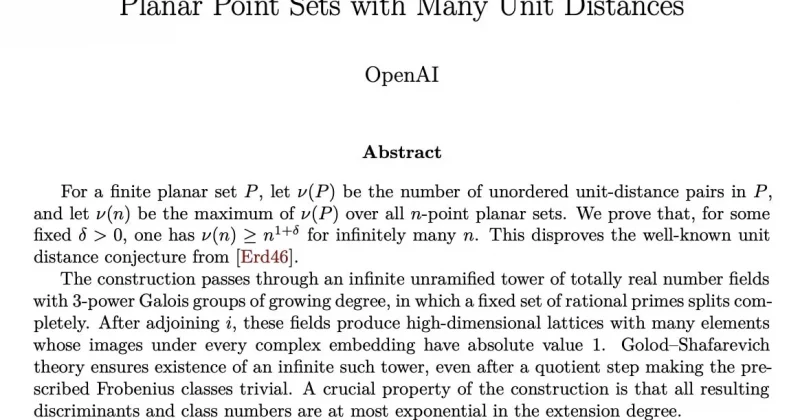
An internal OpenAI general reasoning model has produced a proof that resolves the planar unit distance problem, a conjecture first posed by legendary Hungarian mathematician Paul Erdős in 1946. The proof, spanning roughly 125 pages, establishes an infinite family of planar configurations with more unit-distance pairs than the traditionally assumed optimal arrangements. In plain terms: the AI found geometric patterns that break a limit mathematicians believed held for eight decades.
What the proof actually says
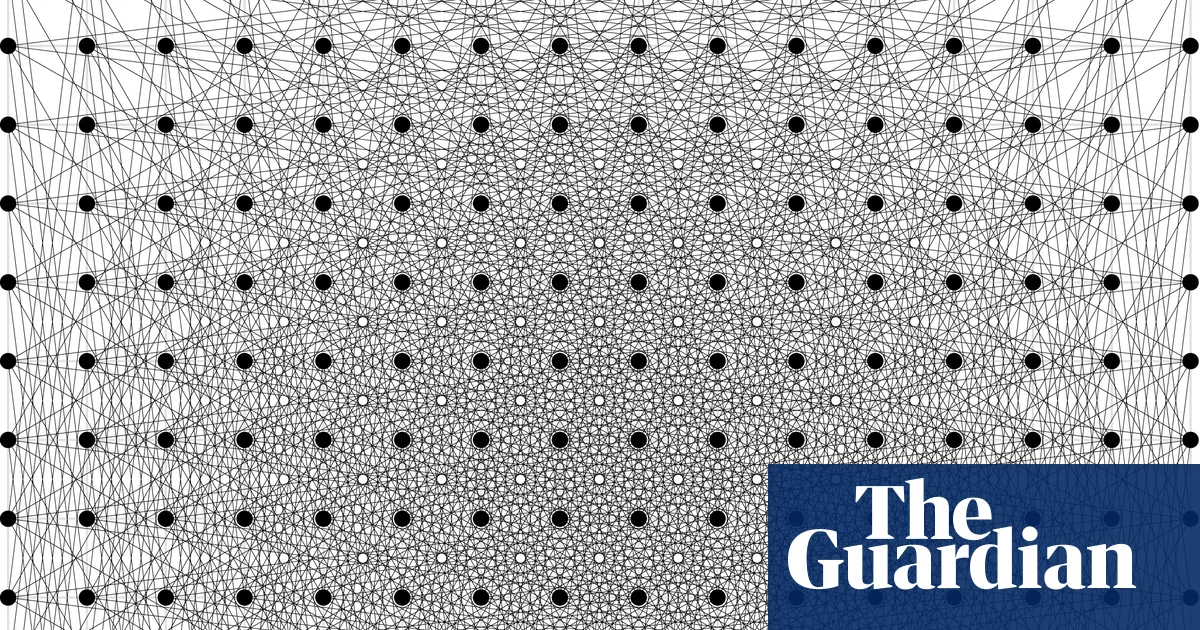
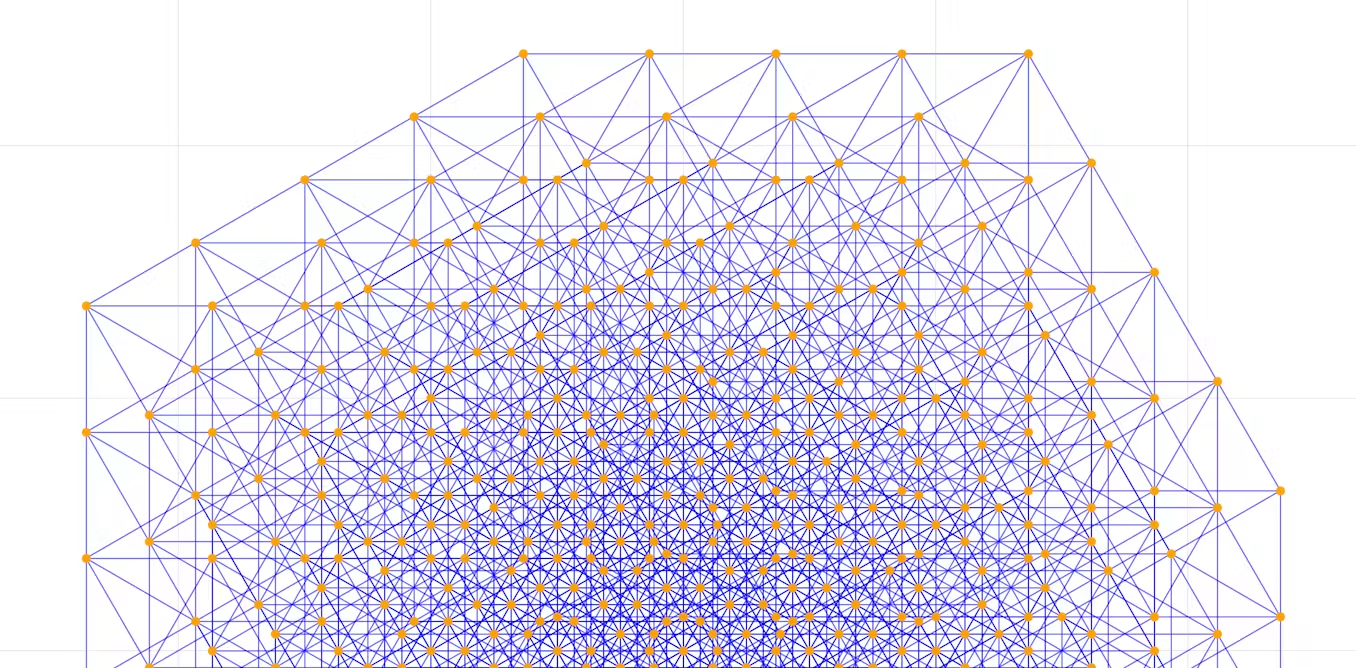
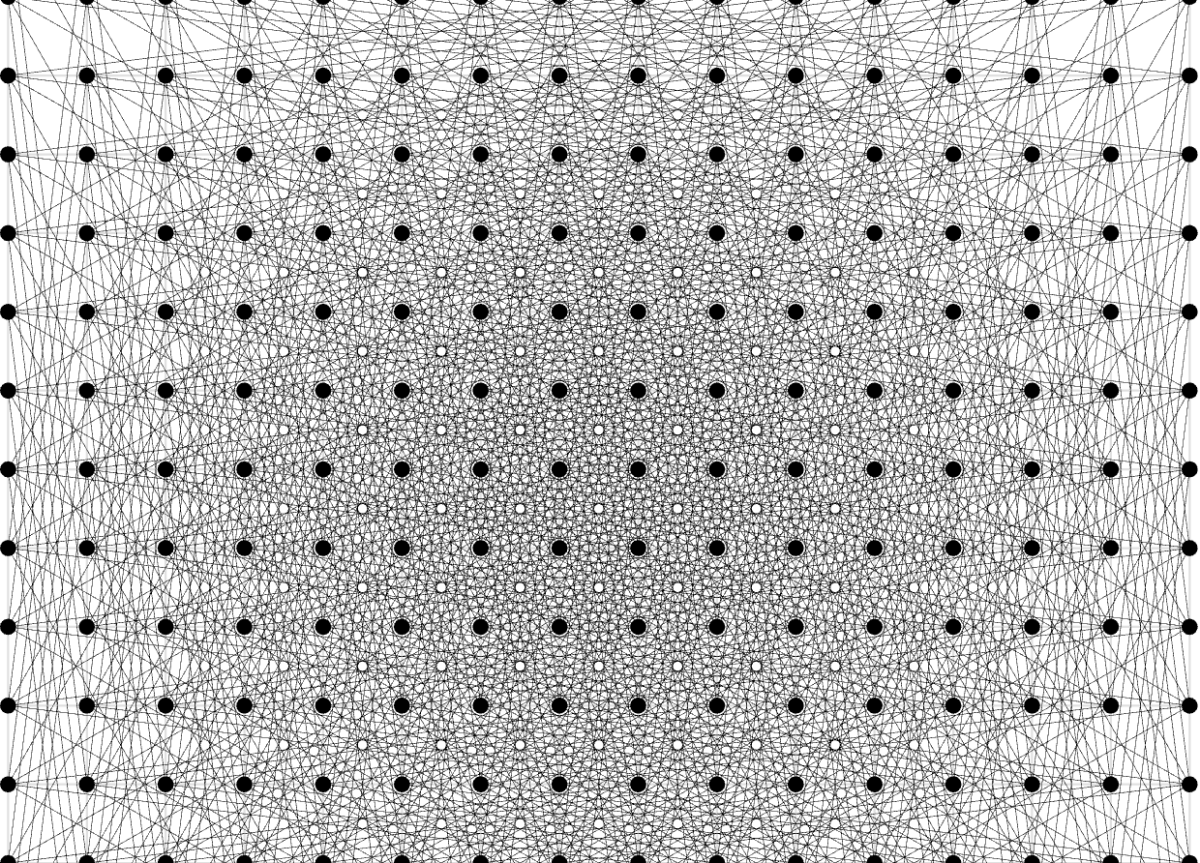
The planar unit distance problem asks: given n points in a plane, what is the maximum number of pairs that can be exactly one unit apart? Erdős conjectured an upper bound on this count, and for decades, the best-known configurations were grid-like structures that seemed to confirm his intuition.
OpenAI’s model took a different route entirely. Rather than iterating on known grid arrangements, it approached the problem through algebraic number theory, connecting it to advanced mathematical structures called infinite class field towers. The result is an infinite family of configurations that surpass the traditionally accepted optimal ones, refuting Erdős’s conjectured upper bound outright. The improvement has been quantified with an exponent of approximately 0.014.