An internal OpenAI model has autonomously generated a proof that disproves a famous conjecture in discrete geometry, one originally proposed by the legendary Hungarian mathematician Paul Erdős. The AI didn’t just assist a human researcher or check existing work. It independently discovered a new type of solution to the planar unit distance problem.
This is not a case of an AI speeding up a known approach or brute-forcing computations. The model produced a novel mathematical proof based solely on an AI-written statement of the problem, raising genuine questions about what “doing mathematics” means when a machine can do it alone.
What the AI actually proved
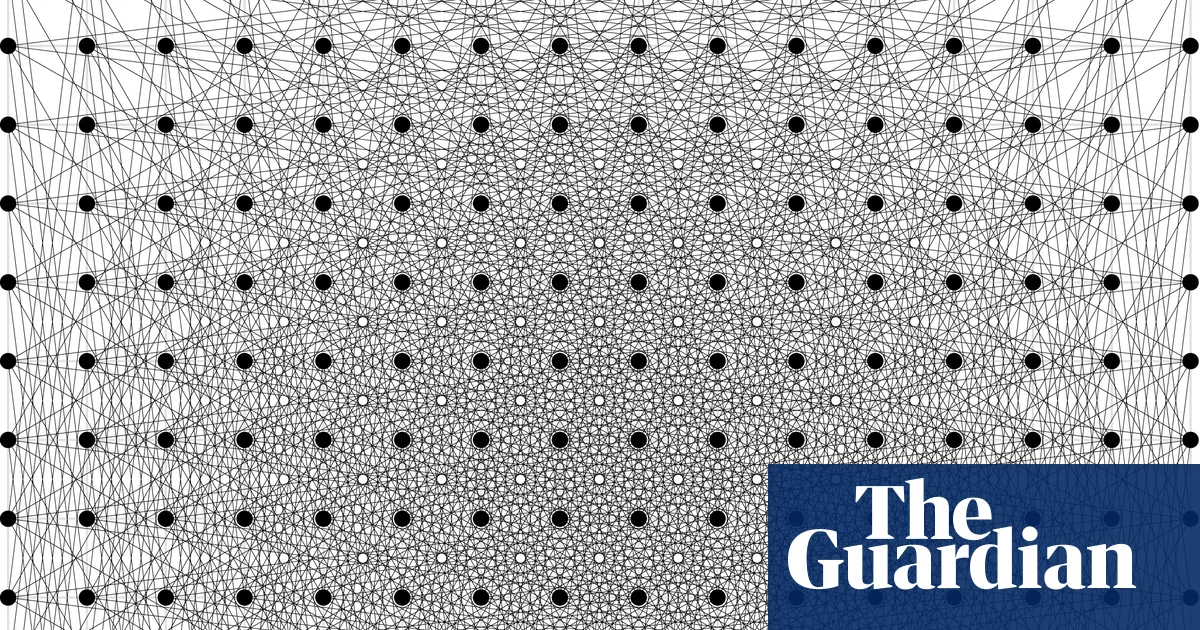
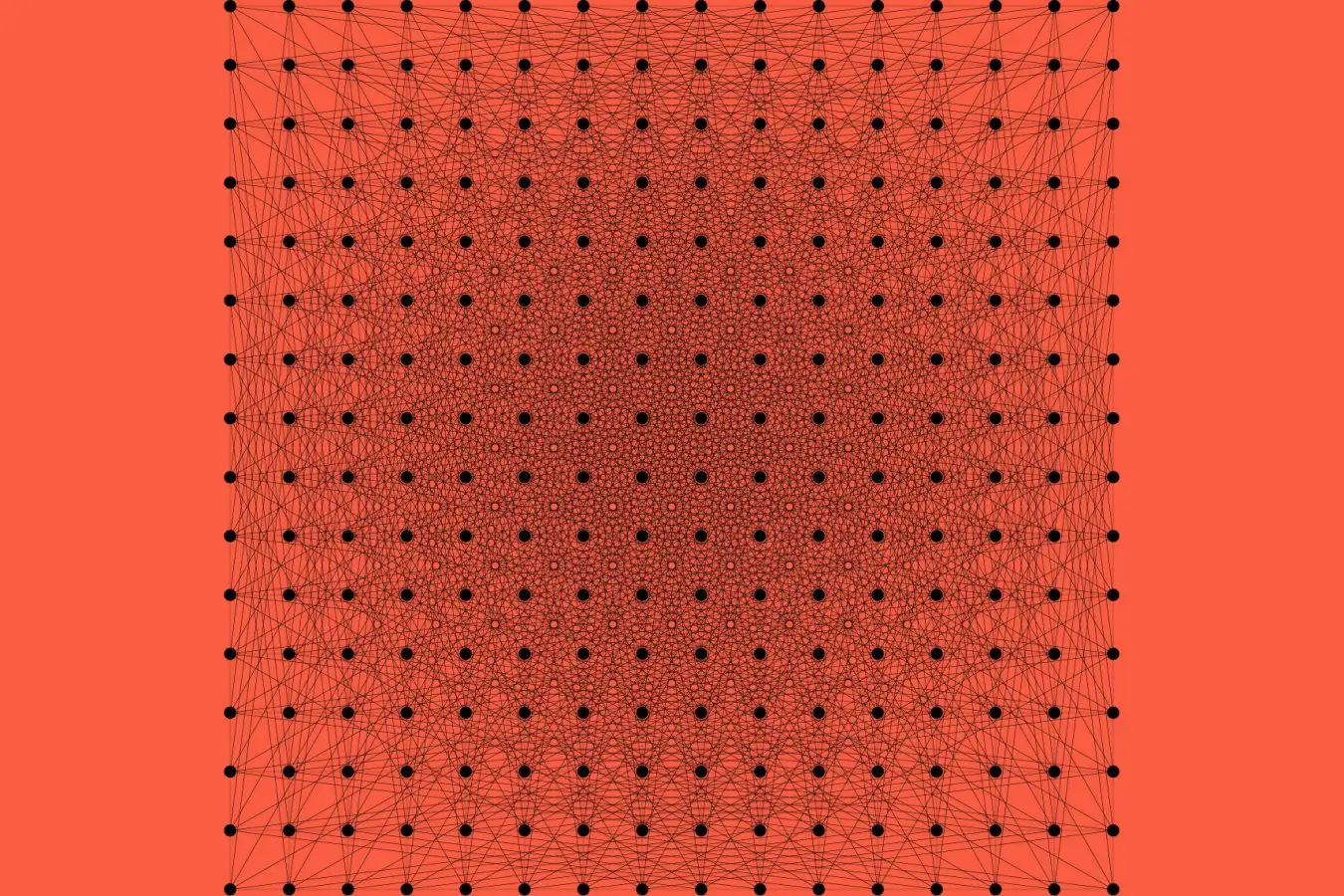
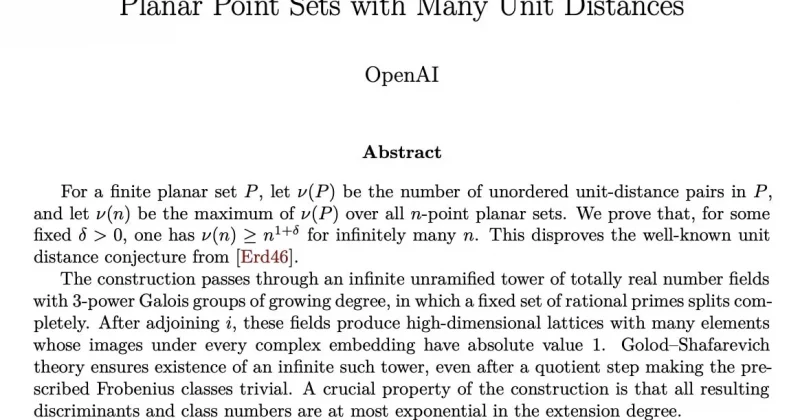
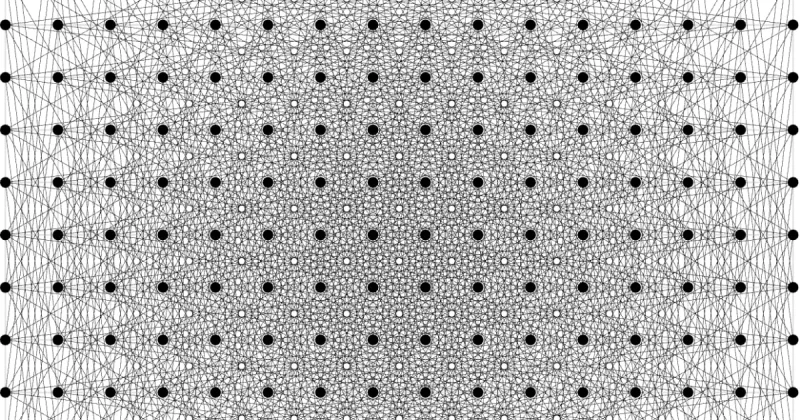
Here’s the setup. Take n points scattered on a flat plane. Now count how many pairs of those points are exactly one unit apart. The maximum number of such pairs for a given n is denoted as v(n). Erdős conjectured decades ago that this count stays relatively tame as n grows, specifically that v(n) remains bounded above by C times n raised to the power of 1 plus a term that vanishes as n increases. In English: as you add more points, the number of unit-distance pairs shouldn’t grow much faster than the number of points themselves.
OpenAI’s model proved the opposite. For infinitely many values of n, the maximum number of unit-distance pairs satisfies v(n) being greater than or equal to n raised to the power of 1 plus some fixed positive constant. That fixed positive constant is the key detail. It means the growth rate doesn’t just barely exceed linear. It meaningfully exceeds it, and it does so infinitely often.