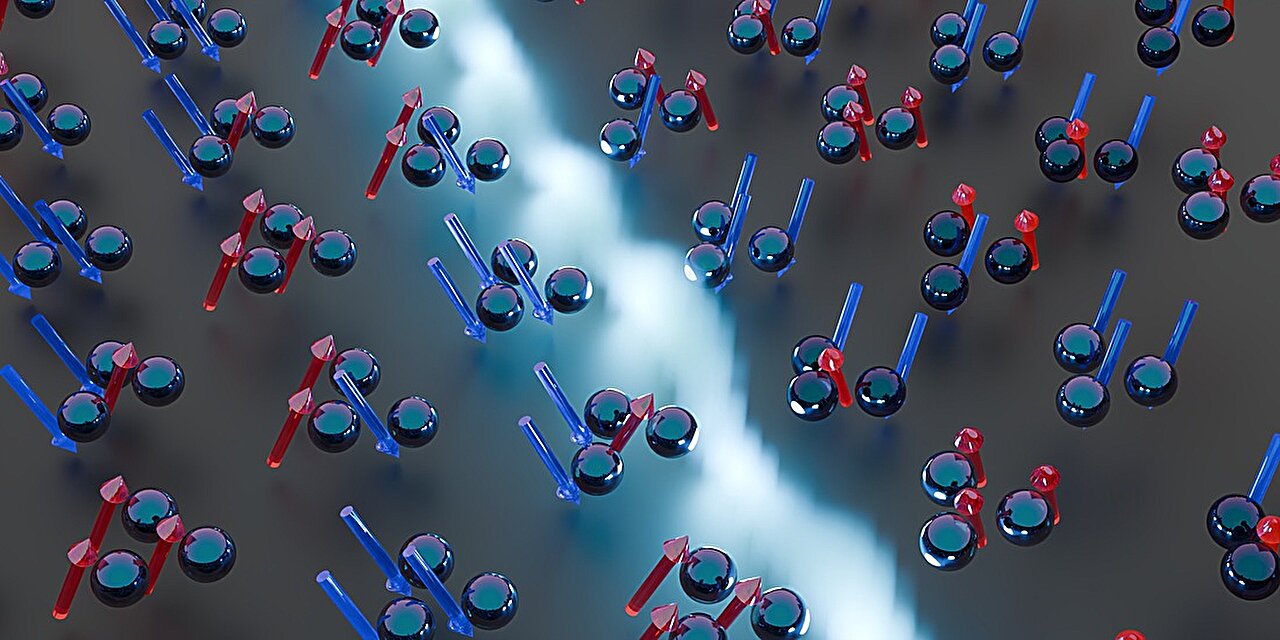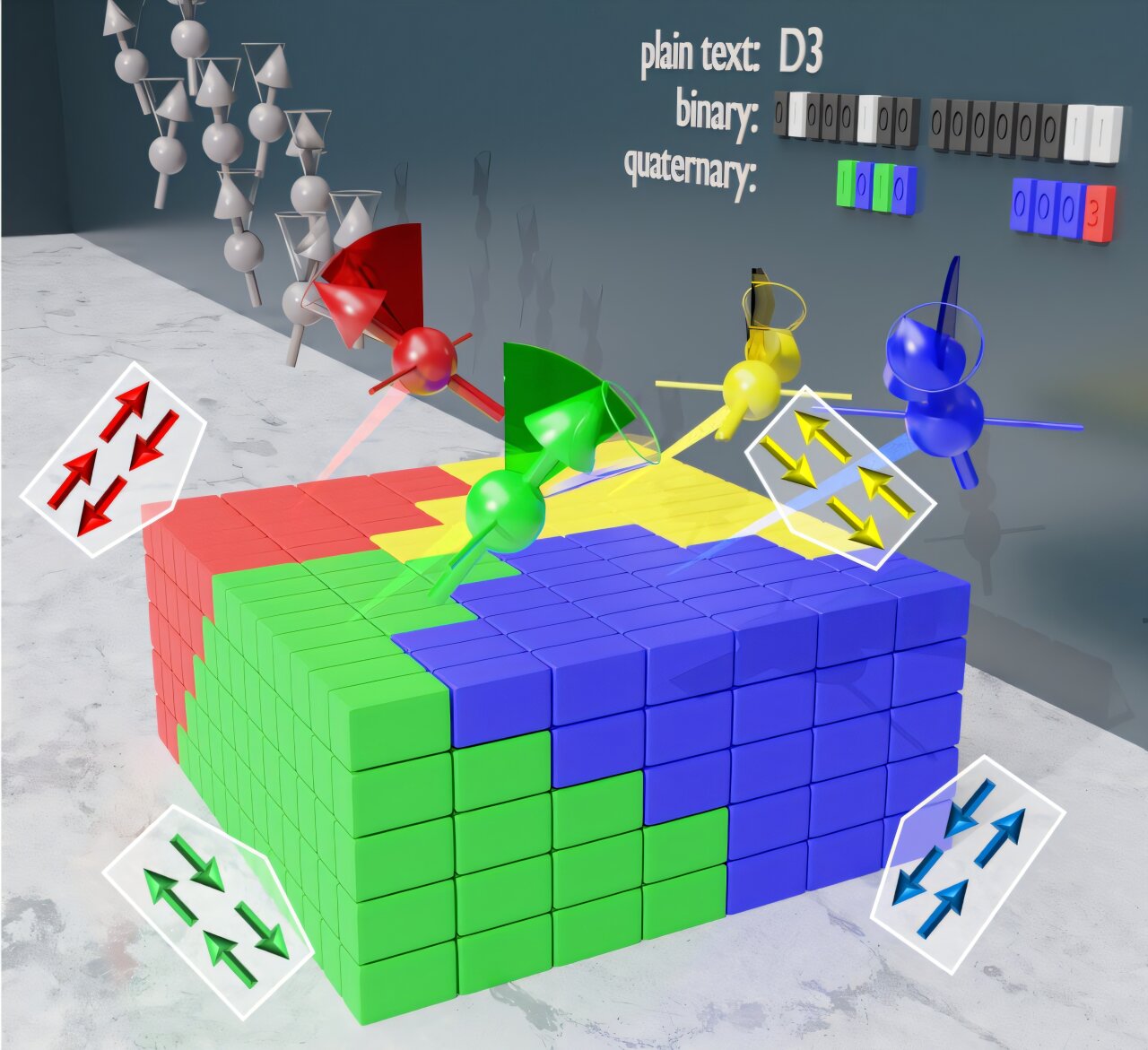
A single crystal of LiNi0.8Fe0.2PO4 can host four different magnetic states (shown in red, green, yellow and blue). In each state, the atomic magnets inside the material follow an antiferromagnetic pattern, where neighboring spins point in opposite directions (as illustrated in the zoom-in of each state), but the overall orientation of this pattern differs. The gray arrows represent neutrons used to probe the crystal. Because neutrons behave like tiny magnetic probes, they interact with the atomic magnets in the material and are affected differently depending on the magnetic state they encounter. By analyzing these changes, researchers can determine which of the four states is present. The illustration on the wall shows how a four-state ("quaternary") memory could encode information more efficiently: the text "D3" requires eight units in conventional binary memory but only four units in a four-state system. Credit: Nature Communications (2026). DOI: 10.1038/s41467-026-70767-8
Today's computers store information using only two values: 0 and 1. But as electronic devices become smaller and reach their limits, scientists are searching for new ways to pack more information into the same space. One idea is to use magnetism. In some materials, atoms behave like tiny magnets that can arrange themselves in different patterns. If each pattern represents a different value, one memory element could store more than just two possibilities.