Insider Brief
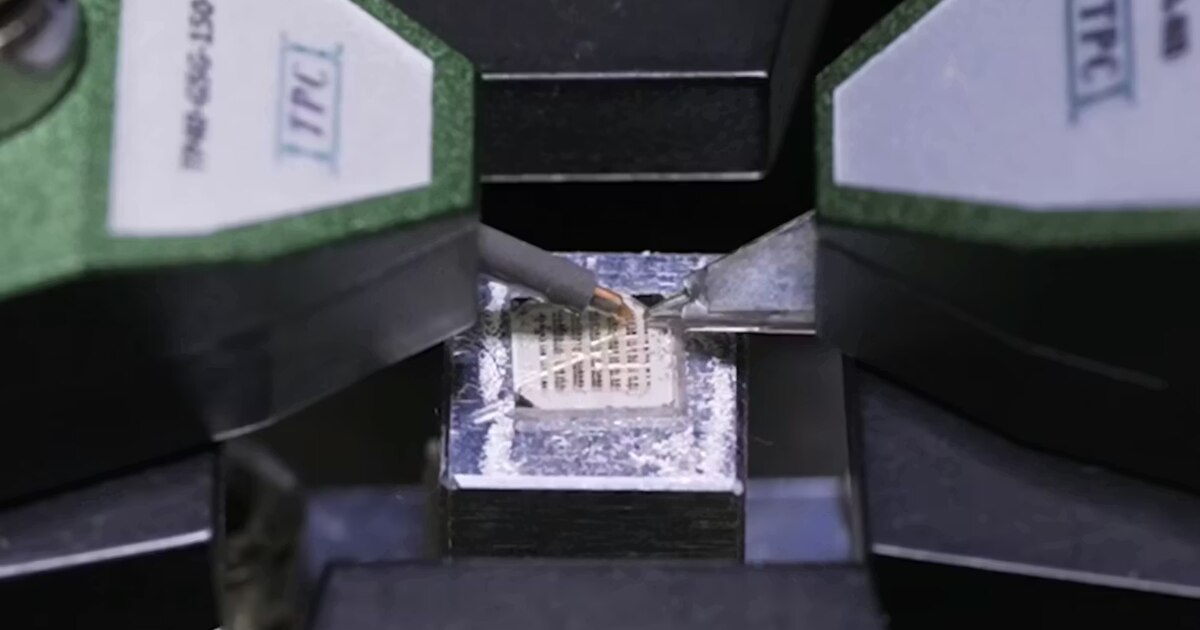
Researchers from The University of Tokyo and RIKEN demonstrated a non-volatile switching element operating with 40-picosecond electrical pulses using the antiferromagnetic material Mn₃Sn.
The study showed that spin-orbit torque can enable ultra-fast switching with lower heat generation and improved durability compared to conventional approaches.
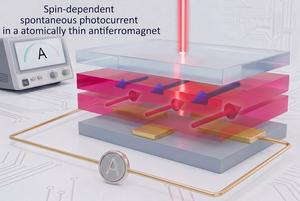
Researchers also demonstrated switching using a 60-picosecond photocurrent pulse, highlighting potential links between optical signals and non-volatile spintronic memory systems.
PRESS RELEASE — The research group, including Professor Tsai Hanshen, Special Assistant Professor Matsuda Takuya (at the time of the study), and Professor Nakatsuji Tomo of the Graduate School of Science at the University of Tokyo, is comprised of Professor Arita Ryotaro of the Graduate School of Science (and Team Director of the Center for Emergent Matter Science at the RIKEN Institute), Professor Takenaka Mitsuru of the Graduate School of Engineering, Assistant Professor Shimizu Kotaro, and Professor Iizuka Tetsuya In collaboration with Shinji Miwa, Associate Professor at the Institute of Solid State Physics, and Kota Kondo, Senior Researcher at the Center for Emergent Materials Science, RIKEN (at the time of the study) (currently Associate Professor at the Osaka University Advanced Interdisciplinary Research Organization), we used the antiferromagnetic material Mn₃Sn We have shown that magnetic states (binary values) can be rewritten, or switched, by extremely short electrical pulses of 40 picoseconds (pico is parts per trillion).