Materials known as relaxor ferroelectrics have played an important role for decades in technologies such as ultrasound imaging, microphones, and sonar. Their unusual performance comes from the way atoms are arranged inside them. However, that internal structure has been extremely difficult to measure directly, leaving scientists to rely on incomplete models.
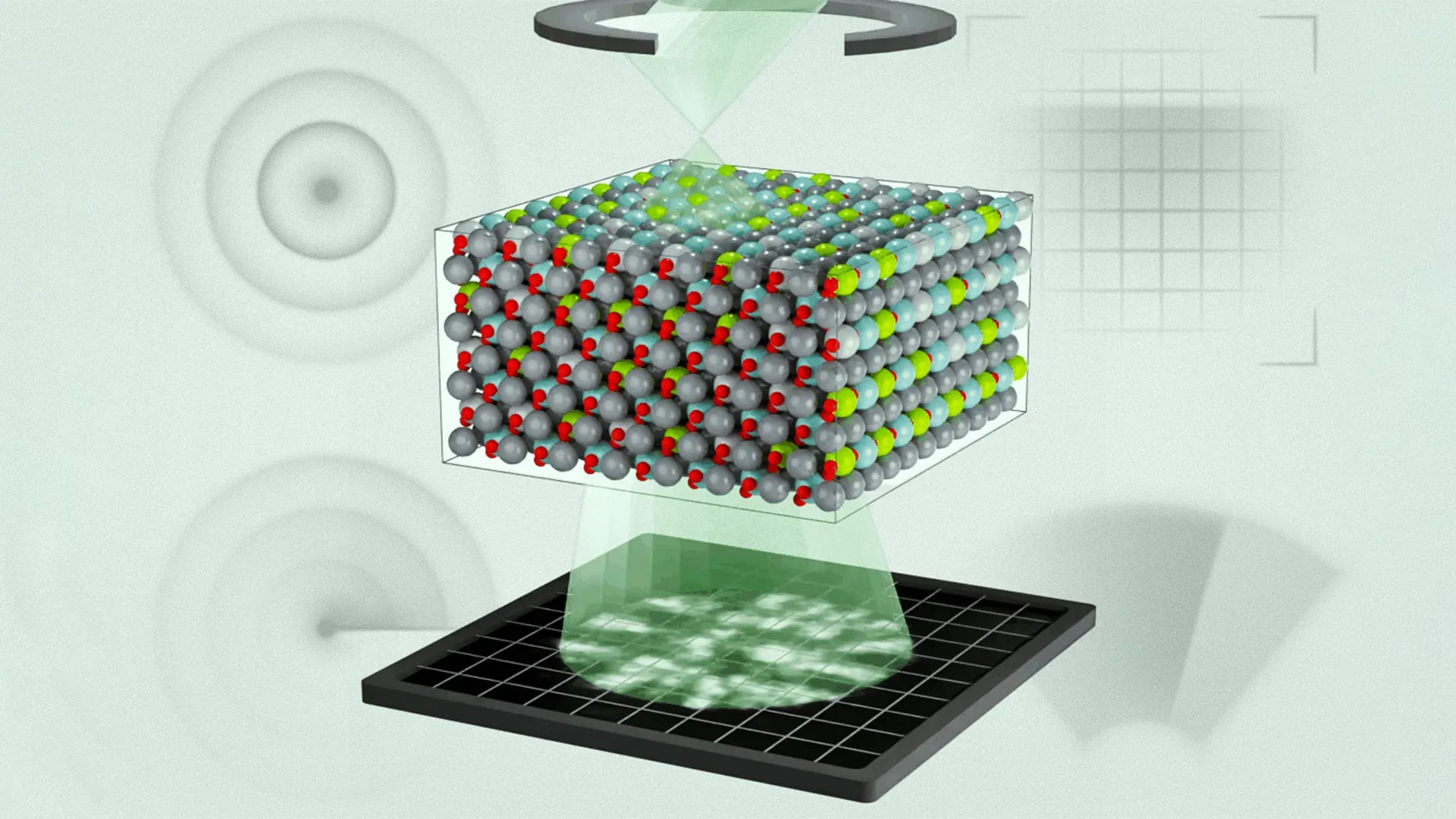
Now, researchers from MIT and collaborating institutions have, for the first time, mapped the three dimensional atomic structure of a relaxor ferroelectric. Their results, to be published in Science, offer a clearer foundation for improving the models used to design future computing systems, energy devices, and advanced sensors.
"Now that we have a better understanding of exactly what's going on, we can better predict and engineer the properties we want materials to achieve," says corresponding author James LeBeau, MIT's Kyocera Professor of Materials Science and Engineering. "The research community is still developing methods to engineer these materials, but in order to predict the properties those materials will have, you have to know if your model is right."
Revealing Hidden Charge Patterns in Complex Materials
In the study, the team used a cutting edge imaging method to examine how electric charges are distributed throughout the material. What they found challenged previous assumptions.