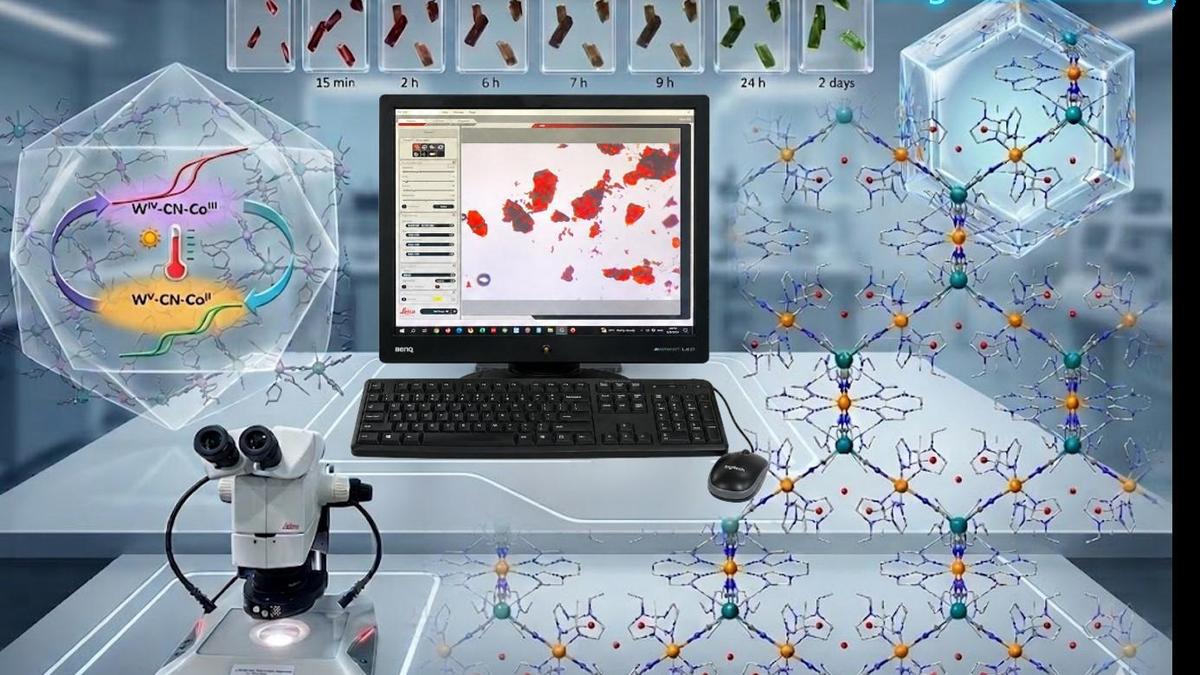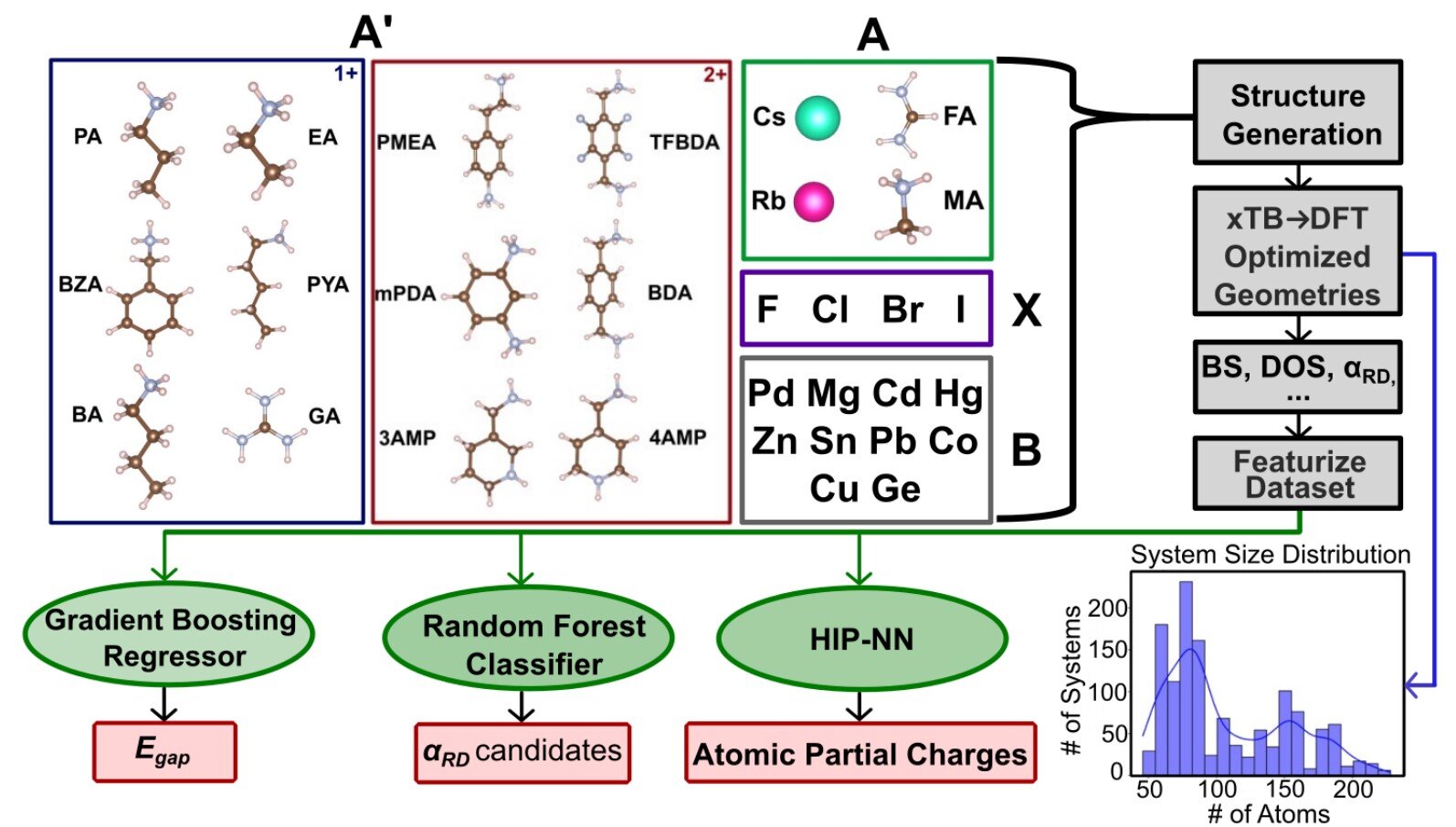
Schematic overview of the project detailing the selection of building components, a rough outline of the computational workflow, as well as the resulting dataset and three ML models for prediction of electronic band gaps, Rashba-Dresselhaus splitting candidates, and atomic partial charges. The picture does not represent an exhaustive list of A' and A-site cations used in the present study, all building components can be found in the Dataset Design section. Credit: npj Computational Materials (2026). DOI: 10.1038/s41524-026-02049-2
Researchers at Clarkson University are advancing the use of artificial intelligence and computational physics to accelerate discovery of next-generation materials for quantum technologies, optoelectronics, and renewable energy applications.
Associate Professor of Physics Dhara Trivedi recently worked with scientists at Los Alamos National Laboratory on a research project that combined machine learning, high-throughput computational modeling, and quantum-scale simulations to accelerate the discovery of advanced materials with specialized electronic and quantum properties.
The team studied two-dimensional perovskites, a group of materials that could improve technologies such as solar panels, sensors, lasers and next-generation computers. The research was published in npj Computational Materials.