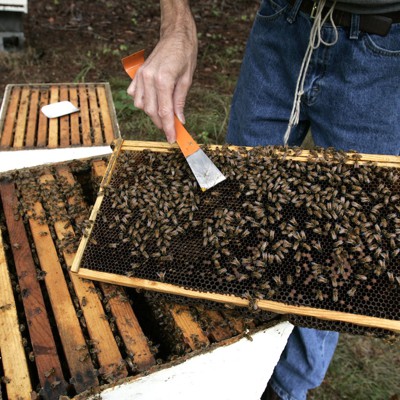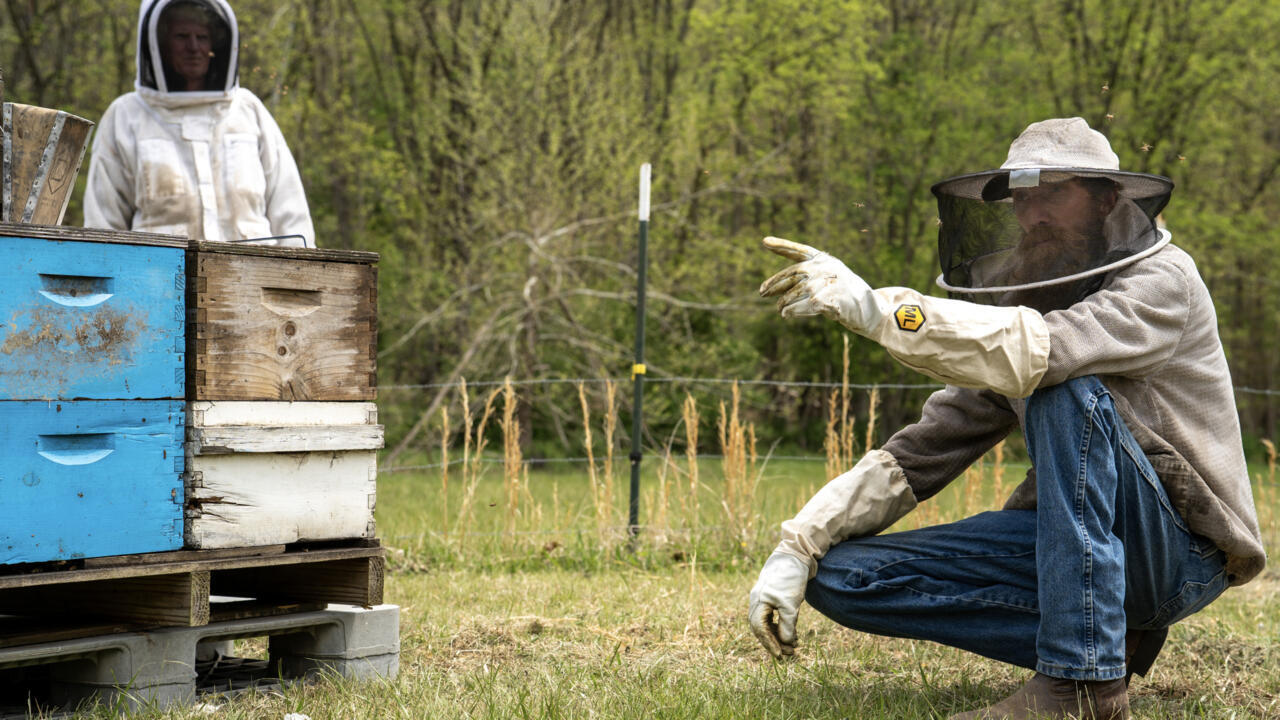
This club of apiarists -- ranging from hobbyists to full-time commercial bee farmers -- gathers regularly to learn new skills and discuss tricky problems, not least the parasitic varroa mites that plague their hives.But the group -- and beekeepers across the country -- face a new challenge: The government's closure of a key research facility, home to the nation's oldest bee lab that has been at the vanguard of research into bee ills for over a century.Funkhouser, a veteran commercial beekeeper, should have around 1,200 hives under his care. This year, he's sitting on less than 200."It's a real struggle," Funkhouser told AFP. "The parasites that we've got now, the mites and everything -- more viruses and more pesticide exposures, more chemical exposures -- everything is just more of a struggle today than what it was in the past."
US beekeepers lost more than half their bee colonies in the year leading up to April 2025, according to the most recent data © Paul Blake / AFP
Catastrophic lossesHe's hardly alone.America's beekeepers are in a bad way.They lost more than half their bee colonies in the year leading up to April 2025, according to the latest estimates from Apiary Inspectors of America, marking the highest annual loss since the group began surveying beekeepers.Mites & Viruses