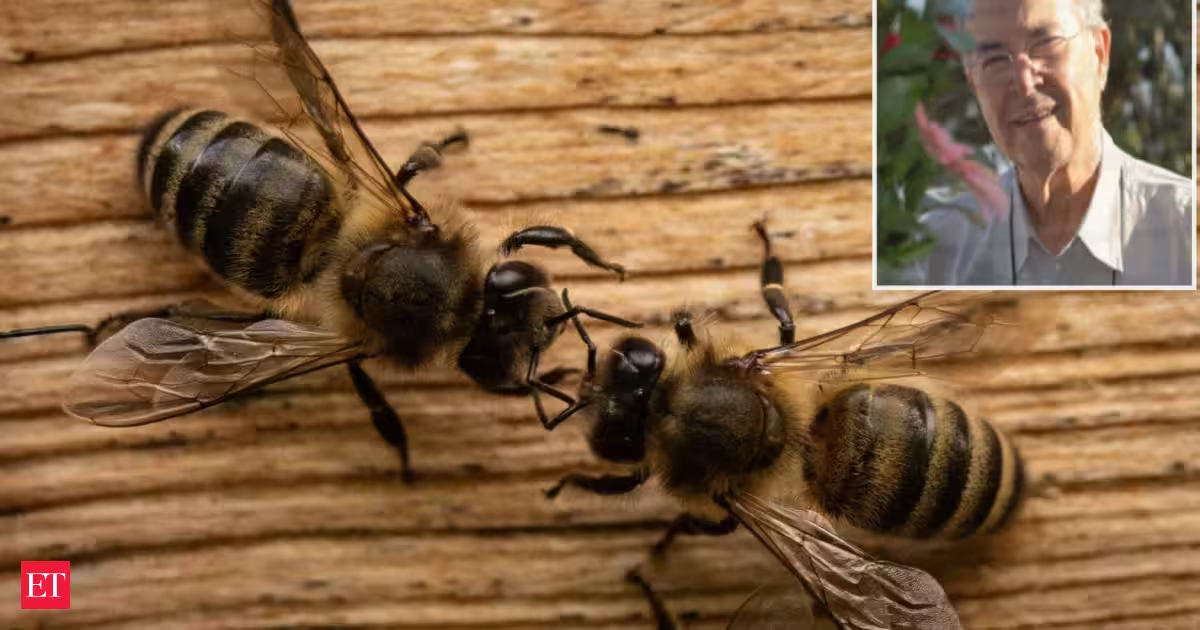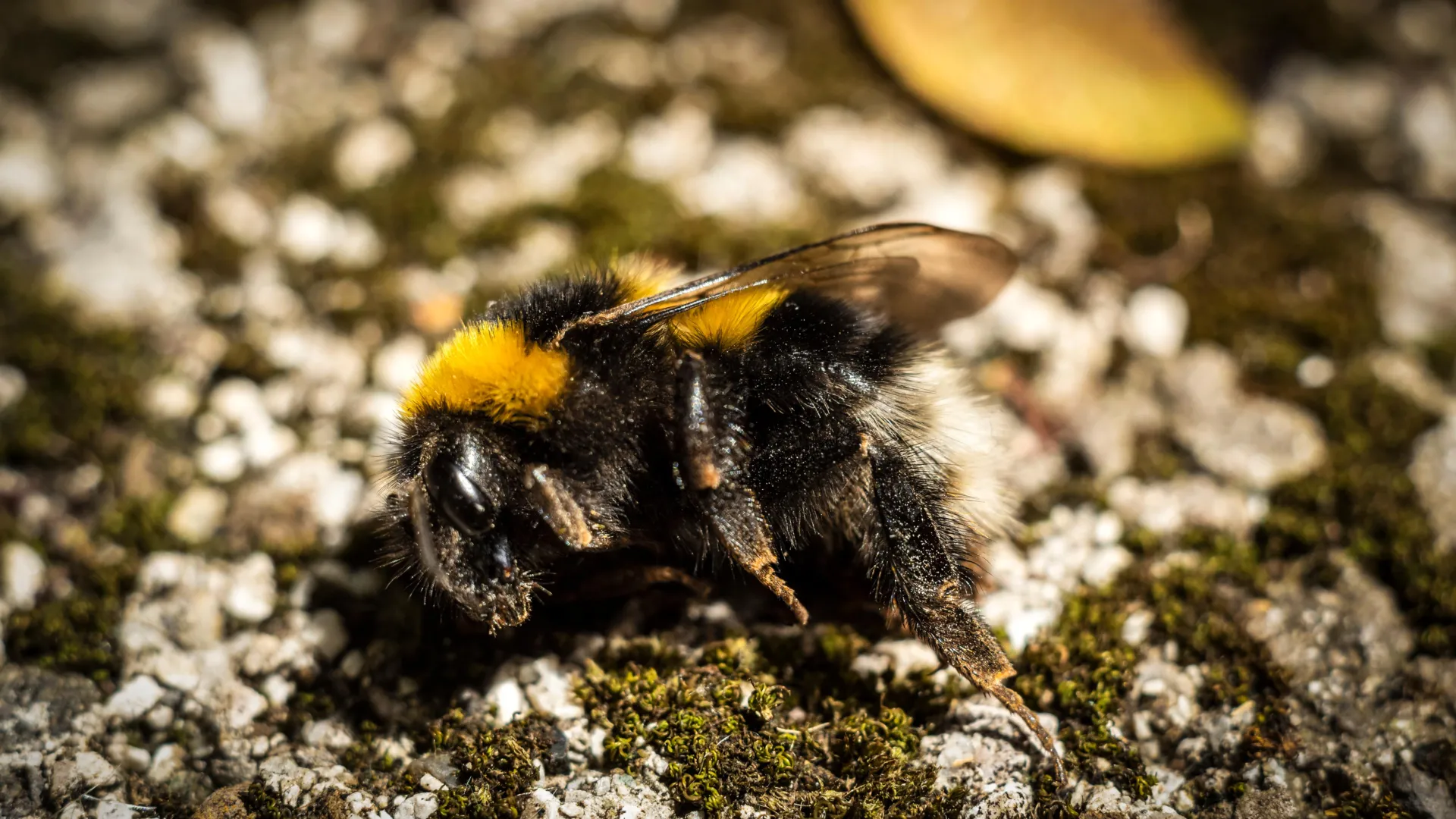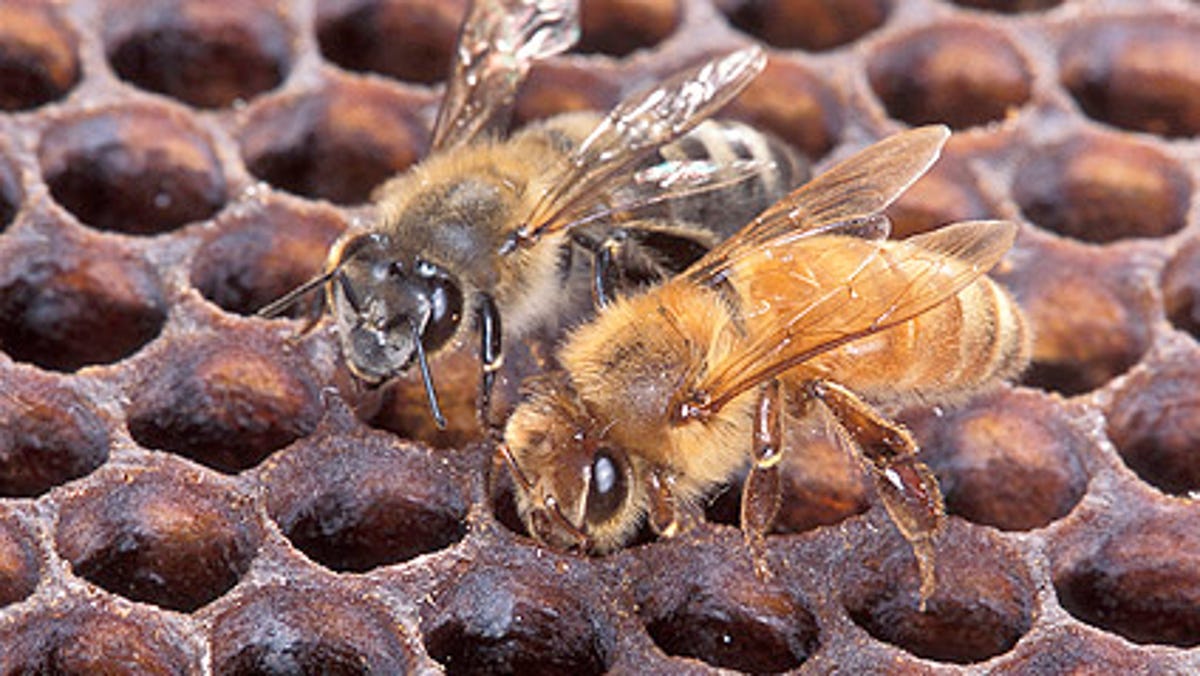
Africanized honey bees, often called "killer bees," are now found in 13 states and are slowly spreading northward, attacking people, livestock and pets along the way.
In the last three months alone, a man mowing his property died after a bee attack, three people were taken to the hospital after tree trimmers disturbed a colony, hikers ran a mile to get away from an agitated hive and a woman and three horses were swarmed by bees spooked by a lawn mower. The horses later died from "thousands" of stings, their owner said.
Scientists say the bees' temperament is a defense mechanism to ward off predators – and note that because honey bees die after stinging, they are sacrificing themselves to protect their colony. But to unsuspecting humans, killer bees sure seem aggressive, spiteful and terrifying.
They've been known to follow their victims for up to a mile – even following cars and trucks – and can sting through regular beekeeping gear. In the attack on the Texas horses, owner Baillie Hillman said, "they didn’t give up."
As parts of the west become warmer and drier, it's only going to get worse as the bees' preferred climate moves northward.