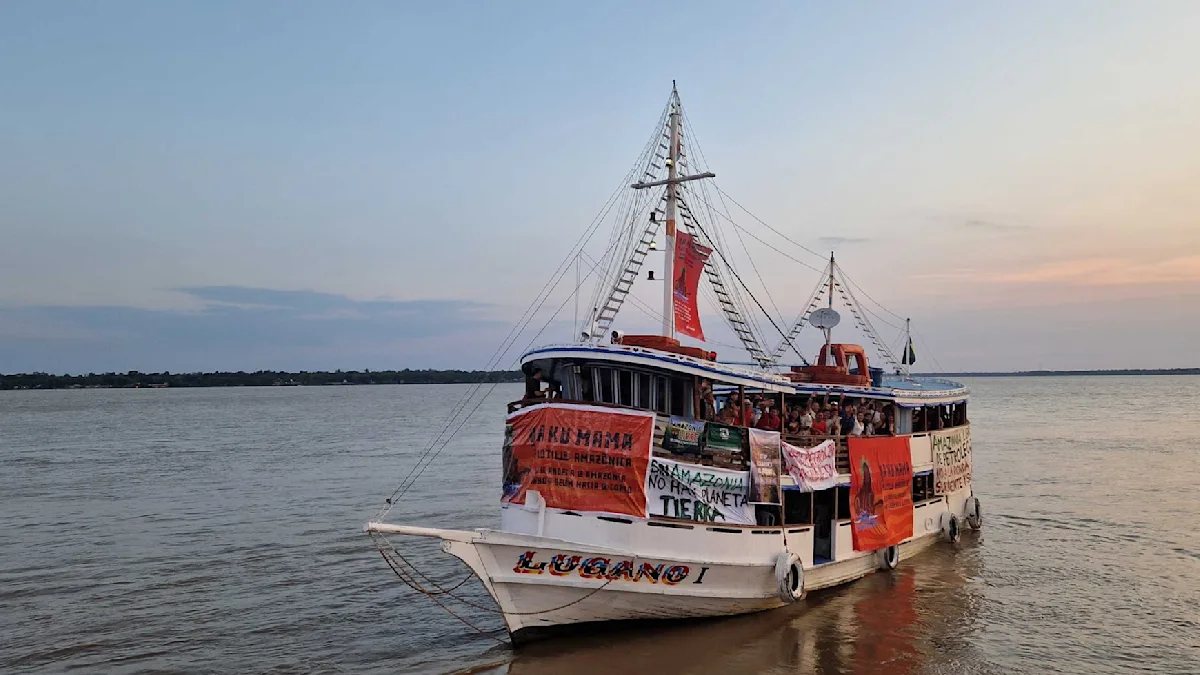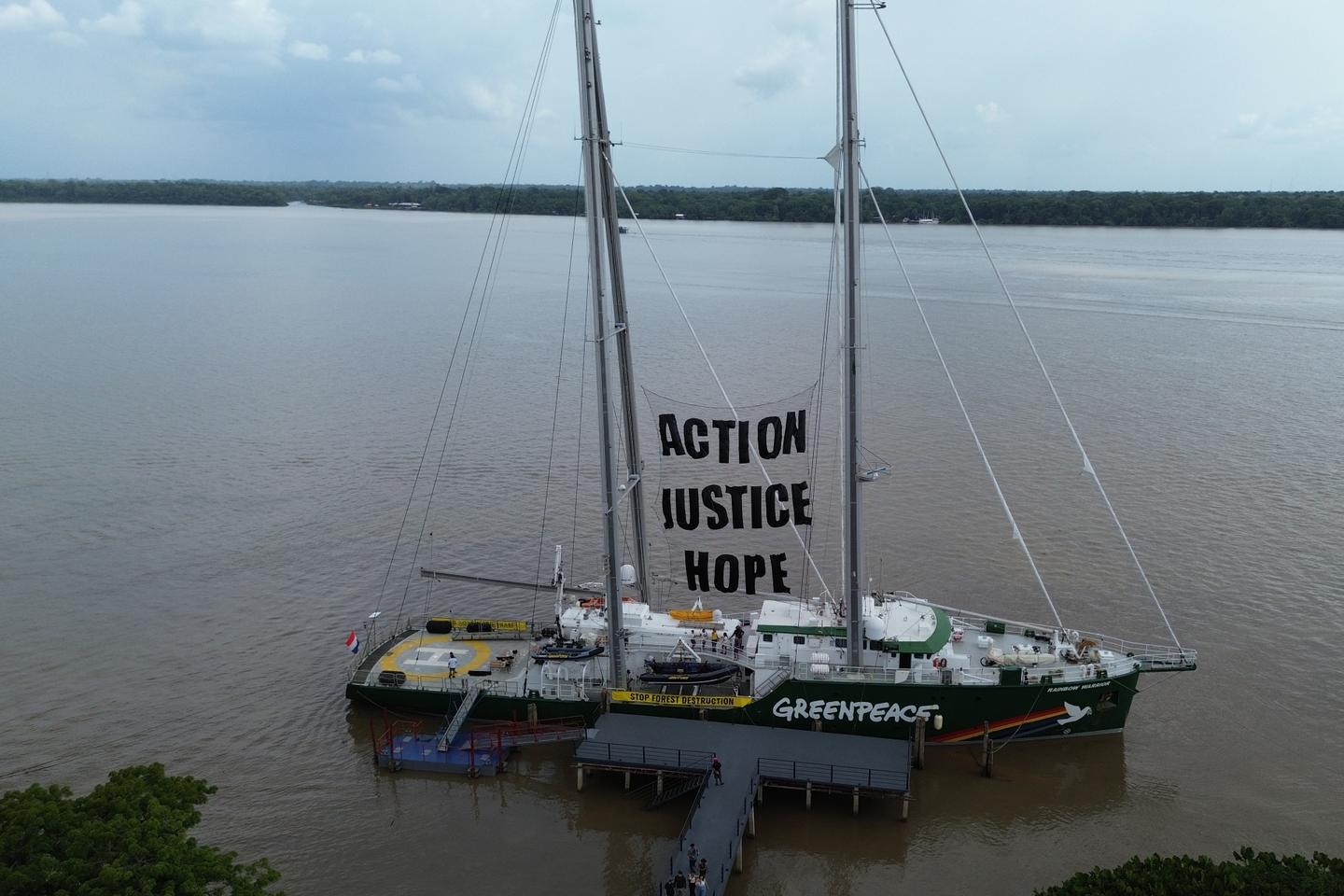
Greenpeace's Rainbow Warrior ship docked at the port of the Federal University of Pará in Belém, Brazil, on Wednesday, November 5, 2025. PAULO SANTOS / AP
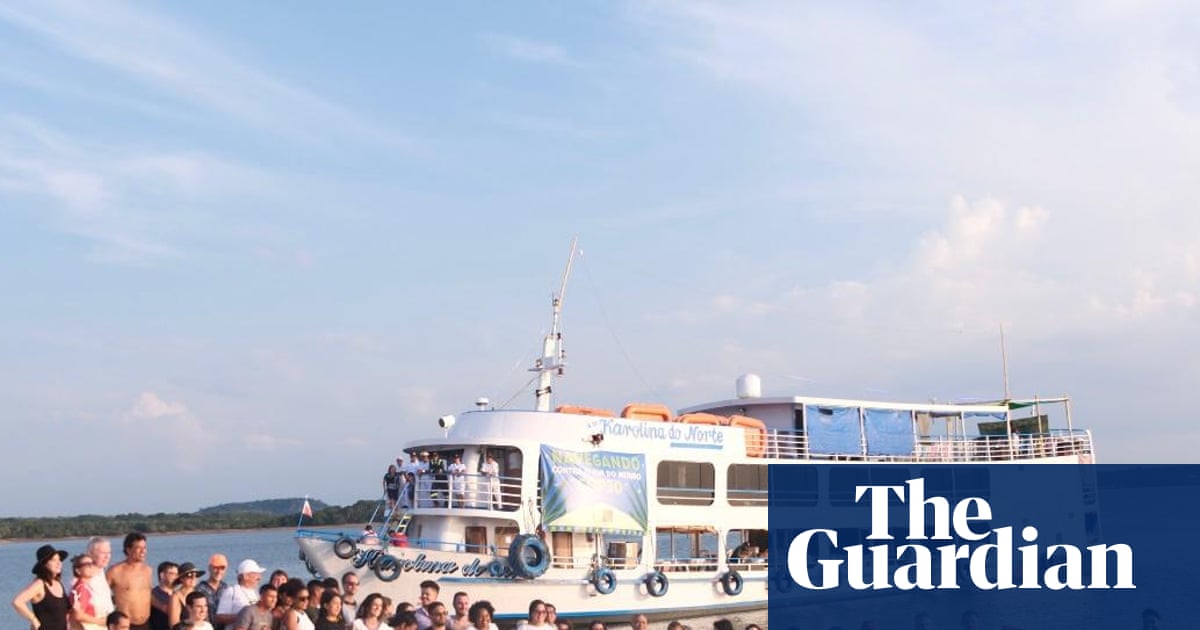
When Emmanuel Macron traveled to Belem, Brazil, ahead of the 30th Conference of the Parties on climate change (COP30), he encountered a name well-known to the French public. On Thursday, November 6, the president visited one of the boats from the "Iaraçu" river caravan, a French-Brazilian scientific project moored on the Rio Guamá south of the city. Just a short distance away, Greenpeace activists displayed a banner reading "Macron: good cop or bad cop?" The sign was placed at the stern of the NGO's vessel, its name emblazoned in large white letters: Rainbow Warrior.
The president did not make his way to the green ship decorated with a long rainbow. Those colors bring back bitter memories for French authorities. Forty years ago, the first Rainbow Warrior – a former North Sea trawler acquired by Greenpeace in 1978 – had just undergone major renovations, including the addition of masts for cleaner sailing. Sporting a "Nuclear free Pacific" banner, it set off on an activist journey to meet with the peoples of the Marshall Islands, which had been the site of 67 American nuclear tests between 1946 and 1958. But the activists' main objective was to reach the atolls of Mururoa and Fangataufa, where France was conducting its own nuclear experiments.