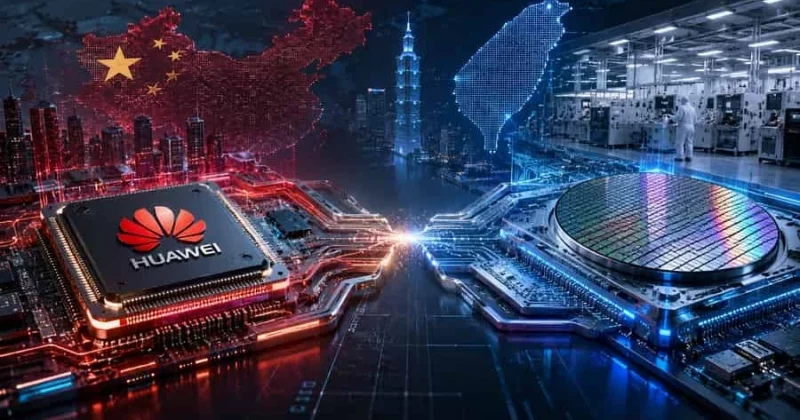
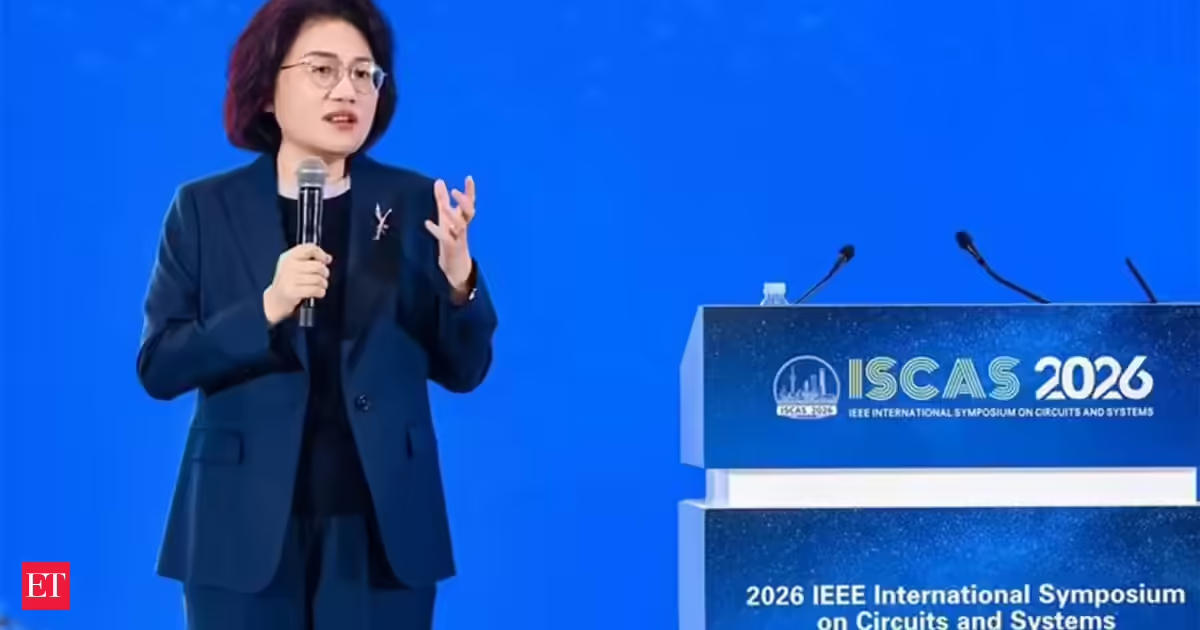
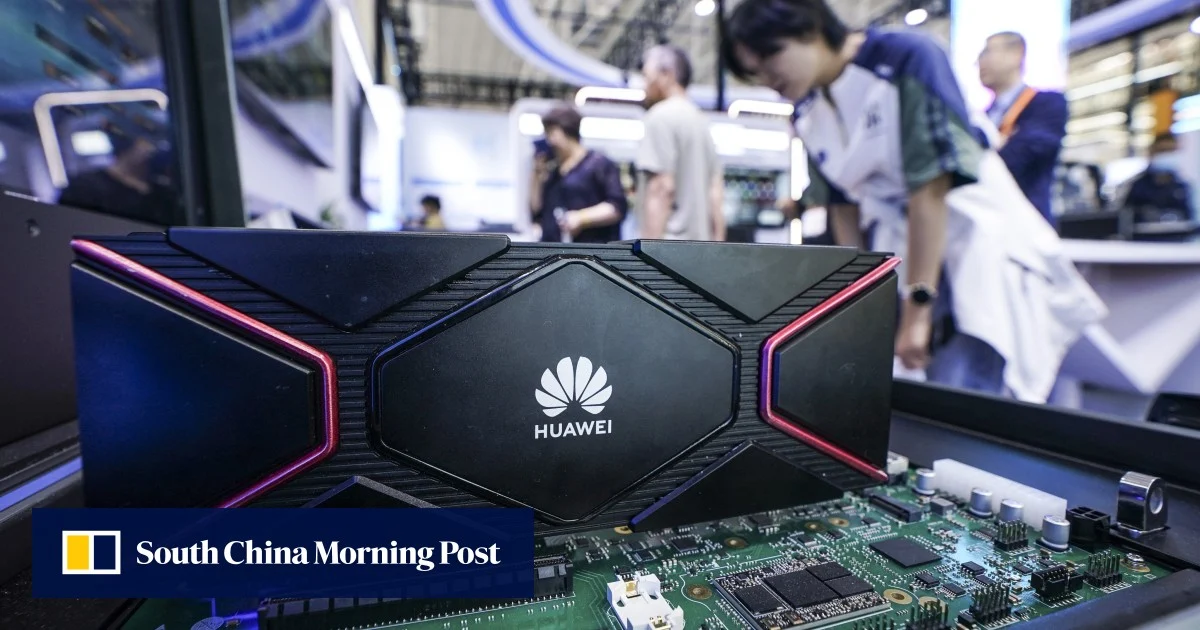
China has been barred since 2019 from importing ASML's most advanced extreme ultraviolet (EUV) lithography machines, curbing the ability of its chipmakers to keep up with global leaders like Taiwan's TSMC in relying on ever-smaller manufacturing processes that make chips more powerful.

If proven, the innovation marks a significant milestone for Huawei, which has been cut off from advanced semiconductor technology since 2019.

Chinese tech biz shows off clever workaround for its process node gap, but it isn't catching up with Intel and TSMC

Huawei hat aufgrund der Sanktionen Schwierigkeiten, Transistoren weiter zu schrumpfen. Kurze Signalwege mit gestapelten Chips sollen die Probleme kaschieren.

Chip advance marks big step accelerating China’s semiconductor self-reliance push and promises leaps in AI computing power.

Huawei's Tau Scaling Law and LogicFolding 3D architecture aim to bypass US sanctions by rethinking chip design, targeting 1.4nm-equivalent density by 2031.

The Chinese company is adapting to the demise of Moore’s Law, which guides chip production. It could complicate US chip dominance.

Huawei unveiled Tau Scaling Law and LogicFolding technology to match TSMC's 1.4nm chip density by 2031 without EUV lithography machines blocked by US sanctions.

China has been barred since 2019 from importing ASML's most advanced extreme ultraviolet (EUV) lithography machines, curbing the ability of its chipmakers to keep up with global…

China's electronics giant Huawei is pioneering a new chip design approach. This method focuses on reducing signal transmission time instead of shrinking transistors. The company…

Desde 2019, a China está impedida de importar as máquinas de litografia ultravioleta extrema mais avançadas da ASML, o que limita a capacidade de suas fabricantes de acompanhar…

Company says 3D design can deliver world-beating chips without the best chipmaking gear, rewriting the playbook for China’s tech future.