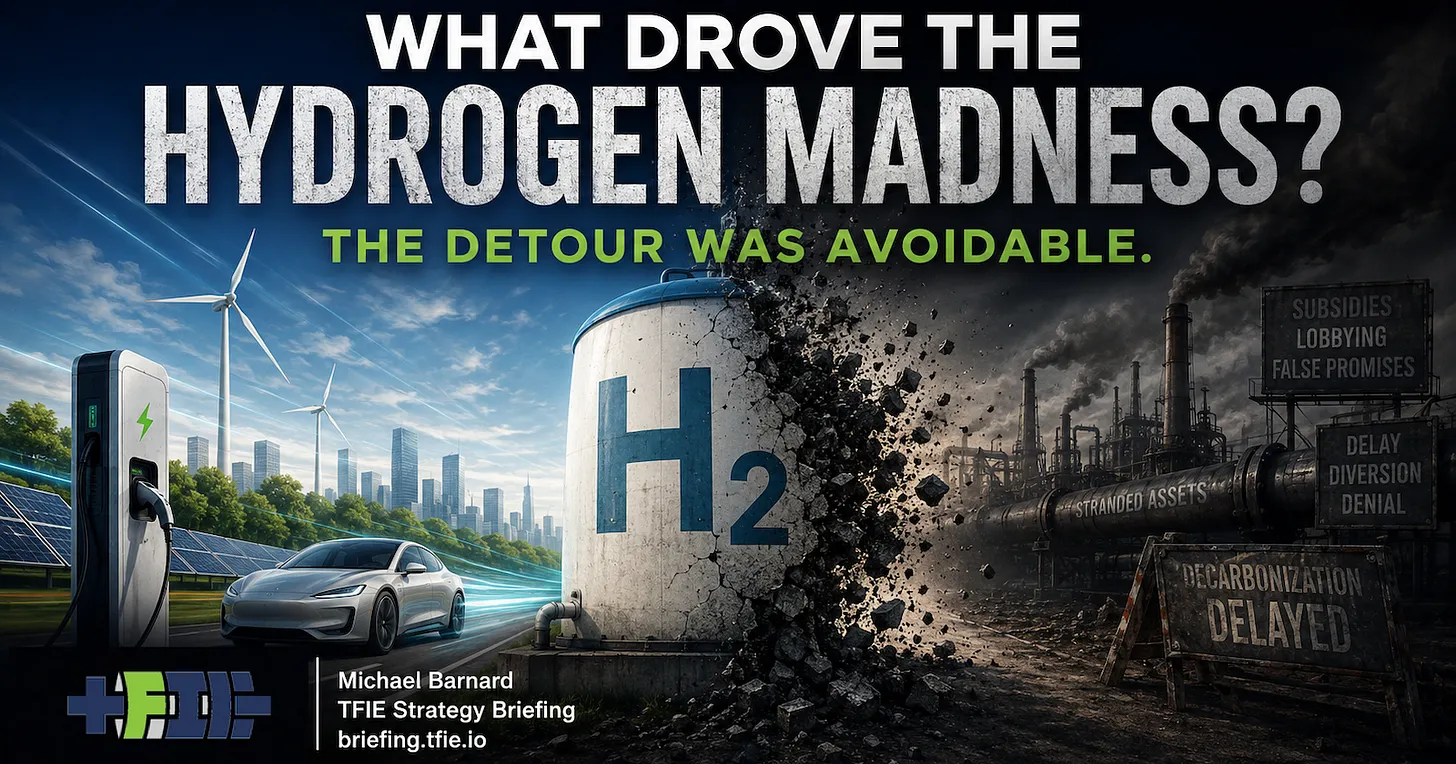
Hydrogen’s detour persisted because incumbent assets, skills and institutions had reasons to keep the molecule economy politically viable after the economics weakened.
Support CleanTechnica's work through a Substack subscription, on Patreon, or on Stripe. Help us produce all of the high-quality, original content we publish week after week despite the challenges of content-scraping AI, antisocial media, inflation, and other hurdles.
In 2023, a senior executive responsible for decarbonizing a major transportation company asked me, with some exasperation, what drove the “madness on hydrogen.” Hydrogen proposals kept arriving for applications where the energy balance and economics looked dreadful. That conversation became What Drives This Madness On Hydrogen?, an attempt to explain why enthusiasm persisted despite increasingly obvious problems.
Three years later, I would change the weighting of my answer. Confirmation bias, familiarity and loss aversion were real, but I put them too close to the beginning of the causal chain. The more important question is why companies, governments and institutions acquired such strong reasons to keep hydrogen politically viable that adverse evidence repeatedly failed to stop the pathway.