Support CleanTechnica's work through a Substack subscription or on Stripe.
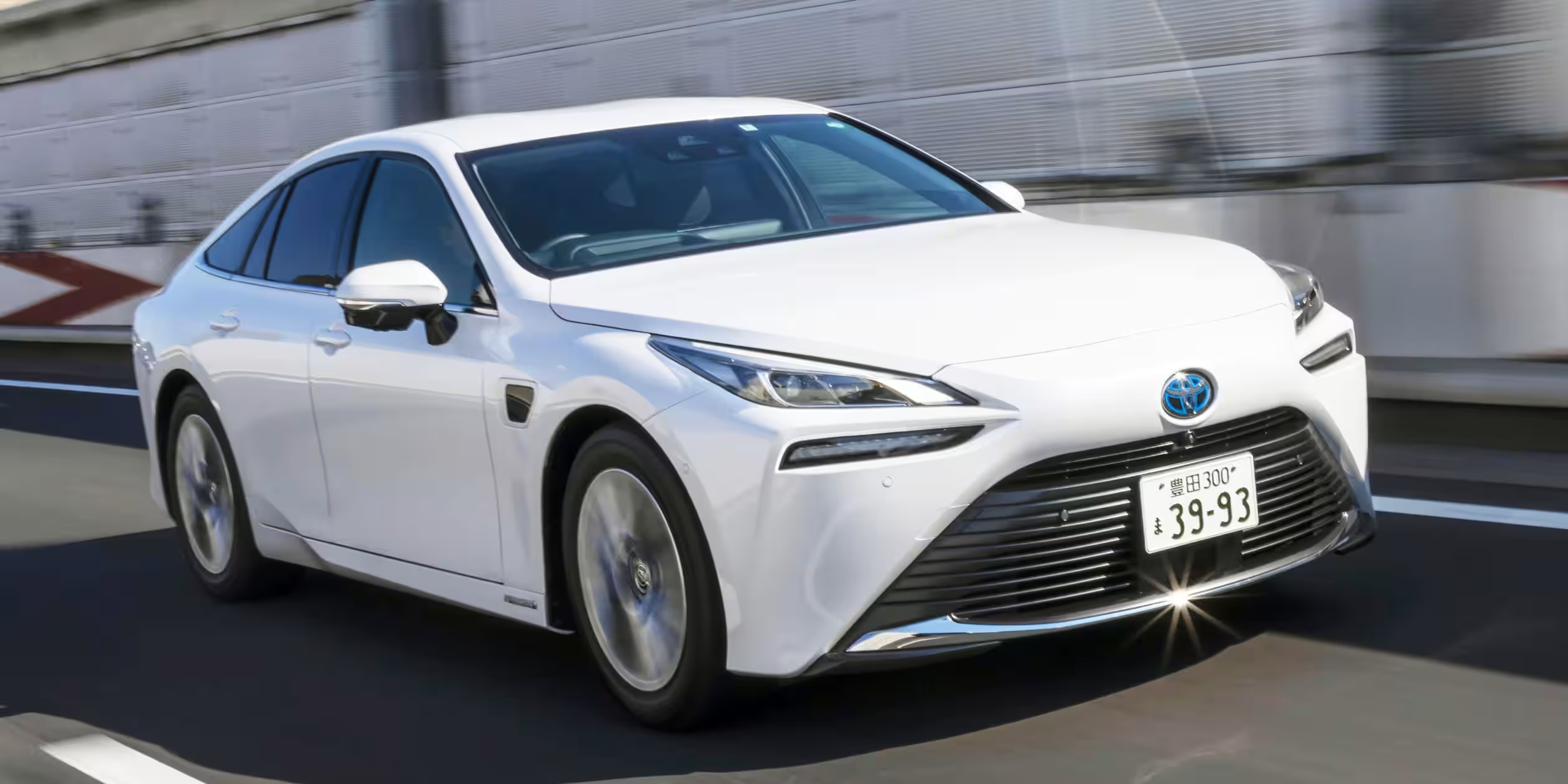
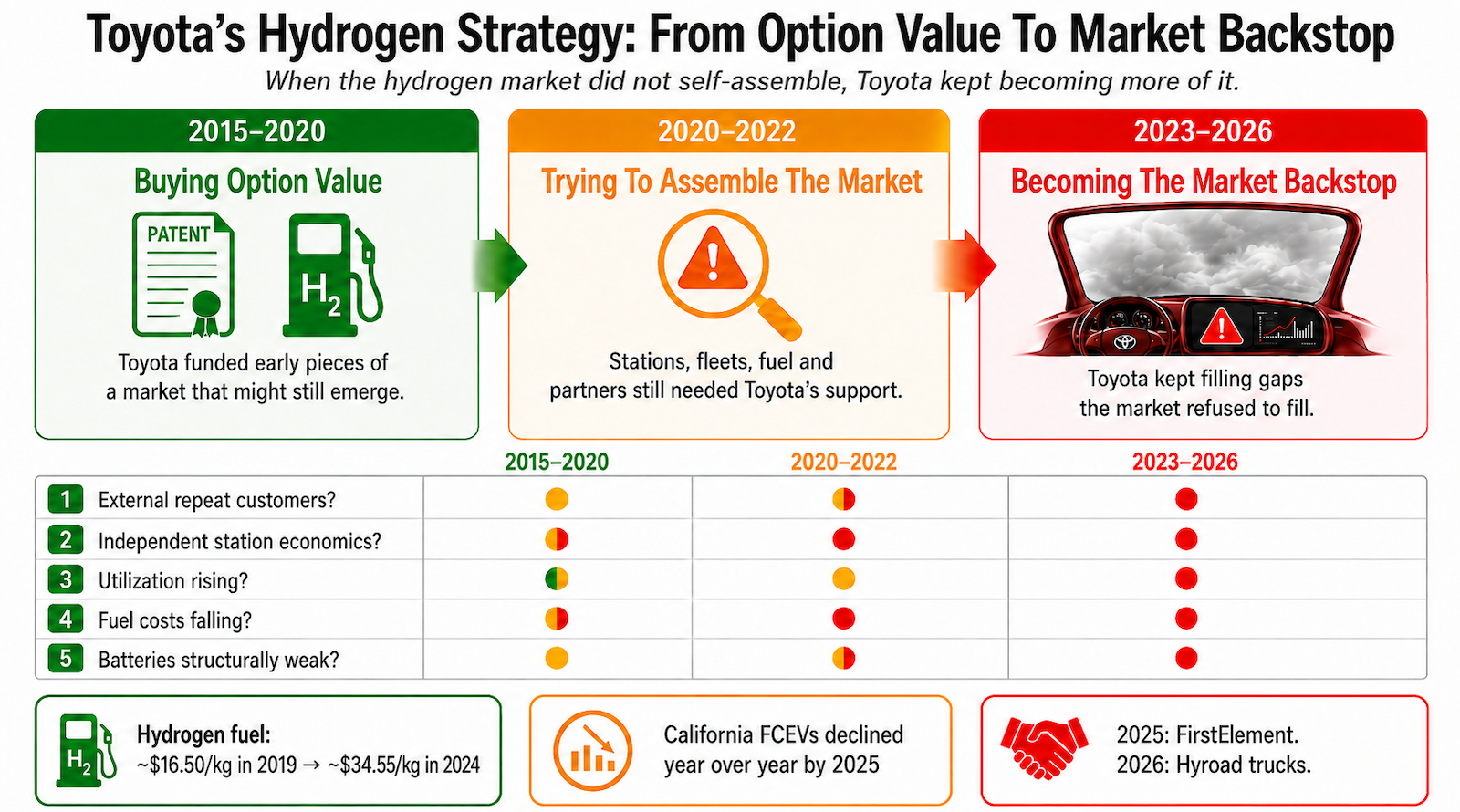
Toyota’s latest hydrogen truck move is not interesting because it is large. Forty trucks is not a large order in a global transport market. It is interesting because of what sits behind it. Hyroad, formed mostly by ex-Nikola executives, acquired hydrogen truck assets from Nikola’s remains, and Toyota then appeared with a deal to use 40 Class 8 hydrogen trucks in Southern California logistics while supplying hydrogen through refueling infrastructure Toyota is developing in Ontario, California. That is not evidence of hydrogen truck market pull. It is a controlled deployment stitched together from salvaged assets, Toyota demand, and Toyota fuel infrastructure.
This is not an isolated pattern. A hydrogen transportation announcement appears under another company’s logo, but Toyota is often somewhere in the background as fuel-cell module supplier, vehicle development partner, infrastructure investor, fleet customer, hydrogen offtaker, station backstop, or some combination of those roles. CaetanoBus in Portugal, FirstElement in California, Shell’s earlier California hydrogen station push, Toyota’s Long Beach Tri-gen project, PACCAR fuel-cell trucks, VDL logistics trucks, Hino and Isuzu collaborations, BMW fuel-cell work, and marine and rail demonstrations all show variants of the same thing.