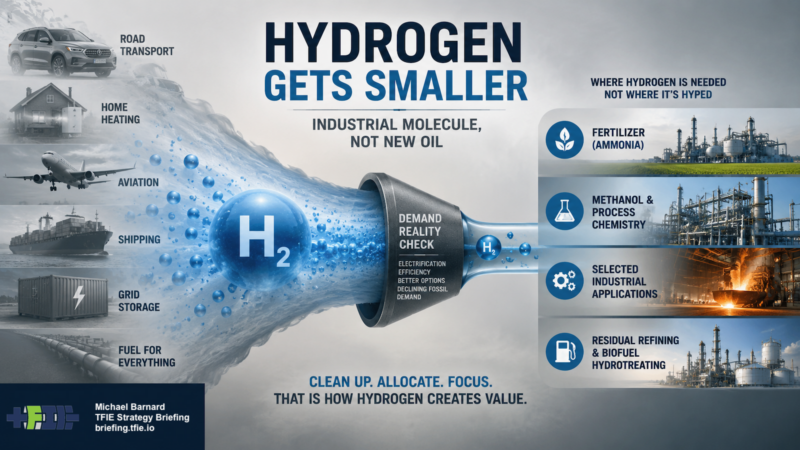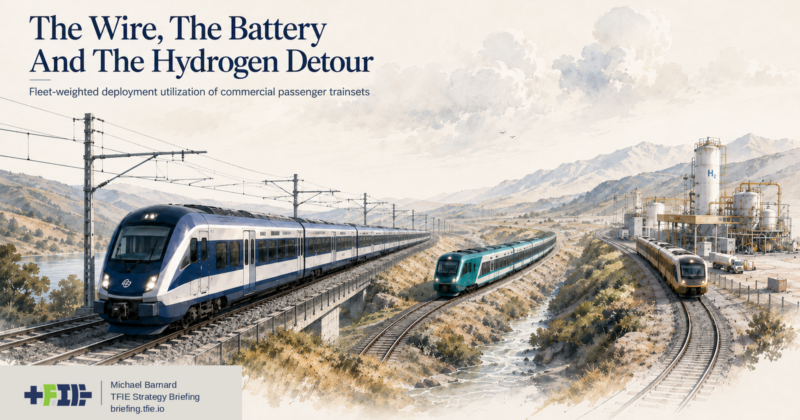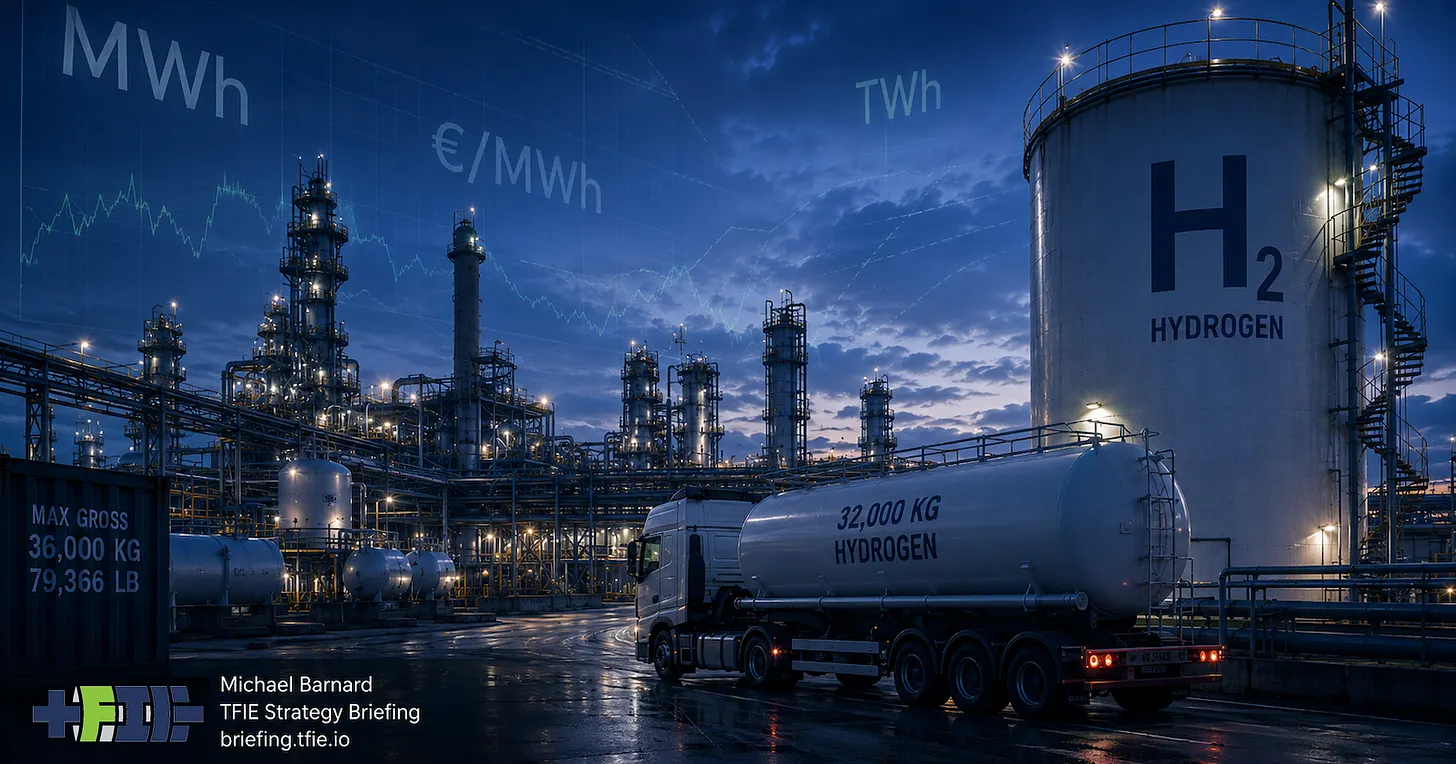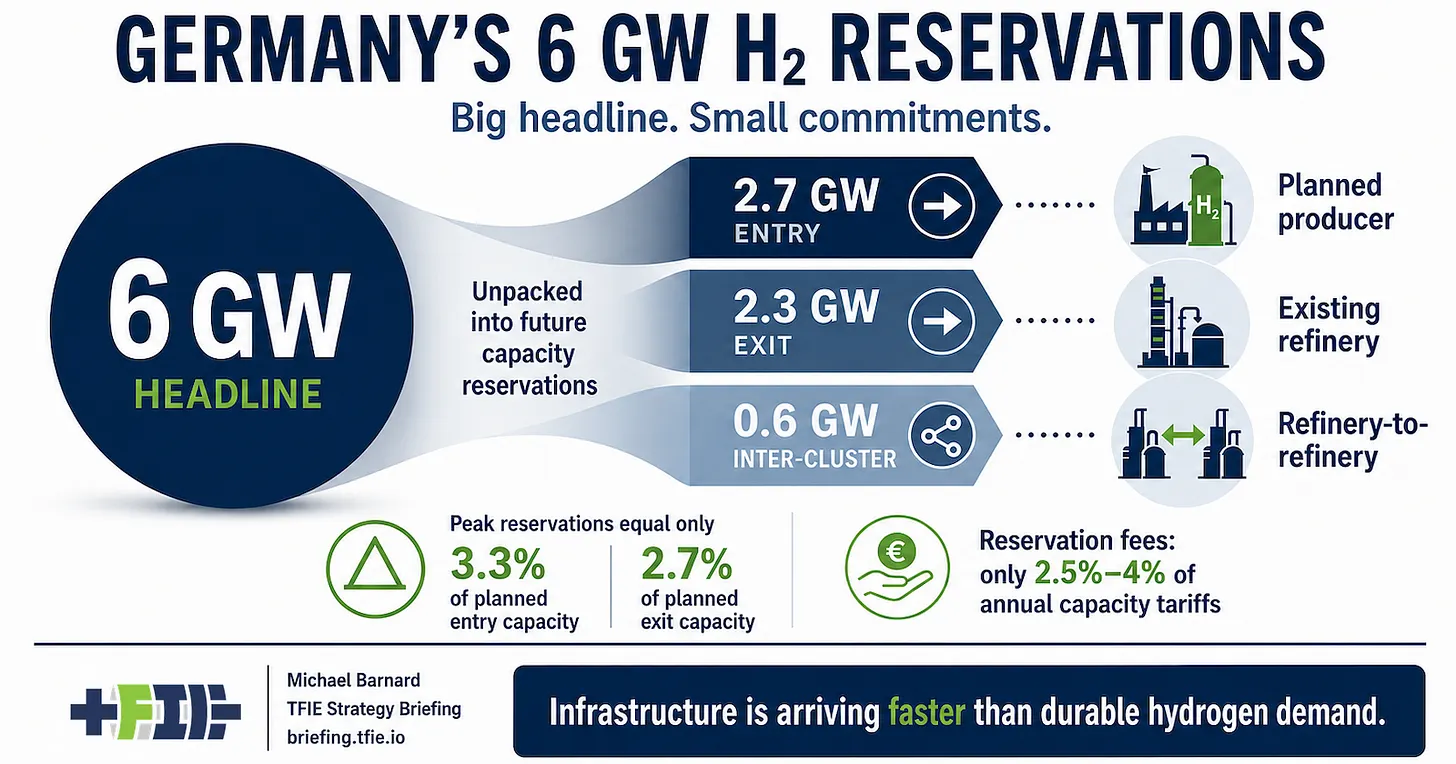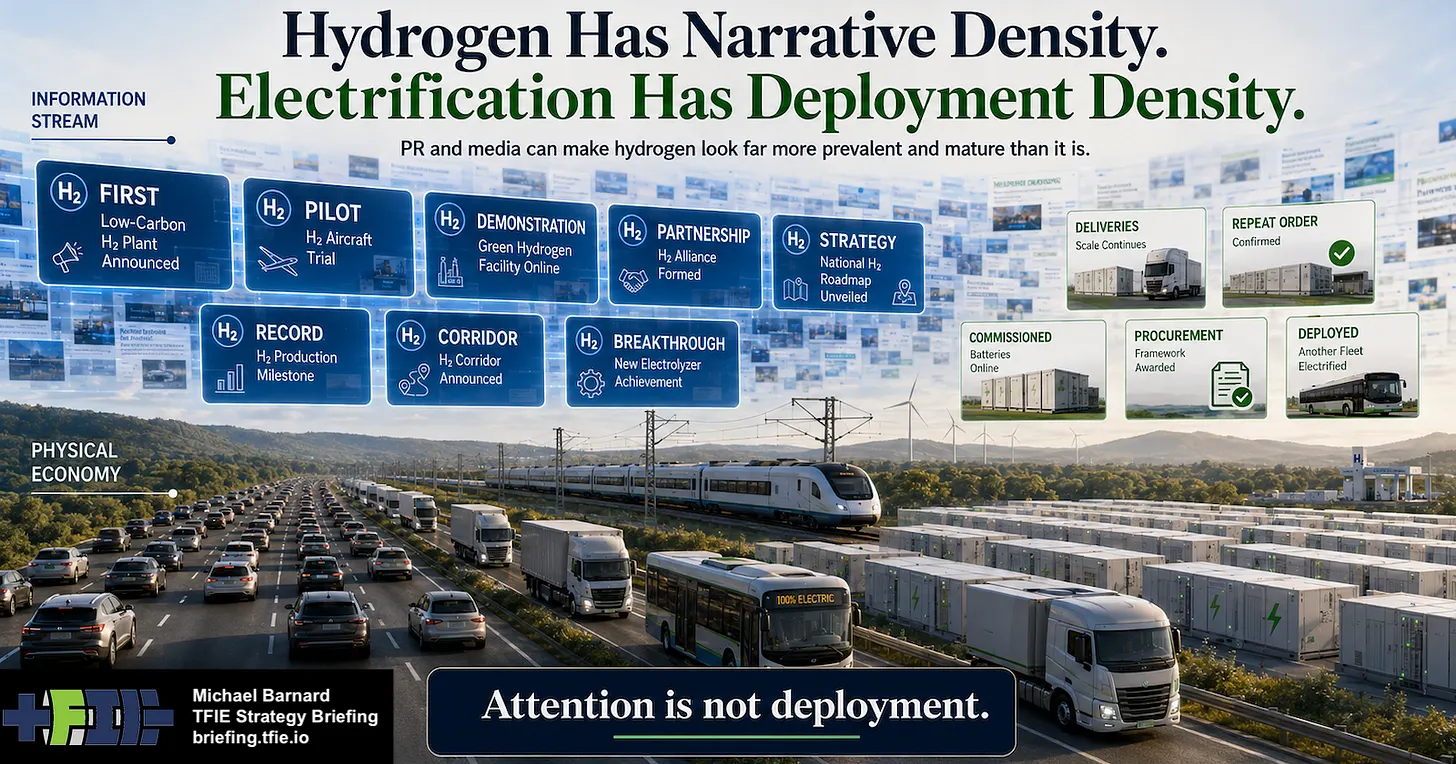
Hydrogen and electrification occupy surprisingly similar amounts of attention despite radically different levels of physical deployment.
Support CleanTechnica's work through a Substack subscription, on Patreon, or on Stripe. Help us produce all of the high-quality, original content we publish week after week despite the challenges of content-scraping AI, antisocial media, inflation, and other hurdles.
Hydrogen occupies an unusually large share of the energy-transition information stream for the amount of physical deployment behind it. Fuel-cell trucks, buses, trains, ships, storage projects, demonstrations and records recur through corporate releases, government announcements, trade publications and mainstream reporting, creating the impression that hydrogen remains a substantial parallel pathway to batteries and direct electrification across many sectors. I tested that impression with a bounded register of positive milestones from 2022 through 2025. Batteries actually generated more announcements than hydrogen, 206 versus 114, but that modest 1.8-to-one difference bears little resemblance to the markets underneath them.
The divergence becomes obvious once physical denominators are restored. In freight trucks, the announcement ratio is only about 1.5 to one in favor of batteries, while China had roughly 366,000 electric heavy trucks at the end of 2025 versus about 18,000 fuel-cell heavy trucks. Transit buses show a similar pattern: 47 battery milestones versus 23 hydrogen milestones, yet more than 680,000 electric buses were operating in China alone compared with roughly 15,000 fuel-cell buses globally. Maritime announcements are separated by only about two to one, while DNV’s operating-fleet evidence shows seven hydrogen-fuelled vessels against more than 1,300 battery-equipped vessels.