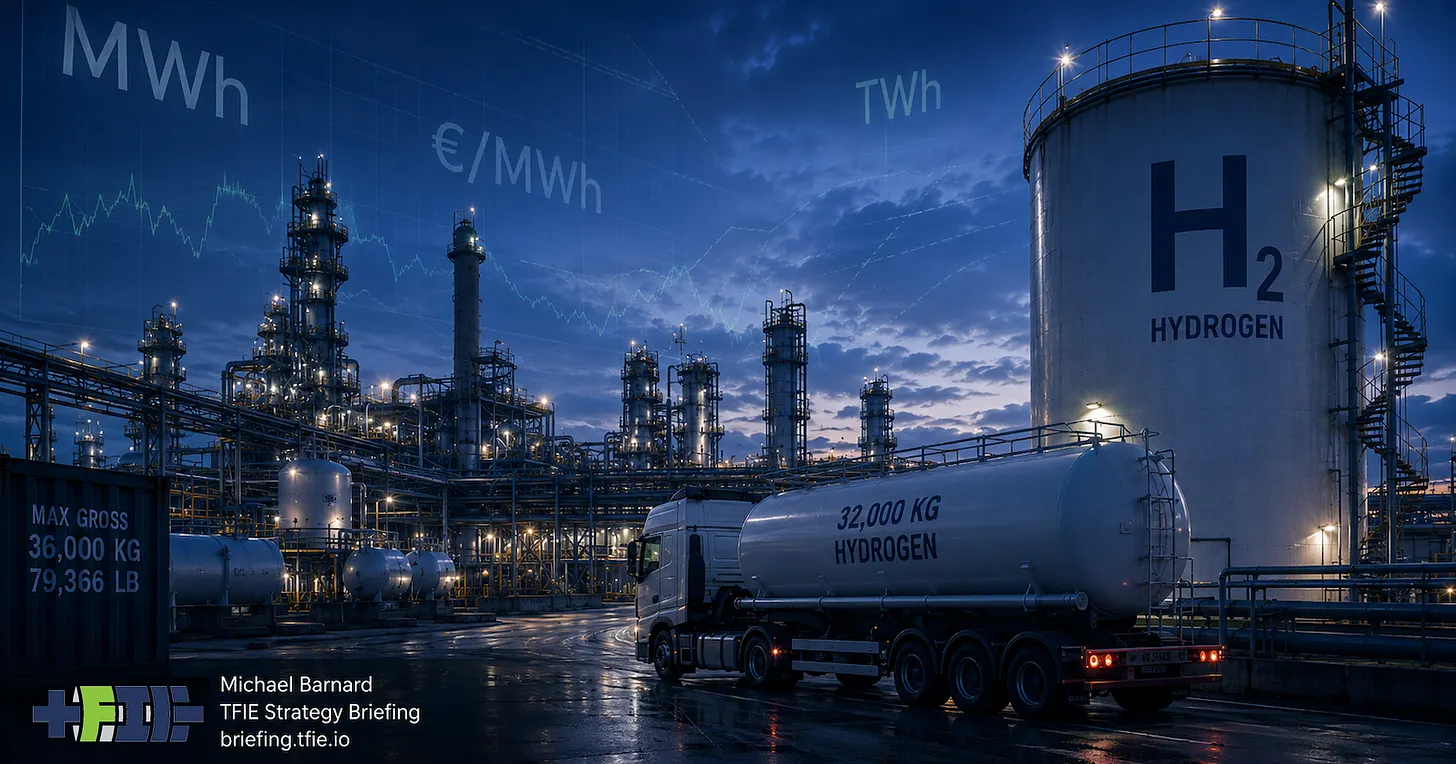
Putting MWh over an industrial hydrogen supply chain changes the framing, not the underlying market: real buyers still purchase hydrogen by mass.
Support CleanTechnica's work through a Substack subscription, on Patreon, or on Stripe. Help us produce all of the high-quality, original content we publish week after week despite the challenges of content-scraping AI, antisocial media, inflation, and other hurdles.
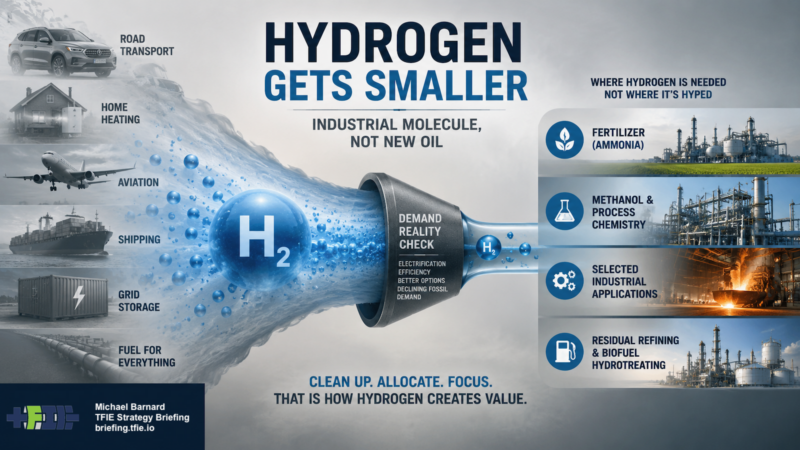
Global hydrogen demand exceeded 100 million tonnes in 2025, and almost all of it was still consumed where hydrogen has been used for decades: refining and industry. That is why kilograms and tonnes are not merely traditional units. They describe the market that exists. An ammonia plant buys a chemical feedstock by mass. A refinery has an annual hydrogen requirement. A direct-reduced-iron plant can be assessed in kilograms of hydrogen per tonne of iron. The molecule is entering an industrial process, not arriving as an abstract bundle of energy.
There is nothing mathematically wrong with converting hydrogen into megawatt-hours. Its lower heating value is about 33.33 kWh per kilogram. The problem starts when dimensional validity is treated as though the choice of unit were analytically neutral. Electricity is generated, traded and consumed in kWh, MWh and TWh because energy is the product. Hydrogen today is overwhelmingly manufactured, transported and consumed as an industrial molecule. Expressing both in MWh can make them look like competing energy commodities before hydrogen has actually won the energy markets being imagined for it.