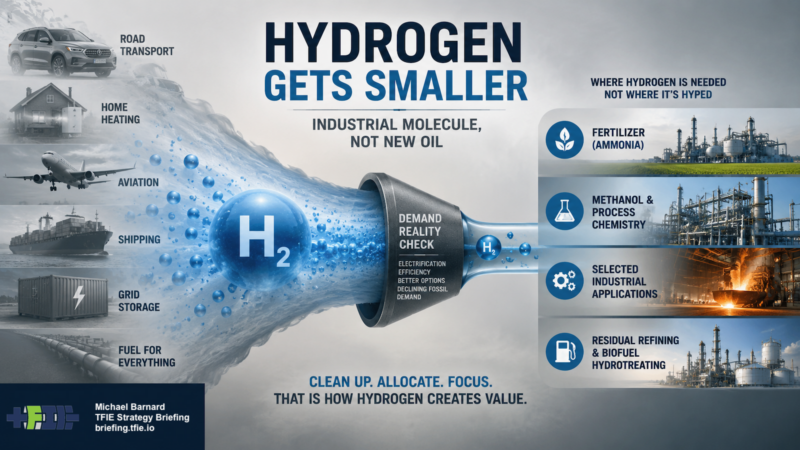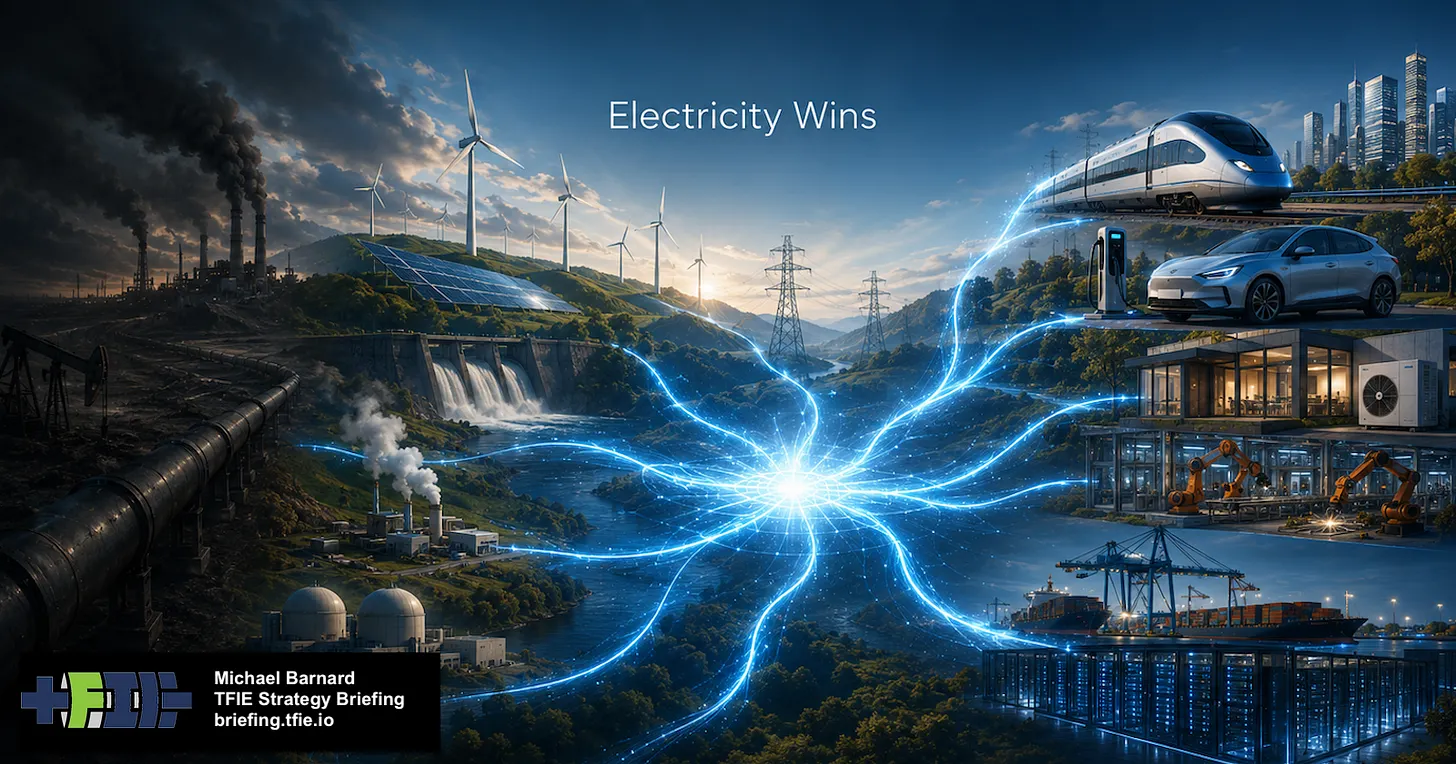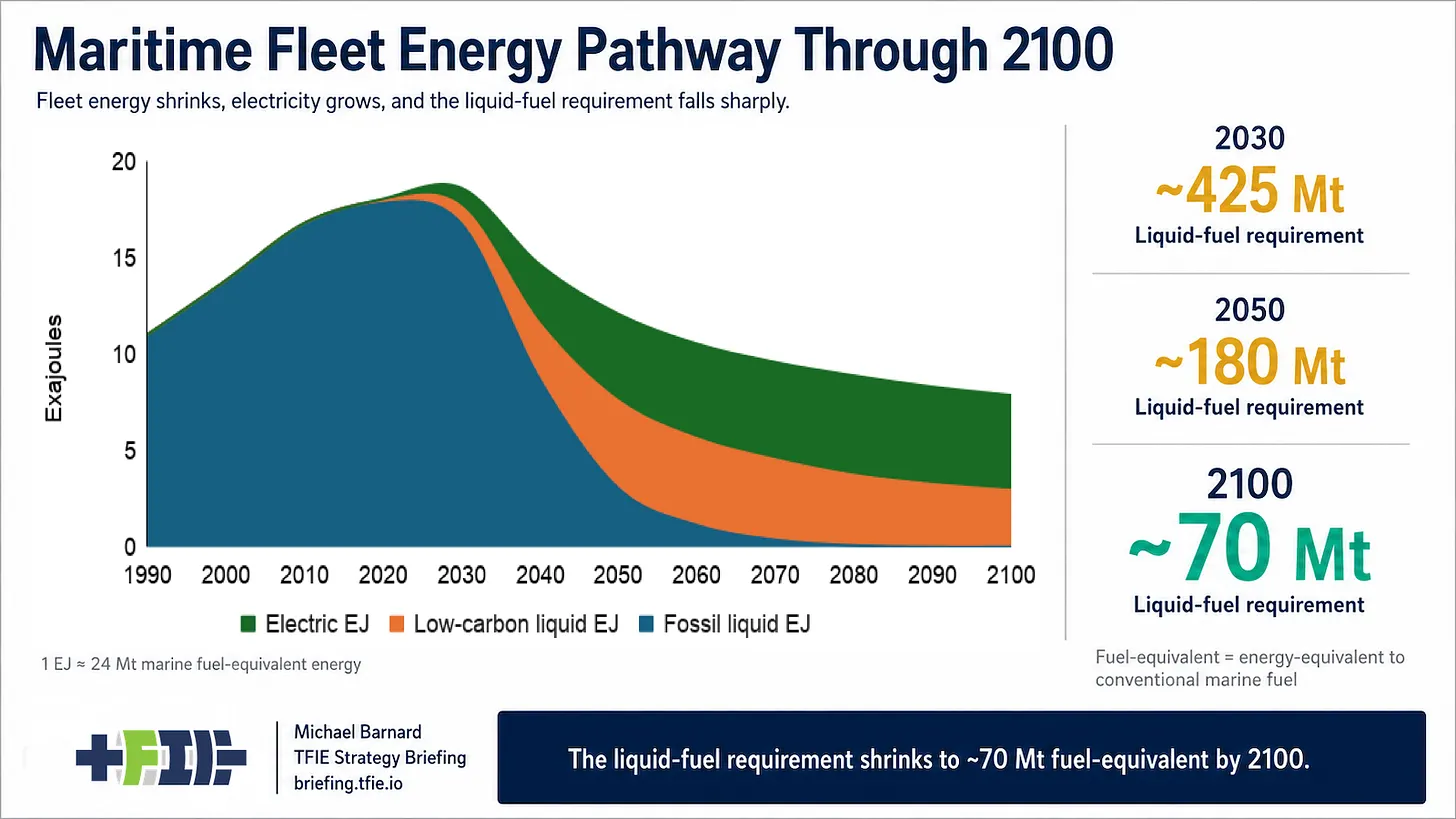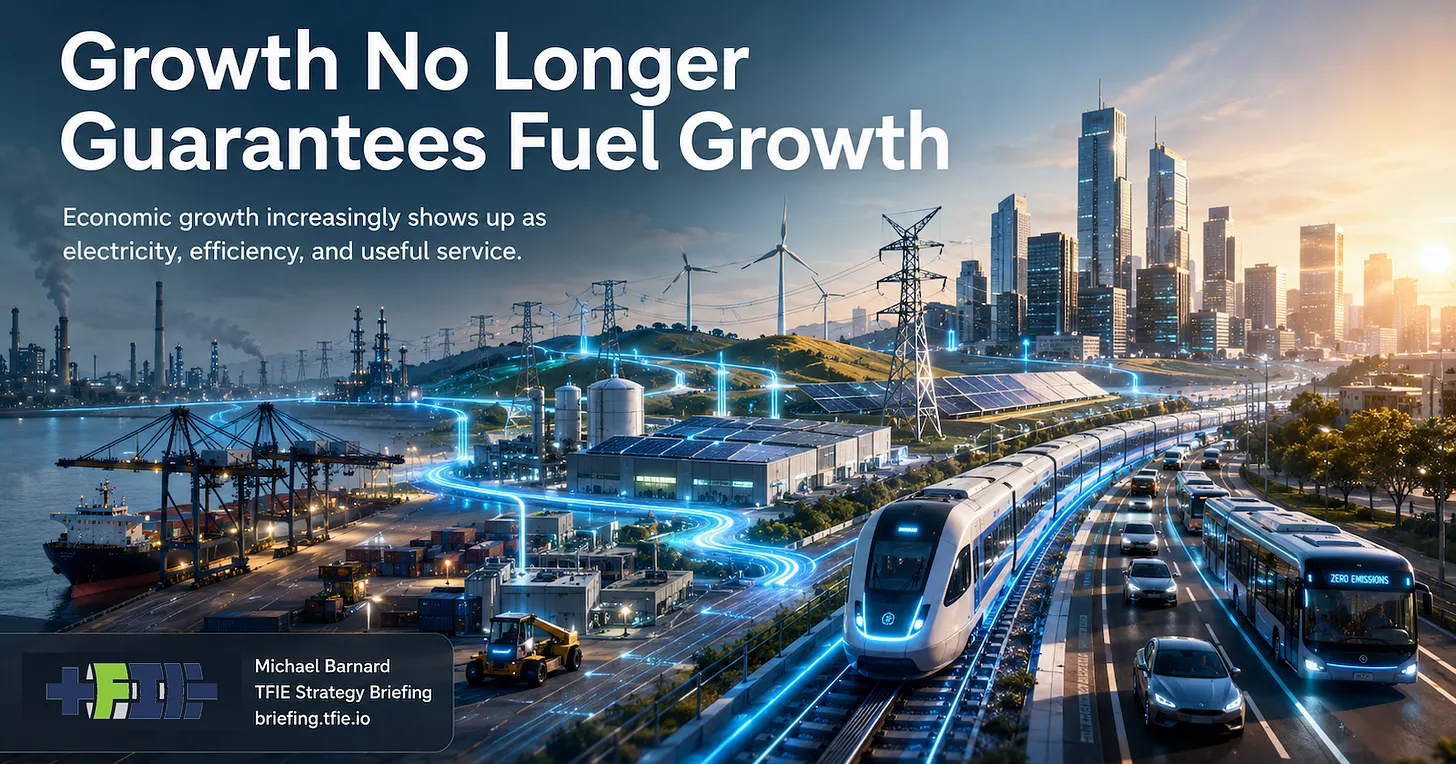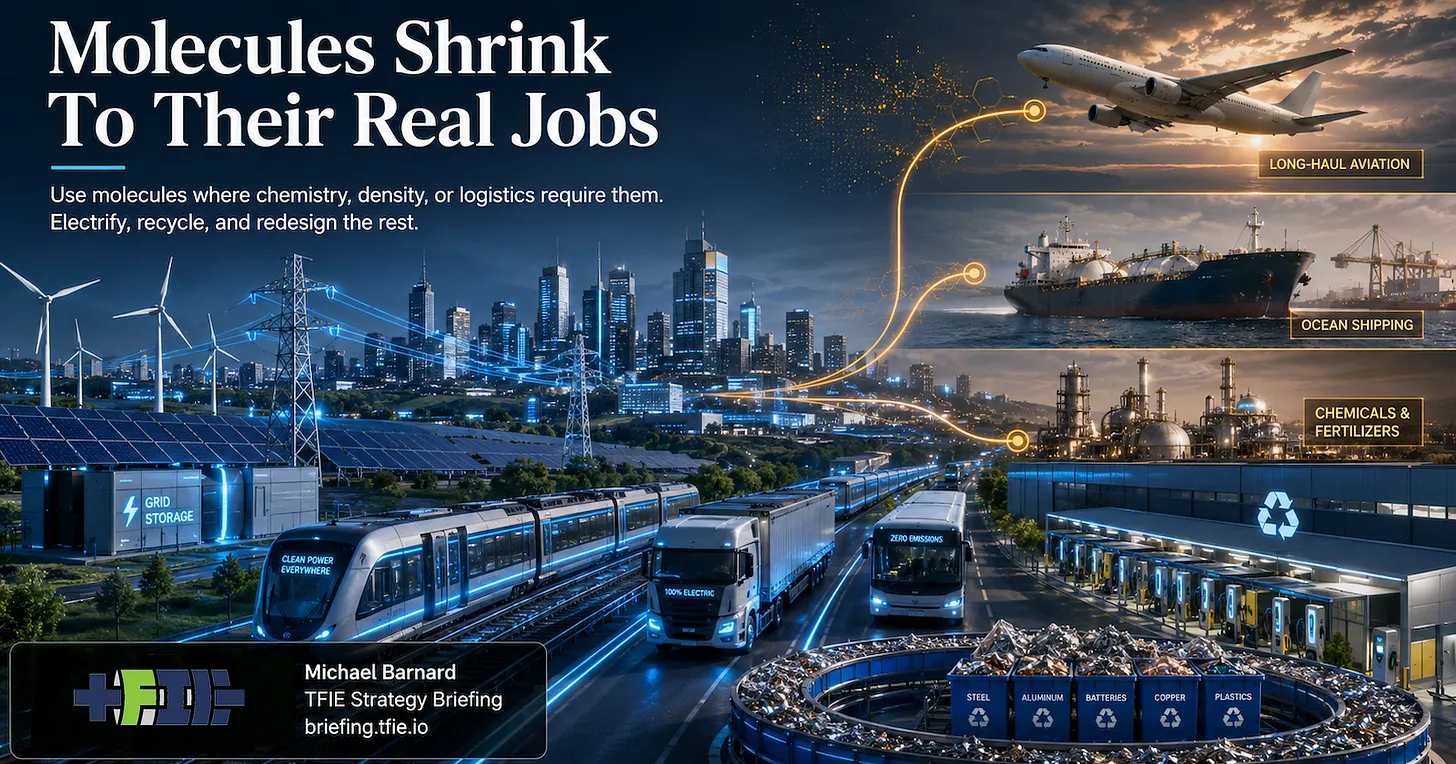
The transition does not preserve the fossil fuel pool and relabel it. Direct electrification removes most heat, motion, and storage work first, leaving molecules for narrower real jobs.
Support CleanTechnica's work through a Substack subscription or on Stripe.
A lot of energy-transition arguments begin with today’s fossil fuel demand. Coal, oil, and gas still dominate global primary energy, so it is tempting to draw a straight line from the current fuel system to a future molecule system. Replace natural gas with hydrogen. Replace bunker fuel with ammonia or methanol. Replace jet fuel with synthetic liquids. Replace diesel with biofuels. Keep the basic market map and change the label. That is attractive for project decks, but it is a poor way to think about the transition.
The better starting point is the service being delivered. Buildings need heat, not gas. Cars and trucks need motion, not gasoline or diesel. Grids need reliability and storage, not necessarily hydrogen. Industry needs heat, force, separations, chemistry, and materials, not a generic bucket called “molecules.” Once the question is framed around useful work instead of existing fuel sales, direct electricity, efficiency, demand shifts, and system redesign remove a large share of the apparent market before alternative fuels get to compete.