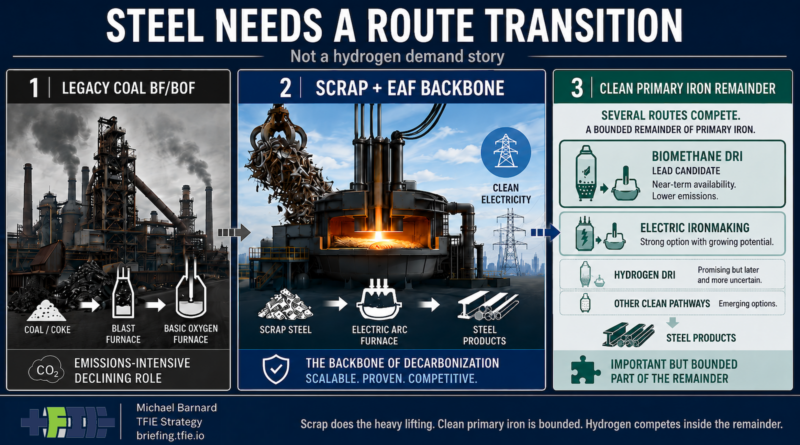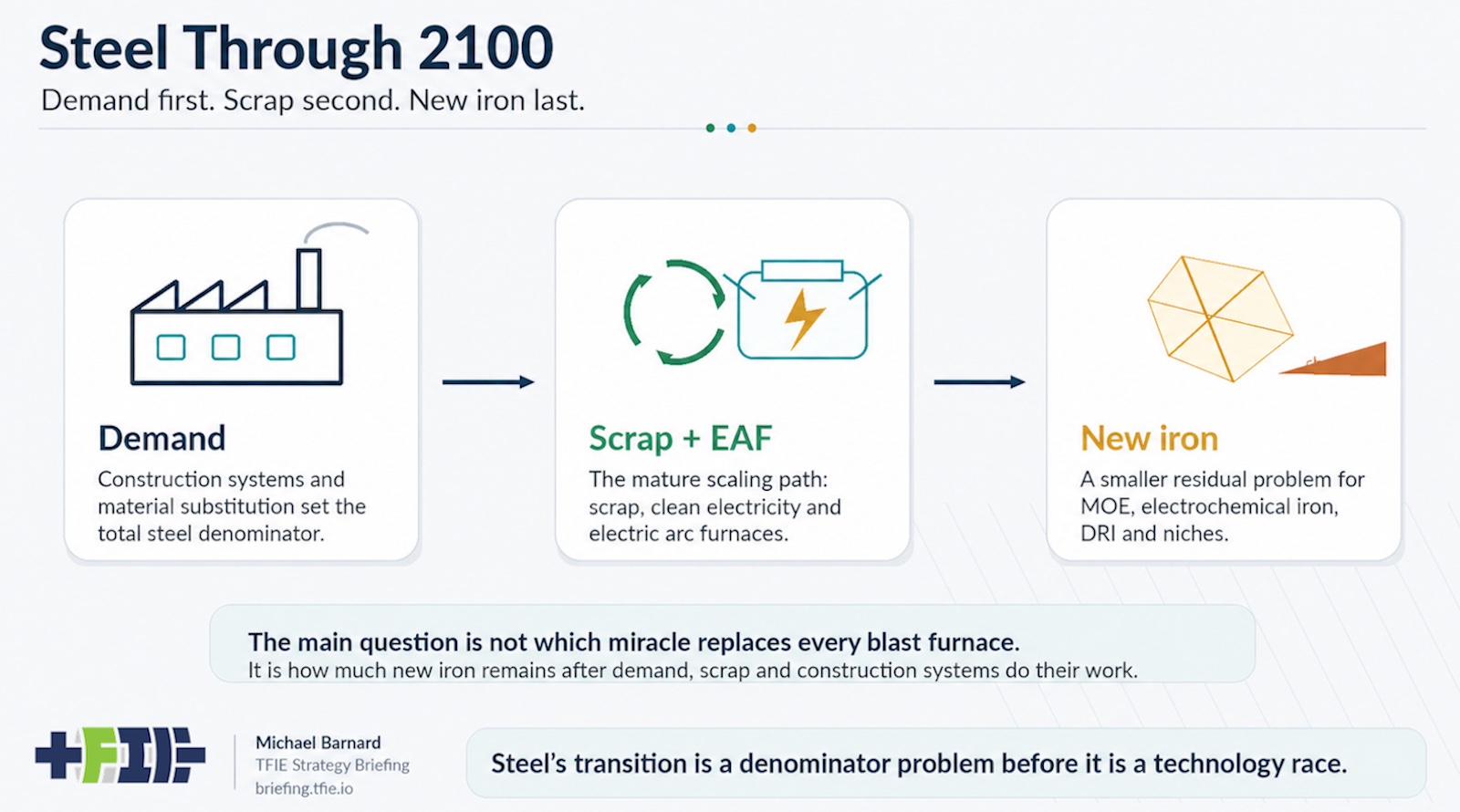
Steel decarbonization starts with demand, scrap, and electric arc furnaces, leaving new iron as the smaller residual problem.
Support CleanTechnica's work through a Substack subscription or on Stripe.
Steel keeps getting framed as a hydrogen problem because hydrogen gives the sector a single shiny lever. Replace coal with hydrogen, keep making new iron, plug it into an electric arc furnace, and declare victory somewhere around the ribbon-cutting ceremony. It is an attractive story for governments, incumbent producers, electrolyzer vendors, consultants, and anyone else who prefers a technology race to a material-flow problem.
The trouble is that steel’s transition does not start with hydrogen. It starts with how much steel the world actually needs, how much old steel comes back as scrap, how quickly electric arc furnaces expand, how construction changes, and how much new iron remains after those factors are counted. Hydrogen may have a role in that residual new-iron problem, but treating it as the center of the steel transition gets the order wrong.
The scale is not in doubt. The world makes roughly 1.9 billion tons of crude steel a year, much of it still through blast furnaces and basic oxygen furnaces using iron ore, coal, limestone, and some scrap. Steel is in buildings, bridges, vehicles, ships, rails, wind turbines, transformers, ports, warehouses, appliances, factories, and the industrial equipment that makes the rest of the economy possible. It is a serious climate problem, but serious does not mean mysterious.