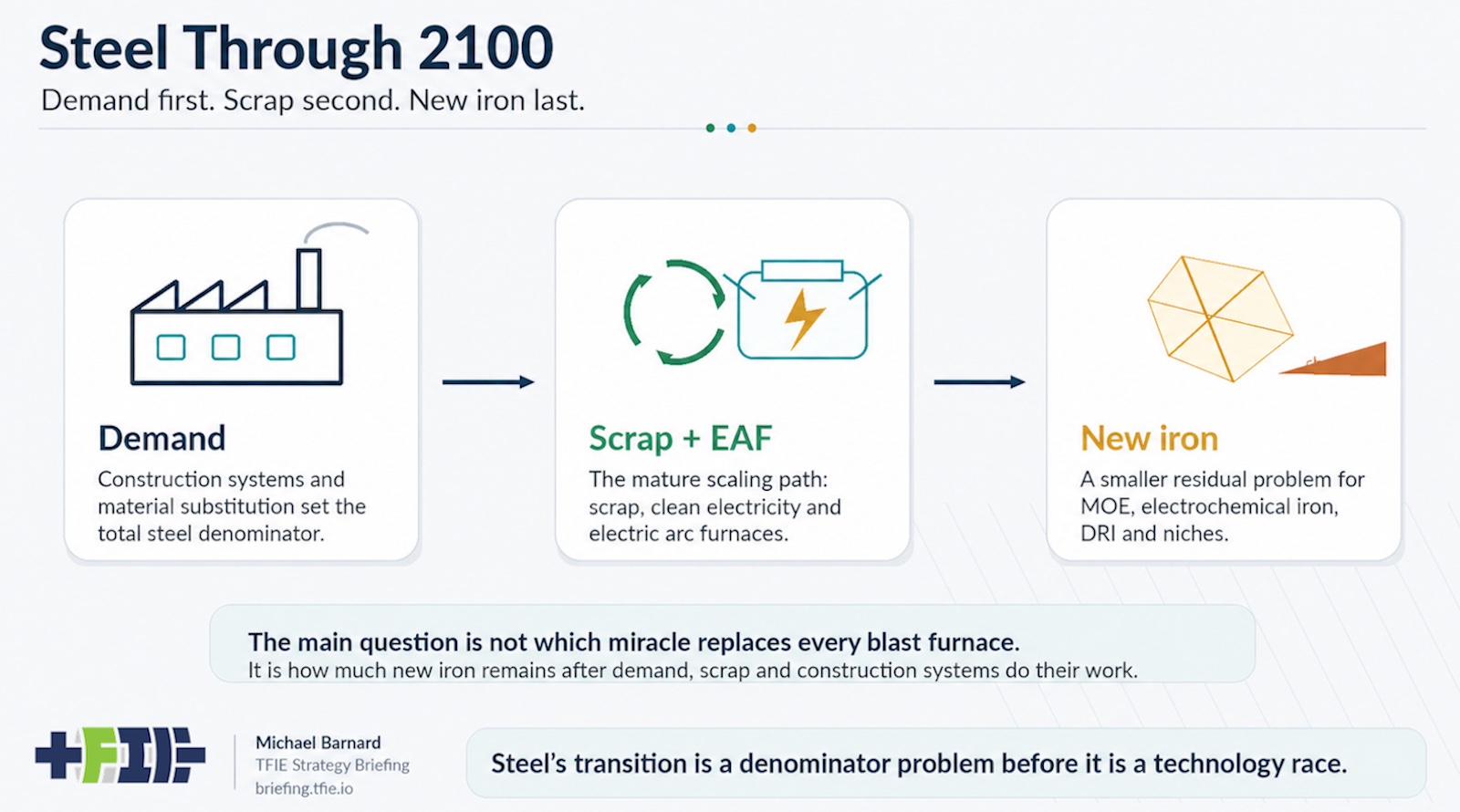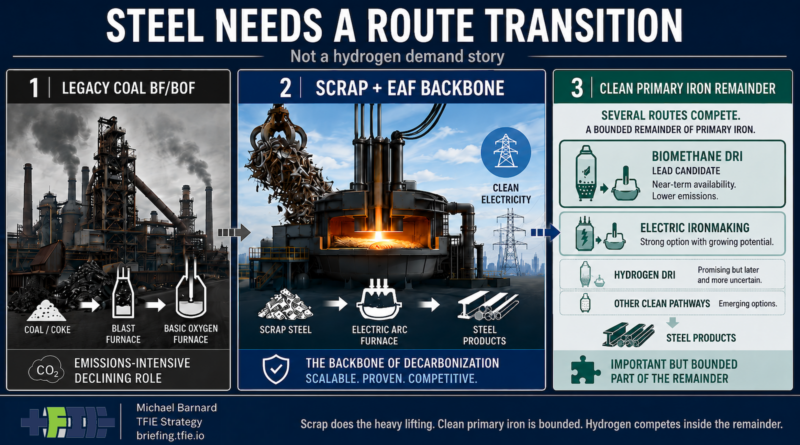
Steel decarbonization is a route shift: scrap and electric arc furnaces do the heavy lifting, while clean primary iron remains a bounded and contested market.
Support CleanTechnica's work through a Substack subscription or on Stripe.
Steel decarbonization keeps being pulled into the wrong conversation. Call it a future hydrogen market, and the discussion moves quickly to electrolyzers, pipelines, storage caverns, offtake contracts, national hydrogen strategies, and industrial-policy speeches looking for a customer. That framing is convenient for hydrogen advocates, but it is not how the steel system actually works.
Steel is not a fuel. It does not disappear when used. It accumulates in buildings, bridges, ports, rail, vehicles, ships, appliances, industrial equipment, pipes, and transmission towers, then returns as scrap when those assets retire. That stock-and-flow reality is the starting point for a serious steel transition. The useful questions are not how much hydrogen the sector might absorb if hydrogen were cheap, abundant, conveniently stored, and politically protected. The useful questions are how much steel the world actually needs, how much can come from scrap, how much clean primary iron remains, and which production routes can deliver it under real constraints.