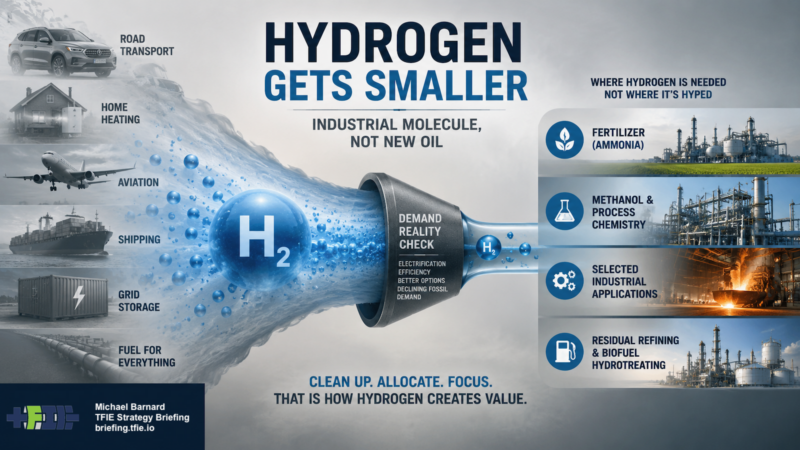
Hydrogen demand gets smaller when speculative energy uses are filtered out and the surviving industrial molecule uses remain.
Support CleanTechnica's work through a Substack subscription or on Stripe.
Hydrogen demand is usually discussed as if the world is about to discover a giant new fuel market. That is the wrong starting point. Hydrogen is already a very large industrial molecule, but most of that demand is tied to the fossil-fuel system, fertilizer, methanol and process chemistry. It’s a climate change problem on the scale of all global aviation today. When those sectors are counted properly, the transition story is not explosive growth. It is contraction, cleanup and concentration.
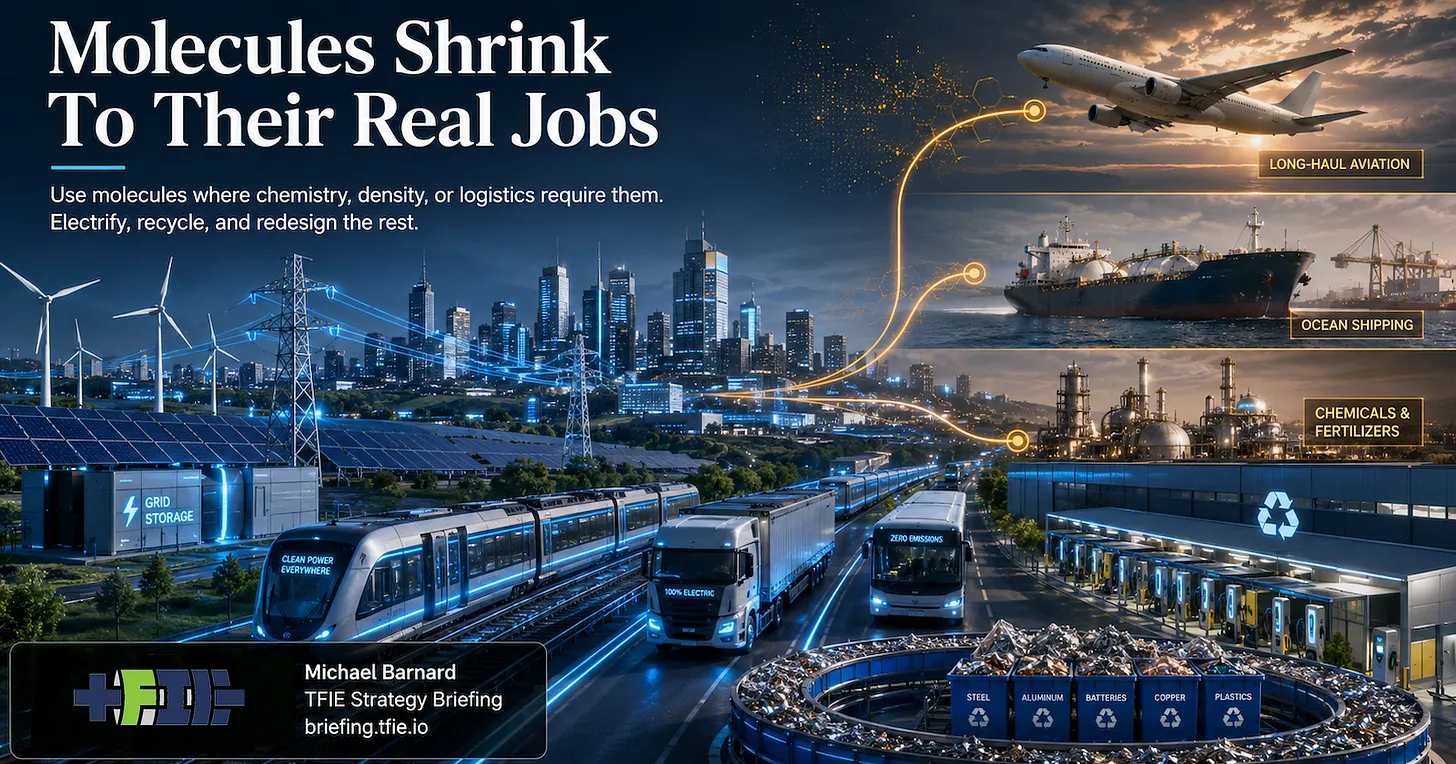
That distinction matters because hydrogen has been sold for years as a future energy carrier for road transport, home heating, grid storage, shipping, aviation, steel, backup power and industrial heat. Many of those claims treat hydrogen demand as if every hard-looking energy problem automatically becomes a hydrogen market. The better test is narrower: where is hydrogen already used, which of those uses survive decarbonization, and which new uses can beat direct electrification or better molecules?
I’ve formalized and normalized my hydrogen demand projection through 2100 as part of the series of decade by decade decarbonization projections across industry and transportation I now maintain at TFIE Strategy Briefing.