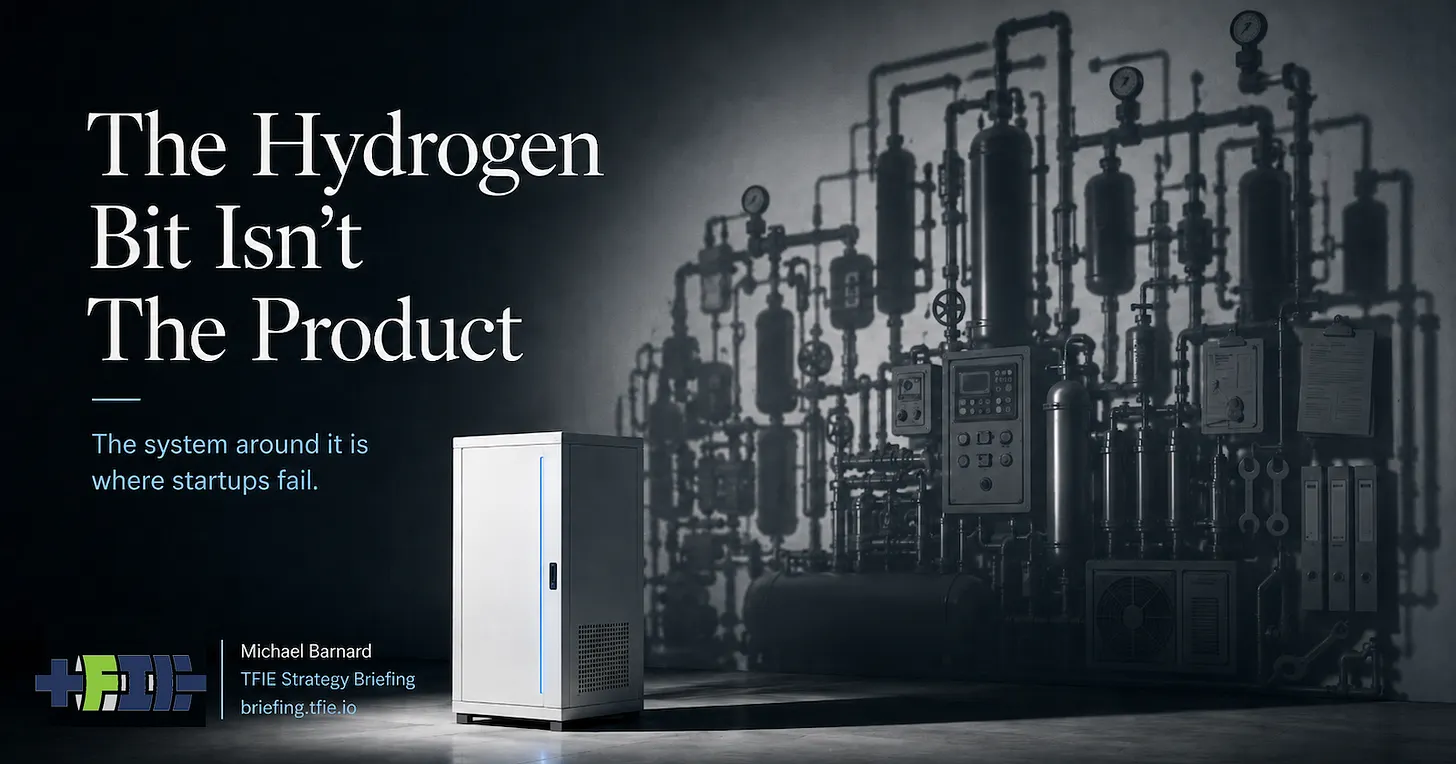
The electrolyzer stack is only the visible component; safety, uptime, service and commercial risk sit in the industrial system around it.
Support CleanTechnica's work through a Substack subscription, on Patreon, or on Stripe. Help us produce all of the high-quality, original content we publish week after week despite the challenges of content-scraping AI, antisocial media, inflation, and other hurdles.
CPH2 did not merely lose an experimental electrolyzer. Its destructive test failure exposed a mismatch between the product the company promoted and the business it was actually trying to operate. After more than a decade of development, a public listing and roughly £50 million in disclosed financing before its 2026 rescue raise, the company was still treating its membrane-free stack as though it represented most of the commercial problem. The damaged equipment demonstrated that the difficult part was the industrial system wrapped around it.
The advertised breakthrough was attractive. CPH2’s electrolyzer avoids membranes, platinum-group metals and PFAS, potentially removing cost, supply-chain and degradation concerns associated with conventional designs. But the architecture generates hydrogen and oxygen together in the stack, passes the mixed gas through dryers and then separates it cryogenically. Once that process choice is made, the commercial proposition includes every pipe, valve, sensor, dryer, chiller, separator and control sequence required to manage a potentially explosive gas mixture under every operating condition.